

Prebiotic-integrated nanoplatforms for inflammatory bowel disease: from construction strategies to multimodal combination therapy
 0

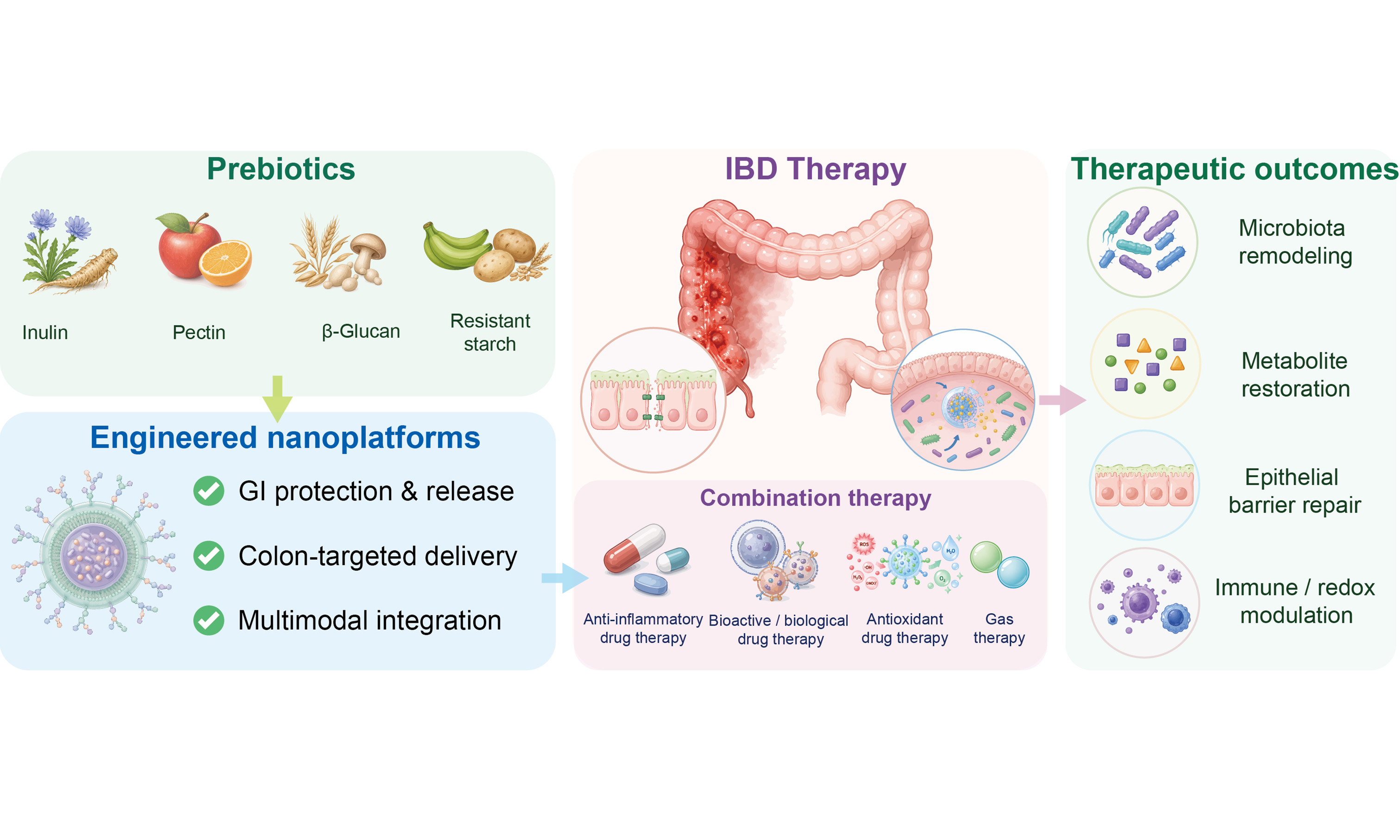
Graphical Abstract
Abstract
Inflammatory bowel disease (IBD) is driven by persistent disruption of the gut microbiota-metabolite-barrier-immune network, creating a strong rationale for therapeutic strategies that extend beyond direct suppression of inflammation. Prebiotics can support microbial metabolic activity, epithelial barrier integrity, and mucosal immune homeostasis, but their clinical application is limited by microbiome-dependent responses, high dose requirements, nonspecific gastrointestinal exposure, uncontrolled fermentation, and relatively slow therapeutic onset. This review summarizes the therapeutic potential of prebiotics in IBD and discusses how nanoscale engineering can improve their gastrointestinal stability, colonic delivery, local retention, and integration with complementary therapeutic modalities. Particular emphasis is placed on three questions: how prebiotics can be incorporated into nanoscale platforms, whether prebiotic function is retained after engineering, and how these materials can be integrated with conventional anti-inflammatory drugs, bioactive or biological therapeutics, antioxidant therapies, and gas-based therapies. Current evidence indicates that these platforms can couple microbiota-directed regulation with more rapid pharmacological or catalytic effects, thereby addressing both intestinal dysbiosis and ongoing inflammatory injury. However, further progress requires clearer validation of the functional contribution of engineered prebiotics, more clinically relevant disease models, microbiome-guided patient stratification, long-term safety evaluation, and reproducible manufacturing. Prebiotic-integrated nanomedicine therefore represents a promising strategy for developing multimodal therapies that target both the inflammatory and ecological components of IBD.
Keywords


 Download PDF
INTRODUCTION
Inflammatory bowel disease (IBD) comprises ulcerative colitis (UC) and Crohn’s disease (CD). UC usually presents as continuous mucosal inflammation of the colon, whereas CD can affect any segment of the gastrointestinal tract and may cause patchy transmural inflammation, strictures, fistulas, or other penetrating complications. Both disorders are relapsing and show substantial heterogeneity in location, disease behavior, treatment response, and prognosis. Host genetics, environmental exposure, and the compositional and functional capacity of the gut microbiome are recognized determinants of disease susceptibility and progression[1,2].
IBD develops when genetic and environmental susceptibility disrupts the regulated homeostatic relationship among the gut microbiota, epithelial barrier, and mucosal immune system. Treatment-naive, new-onset CD is characterized by enrichment of Enterobacteriaceae, Pasteurellaceae, Veillonellaceae, and Fusobacteriaceae together with depletion of selected Clostridiales and Bacteroidales members[3]. Multi-omics studies further identify alterations in bile-acid, sphingolipid, and redox-related microbial functions[4,5] and indicate that IBD involves a cross-kingdom ecosystem comprising bacteria, fungi, viruses, and their metabolites.
Barrier injury converts dysbiosis into persistent tissue inflammation. Disruption of mucus and tight junctions facilitates the entry of microbial products into the lamina propria, where inflammatory epithelial, stromal, myeloid, and T-cell populations form interconnected signaling networks[6,7]. Neutrophils and activated macrophages generate reactive oxygen and nitrogen species (RONS), which further impair epithelial metabolism and create an ecological advantage for oxygen-tolerant pathobionts. IBD can therefore be viewed as a self-reinforcing cycle in which dysbiosis, metabolite depletion, barrier failure, immune activation, and oxidative injury mutually amplify one another[1-2,8].
Aminosalicylates, corticosteroids, immunomodulators, biologics, and small-molecule inhibitors remain central to IBD treatment, but their main effects are directed at inflammatory signaling or leukocyte trafficking. Biologics still fail to induce or maintain remission in a substantial proportion of patients[9,10], and suppressing a cytokine or trafficking pathway does not by itself restore epithelial, metabolic, or microbiome function[8]. This gap has encouraged adjunctive strategies aimed at the microbiota-metabolite-barrier axis. Prebiotics may therefore be better positioned as adjuncts to rapidly acting therapies than as stand-alone interventions, because their effects are generally slower and depend on the functional capacity of the resident microbiome.
Recent reviews have addressed prebiotic selection and therapeutic outcomes in IBD[11], prebiotic carbohydrate-based gastrointestinal delivery systems[12], and broader colon-targeted nanotherapeutic strategies[13]. Reviews centered on prebiotics have mainly emphasized substrate selection, microbiome-dependent responses, and clinical or preclinical efficacy, whereas delivery-oriented reviews have focused primarily on gastrointestinal protection, colonic targeting, and carrier design. An important issue at the interface of these fields remains insufficiently resolved: whether chemical modification, crosslinking, surface confinement, or nanoscale assembly preserves the selective microbial utilization that defines a prebiotic, and how this microbiota-dependent function can be distinguished from and integrated with faster pharmacological, biological, redox-active, or gas-mediated interventions. Accordingly, the review is organized around three linked questions: how prebiotics are incorporated into nanoscale platforms, what evidence demonstrates retention of prebiotic function after engineering, and how prebiotic and co-therapeutic components can be mechanistically integrated and experimentally distinguished.
Figure 1 provides an integrated overview of prebiotic-integrated nanoplatform design, therapeutic functions, combination strategies, and key translational considerations.
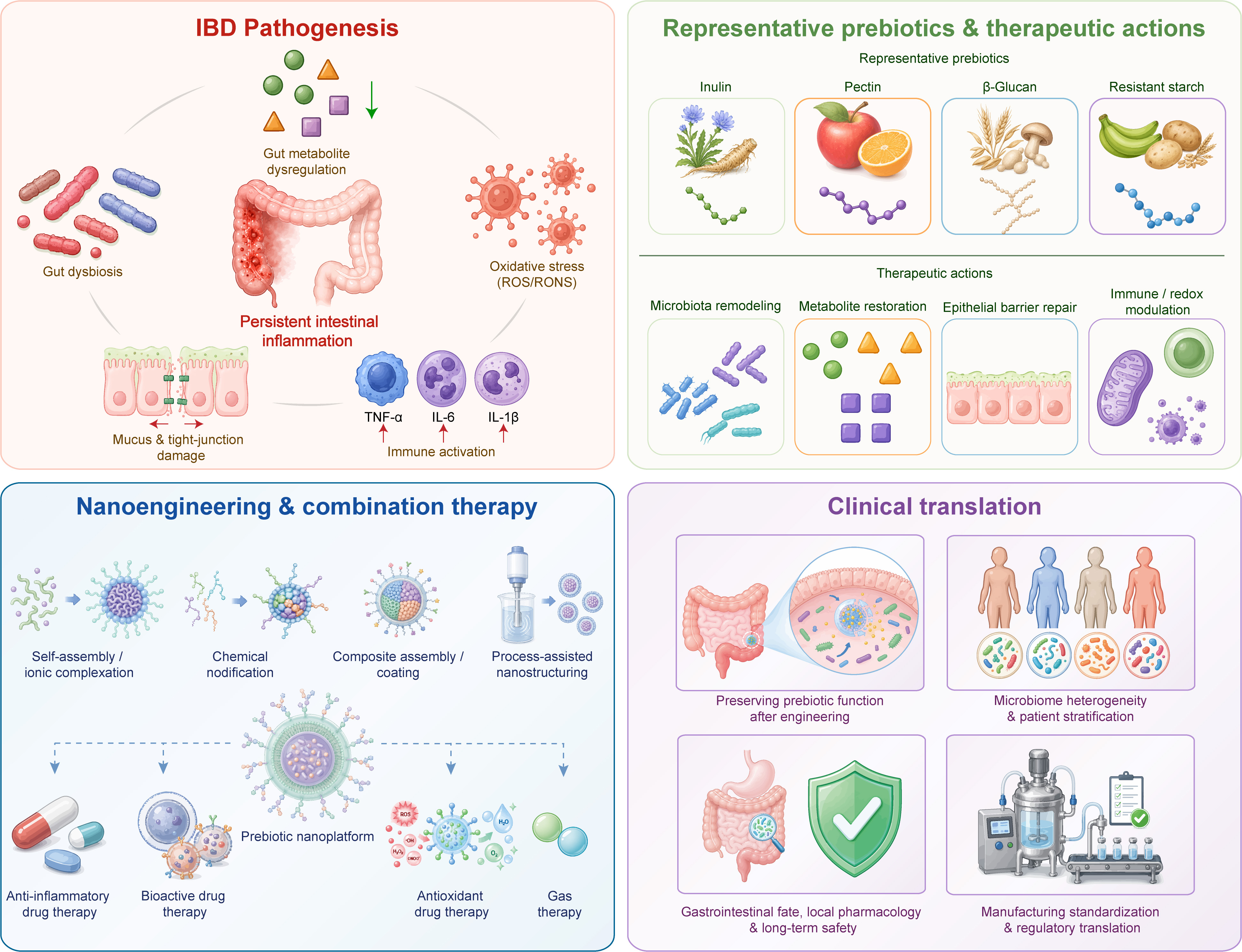
Figure 1. Prebiotic-integrated nanoplatforms for IBD therapy and their translational considerations. IBD involves interconnected disturbances in the gut microbiota, microbial metabolism, epithelial barrier, redox balance, and mucosal immunity. Prebiotics such as inulin, pectin, β-glucan, and resistant starch can act through microbiota remodeling, metabolite restoration, barrier repair, and immune/redox regulation. These materials can be engineered into nanoscale systems through self-assembly, ionic complexation, chemical modification, composite assembly, coating, or process-assisted nanostructuring, and further combined with anti-inflammatory, biological, antioxidant, or gas-based therapies. Key translational issues include retention of prebiotic activity after engineering, microbiome-dependent response variability, gastrointestinal fate and long-term safety, and manufacturing and regulatory standardization. IBD: Inflammatory bowel disease; IL: interleukin; ROS: reactive oxygen species; RONS: reactive oxygen and nitrogen species; TNF-α: tumor necrosis factor-α.
PREBIOTICS AS THERAPEUTIC AGENTS FOR IBD
Definition, criteria, and major classes of prebiotics
The International Scientific Association for Probiotics and Prebiotics (ISAPP) defines a prebiotic as “a substrate that is selectively utilized by host microorganisms conferring a health benefit”[14]. This functional definition is more stringent than the broader concepts of dietary fiber or fermentable polysaccharides: microbial degradability alone is insufficient, and a material should be considered a prebiotic only when selective utilization is linked to a measurable host benefit.
Prebiotics with comparatively strong evidence include inulin-type fructans and fructo-oligosaccharides (FOS), galacto-oligosaccharides (GOS), selected resistant starches, β-glucans, xylo-oligosaccharides (XOS), and other structurally defined oligosaccharides; pectin and pectic oligosaccharides have increasingly substantial but structure-dependent evidence[11,15]. Chitosan, alginate, and hyaluronic acid should not automatically be labeled prebiotics; without evidence of selective utilization and host benefit, they are better described as bioactive polysaccharides or delivery materials. Here, “prebiotic-integrated” refers to nanosystems that incorporate a carbohydrate with established or proposed prebiotic activity in its native form. Whether that activity survives nanoengineering is evaluated separately rather than assumed from the material composition.
Representative prebiotics differ markedly in fermentation region, dominant utilizers, and fermentation kinetics. Inulin-type fructans are generally fermented relatively rapidly and tend to support bifidobacteria-associated niches in the proximal-to-mid colon; pectin fermentation is more strongly influenced by molecular weight, branching, and degree of esterification and may extend across multiple colonic regions; resistant starch is degraded more slowly and may sustain saccharolytic substrate availability further into the distal colon[16-20]. Beyond these three classes, GOS, XOS, and selected structurally defined β-glucans also show substantial evidence of selective microbial utilization, although responder taxa and fermentation outputs remain dependent on degree of polymerization, branching, and the baseline host microbiome. Representative microbial taxa involved in fermentation, major fermentation products, and fermentation profiles of selected prebiotics are summarized in Table 1.
Representative prebiotics and their major fermentation characteristics relevant to IBD
| Prebiotic | Representative microbial taxa involved in fermentation | Major fermentation products | Fermentation profile |
| Inulin-type fructans / FOS | Bifidobacterium spp. as primary utilizers; butyrate-producing taxa as cross-feeding partners | Acetate and lactate; secondary butyrate | Relatively rapid fermentation, predominantly in the proximal-to-mid colon[16,17] |
| Pectin | Bacteroides spp. and Bifidobacterium spp.; Faecalibacterium prausnitzii may benefit through cross-feeding | Acetate and butyrate | Structure-dependent fermentation that may extend across multiple colonic regions[18] |
| Resistant starch | Ruminococcus bromii as a key primary degrader; Eubacterium rectale and other butyrate-producing cross-feeders | Butyrate, acetate, and propionate | Slower fermentation with sustained substrate availability toward the distal colon[19,20] |
| GOS | B. longum, B. bifidum, B. catenulatum; selected Lactobacillus spp. | Acetate and lactate | Relatively rapid colonic fermentation[21] |
| XOS | Selected Bifidobacteriaceae; Lachnospiraceae-related taxa may participate in downstream cross-feeding | Acetate; butyrate varies with chain length and cross-feeding | Fermentation kinetics depend on degree of polymerization[22] |
| Selected β-glucans | Bacteroides uniformis and B. ovatus; Anaerostipes spp. as downstream responders/cross-feeding taxa | short-chain fatty acids (SCFAs), including propionate in selected studies | Fermentability varies with linkage pattern, solubility, and branching[23] |
Mechanisms of prebiotic action in IBD
Prebiotic action in IBD is best viewed as a sequence rather than as several independent effects. Microbial use of the substrate first changes community interactions; the resulting shifts in fermentation and metabolic output then influence the epithelial barrier and mucosal immune system.
Gut microbiota remodeling
Prebiotics alter microbial competition by preferentially supplying substrates to organisms equipped with the appropriate glycosidases, transport systems, and utilization pathways. In IBD, therapeutic benefit is unlikely to depend on expansion of a single predefined beneficial taxon, but rather on restoration of functionally interconnected microbial networks involving primary degraders, commensals, and cross-feeding partners. Studies in UC cohorts have shown that inulin-type fructans can increase the relative abundance of Bifidobacteriaceae and selected Lachnospiraceae members[24]. Patient-derived in vitro fermentation further demonstrates that 2'-fucosyllactose, FOS, and GOS generate distinct patterns of community remodeling[25]. Structurally characterized resistant starch was likewise associated with increased Lactobacillus, Bifidobacterium, and Lachnospiraceae-related taxa in dextran sulfate sodium (DSS)-induced colitis[26]. Together, these studies show that different prebiotic substrates reshape microbial composition and ecological interactions in distinct ways.
Restoration of microbial metabolites
The therapeutic relevance of microbiota remodeling depends largely on what the remodeled community produces. Different substrates favor different degraders and cross-feeding networks and therefore generate distinct profiles of short-chain fatty acids (SCFAs) and other metabolites. Acetate, propionate, and butyrate are the best-characterized SCFAs generated during carbohydrate fermentation. Butyrate is an important fuel for colonocytes, promotes epithelial oxygen consumption, and supports hypoxia-inducible factor (HIF)-dependent barrier transcription[27]. SCFAs also contribute to colonic regulatory T-cell homeostasis through receptor-mediated and epigenetic mechanisms[28,29]. For this reason, compositional microbiome data alone provide an incomplete measure of functional recovery, especially when nanoengineering changes the structure or accessibility of the prebiotic.
Epithelial barrier repair
These metabolic changes can in turn support epithelial repair. Butyrate supplies energy to colonocytes, helps maintain physiological hypoxia, and supports tight-junction and mucus-barrier integrity, thereby limiting translocation of luminal antigens. Restoring the barrier reduces the inflammatory input from the lumen and can interrupt the cycle linking dysbiosis, metabolite loss, and epithelial injury. Clinical responses to prebiotic interventions, including changes in intestinal permeability, inflammatory biomarkers, and microbial metabolites, remain heterogeneous across substrates, disease states, and patient populations[30-32].
Immune and redox modulation and its kinetic constraints
Microbial metabolites also shape mucosal immune and redox responses. SCFAs can influence mucosal immune homeostasis through G-protein-coupled receptor signaling, histone deacetylase inhibition, and metabolic regulation. Among the best-established effects, butyrate and other SCFAs promote colonic regulatory T-cell (Treg) differentiation and homeostasis[28,29]. Secondary bile-acid metabolites provide another route: 3-oxoLCA suppresses T helper 17 (Th17)-cell differentiation, whereas isoalloLCA promotes Treg differentiation[33]. Barrier repair and reduced microbial translocation may further lessen immune-cell activation and RONS generation. Because these effects depend on microbial and host remodeling, they generally develop more slowly than direct catalytic RONS scavenging, providing a rationale for pairing prebiotics with faster redox-active interventions.
LIMITATIONS OF FREE PREBIOTICS IN IBD THERAPY
Dependence on microbial utilization also contributes to the variable performance of free oral prebiotics in active IBD. Response varies with the microbial functions available in each patient, where and how much substrate reaches the colon, the rate of fermentation, and whether ecological recovery can keep pace with ongoing inflammation. Four limitations are especially relevant when considering nanoscale formulation.
Patient- and microbiome-dependent response variability
The same substrate can produce different microbial and metabolic responses because patients differ in relevant transporters, glycosidases, primary degraders, and cross-feeding partners[11,25]. Nanoengineering can alter where and when a substrate is delivered, but it cannot replace microbial functions that are absent. Patient or microbiome stratification therefore remains important.
High-dose requirements and poor lesion targeting
Free prebiotics are often administered at gram-scale doses, yet dissolved substrates disperse through the intestinal lumen rather than accumulating at ulcerated sites. They are also difficult to co-localize with epithelial or immune-cell targets. Nanoscale carriers may reduce this spatial mismatch by concentrating the prebiotic-derived structure and its co-therapeutic cargo in selected gastrointestinal regions or inflamed tissue, provided that the formulated carbohydrate remains biologically accessible.
Uncontrolled fermentation and gastrointestinal intolerance
Rapid exposure to soluble fermentable substrates can increase gas production and contribute to bloating, abdominal pain, or altered bowel habits. In active Crohn’s disease, 15 g/day FOS did not improve clinical response and was associated with a higher withdrawal rate[34]. Engineered systems could, in principle, stage substrate exposure through controlled dissolution, enzyme-responsive disassembly, or changes in accessible surface area, but clinical evidence that nanostructuring reduces fermentation-related intolerance is not yet available.
Kinetic mismatch in active inflammation
Microbiota-dependent effects may also be too slow for active disease with a high inflammatory or oxidative burden. Co-delivery with faster anti-inflammatory, antioxidant, biological, metabolic, or gas-releasing modules is therefore intended to bridge this kinetic gap rather than to replace the prebiotic component.
NANOSCALE ENGINEERING STRATEGIES FOR PREBIOTIC-BASED PLATFORMS
These limitations motivate nanoscale formulation, but successful engineering requires more than improved particle stability or drug loading. Nanoscale design can alter gastrointestinal exposure while also changing carbohydrate accessibility, degradability, and microbial recognition. The main approaches discussed here are self-assembly and ionic complexation, chemical modification-driven self-assembly, composite assembly and surface functionalization, and process-assisted nanostructuring. In each case, preservation of microbial utilization is a separate question from successful particle formation. More broadly, stimulus-responsive nanoparticle design provides a general framework for coupling nanoscale structure with controlled therapeutic activation or release[35].
Self-assembly and ionic nanocomplexation
Prebiotic polymers can form nanoparticles without permanent hydrophobic grafts through intrinsic aggregation or non-covalent complexation. Enzymatically synthesized high-molecular-weight inulin, for example, formed stable spherical particles with an average diameter of about 112 nm above a critical aggregation concentration[36]. In a more recent formulation, calcium chloride was used for ionotropic gelation and natural honey for stabilization of inulin nanoparticles intended for colon-targeted delivery[37]. The earlier high-molecular-weight inulin particles showed no significant prebiotic activity in the probiotic strains tested, illustrating that nanoscale assembly and prebiotic function do not necessarily track together.
Pectin provides a complementary route because its charge enables ionic gelation and polyelectrolyte complexation with cationic polymers. Colon-directed systems have been prepared with trimethyl chitosan or chitosan/tripolyphosphate, with polymer ratio, charge density, pH, ionic strength, and crosslinker concentration controlling particle size and stability[38,39]. These studies establish pectin as a useful construction and colon-delivery material, but they do not by themselves show that the engineered pectin retains selective prebiotic activity in IBD.
Chemical modification-driven self-assembly
Covalent modification is useful when a hydrophilic prebiotic must be converted into an amphiphilic carrier. Inulin contains abundant hydroxyl groups that can be grafted with hydrophobic segments, producing structures that self-assemble into micelles or core-shell nanoparticles. Reported examples include succinyl-ceramide/polyethylene glycol (PEG) graft copolymers[40], inulin-poly (D, L-lactide) (INU-PLA) nanoparticles with an inulin-rich corona whose organization depends on surface density[41], vitamin E-modified pH-sensitive nanomicelles[42], and propionylated or propyl inulin nanoparticles[43]. The same principle has been applied to pectin: pectin-doxorubicin conjugates containing acid-sensitive hydrazone linkages can co-self-assemble with hydrophobic drugs into pH-responsive nanoparticles[44].
Chemical modification offers structural control but can also mask glycosidic motifs or reduce enzyme accessibility. Degree and position of substitution should therefore be considered in relation to microbial utilization, not only particle formation.
Composite assembly and surface functionalization
A prebiotic does not need to form the entire particle to contribute to a nanoscale platform. It can instead serve as a co-assembling component or surface layer, leaving the core to provide drug loading or structural stability while the carbohydrate interface contributes gastrointestinal protection and, potentially, microbial accessibility. Pectin has been incorporated into whey-protein-isolate/zein nanoparticles[45] and deposited onto preformed liposomes to improve stability during simulated digestion[46]. In a multicomponent IBD system, inulin, trans-ferulic acid, and silk sericin were assembled into nanoparticles before being immobilized on coated Bifidobacterium longum[47]. Only the nanoparticle component is considered here because the subsequent whole-cell construct lies outside the nanoscale scope of this review.
Scope also depends on where the carbohydrate sits in the formulation. The scope includes systems in which the prebiotic forms part of the nanoparticle core, shell, or nanoscale interface, but excludes nanoparticles that are simply embedded in a bulk prebiotic hydrogel or another macroscopic matrix. The latter are better considered hydrogel-based delivery systems rather than nanoscale prebiotic platforms.
Process-assisted nanostructuring
Physical processing offers a route to nanoscale organization without extensive covalent derivatization. Resistant-starch nanoparticles have been produced by pullulanase-mediated debranching followed by nanoprecipitation[48] and by ultrasound-assisted enzymatic restructuring[49]. Pectin nanoparticles have also been prepared from nanoemulsion templates generated by high-pressure homogenization[50]. These methods may preserve more of the native chemistry than extensive grafting, but they can still change molecular weight, branching, crystallinity, surface accessibility, and fermentation behavior. Those changes are relevant to microbial utilization as well as to particle properties.
Most reports in this area still emphasize particle formation and delivery performance. Direct comparisons of native and engineered carbohydrates with respect to microbial degradation, fermentation, and metabolic output remain uncommon and should complement routine physicochemical characterization.
Evaluating retention of prebiotic function after nanoengineering
Successful incorporation of a prebiotic carbohydrate into a nanoscale formulation does not by itself demonstrate retention of prebiotic function. Evidence can be considered at three levels. Direct evidence includes demonstrated microbial utilization or degradation of the engineered carbohydrate together with fermentation or metabolite production. Intermediate evidence includes microbiota and metabolite changes that are associated with the engineered carbohydrate but are not experimentally separated from other formulation components. Indirect evidence is limited to changes in microbiota composition or disease phenotype without direct demonstration of carbohydrate utilization. This distinction is particularly important for chemically modified, densely crosslinked, or surface-confined carbohydrates, whose accessibility to microbial enzymes may differ substantially from that of the native substrate.
Accordingly, future studies should compare native and engineered forms using microbial degradation assays, fermentation kinetics, SCFA or other metabolite measurements, and appropriate carrier-only controls. Microbiota-associated changes alone are therefore not considered sufficient to establish retained prebiotic activity.
Selected ionic, amphiphilic, composite, and multilayer architectures are shown in Figure 2. Several examples were developed outside IBD and are included only to illustrate construction or oral-delivery principles that can be transferred to prebiotic nanomedicine.
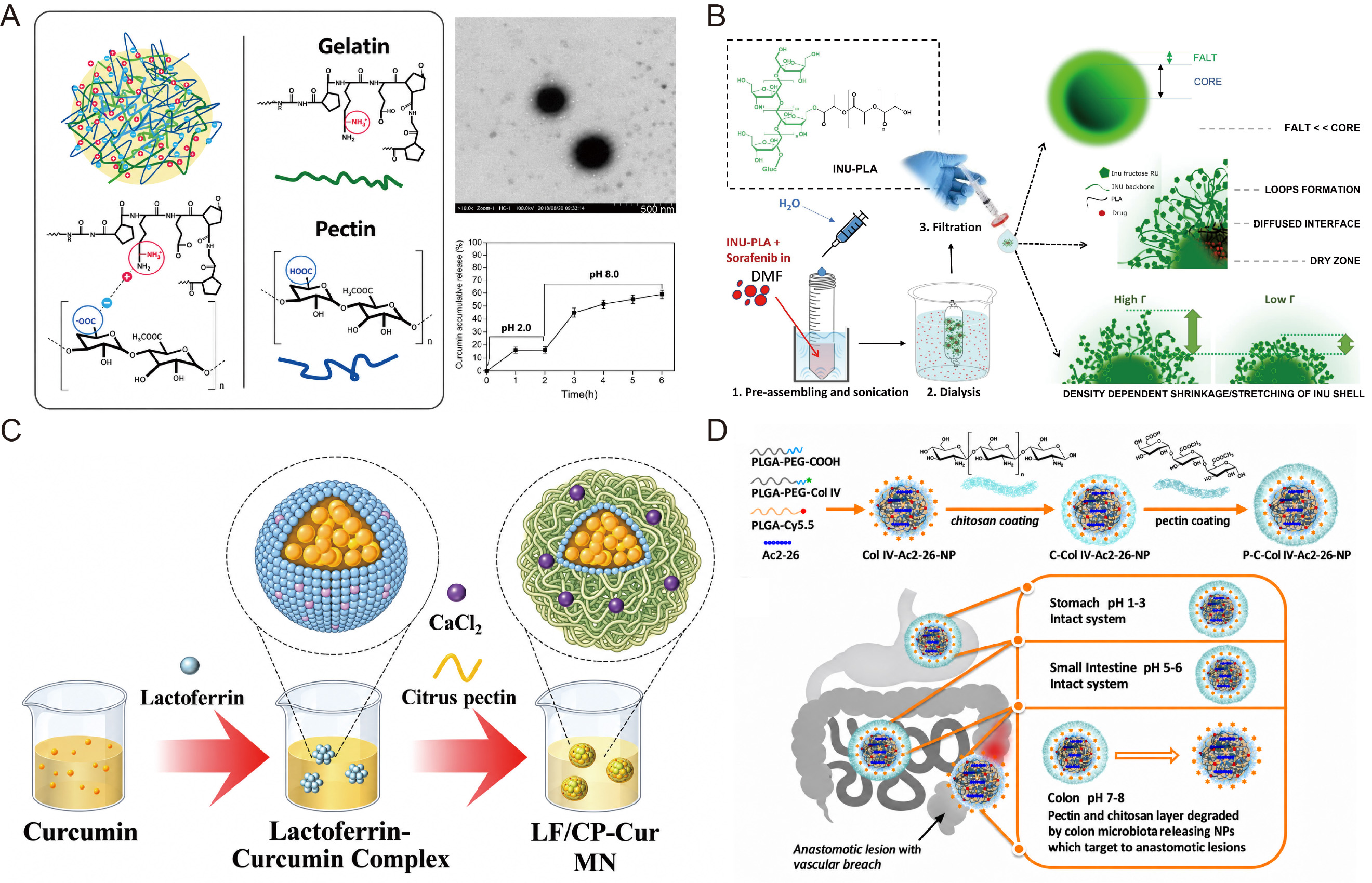
Figure 2. Representative construction and oral delivery architectures of inulin- and pectin-containing nanosystems. (A) Pectin-type B gelatin polyelectrolyte complexes formed through electrostatic interactions for curcumin loading, showing nanoscale morphology and pH-dependent drug release under simulated gastrointestinal conditions[51]. (A) is adapted from Ref.[51], under CC BY 4.0 License; (B) Amphiphilic inulin-poly (D,L-lactide) (INU-PLA) graft copolymers assembled into core-shell nanoparticles for sorafenib loading, with the inulin-rich surface layer governed by INU surface density[41]. (B) is adapted from Ref.[41], under CC BY 4.0 License; (C) Curcumin-loaded lactoferrin/citrus-pectin core-shell microgel nanoparticles (LF/CP-Cur MN) prepared by lactoferrin-curcumin complex formation, pectin incorporation, and Ca2+-mediated consolidation for IBD therapy[52]. (C) is adapted from Ref.[52], under CC BY 4.0 License; (D) Layer-by-layer pectin/chitosan-coated, collagen-IV-targeted PLGA nanoparticles encapsulating the pro-resolving peptide Ac2-26 (P-C-Col IV-Ac2-26 NPs), designed to remain intact during upper gastrointestinal transit and undergo microbiota-mediated shell degradation in the colon[53]. (D) is adapted from Ref.[53], under CC BY 4.0 License. Ac2-26: Annexin A1-derived peptide Ac2-26; Col IV: collagen IV; CP: citrus pectin; Cy5.5: cyanine 5.5; DMF: dimethylformamide; FALT: fixed aqueous layer thickness; INU: inulin; LF: lactoferrin; MN: microgel nanoparticle; NP: nanoparticle; PEG: polyethylene glycol; PLA: poly (D,L-lactide); PLGA: poly (lactic-co-glycolic acid); IBD: inflammatory bowel disease.
MULTIMODAL COMBINATION THERAPY BASED ON PREBIOTIC NANOPLATFORMS
The platforms described above become particularly useful when the prebiotic and the co-therapy operate on different timescales. Microbiota-dependent recovery of fermentation, barrier function, and immune homeostasis is relatively slow, whereas drugs, catalytic materials, and gasotransmitters can act more rapidly on inflammation or oxidative stress. Combination platforms aim to exploit this difference by controlling acute pathology while ecological recovery develops. Current examples pair prebiotic nanocomponents with conventional anti-inflammatory drugs, bioactive or biological therapeutics, antioxidant modules, or gas-releasing systems.
Combination with conventional anti-inflammatory drugs
A straightforward combination strategy pairs a prebiotic nanocomponent with an established anti-inflammatory drug. The carbohydrate can contribute gastrointestinal protection, colon-responsive disassembly, or local retention, while the drug directly suppresses inflammatory signaling. If the engineered carbohydrate remains available to the microbiota, the same formulation may also address ecological functions that conventional drugs do not directly restore.
Bud@MSN-IN illustrates this division of labor: budesonide-loaded mesoporous silica nanoparticles were coated with inulin[54]. The coating improved upper-gastrointestinal stability and enabled inulinase-responsive release in the colon, while budesonide supplied the rapid anti-inflammatory effect. Treatment was also associated with improvements in oxidative-stress and microbiota-related indices, and unloaded inulin-coated particles showed measurable biological activity. These findings are consistent with a contribution from the inulin layer, although selective microbial utilization of the engineered coating was not directly traced.
A key experimental issue is therefore not only whether the combined formulation is effective, but also whether the drug, carrier, and prebiotic make distinguishable contributions. Appropriate controls are needed to distinguish pharmacological activity from carrier effects and microbiota-dependent effects.
Combination with bioactive and biological therapeutics
Beyond conventional drugs, nanoscale prebiotic systems can improve the oral delivery of bioactive agents that are poorly soluble, unstable, rapidly metabolized, or poorly retained in inflamed intestinal tissue. The carbohydrate usually contributes assembly and gastrointestinal handling, while the cargo supplies a more direct pharmacological or regenerative effect.
TPP-IN-LA/CBD used chemically modified inulin to formulate mitochondria-targeted, glutathione-responsive cannabidiol nanoparticles[55]. Importantly, this study evaluated the platform in a preventive colitis setting rather than as treatment of established disease. Under this regimen, the formulation reduced Toll-like receptor 4 (TLR4)/nuclear factor kappa B (NF-κB)-associated inflammatory responses, improved epithelial-barrier markers, and was accompanied by changes in microbial composition and SCFA levels. However, microbial utilization of the modified inulin was not isolated from the overall formulation effect. Hesperetin-zinc and epigallocatechin gallate-manganese (EGCG-Mn) systems[56,57] also use prebiotic carriers; because redox regulation is their main added function, they are considered in Section Combination with antioxidant therapeutics.
Microbial metabolites can also be incorporated directly. The inulin-butyrate nanogel combines a fermentable carbohydrate with butyrate replacement in the same nanoscale structure[58]. It accumulated preferentially in inflamed colonic tissue and underwent inulinase- and esterase-responsive degradation. Microbiota remodeling, barrier recovery, and regulatory T-cell responses accompanied treatment, allowing the supplied butyrate to act early while inulin remained available for slower microbiota-dependent effects.
Biological cargos extend this concept beyond small molecules. Engineered extracellular vesicles and bacterial outer membrane vesicles can carry activities that are difficult to reproduce with conventional drugs[59]. The inflamed-colon-targeted hybrid nanotherapeutic (ICHN) combined inulin with mitochondria-targeted cerium-based nanocomponents and mesenchymal stromal cell-derived extracellular vesicles (MSC-EVs)[60], with concurrent effects reported on mitochondrial oxidative injury, macrophage polarization, epithelial repair, and dysbiosis. Because several active modules were present, the microbiota response cannot be assigned specifically to inulin.
Combination with antioxidant therapeutics
Oxidative injury provides a mechanistic rationale for adding a fast-acting module to a prebiotic platform. Redox-active agents can lower RONS before microbiota-mediated metabolic recovery is established; reported systems range from small-molecule or coordination complexes to catalytic nanozymes[61-64].
Hes-Zn@IN and BG@EGCG-Mn represent the small-molecule/coordination end of this spectrum[56,57]. Hes-Zn@IN couples a hesperetin-zinc core with an inulin-containing shell that supports pH-dependent delivery and accumulation in inflamed colon tissue. BG@EGCG-Mn uses oat β-glucan nanoparticles to carry an EGCG-Mn complex. Both systems were associated with improvements in barrier and microbiota-related outcomes, although fermentation of the engineered carbohydrate was not traced directly.
Catalytic systems pursue the same goal through enzyme-mimetic RONS removal. CeO2@IN places an inulin coating around cerium oxide nanoparticles[62]; the ceria core exhibited superoxide-dismutase- and catalase-like activity and was reported to preserve epithelial integrity, while the coating supported oral delivery. PSGI refers to a nanosystem comprising sulfasalazine-loaded hollow mesoporous Prussian blue nanoparticles encapsulated in a glutamine-modified inulin nanogel[63]. Here, catalytic antioxidant activity and drug therapy are paired with upper-gastrointestinal protection and enzyme-responsive colonic release. In both systems, the delivery role of inulin is clear, but post-engineering microbial utilization was not separated from the overall treatment effect.
Resistant starch has also been incorporated into cerium-sulfasalazine infinite coordination polymers (Ce-SASP-RS ICPs)[64]. The system showed multienzyme-like redox activity and microbiota-associated changes; however, gastric instability necessitated intraperitoneal administration. Because this route bypasses luminal gastrointestinal exposure, direct intestinal microbial utilization of the resistant-starch component cannot be assumed. This system is therefore better regarded as a proof-of-concept for resistant-starch-containing multimodal nanotherapy rather than direct evidence for oral prebiotic-integrated nanomedicine.
Combination with gas therapy
Gasotransmitters extend the same fast/slow design logic. At low local concentrations they can rapidly influence redox-sensitive and immune-regulatory pathways[65], but gastrointestinal delivery is complicated by instability, uncontrolled release, and short local exposure. A prebiotic-derived carrier may help localize the gas donor while retaining a substrate for later microbial and metabolic effects.
DATS-loaded inulin-PCL nanomicelle (DIP) is an oral inulin-grafted polycaprolactone nanomicelle carrying diallyl trisulfide as a hydrogen sulfide (H2S) donor[66]. Intracellular glutathione promoted H2S generation, activating heme oxygenase-1 (HO-1)-associated antioxidant responses and suppressing the phosphorylated signal transducer and activator of transcription 3 (p-STAT3)/Th17/interleukin-17 (IL-17) axis. Treatment also increased Lactobacillaceae and Muribaculaceae and raised acetate and butyrate levels; multi-omics analyses linked these changes with immune regulation, epithelial repair, and barrier recovery. Unlike systems in which the carbohydrate primarily serves as a coating, DIP was designed to couple microbiota-associated changes with gas-mediated activity within the same formulation. It therefore illustrates a strategy in which a prebiotic-derived nanocarrier is integrated with local gasotransmitter generation. Nevertheless, direct demonstration of microbial utilization of the engineered inulin component remains important for distinguishing retained prebiotic activity from broader treatment-associated microbiota changes.
Summary: design principles for prebiotic combination nanotherapy
Mechanistically interpretable combination designs assign distinct functions to the prebiotic and the co-therapy. The added module should address a defined deficit - rapid control of inflammation, oxidative injury, or metabolite shortage - while the carbohydrate retains a measurable delivery or microbiota-related function. This also dictates the control groups: multicomponent systems should be compared with simpler formulations so that the contribution of each module can be resolved. Figure 3 broadens this comparison with pectin-based systems carrying sulfasalazine, azathioprine, or celastrol[67-69], whereas Figure 4 contrasts a β-glucan/polydopamine antioxidant platform with the DIP H2S system[61,66]. Representative platforms are summarized in Table 2.
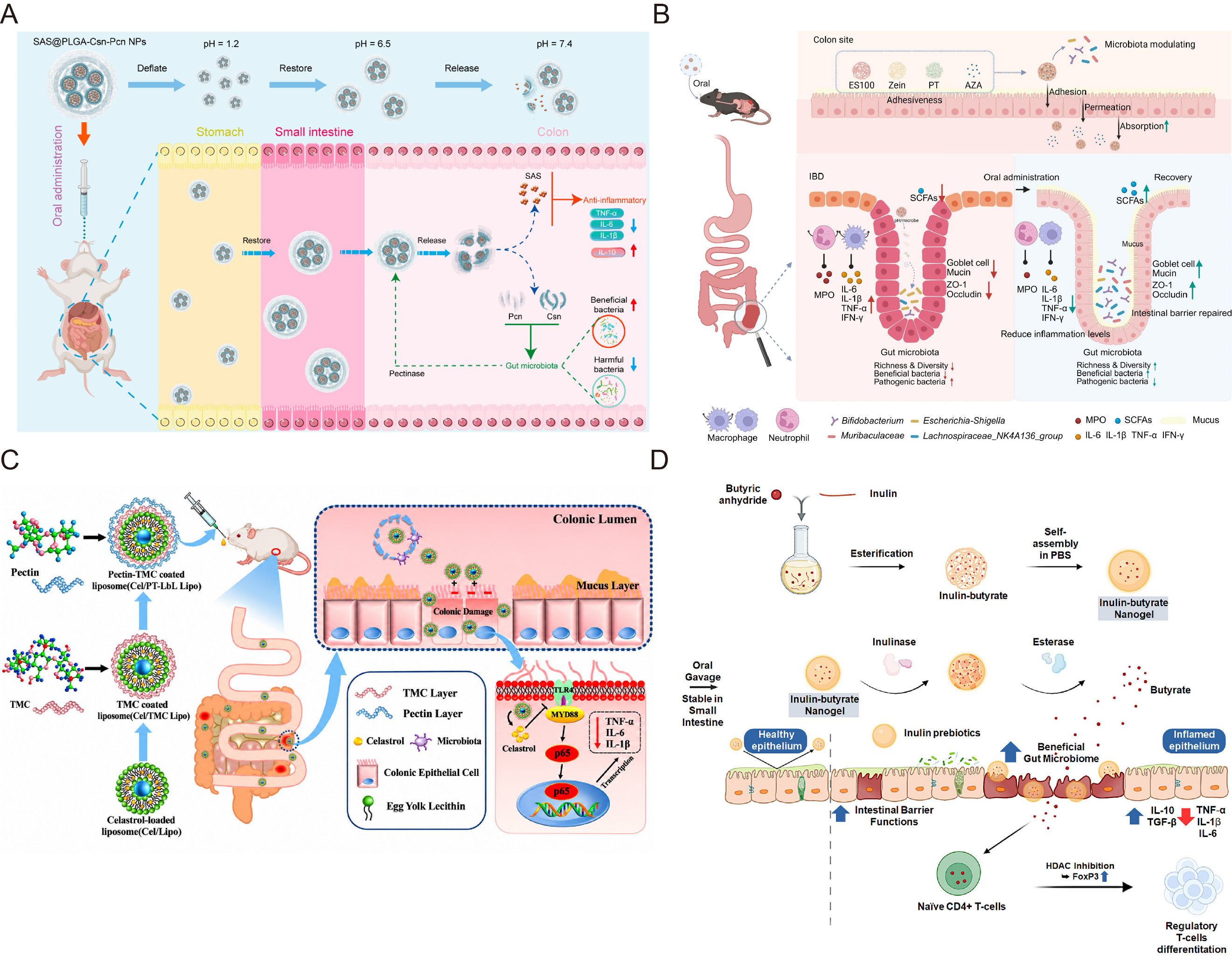
Figure 3. Prebiotic-integrated nanoplatforms combined with conventional drugs and bioactive therapeutics for IBD treatment. (A) Pectin/chitosan-coated PLGA nanoparticles for colon-specific sulfasalazine delivery, with pectinase-triggered shell degradation and microbiota modulation[67]. (A) is adapted from Ref.[67], under CC BY 4.0 License; (B) Pectin/zein/Eudragit S100 nanoparticles for colonic azathioprine delivery and recovery of microbial, SCFA, and barrier indices[68]. (B) is adapted from Ref.[68], under CC BY 4.0 License; (C) Pectin/TMC-coated celastrol liposomes for colonic retention and suppression of inflammatory signaling[69]. (C) is adapted from Ref.[69], under CC BY 4.0 License; (D) Inulin-butyrate nanogels enabling enzyme-responsive release, microbiota remodeling, barrier repair, and Treg promotion[58]. (D) is adapted from Ref.[58], under CC BY 4.0 License. (C) was further modified for improved graphical clarity and text legibility using AI-assisted image editing, without intentional alteration of the scientific content. AZA: Azathioprine; Csn: chitosan; ES100: Eudragit S100; FoxP3: forkhead box P3; HDAC: histone deacetylase; IFN-γ: interferon-γ; IL: interleukin; MPO: myeloperoxidase; MyD88: myeloid differentiation primary response 88; NF-κB: nuclear factor kappa B; NP: nanoparticle; Pcn/PT: pectin; PLGA: poly(lactic-co-glycolic acid); SAS: sulfasalazine; SCFA: short-chain fatty acid; TLR4: Toll-like receptor 4; TMC: trimethylated chitosan; TNF-α: tumor necrosis factor-α; Treg: regulatory T cell; IBD: inflammatory bowel disease.
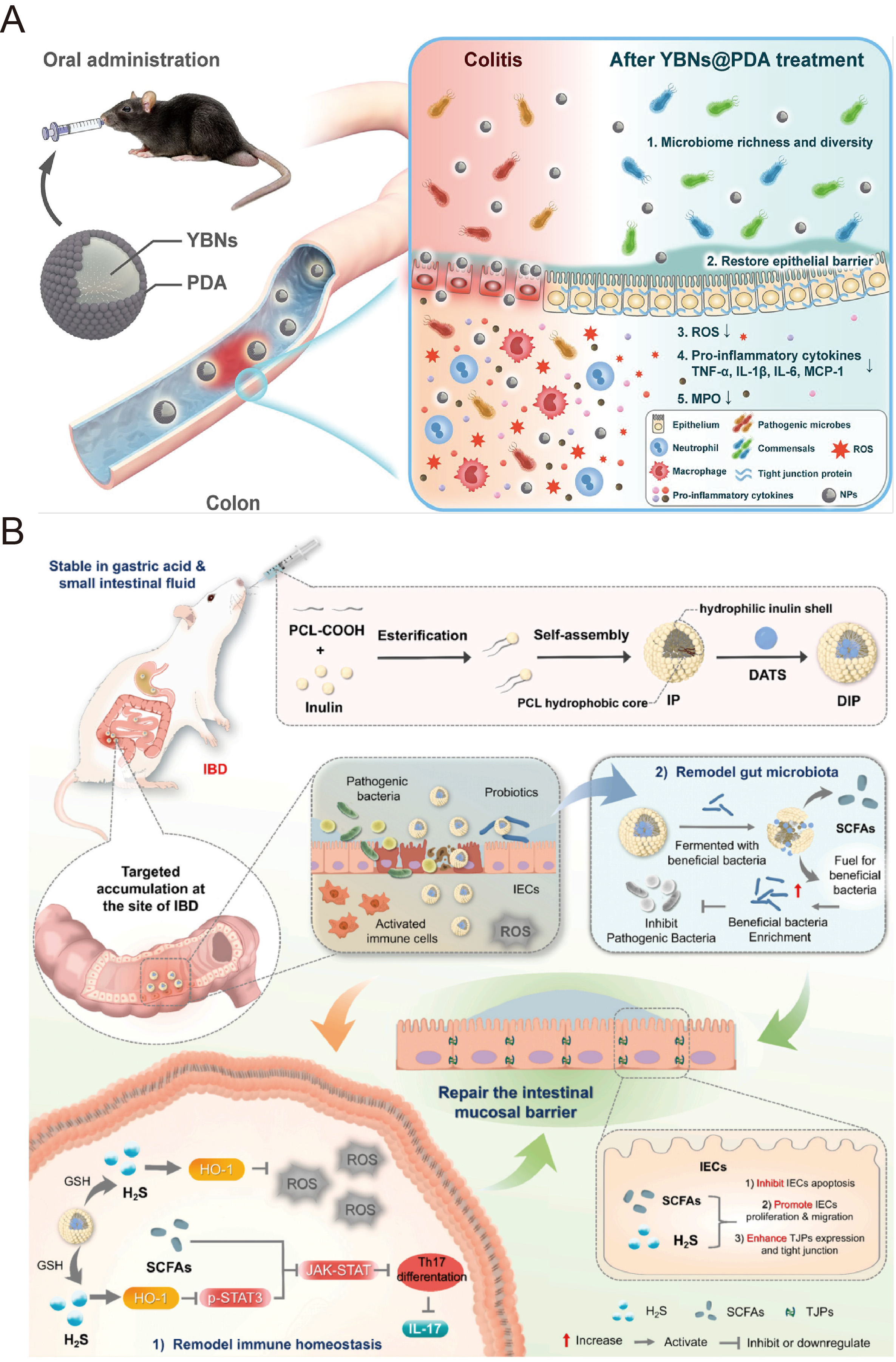
Figure 4. Prebiotic-integrated nanoplatforms for antioxidant and gas-based combination therapy in IBD. (A) Polydopamine-coated yeast β-glucan nanoparticles (YBNs@PDA) combine ROS scavenging with microbiota regulation and epithelial-barrier recovery[61]. (A) was adapted from Ref.[61] under CC BY 4.0 License; (B) DIP accumulates in inflamed colon and generates H2S in response to intracellular GSH, coupling redox and immune regulation with microbiota remodeling, SCFA recovery, and barrier repair[66]. (B) was reproduced with permission from Ref.[66]. Copyright © 2026 Elsevier Ltd. DATS: Diallyl trisulfide; DIP: DATS-loaded inulin-PCL nanomicelle; GSH: glutathione; H2S: hydrogen sulfide; HO-1: heme oxygenase-1; IBD: inflammatory bowel disease; IEC: intestinal epithelial cell; IL: interleukin; IP: inulin-PCL copolymer; JAK-STAT: Janus kinase-signal transducer and activator of transcription; MCP-1: monocyte chemoattractant protein-1; MPO: myeloperoxidase; NP: nanoparticle; PCL: polycaprolactone; PDA: polydopamine; ROS: reactive oxygen species; SCFA: short-chain fatty acid; TJP: tight-junction protein; TNF-α: tumor necrosis factor-α; YBN: yeast β-glucan nanoparticle.
Representative nanoscale prebiotic-integrated combination platforms investigated in IBD models
| Platform | Physical form | Co-therapeutic component | Nanoplatform-specific advantages | Functional contribution of the prebiotic component |
| Bud@MSN-IN[54] | Inulin-coated MSN | Budesonide | Upper-GI protection with inulinase-responsive colonic release of budesonide | Inulin forms the enzyme-responsive outer layer and contributes to colon-specific release; microbiota-related effects were observed, although they were not independently attributed to the inulin coating |
| SAS@PLGA-Csn-Pcn[67] | Pectin/chitosan-coated PLGA NPs | Sulfasalazine (SAS) | Multilayer oral protection with pectinase-triggered shell degradation and enhanced colonic accumulation. | Pectin functions as a microbiota-degradable outer layer that enables colonic release and generates pectin-derived fragments after shell degradation; their selective microbial utilization was not independently demonstrated |
| APZE[68] | Pectin/zein/ES100 NPs | AZA | pH-responsive colon targeting with mucoadhesion, enhanced uptake, and prolonged colonic retention | Pectin contributes to colon-responsive delivery and was associated with microbiota remodeling and increased SCFA levels during treatment |
| TPP-IN-LA/CBD[55] | Modified-inulin NPs | Cannabidiol (CBD) | Colon accumulation with mitochondrial targeting and GSH-responsive intracellular cannabidiol release; evaluated in a preventive model | Modified inulin contributes to nanoparticle construction and was associated with microbiota and SCFA changes in the preventive model, although its specific microbial contribution was not isolated |
| Inulin-butyrate nanogel[58] | Inulin-butyrate nanogel | Butyrate | Preferential accumulation in inflamed colon with dual inulinase/esterase-responsive degradation, integrating substrate delivery with direct butyrate supplementation | Inulin serves as a degradable nanogel scaffold and a potential fermentable substrate, complementing direct butyrate supplementation |
| Cel/PT-LbL Lipo[69] | Pectin/TMC-coated liposomes | Celastrol | Layer-by-layer GI protection with pH-responsive release and TMC-mediated mucoadhesion and colonic retention | Pectin primarily functions as a colon-responsive coating; a distinct microbiota-mediated contribution was not evaluated |
| ICHN[60] | Inulin hybrid NPs | Ce-TPP nanozyme + MSC-EVs | Inflamed-colon targeting with coordinated delivery of a cerium nanozyme and MSC-EVs in a single oral hybrid platform | Inulin contributes to the hybrid nanostructure and may support microbiota recovery alongside the antioxidant and regenerative modules, although an inulin-specific effect was not resolved |
| Hes-Zn@IN[56] | Inulin-armored NPs | Hesperetin-Zn | pH-dependent intestinal release with enhanced localization of the hesperetin-zinc therapeutic module in inflamed colon tissue | Inulin primarily contributes to the protective carrier shell and intestinal delivery; a distinct microbial role was not independently established |
| BG@EGCG-Mn[57] | Oat β-glucan NPs | EGCG-Mn | Nanoscale co-localization of β-glucan and the EGCG-Mn complex for combined redox and barrier-focused intervention | β-Glucan forms the nanoscale matrix and may contribute to microbiota-associated recovery in addition to serving as the prebiotic component of the combination platform |
| YBNs@PDA[61] | PDA-coated β-glucan NPs | PDA | A mucoadhesive PDA coating prolongs gastrointestinal retention while providing ROS-scavenging activity around a β-glucan core | β-Glucan constitutes the nanoparticle core and provides the putative microbiota-modulating component; its direct microbial utilization after engineering was not demonstrated |
| CeO2@IN[62] | Inulin-coated ceria NPs | Ceria nanozyme | Oral nanozyme delivery integrating catalytic ROS scavenging with CT-guided theranostic imaging | Inulin stabilizes the nanozyme during gastrointestinal transit and supports oral colonic delivery; its microbial contribution was not separately evaluated |
| PSGI[63] | Inulin-coated Prussian blue NPs | Prussian blue + SAS | Multimodal oral platform co-localizing a Prussian blue nanozyme and sulfasalazine with inflamed-site adhesion and retention | The inulin nanogel provides gastrointestinal protection and inulinase-responsive colonic release; its prebiotic contribution was not independently quantified |
| Ce-SASP-RS ICPs[64] | RS-grafted Ce-SASP polymers | Cerium + SAS | Coordination-polymer integration of cerium and sulfasalazine provides multienzyme-like redox activity, although gastric instability precluded oral administration | Resistant starch is incorporated into the coordination polymer, but its luminal prebiotic function cannot be inferred because intraperitoneal administration bypassed direct intestinal exposure |
| DIP[66] | Inulin-grafted PCL nanomicelle | DATS-derived H2S | Inflamed-colon accumulation with intracellular GSH-triggered H2S generation for localized gas therapy | Inulin contributes to nanomicelle construction and was associated with microbiota and SCFA recovery, complementing the more rapid H2S-mediated effect |
TRANSLATIONAL CHALLENGES AND OUTLOOK
Most prebiotic-integrated nanoplatforms are still at the proof-of-concept stage. The main barriers to translation are not limited to nanoparticle performance: they include uncertain retention of prebiotic activity after engineering, strong microbiome-dependent variability, incomplete knowledge of gastrointestinal fate and repeated-dose safety, and increasing formulation complexity. Evaluation therefore must connect material properties with microbial function, local intestinal pharmacology, and manufacturability.
From preclinical efficacy to clinical relevance
Clinical evidence for prebiotics in IBD comes mainly from free dietary substrates rather than nanoengineered formulations. Inulin-type fructans and 1-kestose have shown potential benefits in selected UC populations, including changes in clinical activity, fecal calprotectin, microbiota composition, or SCFA production[24,70,71]. The results are not uniform: FOS failed to improve active Crohn’s disease in a randomized trial[34], and recent meta-analyses report heterogeneous efficacy with generally limited certainty[31,32].
These findings justify continued interest in microbiota-directed therapy, but they cannot be extrapolated directly to prebiotic nanomedicine. Most nanoformulations have been tested in chemically induced colitis, which is useful for early efficacy studies but does not capture the chronic, relapsing, and heterogeneous course of human IBD. More informative validation would include chronic or recurrent models, comparison with established treatments, and sustained remission rather than only short-term endpoints[12,13].
Preserving prebiotic function across microbiome heterogeneity
A recurring uncertainty is whether the carbohydrate still behaves as a prebiotic after it has been engineered. Nanostructuring can change molecular weight, branching, degree of substitution, glycosidic accessibility, and degradation kinetics, all of which may alter fermentation. The point is illustrated by self-assembled high-molecular-weight inulin nanoparticles: particle formation was successful, but prebiotic activity was not detectable in the tested probiotic strains[36].
For this reason, a shift in microbiota composition should not be treated as sufficient evidence of retained prebiotic function. Native and engineered forms should be compared directly for microbial degradation, fermentation behavior, and relevant metabolic outputs. Substitution degree, crosslink density, and surface accessibility should also be related to microbial utilization rather than reported only as physicochemical variables[11,12].
Patient-to-patient variability adds a second layer of uncertainty. Relevant degraders, carbohydrate-active enzymes, and cross-feeding networks differ with diet, medication exposure, disease location, and inflammatory activity[1,11,15]. Functional microbial features may therefore be more useful for patient stratification than taxonomic composition alone.
Gastrointestinal fate, local pharmacology, and safety
Systemic pharmacokinetics alone are a poor description of exposure for an oral, colon-directed prebiotic nanomedicine. More relevant measurements include upper-gastrointestinal stability, regional disassembly, mucus interaction, retention in inflamed tissue, microbial degradation, local generation of metabolites or therapeutic agents, and elimination[12,13]. These measurements are especially important for enzyme-responsive and gas-releasing systems, whose activity depends on sequential events at specific intestinal sites.
Dose also needs to be interpreted differently from free prebiotic supplementation. Dietary interventions commonly use gram-scale amounts, whereas a nanoformulation may contain only milligrams or micrograms of carbohydrate and may alter where that carbohydrate becomes accessible. Dose-ranging studies should therefore pair conventional pharmacokinetic or efficacy measurements with gastrointestinal tolerability and fermentation readouts.
Safety assessment should address both the carrier and the engineered carbohydrate. Chemical modification can introduce residual reagents or new degradation products, while inorganic nanozymes and other persistent materials raise questions about long-term retention and repeated dosing. Fermentation-related gastrointestinal effects and unintended release of highly active cargos also need to be characterized. Because IBD treatment is often prolonged or recurrent, repeated-dose local and systemic safety is more informative than short-term tolerability alone.
Manufacturing standardization and regulatory translation
Manufacturing reproducibility is particularly challenging when natural polysaccharides are used as functional components. Biological source, extraction, molecular-weight distribution, branching, and degree of esterification can vary between batches, and chemical modification adds further variability in substitution and residual reactants. Particle size distribution, surface composition, loading, stability, and release behavior also require consistent control[12,13].
Quality control should therefore include biological attributes when efficacy depends on preserved prebiotic function. Microbial degradability and fermentation behavior may be as important as conventional physicochemical specifications. Complexity also matters: formulations that combine drugs, nanozymes, extracellular vesicles, or gas donors are more difficult to scale, sterilize, store, and characterize. Additional components should be retained only when they provide a distinct, experimentally supported function.
A clinically credible prebiotic nanomedicine will ultimately need reproducible manufacturing, documented prebiotic activity, predictable gastrointestinal behavior, acceptable long-term safety, and a patient-selection strategy compatible with microbiome variability. Accordingly, translational success will require simultaneous control of material quality, gastrointestinal behavior, microbiological function, and patient-dependent biological variability rather than optimization of nanoparticle properties alone. These requirements are likely to be more decisive for translation than efficacy in a short-term colitis model alone.
CONCLUSION AND FUTURE PERSPECTIVES
The central challenge in prebiotic nanomedicine is to gain a delivery or therapeutic advantage without losing microbial utilization of the carbohydrate. At present, the major limitation of the field is not the lack of therapeutic efficacy in experimental colitis, but the limited causal evidence that engineered carbohydrates continue to function as prebiotics after formulation. In a successful design, the prebiotic should retain a defined role - such as colon-responsive disassembly, microbial substrate activity, or longer-term metabolic recovery - while the partner module provides a faster anti-inflammatory, redox, regenerative, metabolic, or gas-mediated effect. Mechanistic interpretation is facilitated by simpler systems with experimentally separable functions rather than increasingly complex formulations whose individual contributions cannot be resolved.
Future studies should compare native and engineered carbohydrates directly for microbial utilization, fermentation kinetics, and metabolic output. Patient-derived or disease-relevant microbial consortia could help identify ecological features associated with response before clinical testing. For multicomponent platforms, additive or synergistic benefit should be demonstrated against simpler controls, and clinical endpoints should couple mucosal healing with microbial and metabolic recovery. These steps will help establish whether prebiotic-integrated nanomedicine can progress from experimental colitis models to a reproducible therapeutic strategy.
DECLARATIONS
Authors’ Contributions
Writing - original draft: Zhang R, Yu L
Visualization: Zhang R, Yu L
Conceptualization: Zhang R, Yu L, Cai X
Writing - review & editing: Shubhra QTH, Cai X
Supervision: Cai X
Project administration: Cai X
Funding acquisition: Cai X
Availability of data and materials
Not applicable.
AI and AI-assisted tools statement
During the preparation of this manuscript, the authors used ChatGPT with GPT-5.6 Sol (OpenAI; released July 9, 2026) to assist with English-language polishing, including improvements in grammar, sentence structure, clarity, and readability. The AI tool was not used to generate scientific data, perform data analysis, interpret results, or draw scientific conclusions. All AI-assisted text was critically reviewed and edited by the authors. During the preparation of Figure 1 and the Graphical Abstract (GA), ChatGPT Images 2.5 (OpenAI; released September 8, 2026) was used to generate preliminary graphical elements based on author-defined prompts. The final graphics were subsequently assembled, modified, arranged, and labeled by the authors in Adobe Illustrator 2026 (Microsoft Windows). No third-party copyrighted figures, stock images, commercial templates, logos, or trademarks were incorporated into these AI-assisted illustrations. ChatGPT Images 2.5 was also used to assist with graphical enhancement of selected panels adapted from sources published under CC BY 4.0 License, specifically Figures 2A, 2C, 2D, and Figure 3C. The modifications were limited to improving graphical clarity and text legibility, including enlargement and clarification of selected labels and schematic elements. The original scientific meaning was not intentionally altered, and all modified panels were manually compared with the corresponding source figures to verify the accuracy of chemical structures, labels, pathways, and other scientific information. The original TEM image in Figure 2A was retained without generative AI modification. The corresponding figure legends identify the original sources, CC BY 4.0 license status, and the fact that modifications were made. All AI-assisted content was reviewed and approved by the authors, who take full responsibility for the accuracy, integrity, and final presentation of the manuscript and figures.
Financial support and sponsorship
The authors acknowledge the support from the National Natural Science Foundation of China (82572425 and 82272150).
Conflicts of interest
The authors declare no conflicts of interest.
Ethical approval and consent to participate
Not applicable.
Consent for publication
Not applicable.
Copyright
© The Author(s) 2026.
REFERENCES
1. Iliev ID, Ananthakrishnan AN, Guo CJ. Microbiota in inflammatory bowel disease: mechanisms of disease and therapeutic opportunities. Nat Rev Microbiol. 2025;23:509-24.
2. Caruso R, Lo BC, Chen GY, Núñez G. Host-pathobiont interactions in Crohn’s disease. Nat Rev Gastroenterol Hepatol. 2025;22:395-414.
3. Gevers D, Kugathasan S, Denson LA, et al. The treatment-naive microbiome in new-onset Crohn’s disease. Cell Host Microbe. 2014;15:382-92.
4. Franzosa EA, Sirota-Madi A, Avila-Pacheco J, et al. Gut microbiome structure and metabolic activity in inflammatory bowel disease. Nat Microbiol. 2019;4:293-305.
5. Lloyd-Price J, Arze C, Ananthakrishnan AN, et al.; IBDMDB Investigators. Multi-omics of the gut microbial ecosystem in inflammatory bowel diseases. Nature. 2019;569:655-62.
6. Smillie CS, Biton M, Ordovas-Montanes J, et al. Intra- and inter-cellular rewiring of the human colon during ulcerative colitis. Cell. 2019;178:714-730.e22.
7. Jaeger N, Gamini R, Cella M, et al. Single-cell analyses of Crohn’s disease tissues reveal intestinal intraepithelial T cells heterogeneity and altered subset distributions. Nat Commun. 2021;12:1921.
8. Neurath MF. Strategies for targeting cytokines in inflammatory bowel disease. Nat Rev Immunol. 2024;24:559-76.
9. Feagan BG, Rutgeerts P, Sands BE, et al.; GEMINI 1 Study Group. Vedolizumab as induction and maintenance therapy for ulcerative colitis. N Engl J Med. 2013;369:699-710.
10. Sands BE, Sandborn WJ, Panaccione R, et al.; UNIFI Study Group. Ustekinumab as induction and maintenance therapy for ulcerative colitis. N Engl J Med. 2019;381:1201-14.
11. Ariaee A, Koentgen S, Wardill HR, et al. Prebiotic selection influencing inflammatory bowel disease treatment outcomes: a review of the preclinical and clinical evidence. eGastroenterology. 2024;2:e100055.
12. Zhang Y, He J, Zeng H, Xu D, Li W, Wang Y. Advances in prebiotic carbohydrate-based targeted delivery: overcoming gastrointestinal challenges for bioactive ingredients. Food Chem. 2025;466:142210.
13. Zheng B, Wang L, Yi Y, Yin J, Liang A. Design strategies, advances and future perspectives of colon-targeted delivery systems for the treatment of inflammatory bowel disease. Asian J Pharm Sci. 2024;19:100943.
14. Gibson GR, Hutkins R, Sanders ME, et al. Expert consensus document: the International Scientific Association for Probiotics and Prebiotics (ISAPP) consensus statement on the definition and scope of prebiotics. Nat Rev Gastroenterol Hepatol. 2017;14:491-502.
15. Loy L, Petronio L, Marcozzi G, Bezzio C, Armuzzi A. Dietary fiber in inflammatory bowel disease: are we ready to change the paradigm? Nutrients 2024;16:1108.
16. van Deuren T, Umanets A, Venema K, et al. Specific dietary fibers steer toward distal colonic saccharolytic fermentation using the microbiota of individuals with overweight/obesity. Food Res Int. 2025;209:116271.
17. De Vuyst L, Leroy F. Cross-feeding between bifidobacteria and butyrate-producing colon bacteria explains bifdobacterial competitiveness, butyrate production, and gas production. Int J Food Microbiol. 2011;149:73-80.
18. Ferreira-Lazarte A, Moreno FJ, Cueva C, Gil-Sánchez I, Villamiel M. Behaviour of citrus pectin during its gastrointestinal digestion and fermentation in a dynamic simulator (simgi®). Carbohydr Polym. 2019;207:382-90.
19. Ze X, Duncan SH, Louis P, Flint HJ. Ruminococcus bromii is a keystone species for the degradation of resistant starch in the human colon. ISME J. 2012;6:1535-43.
20. Baxter NT, Schmidt AW, Venkataraman A, Kim KS, Waldron C, Schmidt TM. Dynamics of human gut microbiota and short-chain fatty acids in response to dietary interventions with three fermentable fibers. mBio. 2019;10.
21. Maathuis AJ, van den Heuvel EG, Schoterman MH, Venema K. Galacto-oligosaccharides have prebiotic activity in a dynamic in vitro colon model using a 13C-labeling technique. J Nutr. 2012;142:1205-12.
22. Zhao S, Lau R, Chen MH. Influence of chain length on the colonic fermentation of xylooligosaccharides. Carbohydr Polym. 2024;331:121869.
23. Zavadinack M, Cantu-Jungles TM, Abreu H, et al. (1 → 3), (1 → 6) and (1 → 3)-β-D-glucan physico-chemical features drive their fermentation profile by the human gut microbiota. Carbohydr Polym. 2024;327:121678.
24. Valcheva R, Koleva P, Martínez I, Walter J, Gänzle MG, Dieleman LA. Inulin-type fructans improve active ulcerative colitis associated with microbiota changes and increased short-chain fatty acids levels. Gut Microbes. 2019;10:334-57.
25. Kennedy JM, De Silva A, Walton GE, Poveda C, Gibson GR. Comparison of prebiotic candidates in ulcerative colitis using an in vitro fermentation model. J Appl Microbiol. 2024;135:lxae034.
26. Wang Z, Gao M, Kan J, et al. Resistant starch from purple sweet potatoes alleviates dextran sulfate sodium-induced colitis through modulating the homeostasis of the gut microbiota. Foods. 2024;13:1028.
27. Kelly CJ, Zheng L, Campbell EL, et al. Crosstalk between microbiota-derived short-chain fatty acids and intestinal epithelial HIF augments tissue barrier function. Cell Host Microbe. 2015;17:662-71.
28. Smith PM, Howitt MR, Panikov N, et al. The microbial metabolites, short-chain fatty acids, regulate colonic Treg cell homeostasis. Science. 2013;341:569-73.
29. Furusawa Y, Obata Y, Fukuda S, et al. Commensal microbe-derived butyrate induces the differentiation of colonic regulatory T cells. Nature. 2013;504:446-50.
30. Maghsoumi-Norouzabad L, Bagherzadeh-Karimi A, Aliakbari Majd S, Hosseini L, Shahi F. The effects of prebiotic dietary fibers, probiotics, and synbiotics on gut permeability and immunity: a systematic review. Iran J Med Sci. 2025;50:500-29.
31. Limketkai BN, Godoy-Brewer G, Shah ND, et al. Prebiotics for induction and maintenance of remission in inflammatory bowel disease: systematic review and meta-analysis. Inflamm Bowel Dis. 2025;31:1220-30.
32. Zhou S, Wang M, Li W, et al. Comparative efficacy and tolerability of probiotic, prebiotic, and synbiotic formulations for adult patients with mild-moderate ulcerative colitis in an adjunctive therapy: a network meta-analysis. Clin Nutr. 2024;43:20-30.
33. Hang S, Paik D, Yao L, et al. Bile acid metabolites control T(H)17 and T(reg) cell differentiation. Nature. 2019;576:143-8.
34. Benjamin JL, Hedin CR, Koutsoumpas A, et al. Randomised, double-blind, placebo-controlled trial of fructo-oligosaccharides in active Crohn’s disease. Gut. 2011;60:923-9.
35. Farjadian F, Ghasemi S, Akbarian M, Hoseini-Ghahfarokhi M, Moghoofei M, Doroudian M. Physically stimulus-responsive nanoparticles for therapy and diagnosis. Front Chem. 2022;10:952675.
36. Jiménez-Sánchez M, Pérez-Morales R, Goycoolea FM, et al. Self-assembled high molecular weight inulin nanoparticles: enzymatic synthesis, physicochemical and biological properties. Carbohydr Polym. 2019;215:160-9.
37. Joseph S, Jadav M, Solanki R, Patel S, Pooja D, Kulhari H. Synthesis, characterization, and application of honey stabilized inulin nanoparticles as colon targeting drug delivery carrier. Int J Biol Macromol. 2024;263:130274.
38. Seyam S, Choukaife H, Al Rahal O, Alfatama M. Colonic targeting insulin-loaded trimethyl chitosan nanoparticles coated pectin for oral delivery: in vitro and in vivo studies. Int J Biol Macromol. 2024;281:136549.
39. Mishra N, Pal S, Sharma M, et al. Crosslinked and PEGylated Pectin Chitosan nanoparticles for delivery of Phytic acid to colon. Int J Pharm. 2023;639:122937.
40. Licciardi M, Scialabba C, Sardo C, Cavallaro G, Giammona G. Amphiphilic inulin graft co-polymers as self-assembling micelles for doxorubicin delivery. J Mater Chem B. 2014;2:4262-71.
41. Sardo C, Auriemma G, Mazzacano C, et al. Inulin amphiphilic copolymer-based drug delivery: unraveling the structural features of graft constructs. Pharmaceutics. 2024;16:971.
42. Mandracchia D, Trapani A, Perteghella S, et al. pH-sensitive inulin-based nanomicelles for intestinal site-specific and controlled release of celecoxib. Carbohydr Polym. 2018;181:570-8.
43. Jing X, Li W, Gao Y, et al. Propyl inulin nanoprebiotics as a synbiotic partner of Lactiplantibacillus plantarum for Inhibiting pathogenic infection in a mouse model. Carbohydr Polym Technol Appl. 2025;10:100837.
44. Tao Y, Zheng D, Zhao J, et al. Self-assembling pH-responsive nanoparticle platform based on pectin-doxorubicin conjugates for codelivery of anticancer drugs. ACS Omega. 2021;6:9998-10004.
45. Gu X, Li W, Jiang X, Chang C, Wu J. Pectin-coated whey protein isolate/zein self-aggregated nanoparticles as curcumin delivery vehicles: effects of heating, pH, and adding sequence. Int J Biol Macromol. 2024;258:128892.
46. Su L, Zhao D, Huang Q, et al. Preparation of pectin-coated and chitosan-coated phenylethanoside liposomes: studies on characterization, stability, digestion and release behavior. Int J Biol Macromol. 2024;261:129442.
47. Zhang Y, Zhang X, Lv L, et al. Versatile inulin/trans-ferulic acid/silk sericin nanoparticles-nourished probiotic complex with prolonged intestinal retention for synergistic therapy of inflammatory bowel disease. Carbohydr Polym. 2025;350:123063.
48. Yan X, Diao M, Yu Y, et al. Characterization of resistant starch nanoparticles prepared via debranching and nanoprecipitation. Food Chem. 2022;369:130824.
49. Cheng X, Zheng X, Yang Y, et al. Multi-mode ultrasonic-driven self-assembly of banana-derived resistant starch nanoparticles for epigallocatechin gallate encapsulation and in vitro antiglycation evaluation. Int J Biol Macromol. 2026;377:153084.
50. Burapapadh K, Takeuchi H, Sriamornsak P. Novel pectin-based nanoparticles prepared from nanoemulsion templates for improving in vitro dissolution and in vivo absorption of poorly water-soluble drug. Eur J Pharm Biopharm. 2012;82:250-61.
51. Shih FY, Su IJ, Chu LL, et al. Development of pectin-type B gelatin polyelectrolyte complex for curcumin delivery in anticancer therapy. Int J Mol Sci. 2018;19:3625.
52. Jin MY, Yu SY, Wang EF, et al. Curcumin-loaded lactoferrin/pectin core-shell structured microgel nanoparticles: dual regulatory effects in alleviating inflammatory bowel disease. Nutrients. 2026;18:921.
53. Lee JH, Reischl S, Walter RL, et al. Orally delivered biodegradable targeted inflammation resolving pectin-coated nanoparticles induce anastomotic healing post intestinal surgery. Sci Rep. 2024;14:29253.
54. Cao L, Peng J, Duan D, et al. Colon enzyme-activated prebiotic nanomedicine for targeted therapy of inflammatory bowel disease. Small Methods. 2026;10:e2401408.
55. Zhang X, Gao X, Yi X, et al. Multi-targeting inulin-based nanoparticles with cannabidiol for effective prevention of ulcerative colitis. Mater Today Bio. 2024;25:100965.
56. Li L, Liu J, Shi X, et al. Inulin-armored hesperetin‑zinc nanodrugs for synergistic redox-immune modulation and barrier repair in ulcerative colitis. Int J Biol Macromol. 2026;361:152088.
57. Zheng Y, Huang Y, Chen X, et al. Novel oat β-glucan nanoparticles for diabetes-associated colitis therapy. Mater Today Bio. 2026;36:102673.
58. Park N, Lee B, Jeon HJ, et al. Inulin-butyrate nanogel for modulation of gut microbiome, intestinal barrier, and regulatory T-cells in colitis. Small. 2026;22:e13252.
59. Yu L, Zhang H, Shi C, et al. Targeted intestinal barrier repair via probiotic-derived engineered outer membrane vesicles: a 3A1M strategy with antioxidant, anti-inflammatory, anti-ferroptotic, and microbiome modulation effects. Acta Pharm Sin B. 2026;16:2527-52.
60. Li S, Zhang P, Li Y, Zhao M, Deng H. Interface-engineered oral hybrid nanotherapeutics combining cerium nanozymes and extracellular vesicles for multimodal regulation of inflammatory bowel disease. ACS Appl Mater Interfaces. 2026;18:10416-27.
61. Yang F, Su Y, Yan C, Chen T, Cheung PCK. Attenuation of inflammatory bowel disease by oral administration of mucoadhesive polydopamine-coated yeast β-glucan via ROS scavenging and gut microbiota regulation. J Nanobiotechnol. 2024;22:166.
62. Li X, Cao L, Li J, et al. Orally Administrated inulin-modified nanozymes for CT-guided IBD theranostics. Int J Nanomedicine. 2025;20:2119-31.
63. Wang J, Wang Y, Zhu M, et al. Nanogel-coated nanozymes for ulcerative colitis targeted treatment by restoring redox homeostasis and anti-inflammatory activity. Colloids Surf B Biointerfaces. 2026;266:115845.
64. Zhang J, Zhao L, Liang A, et al. Resistant starch grafted cerium-sulfasalazine infinite coordination polymers synergistically remold intestinal metabolic microenvironment for inflammatory bowel disease therapy. J Nanobiotechnol. 2024;22:785.
65. Jin T, Lu H, Zhou Q, et al. H2S-releasing versatile montmorillonite nanoformulation trilogically renovates the gut microenvironment for inflammatory bowel disease modulation. Adv Sci (Weinh). 2024;11:e2308092.
66. Xu C, Su M, Xu M, et al. An oral dual-targeting inulin-based nanomicelle for ulcerative colitis therapy via combined H2S-mediated immunomodulation with prebiotic microbiota regulation. Nano Today. 2026;69:103055.
67. Li H, Cheng Y, Cui L, et al. Combining gut microbiota modulation and enzymatic-triggered colonic delivery by prebiotic nanoparticles improves mouse colitis therapy. Biomater Res. 2024;28:0062.
68. Zhang J, Zhang Y, Lu X, et al. Colon-targeted microbiota-modulating nanoparticles amplify azathioprine efficacy via gut microbiota axis remodeling in inflammatory bowel disease. J Nanobiotechnol. 2026;24.
69. Xian J, Zhong X, Gu H, et al. Colonic delivery of celastrol-loaded layer-by-layer liposomes with pectin/trimethylated chitosan coating to enhance its anti-ulcerative colitis effects. Pharmaceutics. 2021;13:2005.
70. Casellas F, Borruel N, Torrejón A, et al. Oral oligofructose-enriched inulin supplementation in acute ulcerative colitis is well tolerated and associated with lowered faecal calprotectin. Aliment Pharmacol Ther. 2007;25:1061-7.
Cite This Article
 Open Access
How to Cite
Zhang R, Yu L, Shubhra QTH, Cai X. Prebiotic-integrated nanoplatforms for inflammatory bowel disease: from construction strategies to multimodal combination therapy. Nanomed Ther. 2026;1:7. https://dx.doi.org/10.20517/nmt.2026.12
Download Citation
If you have the appropriate software installed, you can download article citation data to the citation manager of your choice. Simply select your manager software from the list below and click on download.
Export Citation File
Type of Import
Tips on Downloading Citation
Citation Manager File Format
Type of Import
Direct Import: When the Direct Import option is selected (the default state), a dialogue box will give you the option to Save or Open the downloaded citation data. Choosing Open will either launch your citation manager or give you a choice of applications with which to use the metadata. The Save option saves the file locally for later use.
Indirect Import: When the Indirect Import option is selected, the metadata is displayed and may be copied and pasted as needed.
About This Article
Copyright

Data & Comments
Data
0







Comments
Comments must be written in English. Spam, offensive content, impersonation, and private information will not be permitted. If any comment is reported and identified as inappropriate content by OAE staff, the comment will be removed without notice. If you have any queries or need any help, please contact us at [email protected].