
fig5
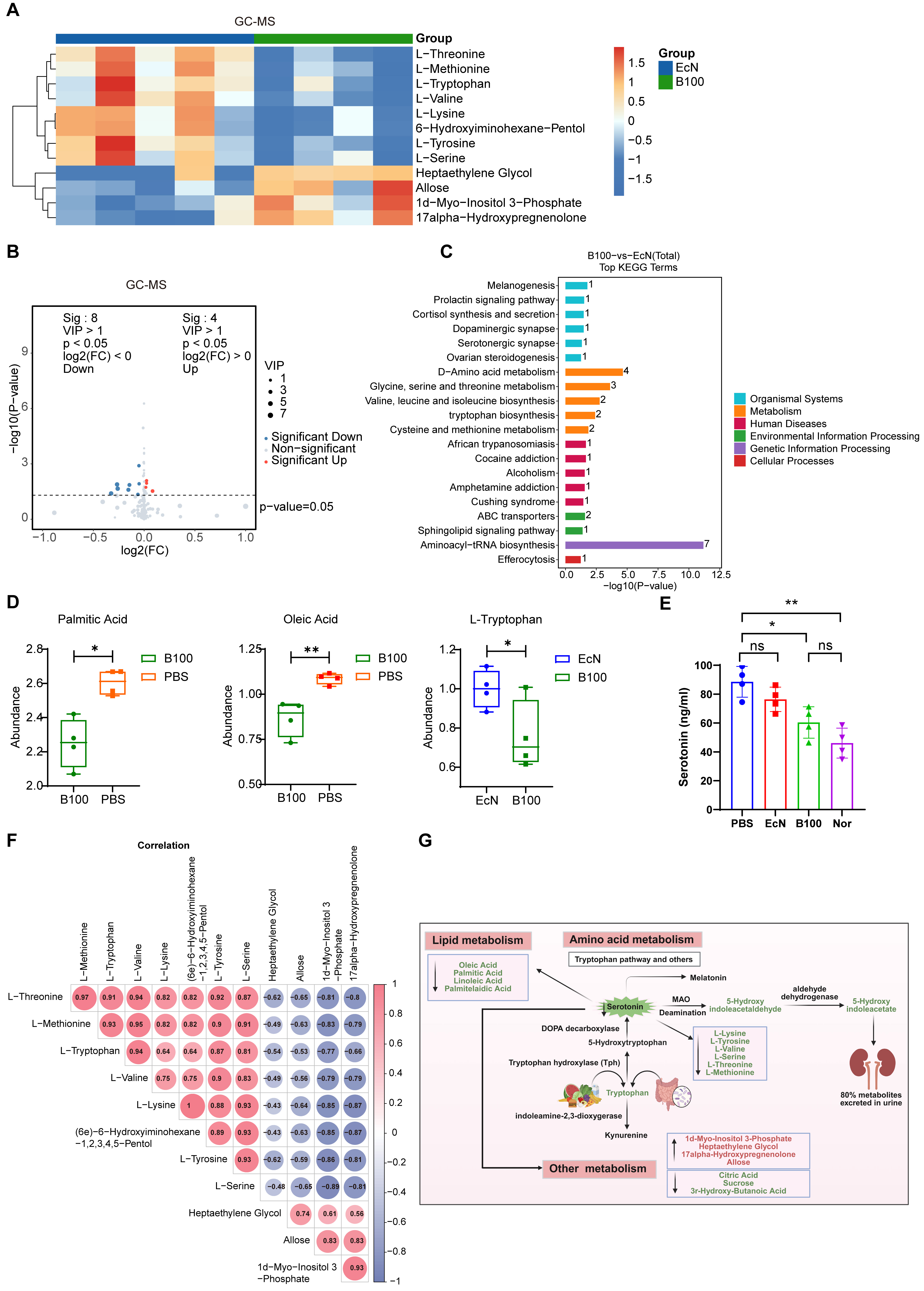
Figure 5. Serum metabolomic profiling revealed B100-induced serotonin pathway modulation. (A) Heatmap of differentially abundant metabolites in the B100 and EcN groups based on GC-MS data; (B) Volcano plot of differentially abundant metabolites comparing the B100 and EcN groups; (C) KEGG pathway classification of metabolites identified in the B100 and EcN groups; (D) Concentrations of metabolites in the B100 group compared with those in the PBS or EcN groups, as indicated; (E) Serum serotonin levels measured by ELISA; (F) Correlation analysis of differentially abundant metabolites in the EcN and B100 groups; (G) Schematic representation of serotonin metabolism. Created with BioRender. All values are expressed as mean ± SEM. *P < 0.05, **P < 0.01. GC-MS: Gas chromatography-mass spectrometry; VIP: variable importance in projection; FC: fold change; PBS: phosphate-buffered saline; EcN: Escherichia coli Nissle 1917; Nor: normal control group; B100: engineered Escherichia coli Nissle 1917 strain; ABC: ATP-bindingcassette; tRNA: transfer RNA; KEGG: Kyoto Encyclopedia of Genes and Genomes; DOPA: Dihydroxyphenylalanine; MAO: maintains functional monoamine oxidase; ELISA: enzyme-linked immunosorbent assay; SEM: standard error of the mean.