

fig5
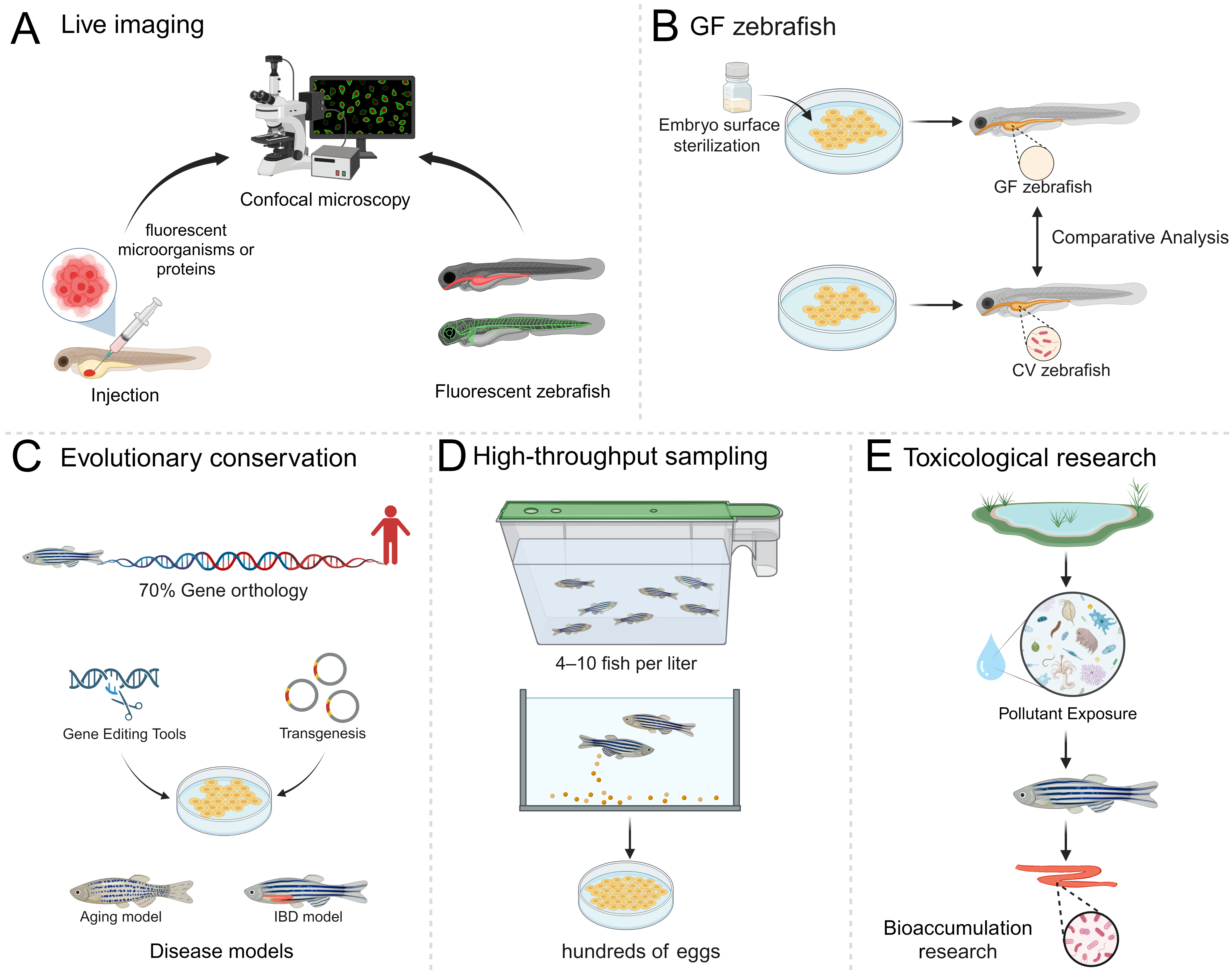
Figure 5. Advantages of zebrafish in gut microbiota research. (A) Fluorescence-based live imaging of microbial spatial organization and host cellular responses in zebrafish larvae; (B) GF and CV zebrafish for studying microbial contributions to intestinal development, metabolism, and neurobehavior; (C) Genetic conservation and genetic manipulation for disease modeling and translational research; (D) Zebrafish enable high-throughput gut microbiome research. Adult zebrafish are commonly maintained at 4-10 fish/L, and a single female can spawn hundreds of eggs per mating[134], supporting large-scale sampling; (E) Aquatic exposure models for studying toxicological mechanisms and pollutant effects on gut microbial communities and bioaccumulation. GF: Germ-free; CV: conventionally raised. Created in BioRender. Li, Y. (2026) https://BioRender.com/tqduw9z.