
fig1
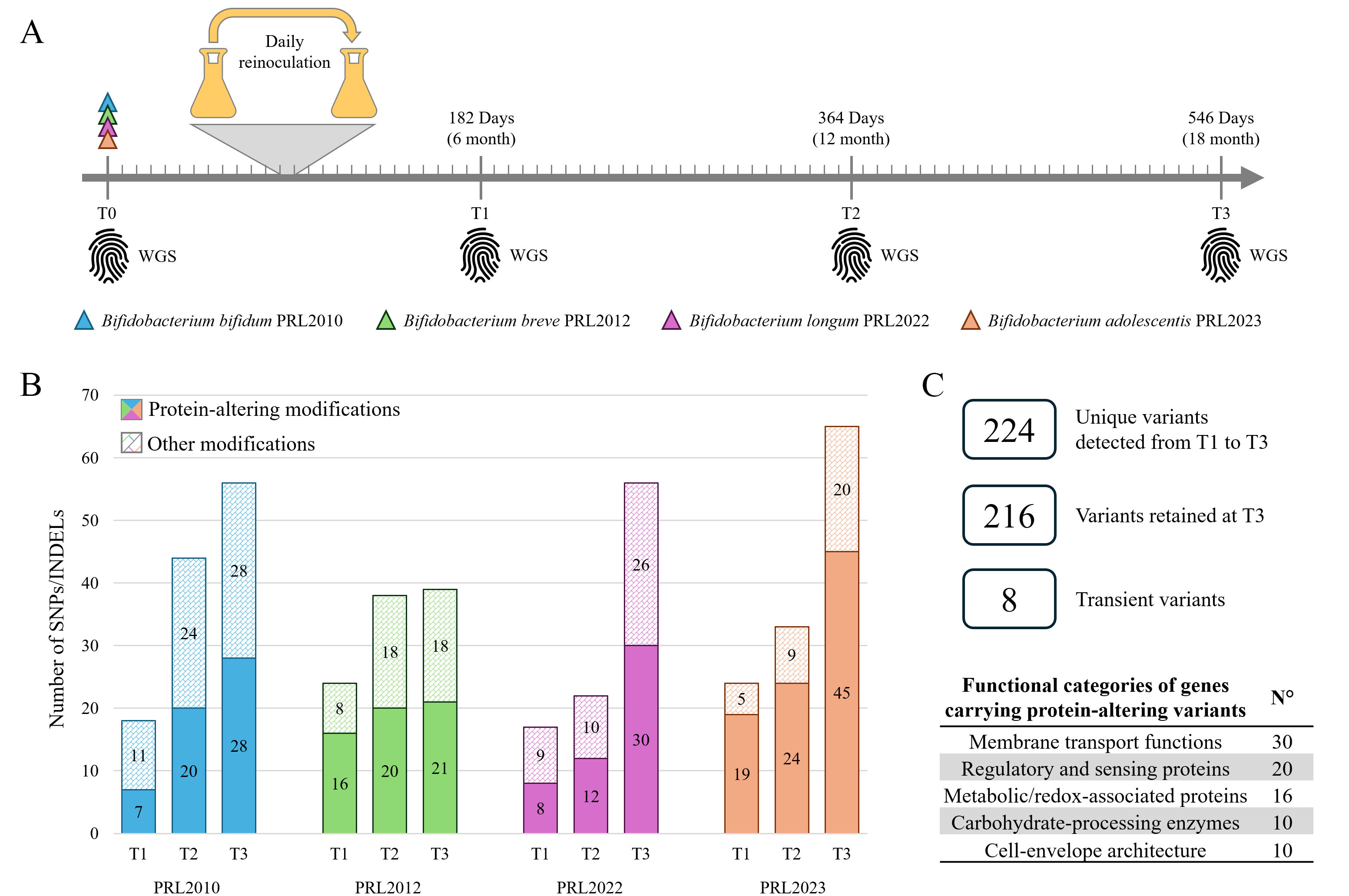
Figure 1. Experimental design and longitudinal accumulation of genetic variation in four bifidobacterial strains during prolonged in vitro cultivation. (A) depicts the experimental workflow, including four human-associated bifidobacterial strains maintained as single continuous lineages, serially reinoculated daily at a 1:100 dilution. Whole-genome sequencing (WGS) was performed at T0, T1, T2, and T3, using T0 data as a reference for variant calling; (B) shows a stacked bar plot with the progressive accumulation of SNP/INDEL variants detected at each sampling point in each strain. The filled portion of each bar indicates the number of protein-altering variants affecting the amino acid sequence of translated genes, whereas the hatched portion represents the remaining detected variants; (C) reports the total number of unique variants detected during the study, variants retained at T3, and transient variants, and summarizes the main predicted functional categories affected by protein-altering variants. T0: The start of the experiment; T1: six months; T2: 12 months; T3: 18 months; SNP: single nucleotide polymorphism; INDEL: insertion/deletion.