
fig4
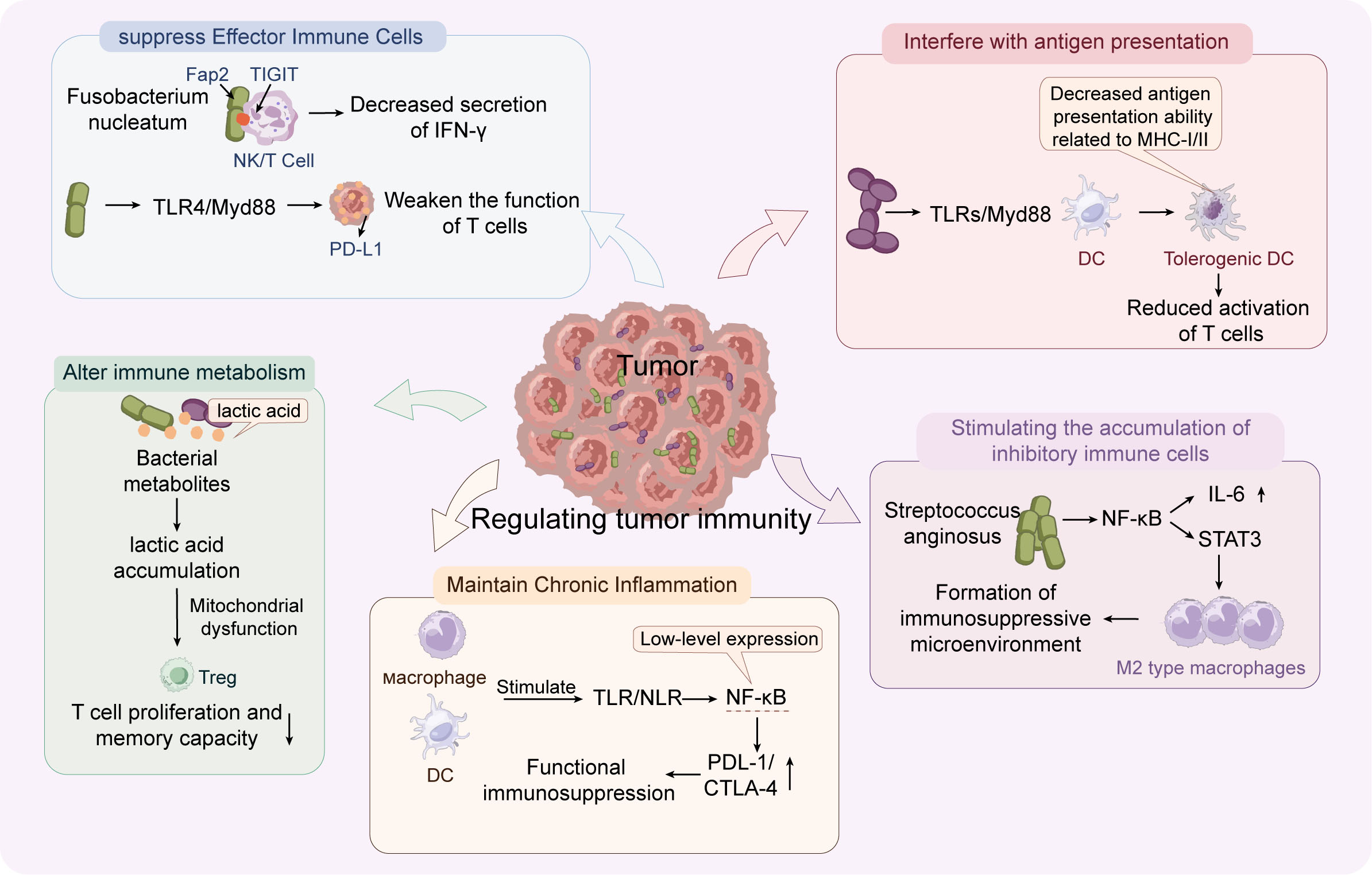
Figure 4. The regulation of tumor immunity by microorganisms within the tumor. Intratumoral microorganisms modulate antitumor immunity by suppressing effector immune cells, impairing antigen presentation, promoting the accumulation of immunosuppressive cells, maintaining chronic inflammation, and altering immune metabolism. Fap2: Fusobacterium adhesin protein 2; TIGIT: T cell immunoreceptor with Ig and ITIM domains; TLR: Toll-like receptors; MyD88: myeloid differentiation primary response 88; NLR: nucleotide-binding domain-like receptor; NF-κB: nuclear factor kappa-B; PD-L1: programmed death-ligand 1; CTLA-4: cytotoxic T-lymphocyte-associated protein 4; DC: dendritic cell; MHC-I/II: major histocompatibility complex class I and class II; Treg: regulatory T cell; IFN-γ: interferon-gamma; IL-6: interleukin-6; STAT3: signal transducer and activator of transcription 3; M2: alternatively activated macrophages.