

fig2
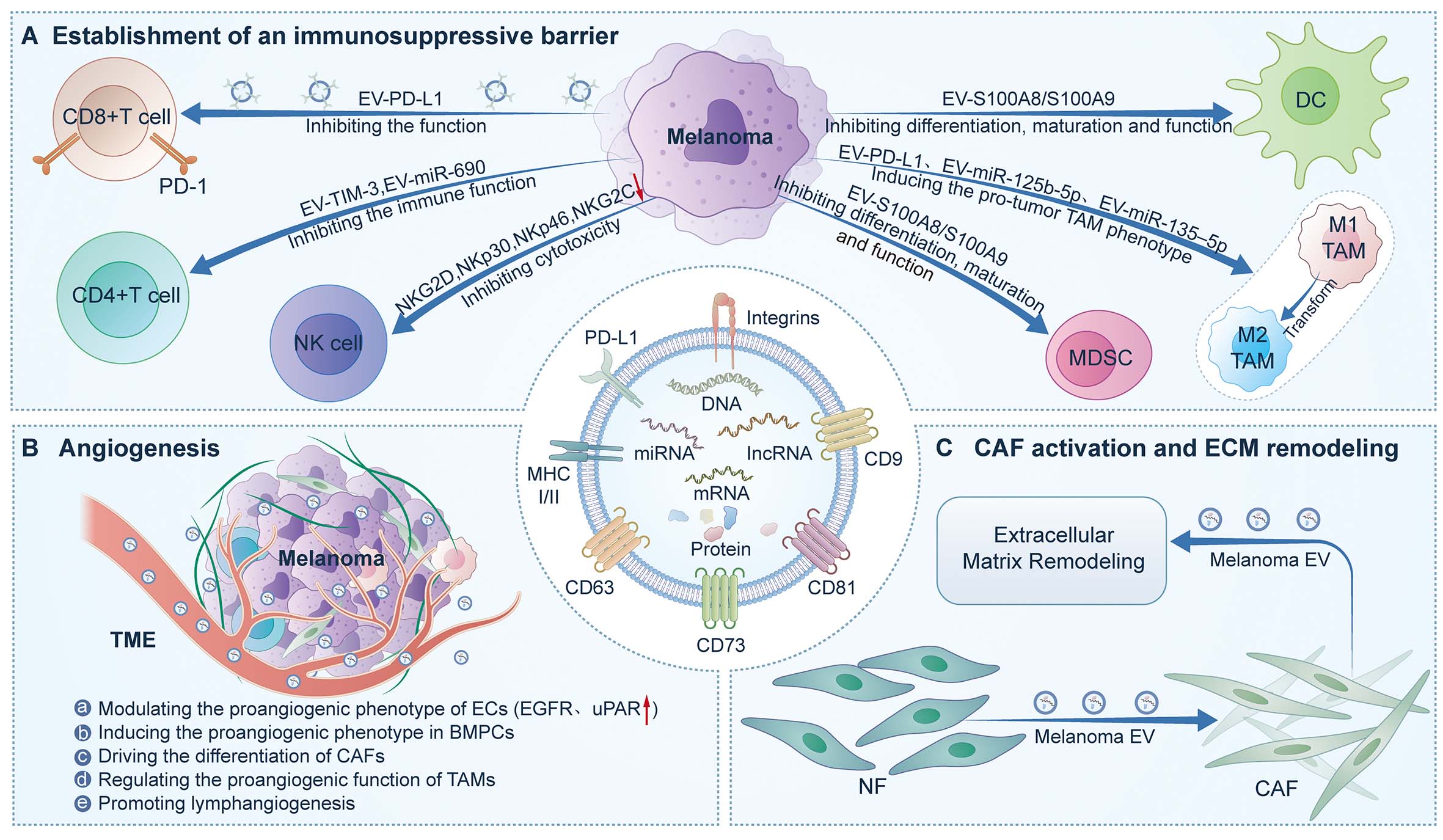
Figure 2. Pleiotropic roles of tumor-derived extracellular vesicles (EVs) in shaping the melanoma tumor microenvironment. (A) Tumor-derived EVs establish an immunosuppressive barrier through multiple mechanisms, including inhibition of CD8+ T-cell infiltration and function, impairment of CD4+ T-cell activity, suppression of natural killer (NK) cell cytotoxicity, induction of MDSCs, inhibition of DC maturation, and promotion of tumor-associated macrophage (TAM) polarization toward a pro-tumor M2-like phenotype. (B) Tumor-derived EVs promote angiogenesis and lymphangiogenesis by modulating endothelial cells (ECs), mobilizing bone marrow progenitor cells (BMPCs), driving CAF activation, and regulating pro-angiogenic TAM functions. (C) In melanoma, tumor-derived EVs contribute to CAF activation and ECM remodeling by promoting the transition of normal fibroblasts (NFs) into CAFs and by further enhancing matrix remodeling to support tumor progression. BMPC: Bone marrow progenitor cell; CAF: cancer-associated fibroblast; DC: dendritic cell; EC: endothelial cell; ECM: extracellular matrix; EV: extracellular vesicle; MDSC: myeloid-derived suppressor cell; NF: normal fibroblast; NK: natural killer; TAM: tumor-associated macrophage; TME: tumor microenvironment.