



Entropy engineering in ferroelectric/dielectric superlattices for ultrahigh-efficiency superparaelectrics energy storage capacitors
 0
0 Abstract
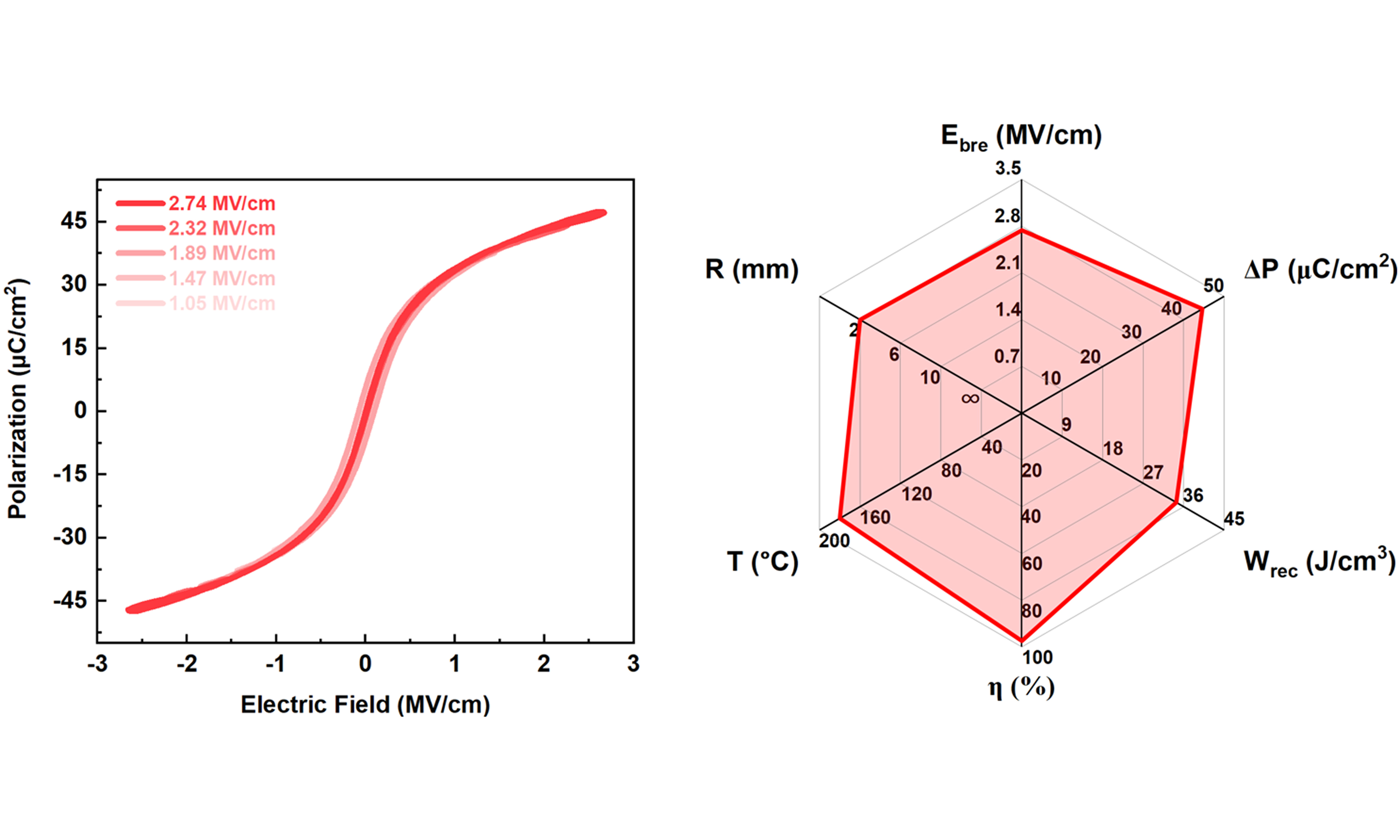
Thin-film capacitors exhibit significant application potential owing to their rapid charge/discharge characteristics and high-power density. Individual engineering strategies can effectively enhance either breakdown strength (Ebre) or polarization difference to improve energy storage performance. However, such enhancement typically leads to unilateral optimization of either energy density (Wrec) or energy efficiency (η) and fails to achieve an optimal trade-off between these, resulting in limitation fundamentally constrains the simultaneous enhancement. In this work, we propose multi-level synergistic modulation strategy, realizing synchronous optimization of multiple parameters to achieve breakthrough in comprehensive energy storage performance. Taking classic BaTiO3 ferroelectric as example, we implemented interface engineering strategy to simultaneously enhance the Ebre and reduce remnant polarization. Combined with entropy optimization strategy, this approach further increased the Ebre while significantly boosting saturation polarization. The developed BaTiO3/SrTiO3-BiFeO3 superparaelectric film capacitor demonstrate exceptional energy storage performance, achieving ultrahigh η of 97.35% and high Wrec of
Keywords
INTRODUCTION
High-performance capacitors are critically application potential in pulsed power systems, hybrid electric vehicles, and advanced renewable energy storage due to their rapid charge-discharge capability and high-power density[1-4]. For capacitors, energy density (Wrec) and energy efficiency (η) serve as critical metrics for evaluating their energy storage performance, reflecting the amount of energy that can be stored per unit volume[5]. Higher Wrec and η indicate that the capacitor can store energy more efficiently within a limited volume and release more energy during charge-discharge cycles[5]. Typically, the Wrec and η are quantitatively calculated through the following formulas[6]:
Researchers have employed composite engineering, multi-scale engineering, and combinatorial engineering, to effectively modulate the composition, microstructure, and local structure of dielectric materials[21-23]. These approaches enable precise control over key properties such as Ebre, Ps, Pr and thermal stability, demonstrating excellent tunability, versatility, and practicality[24-26]. Liu et al. achieved a reduced hysteresis and significantly enhanced Ebre in (Pb0.875La0.05Sr0.05) (Zr0.695Ti0.005Sn0.3)O3 multilayer ceramic capacitors through a combined compositional and structural optimization strategy, realizing an impressive ultrahigh Wrec with high η[24]. Meanwhile, Ma et al. proposed a synergistic nano-micro engineering approach that not only improved the microstructural homogeneity of FE multilayer ceramics but also facilitated the transformation of FE domains into polar nanodomains, thereby enhancing relaxor behavior and energy storage performance[25]. For interface engineering primarily based on STO, the entropy optimization strategy is undoubtedly the most suitable synergistic approach. By incorporating multiple principal elements to form a configuration-entropy system, it simultaneously achieves grain refinement and enhanced relaxor behavior[27-33]. This strategy not only compensates for the inability of STO to improve Ps but also significantly increases the Ebre, thereby synergistically enhancing both Wrec and η, which ultimately expected to achieve comprehensive energy storage performance enhancement. In this study, we proposed a multi-level synergistic modulation strategy involving interface engineering and entropy optimization, which enables effective multi-directional regulation to simultaneously enhance energy storage density and efficiency. Taking BTO as a model system, we designed and fabricated a BTO/STO-BFO superparaelectric (SPE) film capacitor by introducing STO interlayers and BFO solid-solution. The multiscale structural modulation substantially enhanced Ebre and Ps with reducing Pr, reaching an ultra-high η of 97.35% and a high Wrec of 40.60 J/cm3, which represents improvements of 133.56% and 492.72% comparing to the pure BTO film. Remarkably, the flexible capacitors base on same strategy exhibits excellent energy storage performance and stability under harsh thermal and mechanical bending conditions, establishing a promising platform for developing flexible capacitors with high energy storage capacity.
MATERIALS AND METHODS
Sample Fabrication: The (111)-STO substrate and the flexible mica substrate thinned mechanically were placed into pulsed laser deposition system (HT-PLD, RP-HT-102 purchased from Shenzhen Arrayed Materials Co., Ltd. in China) for the following thin films growth, to construct BTO-based capacitors (including BTO, BTO/STO and BTO/STO-BFO). In pulsed laser deposition (PLD) chamber in BTO-based capacitors on (111)-STO substrate, the bottom electrode layer of SrRuO3 (SRO) was first grown on (111)-STO substrate using a KrF excimer laser (λ = 248 nm, Coherent) operated at 690 °C and 80 mTorr oxygen pressure. Then, through the rapid switching mode of multi-target by PLD, the alternating stacks of BTO and STO layers and the solid-solution of BFO were deposited under an oxygen pressure of 5 mTorr at 690 °C. During the deposition process, the fixed total excitation number was 15,000, and the cycle period was 50 times. Among them, the excitation number ratio of BTO, STO and BFO was 12:2:1. For flexible BTO-based capacitors, to weaken the van der Waals forces on the surface of the mica substrate, a CFO (CoFe2O4) film was deposited as a buffer layer before the bottom electrode layer SRO, with an oxygen pressure of 50 mTorr and 600 °C. The CFO, SRO and BTO/STO-BFO layers were grown at a pulse repetition rate of 10 Hz under laser energy of 330, 370 and 350 mJ, respectively. To construct the capacitor structure, a small ion sputterer (SBC-12, purchased from Beijing KYKY Co., Ltd. in China) was used to deposit a circular Au top electrode with a diameter of 100 μm. The detailed growth parameters and the design of the functional layer structure are provided in Supplementary Tables 1 and 2.
Characterization and electrical Properties: The crystalline structure of the BTO-based capacitors were characterized by using XRD (Bruker/AXS D8-ADVANCE ECO diffractometer). The reciprocal space mapping (RSM) data were performed via Rigaku Smartlab diffractometer. The cross-sectional sectional transmission electron microscopy (STEM) specimens were lift-out by Focused Ion beam (FIB, Thermal Fisher Helios G4). STEM images were obtained through an aberration-corrected JEM-ARM300FS equipped with Energy-dispersive X-ray spectroscopy (EDS) detectors. The P-E hysteresis loops and I-E curves were measured using a Radiant Technology Precision Premium II tester (Radiant Technologies, Inc.) at a frequency of 10 kHz. For the bending test, the mold with different bending radii were used to adhere sample on its surface, and the bending performances of sample were tested.
RESULTS AND DISCUSSION
The schematic diagram of our ideal design concept is illustrated in Figure 1A-C. By employing a multi-level synergistic modulation strategy involving interface engineering and entropy optimization, we achieve a transition from FE to relaxor ferroelectric (RFE), ultimately reaching a SPE state. In conventional FE oxides, the domain structure typically exhibits long-range order with large grain sizes, making a relatively large polarization intensity in macroscopic properties [Figure 1A]. While this leads to large hysteresis, small Wrec, and low η, which limit their practical applications in energy storage[7]. Typically, introducing a linear dielectric material with high η and Ebre as a blocking layer to form a FE/dielectric SLs. This approach can effectively disrupt long-range FE ordering and reduce grain size [Figure 1B], thereby diminishing Pr and hysteresis while enhancing the Ebre, resulting in increasing the Wrec and η. Nevertheless, the limited Ps and the existing hysteresis remain challenges. To overcome these limitations, we further integrate an entropy optimization strategy with the FE/dielectric SLs. This methodology enables simultaneous grain size refinement and enhancement of local polarization intensity, facilitating the transition from RFE to SPE and increasing comprehensive energy storage performance of the capacitor in Figure 1C. The developed dielectric capacitor shows great potential for next-generation energy storage applications, offering simultaneous achievement of ultra-high η and outstanding Wrec. To validate our design strategy, we selected the well-established BTO FE system [Figure 1D]. By utilizing STO, a linear dielectric with a compatible crystal structure and lattice matching, we constructed BTO/STO SLs [Figure 1E] to enhance the Ebre and η. We have previously established the efficacy of this strategy through systematic studies of BNT-STO and PLZT-STO system[18,20]. Furthermore, we incorporated a solid-solution BFO FE with known for high polarization intensity into the BTO/STO SLs [Figure 1F] to simultaneously boost both the Ps and Ebre, achieving significant improvement in energy storage performance. Using PLD with a multi-target rapid switching, we epitaxially grew BTO, BTO/STO SLs, and BTO/STO-BFO SPE films on (111)-oriented STO/SRO substrates, and the Au top electrodes were sputtered to construct capacitors. Additional experimental details can be found in the MATERIALS AND METHODS.
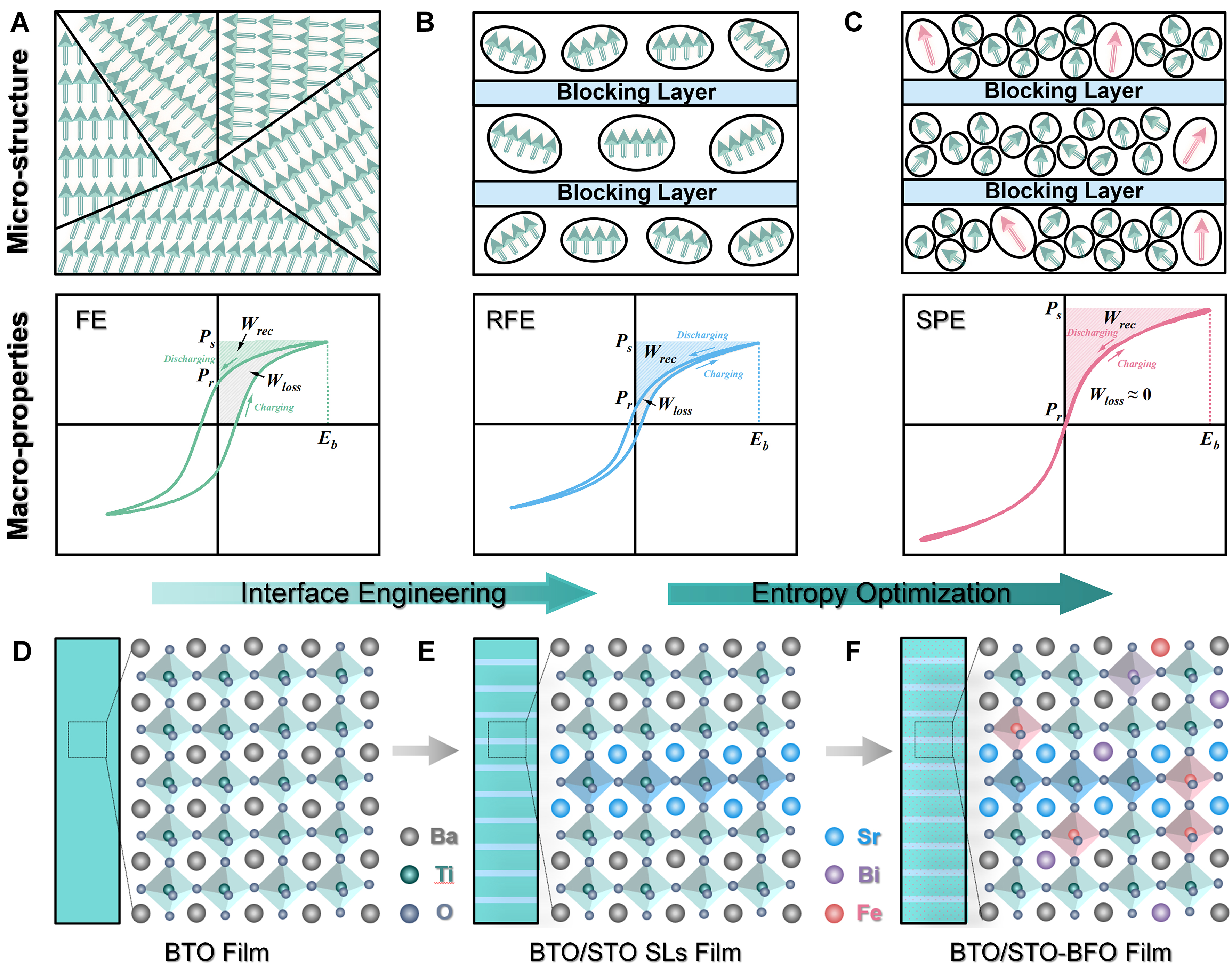
Figure 1. Design concept and preparation of SPE film capacitor. (A-C) Micro-structure and macro-property of (A) FE, (B) RFE and (C) SPE by interface engineering and entropy optimization; (D-F) Schematic diagram of crystal structure for (D) BTO, (E) BTO/STO SLs and (F) BTO/STO-BFO SPE films. FE: Ferroelectric; RFE: relaxor ferroelectric; SPE: superparaelectric; BTO: barium titanate; STO: strontium titanate; BFO: bismuth ferrite; SLs: superlattices; Ps: saturation polarization; Pr: remanent polarization; Eb: electric breakdown strength; Wrec: recoverable energy density; Wloss: energy loss.
The X-ray diffraction pattern (XRD) of the BTO films is presented in Figure 2A, where (iii) reflections from BTO (i = 1, 2) indicate the preferential growth along [111]- orientation, confirming growth without any secondary phase. Furthermore, the BTO/STO SLs and BTO/STO-BFO SPE films exhibit (111) main peak (labeled as “0”) accompanied by characteristic satellite peaks (labeled as ±1, ±2, ...), unambiguously verifying the formation of a periodic BTO/STO SLs. Notably, the BTO diffraction peak exhibits a small-angle shift following BFO incorporation, which we attribute to BFO-induced out-of-plane lattice expansion of the SLs to accommodate the compressive strain from the STO substrate[34]. This observation was further confirmed by RSM around the (222) reflection, as shown in Figure 2B-D. For the BTO film, the RSM pattern sequentially displays diffraction peaks from the STO substrate, SRO buffer layer, and BTO film from top to bottom in Figure 2B, confirming the highly epitaxial single-crystalline nature of the BTO film without any secondary phases or randomly oriented grains. After introducing STO, distinct satellite peaks emerged in the RSM image [Figure 2C] in addition to the STO, SRO, and BTO diffraction peaks (the absence of the SL(-2) reflection in Supplementary Figure 1 is attributed to its relatively weak intensity), further demonstrating the formation of a high-quality and regularly arranged SLs composed of BTO and STO. We observed upward and leftward shifts in the QZ and QX values of the main BTO diffraction peak respectively, indicating that the BTO layer in the superlattice is constrained by the STO layer, resulting in in-plane compressive strain and out-of-plane tensile strain. This is caused by the lattice mismatch between the STO layer (~3.905 Å) and the BTO layer (~3.992 Å). After the introduction of BFO to form the BTO/STO-BFO structure, the mutual dissolution of BTO and BFO weakened the diffraction intensity of the superlattice, leading to a reduction on satellite peaks in Figure 2D. Additionally, the rightward shift of the main BTO diffraction peak in QX indicates that the strain state of the thin film transitioned to stronger in-plane compressive strain. This is because the incorporation of BFO reduced the overall average lattice constant and increased the lattice mismatch. Importantly, these results are consistent with the XRD observations, where the main BTO diffraction peak first shifted to higher angles with STO insertion and remained unchanged after BFO incorporation in Figure 2A. To further characterize the microstructure of the BTO/STO-BFO SPE film, we performed cross-STEM analysis [Figure 2E]. The STEM images reveal sharp interfaces between the STO substrate, SRO bottom electrode layer and BTO/STO-BFO functional layer. Among them, the thicknesses of the SRO and the BTO/STO-BFO layers are approximately 17 and 475 nm respectively, and each element is uniformly distributed without diffusion in the corresponding functional layer [Supplementary Figure 2]. Most significantly, the BTO/STO-BFO layer exhibits pronounced SLs ordering in the STEM image. To verify the compositional modulation of the SLs, we performed localized elemental analysis on a selected region of the BTO/STO-BFO layer [Figure 2F]. EDS mapping revealed the uniform distribution of Ba and Sr elements in the BTO and STO layers, with a thickness ratio of approximately 3:1. It is worth emphasizing that this thickness ratio was optimized and determined through systematic experimental studies in our previous work[18,20]. Moreover, line-scan analysis along the marked region (positions 1 → 2 in Figure 2F) demonstrates strict spatial confinement of Ba and Sr to their respective BTO and STO layers in Supplementary Figure 3, proving that the SLs is formed by the stacking of BTO and STO layers, corresponding to the previous XRD and RSM results. In addition, Bi and Fe elements are uniformly distributed in small amounts throughout the superlattice [Supplementary Figure 4]. The BTO/STO SLs and the solid solution of BFO are further examined by high-resolution STEM observations along the [110] axis in Figure 2G. The Ba and Sr elements successively occupied the A position in the crystal structure in EDS images, while the Ti element mainly occupied the B position, revealing atomically sharp interface with heteroepitaxial relationships of BTO[111]-STO[111]. Furthermore, the presence of Bi and Fe elements also demonstrates the successful solid-solution of BFO into the BTO/STO superlattice results. This was achieved by bombarding the BFO target in a multi-target rapid switching mode, and thus it is randomly and uniformly solid-solution distributed in the atoms. These comprehensive microstructural analyses confirm the successful fabrication of [111]-oriented BTO/STO-BFO SPE film with precisely controlled compositional modulation, wherein STO and BFO respectively exist in a layered structure and a solid solution form, fully consistent with our proposed design strategy in Figure 1.
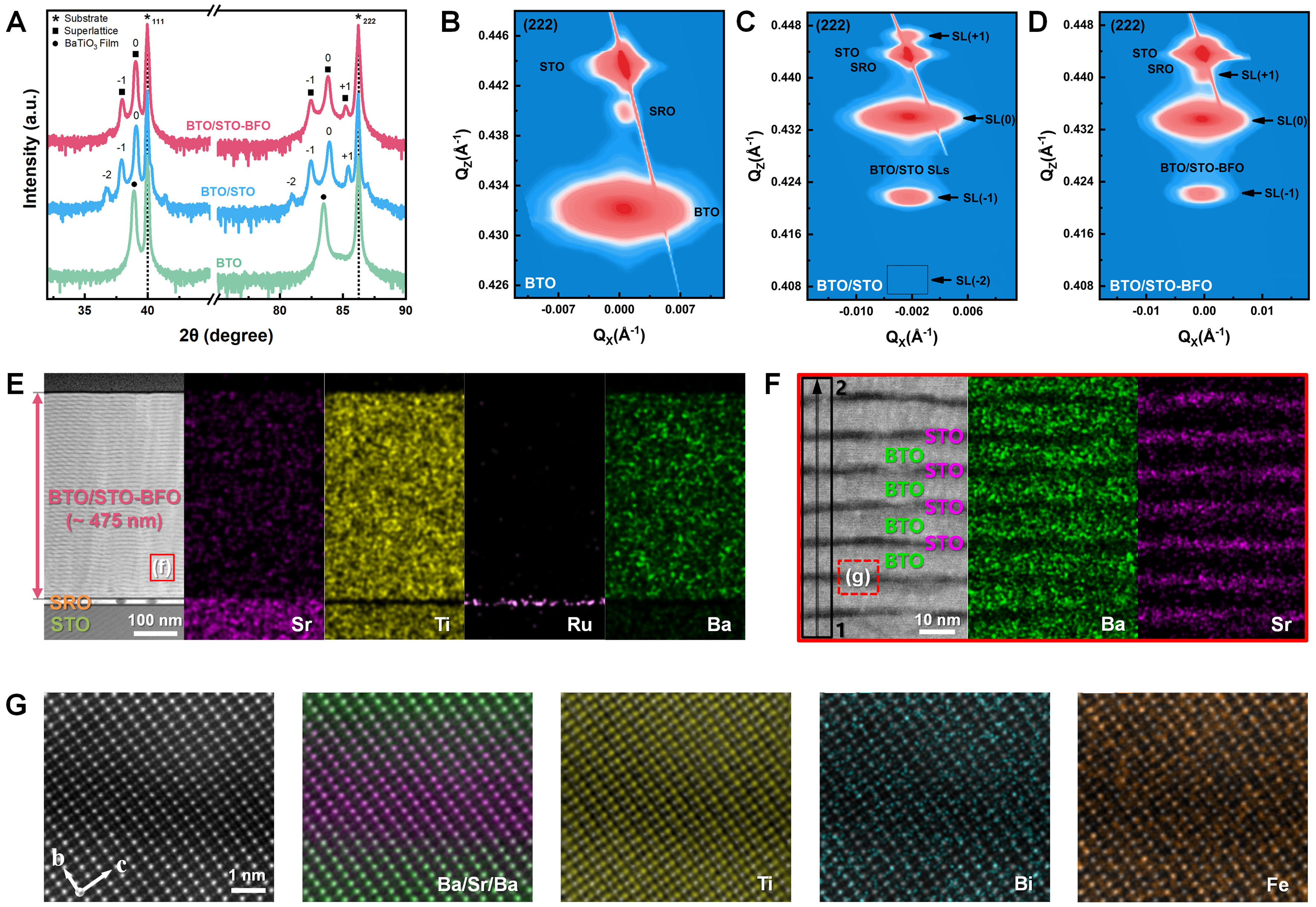
Figure 2. The microstructure of BTO/STO-BFO SPE film on (111)-STO substrate. (A) The XRD of BTO, BTO/STO SLs and BTO/STO-BFO SPE films; (B-D) The RSM of (B) BTO, (C) BTO/STO SLs and (D) BTO/STO-BFO SPE films around the (222) reflections; (E) The STEM image and EDS of the BTO/STO-BFO SPE film; (F) The STEM image of BTO/STO SLs with the corresponding EDS element mapping; (G) The high-resolution STEM image of BTO/STO-BFO SPE film with the corresponding EDS element mapping. BTO: Barium titanate; STO: strontium titanate; BFO: bismuth ferrite; SLs: superlattices; SPE: superparaelectric; XRD: X-ray diffraction; RSM: reciprocal space mapping; STEM: scanning transmission electron microscopy; EDS: energy-dispersive X-ray spectroscopy.
To verify the energy storage performance of BTO/STO-BFO SPE film, the polarization-electric field (P-E) loops of BTO, BTO/STO SLs and BTO/STO-BFO SPE films are measured under the same electric field (E = 0.63 MV/cm), as shown in Figure 3A. Notably, Figure 3A was achieved by optimizing the growth parameters for STO and BFO [Supplementary Figures 5-7]. From the figure, the P-E loop of the BTO thin film capacitor exhibits a classic FE hysteresis, with Ps and Pr of 21.47 and 5.76 μC/cm2, respectively. When the STO layer was introduced into BTO, the resulting BTO/STO SLs exhibited a slenderer loop shape with significantly suppressed hysteresis at room temperature[16]. After incorporating highly polarization BFO, the polarization of the BTO/STO-BFO SPE film exhibited a marked enhancement. Meanwhile, the current- electric field (I-E) curves of all thin films exhibit double switching peaks corresponding to FE hysteresis behavior, confirming its characteristic FE properties. Especially, the BTO/STO-BFO SPE film demonstrates lower current. Subsequently, we measured the P-E hysteresis loops of the films at their maximum Ebre in Figure 3B. Remarkably, through the combined strategy of STO layer insertion and BFO solid-solution incorporation, the BTO/STO-BFO film achieved a 330.48% improvement in Ebre, increasing from 1.05 to 3.47 MV/cm. Moreover, the hysteresis loop showed significant contraction by an approximately two-fold enhancement in Ps (increased from 25.29 to 46.52 μC/cm2), while the Pr decreased from 5.67 to 2.09 μC/cm2. To further analyze the electric-field-driven electrical properties of the BTO/STO-BFO SPE film, we systematically measured P-E loops under varying E [Figure 3C]. We observed that the hysteresis loop gradually transitions from FE to RFE in low E, and eventually becomes a SPE state at high E, arising from the combined effects of the STO layer and BFO solid-solution. The field-dependent energy storage performance confirms our result [Figure 3D]. The BTO/STO-BFO SPE film exhibits FE behavior with a relatively low η below 2.11 MV/cm. When the E exceeds this critical threshold, η increases sharply as the film transitions to RFE. Ultimately at 3.47 MV/cm, the film achieves SPE while reaching both high Wrec (40.60 J/cm3) and exceptional η (97.35%), corresponding to 492.72% and 133.56% increases compared to pure BTO film. The key performance metrics of the BTO, BTO/STO and BTO/STO-BFO films are shown in Table 1.
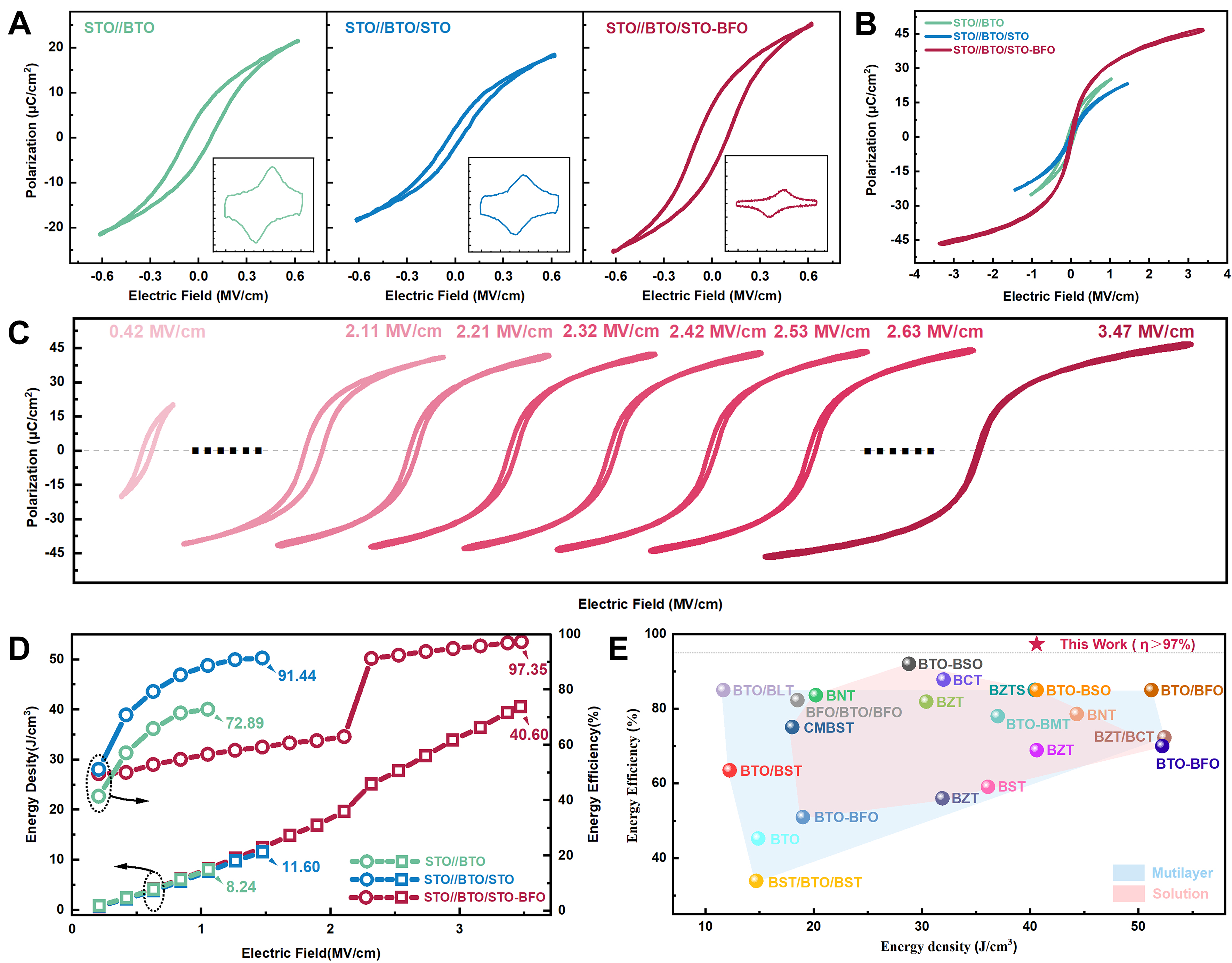
Figure 3. The energy storage performance of BTO/STO-BFO SPE film on (111)-STO substrate. (A) The P-E loops of BTO, BTO/STO SLs and BTO/STO-BFO SPE films under the same electric field, and the inset shows the corresponding I-E curves; (B) The P-E loops of BTO, BTO/STO SLs and BTO/STO-BFO SPE films under the Ebre; (C) The P-E loops of BTO/STO-BFO SPE film under different E; (D) The Wrec and η of BTO, BTO/STO SLs and BTO/STO-BFO SPE films with different E; (E) Comparison of Wrec and η with those reported in literatures. BTO: Barium titanate; STO: strontium titanate; BFO: bismuth ferrite; SLs: superlattices; SPE: superparaelectric; P-E: polarization-electric field; I-E: current-electric field; E: electric field; Ebre: electric breakdown strength; Wrec: recoverable energy density; η: energy storage efficiency; BNT: Ba1−xNixTiO3; BZTS: BaZr0.2Ti0.8O3-2%Sm2O3; BLF: Bi0.993La0.007FeO3; CMBST: (Ce, Mn) co-doped Ba0.6Sr0.4TiO3; BSO: BiScO3; BMT: Bi(Mg, Ti)O3; BZT: barium zirconate titanate; BCT: barium calcium titanate; BTO-BFO: barium titanate-bismuth ferrite; BST: barium strontium titanate; BTO-BST: barium titanate-barium strontium titanate.
Key performance metrics of the film capacitor
| Film capacitor | Ebre (MV/cm) | Ps (μC/cm2) | Pr (μC/cm2) | Wrec (J/cm3) | η (%) |
| BTO | 1.05 | 25.29 | 5.67 | 8.24 | 72.89 |
| BTO/STO | 1.47 | 23.33 | 2.37 | 11.60 | 91.44 |
| BTO/STO-BFO | 3.47 | 46.52 | 2.09 | 40.60 | 97.35 |
This simultaneous enhancement of Wrec and η in BTO/STO-BFO SPE film originate from two aspects. On the one hand, the synergistic effect between periodic STO layers and BFO solid solution elevates the breakdown barrier and suppresses conductive path formation, thereby significantly improving Ebre. The other hand, the disrupted long-range ordering facilitates the transformation of nanodomains into highly polarized configurations, effectively increasing the ΔP[35,36]. Moreover, the well-maintained P-E loops among 25-150 °C in Supplementary Figure 8 suggests that the film can work at a broad temperature range. To highlight the advantages of our approach over individual engineering strategies, Wrec and η for BTO-based materials reported in literatures[31,37-57] are presented in Figure 3E, and our BTO/STO-BFO SPE film clearly stands out with orders of magnitude ultrahigh η, demonstrating exceptional potential for practical capacitor applications.
To extend our work toward broader applications, we extended the design strategy to flexible mica substrate and successfully fabricated flexible BTO/STO-BFO SPE film. Notably, an additional CFO buffer layer was introduced between the mica and the functional layers to address the significant structural mismatch and chemical incompatibility between mica and the FE films. As evidenced by the P-E loops with different E in Figure 4A, the flexible BTO/STO-BFO SPE film maintain polarization intensities comparable to those on STO substrate. Moreover, the local grey area reveals significant contraction of the hysteresis loop with increasing E, which is consistent with the P-E loops observed in films grown on STO substrates. More importantly, the transition from FE to RFE to SPE is a stable and reversible process [Supplementary Figure 9], which can be repeatedly achieved by alternating the application of low and high Ebre. Consequently, flexible BTO/STO-BFO SPE film still achieve impressive performance metrics of 34.37 J/cm3 and 97.48% at 2.74 MV/cm [Figure 4B], though the slightly inferior structural/thermal stability of mica substrate results in a reduced Ebre. The flexible BTO/STO-BFO SPE film demonstrated excellent energy storage stability under harsh environmental conditions, as verified through high-temperature, bending radius, and bending cycle experiments. Within the temperature range of 25 to 180 °C, the P-E loops, Ps and Pr remain nearly unchanged in Figure 4C and Supplementary Figure 10A. The Wrec and η have remained stable at 29.26 ±
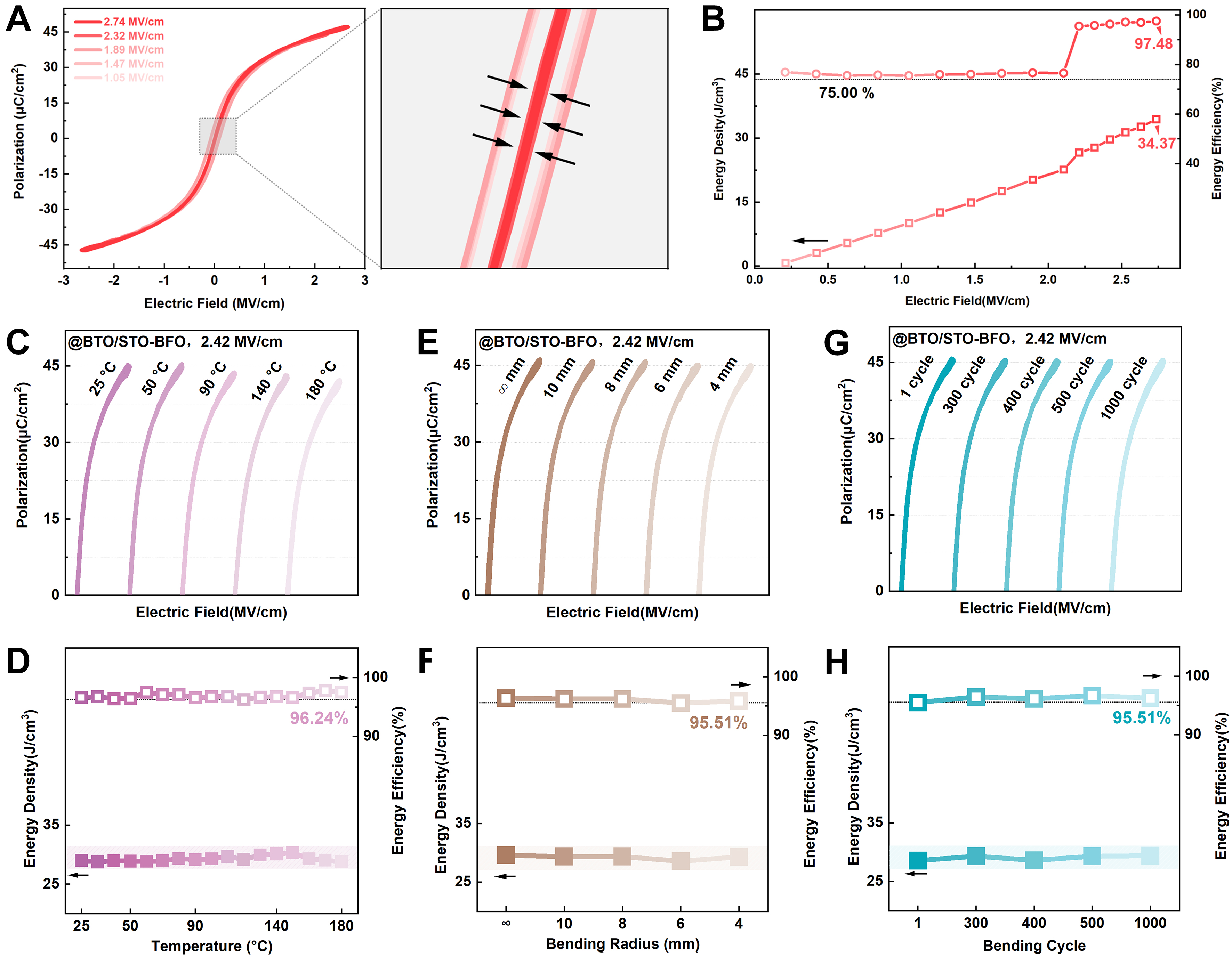
Figure 4. The energy storage performance of flexible BTO/STO-BFO SPE film on mica substrate. (A) The P-E loops of flexible BTO/STO-BFO SPE film under different E, and the local grey area have been magnified; (B) The Wrec and η of flexible BTO/STO-BFO SPE film with different E; (C-H) The P-E loops and energy storage performance of flexible BTO/STO-BFO SPE film under (C and D) different temperature, (E and F) bending radii and (G and H) bending cycle. BTO: Barium titanate; STO: strontium titanate; BFO: bismuth ferrite; SPE: superparaelectric; P-E: polarization-electric field; E: electric field; Wrec: recoverable energy density; η: energy storage efficiency.
CONCLUSIONS
In summary, we propose a multi-level synergistic modulation strategy combining interface engineering of the STO layer and entropy optimization via BFO solid-solution, achieved simultaneous enhancement of breakdown field strength and saturation polarization while effectively suppressing hysteresis loss, leading to dramatically improved energy storage performance. The optimized BTO/STO-BFO SPE film capacitors demonstrate an ultrahigh η of 97.35% and a remarkable Wrec of 40.60 J/cm3, representing 133.56% and 492.72% improvements respectively over pure BTO film. Furthermore, the flexible capacitors designed based on this strategy maintain excellent energy storage performance with high stability across wide temperature ranges and under various severe bending deformations, verifying the universality of our multi-level cooperative regulation strategy. This work provides a promising solution for the coordinated optimization of multiple parameters and comprehensive enhancement of energy storage performance in film capacitor.
DECLARATIONS
Authors’ contributions
Conception and coordination of the project: Zhong, X. L.; Zhong, G.;
Sample fabrication: Chen, Q.; Su, P.;
Supervision of sample fabrication: Zhong, X.; Wang, J.; Li, J.; Zhong, G.;
Structure analysis and interpretation: Chen, Q.; Cheng, M.; Song, H.;
Writing the manuscript: Chen, Q.; Zhong, X.; Zhong, G.;
All authors participated in discussions and analysis.
Availability of data and materials
Some results of supporting the study are presented in the Supplementary Materials.
AI and AI-assisted tools statement
Not applicable.
Financial support and sponsorship
This work was supported by National Key Research and Development Program of China (2022YFF0706100 and 2024YFA1410600), National Natural Science Foundation of China (No. 62474186, 12275230 and 52472139), Shenzhen Science and Technology Program (JCYJ20240813155702004), Postgraduate Scientific Research Innovation Project of Hunan Province (No. CX20230654), and Project of Yuelushan Center for Industrial Innovation (Grant No. 2025YCII0224).
Conflicts of interest
Li, J. is a Senior Editorial Board Member of Microstructures. Li, J. was not involved in any steps of editorial processing, notably including reviewers' selection, manuscript handling, and decision making. The other authors declare that there are no conflicts of interest.
Ethical approval and consent to participate
Not applicable.
Consent for publication
Not applicable.
Copyright
© The Author(s) 2026.
Supplementary Materials
REFERENCES
1. Yang, C.; Lv, P.; Qian, J.; et al. Fatigue‐free and bending‐endurable flexible Mn‐doped Na0.5Bi0.5TiO3‐BaTiO3‐BiFeO3 film capacitor with an ultrahigh energy storage performance. Adv. Energy. Mater. 2019, 9, 1803949.
2. Wang, K.; Ouyang, J.; Wuttig, M.; et al. Superparaelectric (Ba0.95,Sr0.05)(Zr0.2,Ti0.8)O3 ultracapacitors. Adv. Energy. Mater. 2020, 10, 2001778.
3. Yang, B.; Zhang, Y.; Pan, H.; et al. High-entropy enhanced capacitive energy storage. Nat. Mater. 2022, 21, 1074-80.
4. Liu, Y.; Zhang, Y.; Wang, J.; et al. Ultrahigh capacitive energy storage through dendritic nanopolar design. Science 2025, 388, 211-6.
5. Lu, R.; Wang, J.; Duan, T.; et al. Metadielectrics for high-temperature energy storage capacitors. Nat. Commun. 2024, 15, 6596.
6. Yu, Y.; Zhang, Q.; Xu, Z.; et al. Structure-evolution-designed amorphous oxides for dielectric energy storage. Nat. Commun. 2023, 14, 3031.
7. Pan, H.; Li, F.; Liu, Y.; et al. Ultrahigh-energy density lead-free dielectric films via polymorphic nanodomain design. Science 2019, 365, 578-82.
8. Shu, L.; Shi, X.; Zhang, X.; et al. Partitioning polar-slush strategy in relaxors leads to large energy-storage capability. Science 2024, 385, 204-9.
9. Ren, C.; Zhong, G.; Xiao, Q.; et al. Highly robust flexible ferroelectric field effect transistors operable at high temperature with low-power consumption. Adv. Funct. Mater. 2019, 30, 1906131.
10. Sun, N.; Du, J.; Zhao, Y.; et al. Flexible multilayer lead-free film capacitor with high energy storage performances via heterostructure engineering. J. Materiomics. 2022, 8, 772-80.
11. Zhang, S. High entropy design: a new pathway to promote the piezoelectricity and dielectric energy storage in perovskite oxides. Microstructures 2022, 3, 2023003.
12. Jiang, M.; Peng, Z.; Zhou, Q.; et al. Superior energy storage performance of BNT-based ferroelectric ceramics based on maintaining high polarization and breakdown strength. J. Adv. Dielect. 2023, 14, 2340005.
13. Kim, J.; Saremi, S.; Acharya, M.; et al. Ultrahigh capacitive energy density in ion-bombarded relaxor ferroelectric films. Science 2020, 369, 81-4.
14. Pan, Z.; Wang, P.; Hou, X.; et al. Fatigue-free aurivillius phase ferroelectric thin films with ultrahigh energy storage performance. Adv. Energy. Mater. 2020, 10, 2001536.
15. Feng, M.; Feng, Y.; Zhang, T.; et al. Recent advances in multilayer-structure dielectrics for energy storage application. Adv. Sci. 2021, 8, e2102221.
16. Lupi, E.; Wexler, R. B.; Meyers, D.; et al. Engineering relaxor behavior in (BaTiO3)n/(SrTiO3)n Superlattices. Adv. Mater. 2023, 35, e2302012.
17. Zhang, X.; Shu, L.; Yang, Z.; et al. Ultra-thin multilayer films for enhanced energy storage performance. Nano. Energy. 2024, 121, 109271.
18. Chen, Q.; Zhang, Y.; Tang, M.; et al. Significantly enhanced energy storage density and efficiency in flexible Bi3.15Nd0.85Ti3O12 thin film via periodic dielectric layers. J. Appl. Phys. 2022, 131, 114101.
19. Zhang, A. H.; Wang, W.; Li, Q. J.; et al. Internal-strain release and remarkably enhanced energy storage performance in PLZT-SrTiO3 multilayered films. Appl. Phys. Lett. 2020, 117, 252901.
20. Zhong, G.; Chen, Q.; Zhang, Y.; et al. Van der Waals epitaxy enables rollable dielectric superlattice for record high overall energy density. Adv. Funct. Mater. 2023, 33, 2213752.
21. Fan, X.; Wang, J.; Yuan, H.; Zheng, Z.; Zhang, J.; Zhu, K. Multi-scale synergic optimization strategy for dielectric energy storage ceramics. J. Adv. Ceramics. 2023, 12, 649-80.
22. Zhang, L.; Pu, Y.; Chen, M.; Peng, X.; Wang, B.; Shang, J. Design strategies of perovskite energy-storage dielectrics for next-generation capacitors. J. Eur. Ceram. Soc. 2023, 43, 5713-47.
23. Dai, S.; Li, M.; Wu, X.; et al. Combinatorial optimization of perovskite-based ferroelectric ceramics for energy storage applications. J. Adv. Ceram. 2024, 13, 877-910.
24. Liu, X.; Zhu, J.; Li, Y.; Yang, T.; Hao, X.; Gong, W. High-performance PbZrO3-based antiferroelectric multilayer capacitors based on multiple enhancement strategy. Chem. Eng. J. 2022, 446, 136729.
25. Ma, Z.; Li, Y.; Zhao, Y.; et al. High-performance energy-storage ferroelectric multilayer ceramic capacitors via nano-micro engineering. J. Mater. Chem. A. 2023, 11, 7184-92.
26. Li, D.; Liu, Z.; Zhao, W.; et al. Global-optimized energy storage performance in multilayer ferroelectric ceramic capacitors. Nat. Commun. 2025, 16, 188.
27. Raza, H.; Cheng, J.; Lin, C.; Majumder, S.; Zheng, G.; Chen, G. High‐entropy stabilized oxides derived via a low‐temperature template route for high‐performance lithium‐sulfur batteries. EcoMat 2023, 5, e12324.
28. Raza, H.; Cheng, J.; Wang, J.; Kandasamy, S.; Zheng, G.; Chen, G. Titanium-containing high entropy oxide (Ti-HEO): a redox expediting electrocatalyst towards lithium polysulfides for high performance Li-S batteries. Nano. Research. Energy. 2024, 3, e9120116.
29. Raza, H.; Cheng, J.; Kandasamy, S.; et al. Manganese-ncorporated single-hase high-ntropy oxide modified separator enabled high performance of lithium-ulfur batteries at high sulfur loading. Energy. Environ. Mater. 2025, 8, e70058.
30. Raza, H.; Cheng, J.; Xu, J.; et al. Harnessing high entropy sulfide (HES) as a robust electrocatalyst for long-erm cycling of lithium-ulfur batteries. Energy. Environ. Mater. 2025, 8, e70007.
31. Chen, L.; Deng, S.; Liu, H.; Wu, J.; Qi, H.; Chen, J. Giant energy-storage density with ultrahigh efficiency in lead-free relaxors via high-entropy design. Nat. Commun. 2022, 13, 3089.
32. Duan, J.; Wei, K.; Du, Q.; et al. High-entropy superparaelectrics with locally diverse ferroic distortion for high-capacitive energy storage. Nat. Commun. 2024, 15, 6754.
33. Zhou, Y.; Zhang, T.; Chen, L.; et al. Design of antiferroelectric polarization configuration for ultrahigh capacitive energy storage via increasing entropy. Nat. Commun. 2025, 16, 805.
34. Cho, S.; Yun, C.; Kim, Y. S.; et al. Strongly enhanced dielectric and energy storage properties in lead-free perovskite titanate thin films by alloying. Nano. Energy. 2018, 45, 398-406.
35. Liu, Y.; Yang, B.; Lan, S.; Pan, H.; Nan, C.; Lin, Y. Perspectives on domain engineering for dielectric energy storage thin films. Appl. Phys. Lett. 2022, 120, 150501.
36. Liu, Y.; Liu, J.; Pan, H.; et al. Phase-field simulations of tunable polar topologies in lead-free ferroelectric/paraelectric multilayers with ultrahigh energy-storage performance. Adv. Mater. 2022, 34, e2108772.
37. Diao, C.; Liu, H.; Zheng, H.; et al. Enhanced energy storage properties of BaTiO3 thin films by Ba0.4Sr0.6TiO3 layers modulation. J. Alloys. Compd. 2018, 765, 362-8.
38. Fu, D.; He, F.; Tian, H.; et al. Ni-modified BaTiO3 film prepared by sol-gel with high energy storage performance. Ceram. Int. 2024, 50, 52004-10.
39. Abbas, W.; Ho, D.; Pramanick, A. High energy storage efficiency and thermal stability of A‐site‐deficient and 110‐textured BaTiO3-iScO3 thin films. J. Am. Ceram. Soc. 2020, 103, 3168-77.
40. Hou, Y.; Han, R.; Li, W.; Luo, L.; Fei, W. Significantly enhanced energy storage performance in BiFeO3/BaTiO3/BiFeO3 sandwich-structured films through crystallinity regulation. Phys. Chem. Chem. Phys. 2018, 20, 21917-24.
41. Zhang, M.; Deng, C. Structure, ferroelectric and energy density properties of BaTiO3 film capacitors for energy storage applications. Mod. Phys. Lett. B. 2021, 35, 2150179.
42. Hu, Y.; Xie, Q.; Liang, R.; et al. High energy storage performance in lead-free BiFeO3-BaTiO3 ferroelectric thin film fabricated by pulsed laser deposition. AIP. Advances. 2019, 9, 085005.
43. Zhu, H.; Liu, M.; Zhang, Y.; Yu, Z.; Ouyang, J.; Pan, W. Increasing energy storage capabilities of space-charge dominated ferroelectric thin films using interlayer coupling. Acta. Mater. 2017, 122, 252-8.
44. Sun, Z.; Tian, X.; Shang, L.; et al. Modifying energy storage performances of new lead-free system ferroelectric capacitors through interfacial stress. Appl. Surf. Sci. 2021, 559, 149992.
45. Instan, A. A.; Mishra, K. K.; Katiyar, R. S. Ferroelectric ordering and energy storage capacity in lead-free Ba(Zr0.2Ti0.8)O3 nanoscale film capacitors fabricated using pulsed laser deposition technique. J. Appl. Phys. 2019, 126, 134101.
46. Sun, Z.; Ma, C.; Wang, X.; et al. Large energy density, excellent thermal stability, and high cycling endurance of lead-free BaZr0.2Ti0.8O3 film capacitors. ACS. Appl. Mater. Interfaces. 2017, 9, 17096-101.
47. Sun, Z.; Ma, C.; Liu, M.; et al. Ultrahigh energy storage performance of lead-free oxide multilayer film capacitors via interface engineering. Adv. Mater. 2017, 29, 1604427.
48. Puli, V. S.; Pradhan, D. K.; Adireddy, S.; et al. Nanoscale polarisation switching and leakage currents in (Ba0.955Ca0.045)(Zr0.17Ti0.83)O3 epitaxial thin films. J. Phys. D. Appl. Phys. 2015, 48, 355502.
49. Zhu, X.; Guo, M.; Sun, B.; et al. Significantly enhanced energy storage density of epitaxial Ba0.53Sr0.47TiO3 thin films by optimizing bottom electrode material. Ceram. Int. 2020, 46, 13900-6.
50. Ortega, N.; Kumar, A.; Scott, J. F.; et al. Relaxor-ferroelectric superlattices: high energy density capacitors. J. Phys. Condens. Matter. 2012, 24, 445901.
51. Qian, J.; Yang, C.; Han, Y.; Sun, X.; Chen, L. Reduced leakage current, enhanced energy storage and dielectric properties in (Ce,Mn)-codoped Ba0.6Sr0.4TiO3 thin film. Ceram. Int. 2018, 44, 20808-13.
52. Kwon, D. K.; Lee, M. H. Temperature-stable high-energy-density capacitors using complex perovskite thin films. IEEE. Trans. Ultrason. Ferroelectr. Freq. Control. 2012, 59, 1894-9.
53. Ren, L.; Guo, K.; Cui, R.; et al. High energy storage performance in BTO-based ferroelectric films. Ceram. Int. 2024, 50, 41931-42.
54. Liang, Z.; Liu, M.; Shen, L.; et al. All-inorganic flexible embedded thin-film capacitors for dielectric energy storage with high performance. ACS. Appl. Mater. Interfaces. 2019, 11, 5247-55.
55. Zhao, T.; Ye, Y.; Guo, K.; et al. High energy storage properties of calcium-doped barium titanate thin films with high breakdown field strength. J. Alloys. Compd. 2024, 970, 172487.
56. Balmuchu, S. P.; Sahu, S.; Dobbidi, P. The effect of interfacial charge-induced multiferroic properties of Bi0.993La0.007FeO3/BaTiO3 bilayer thin films: performance modulation and energy storage applications. Surf. Interfaces. 2024, 44, 103653.
Cite This Article
 Open Access
How to Cite
Download Citation
Export Citation File:
Type of Import
Tips on Downloading Citation
Citation Manager File Format
Type of Import
Direct Import: When the Direct Import option is selected (the default state), a dialogue box will give you the option to Save or Open the downloaded citation data. Choosing Open will either launch your citation manager or give you a choice of applications with which to use the metadata. The Save option saves the file locally for later use.
Indirect Import: When the Indirect Import option is selected, the metadata is displayed and may be copied and pasted as needed.
About This Article
Copyright

Data & Comments
Data
0










Comments
Comments must be written in English. Spam, offensive content, impersonation, and private information will not be permitted. If any comment is reported and identified as inappropriate content by OAE staff, the comment will be removed without notice. If you have any queries or need any help, please contact us at [email protected].