

fig4
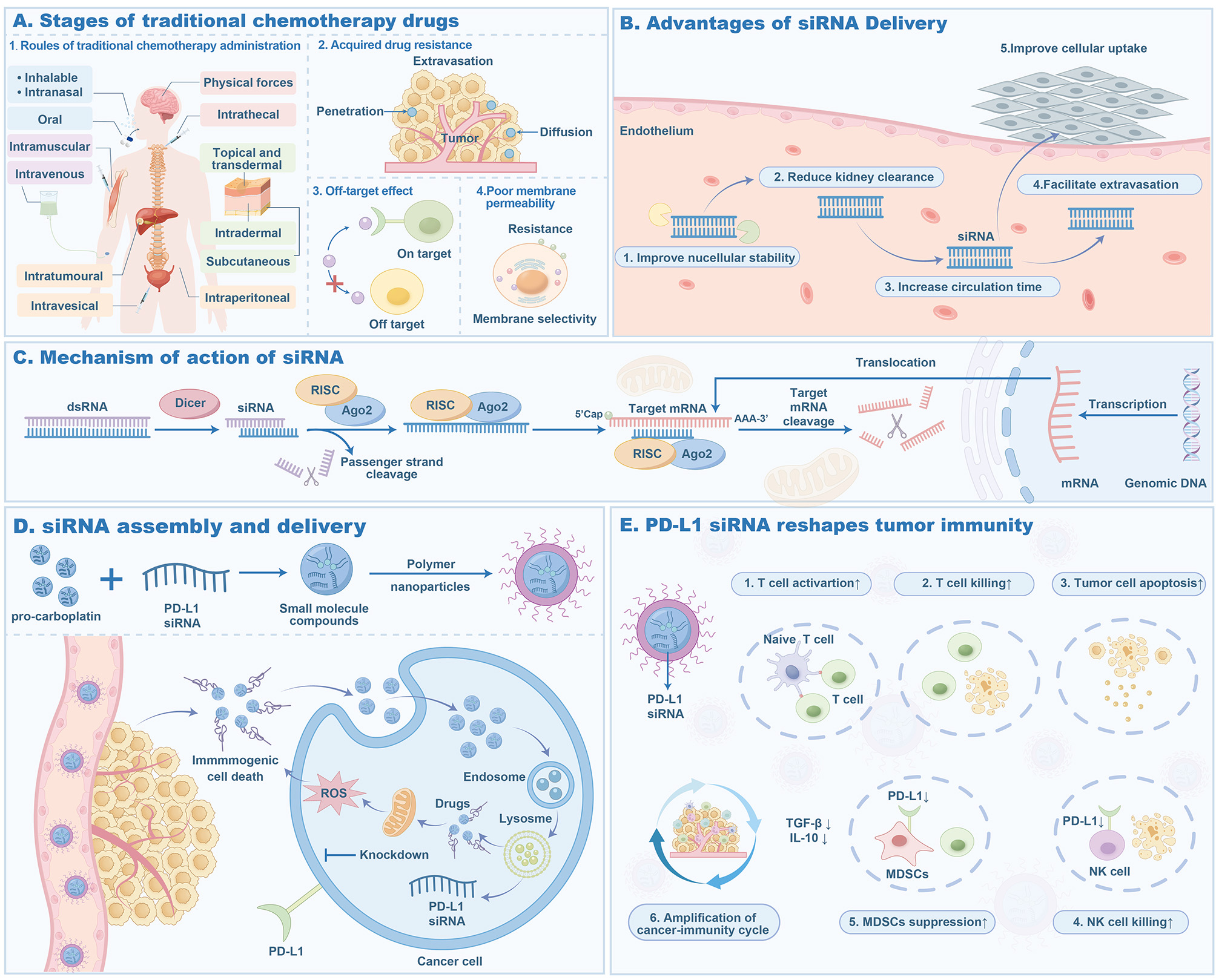
Figure 4. siRNA delivery process of polymer nanoformulations. (A) Stages of traditional chemotherapy drugs. It illustrates the various stages and challenges of drug delivery from administration to tumor cells. (B) Enhanced systemic distribution. It describes how to improve siRNA systemic distribution by enhancing nuclear stability and reducing renal clearance. (C) RNA interference mechanism. It shows the process where dsRNA is converted into siRNA by the Dicer enzyme, followed by mRNA degradation mediated by the RISC complex. (D) Immunogenic cell death. It describes the mechanism by which pro-carboplatin, combined with PD-L1 siRNA, induces immunogenic death of tumor cells. (E) Amplification of the cancer immune cycle. It demonstrates how PD-L1 siRNA activates T cells, inhibits tumor cell apoptosis, and promotes NK cell cytotoxicity. Figure created by MEDGY. siRNA: Small interfering; dsRNA: double-stranded RNA; ROS: reactive oxygen species.