

fig9
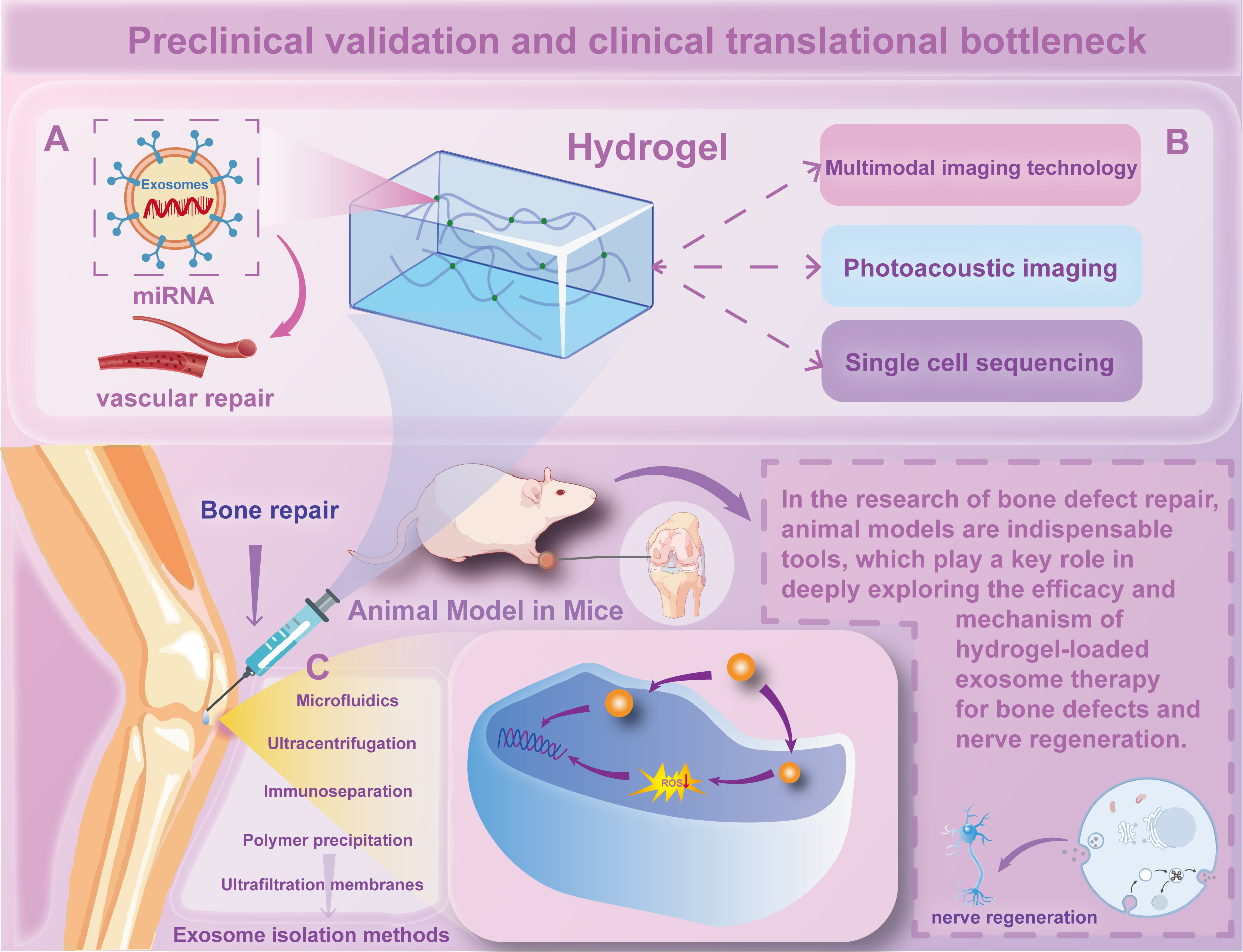
Figure 9. Preclinical validation and clinical translation bottlenecks in hydrogel-exosome bone and nerve regeneration therapy. (A) Exosome-Mediated Vascular and Bone Repair: Exosomes carrying miRNAs play a vital role in promoting vascular repair and bone regeneration. Delivery of exosomes loaded with therapeutic miRNAs enhances vascular regeneration and bone healing by stimulating endothelial cells and osteoblast differentiation. (B) Multimodal Imaging and Analytical Techniques: This panel illustrates the use of advanced imaging technologies, such as photoacoustic imaging and single-cell sequencing, to track and monitor the distribution and effects of hydrogel-exosome systems in animal models. These techniques enable high-resolution monitoring of tissue regeneration processes in vivo. Additionally, the figure highlights the dual-therapeutic potential of this system in promoting both bone healing and nerve regeneration. Specifically, in vivo animal models reveal that internalized exosomes can effectively reduce intracellular ROS levels to mitigate oxidative stress, while also facilitating neural cell differentiation for nerve regeneration. (C) Exosome Isolation Methods: Exosomes are isolated from biological samples using microfluidics, ultracentrifugation, ultrafiltration membranes, immunoseparation, or polymer precipitation. These methods ensure high yield and purity of exosomes for therapeutic applications, which are essential for their effective loading into hydrogels and subsequent delivery to target bone defects.