

fig6
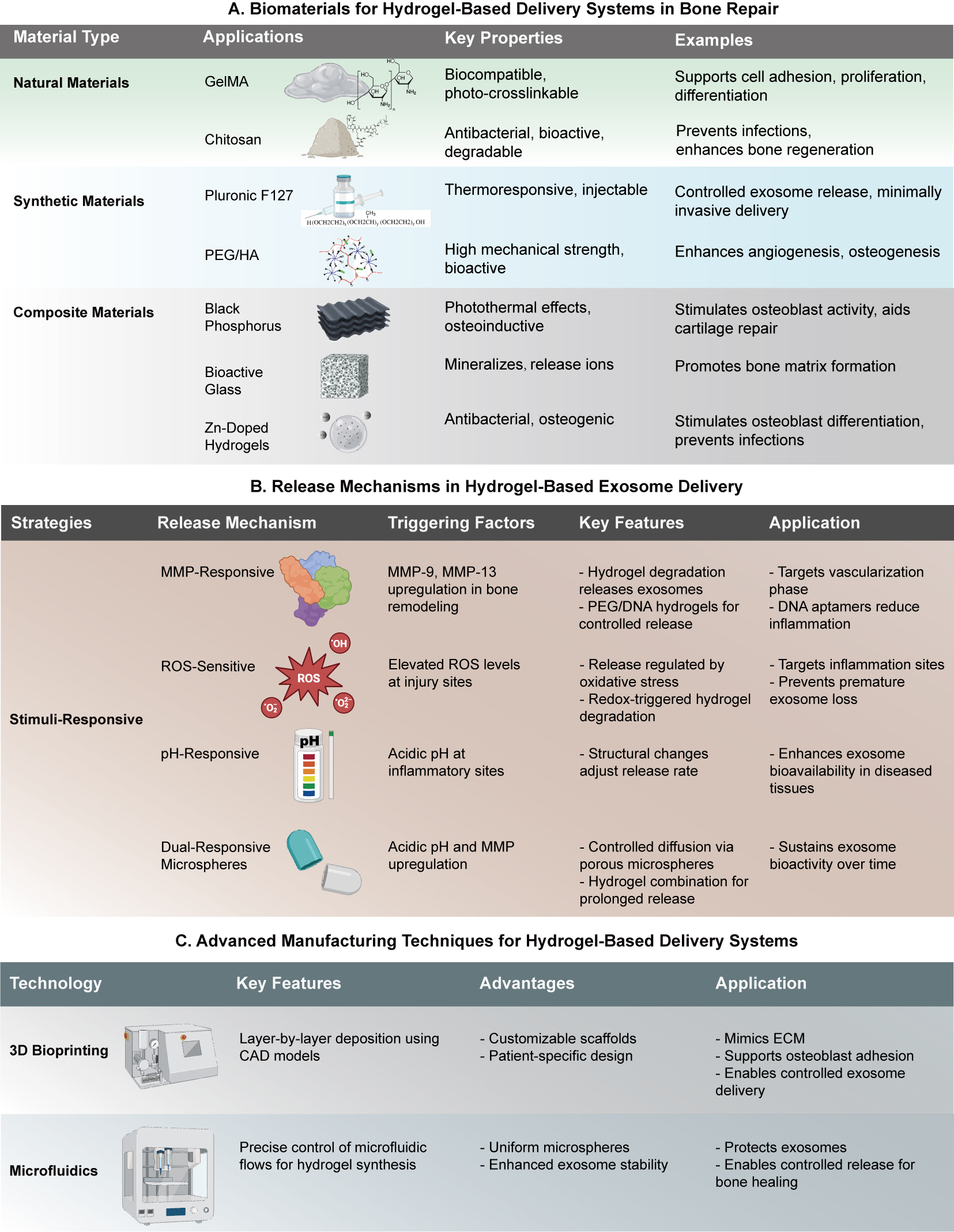
Figure 6. Biomaterials, release mechanisms, and manufacturing technologies for hydrogel-based delivery systems in bone repair.(A) Biomaterials for Hydrogel-Based Systems: Various materials are employed for hydrogel-based delivery systems, including natural materials (e.g., GelMA, Chitosan), synthetic materials (e.g., Pluronic F127, PEG/HA), and composite materials (e.g., Black Phosphorus, Bioactive Glass). These materials are chosen for their biocompatibility, antibacterial properties, and ability to support cell proliferation and differentiation, enhance angiogenesis, and promote bone matrix formation. (B) Release Mechanisms in Hydrogel-Based Exosome Delivery: Several strategies, including MMP-Responsive, ROS-Sensitive, and pH-Responsive mechanisms, regulate the release of therapeutic exosomes. These mechanisms are activated by specific factors such as MMP-9 upregulation, elevated ROS levels, and acidic microenvironments at injury sites, facilitating targeted delivery, regulating exosome release, and preventing premature loss. (C) Advanced Manufacturing Techniques: 3D bioprinting and microfluidics are employed to fabricate hydrogel-based delivery systems. 3D bioprinting enables customizable, patient-specific scaffolds, while microfluidics allows precise exosome encapsulation and stability. These techniques optimize exosome bioactivity, enable controlled delivery, and protect therapeutic cargo for effective bone healing.