

fig5
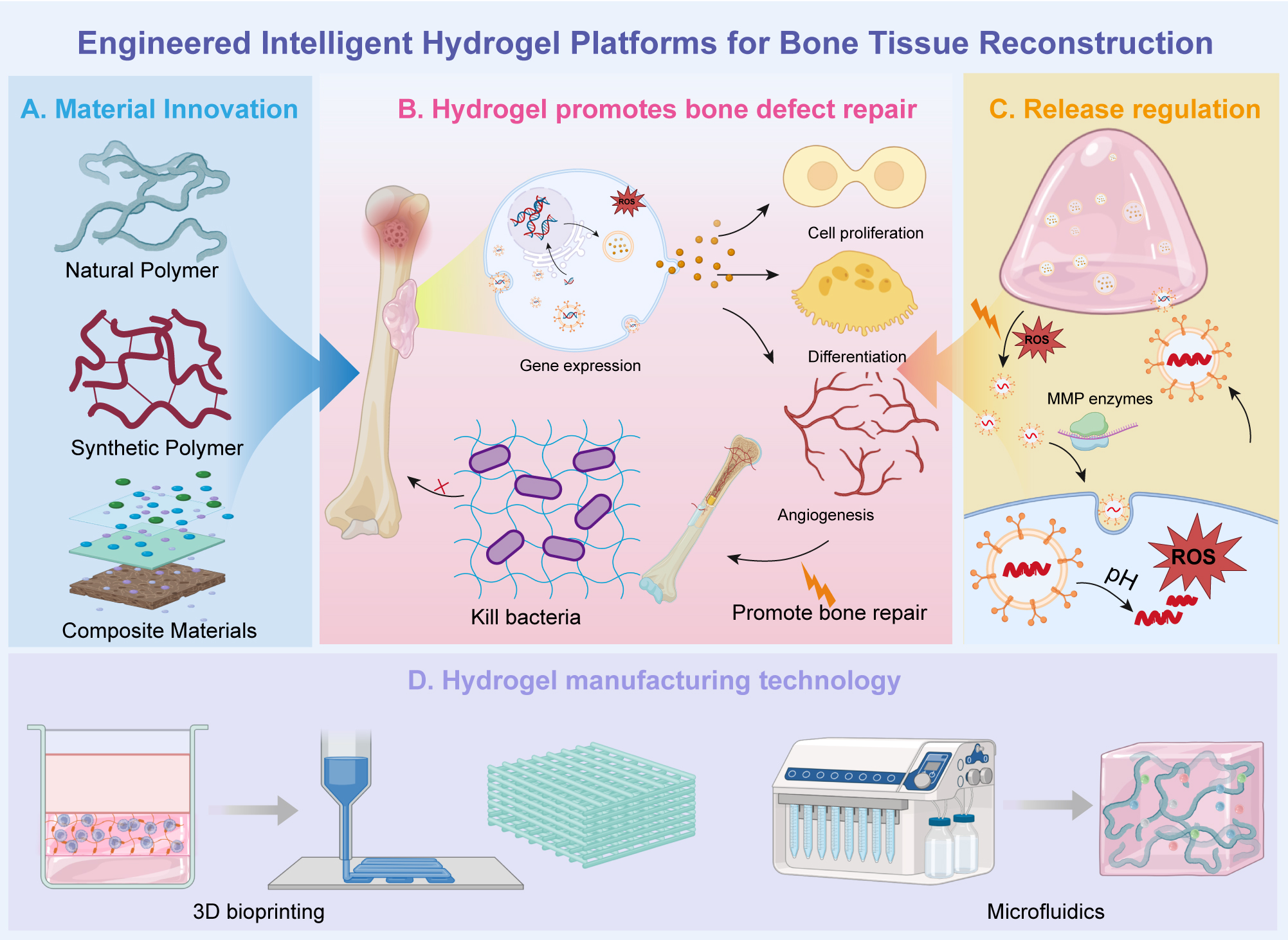
Figure 5. Engineered intelligent hydrogel platforms for bone tissue reconstruction. (A) Material Innovation: Different polymeric materials are utilized to engineer hydrogels, including natural polymers, synthetic polymers, and composite materials, each contributing distinct properties for bone repair. Natural polymers provide biocompatibility, synthetic polymers allow customization of mechanical and chemical properties, and composite materials combine the advantages of both. (B) Hydrogel-Induced Bone Defect Repair: These hydrogel platforms promote bone repair through mechanisms such as cell proliferation, differentiation, angiogenesis, and gene expression regulation. Additionally, they exhibit antibacterial properties that help combat infections during the repair process. (C) Release Regulation: The hydrogels are designed to regulate the controlled release of therapeutic agents (e.g., growth factors) in response to pH, ROS, and MMP activity, further enhancing bone regeneration. These platforms maintain a favorable environment for tissue healing and remodeling. (D) Hydrogel Manufacturing Technology: The production of these hydrogels utilizes advanced technologies such as 3D bioprinting for custom shapes and structures and microfluidics for precise material synthesis and formulation, ensuring uniformity and efficiency in hydrogel preparation for clinical applications.