

fig4
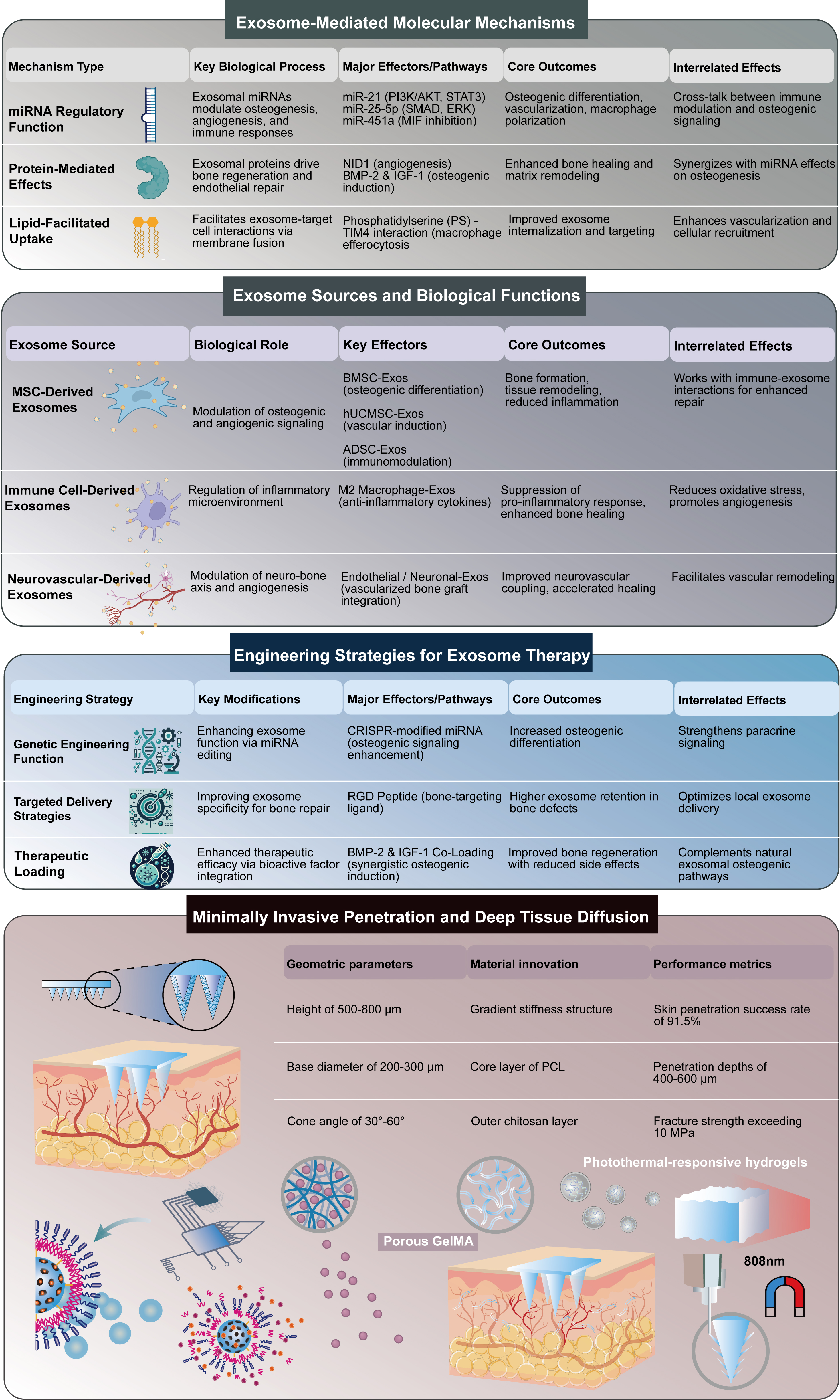
Figure 4. Mechanisms, sources, and engineering of exosomes, and microneedle delivery systems for bone regeneration. (A) Molecular Mechanisms of Exosomes: Exosomes promote bone healing through miRNA regulation, protein delivery, and lipid-mediated uptake. These processes enhance osteogenesis, angiogenesis, and immune modulation. (B) Sources and Functions: Exosomes from MSCs, immune cells, and neurovascular cells serve distinct roles. MSC-derived exosomes boost osteogenic signaling; immune cell-derived exosomes regulate inflammation; neurovascular-derived exosomes support vascularization and graft integration. (C) Engineering Strategies: Genetic editing enhances exosome bioactivity, while targeted delivery improves retention in bone defects. Therapeutic loading with factors such as BMP-2 and IGF-1 enhances regeneration while minimizing side effects. (D) Minimally Invasive Penetration and Deep Tissue Diffusion: Design optimization of microneedles, including geometric parameters (height, base diameter, cone angle) and gradient stiffness structures, enables efficient skin penetration. Porous hydrogel structures and photothermal-responsive systems facilitate the controlled and sustained release of exosomes into deep tissues.