

fig2
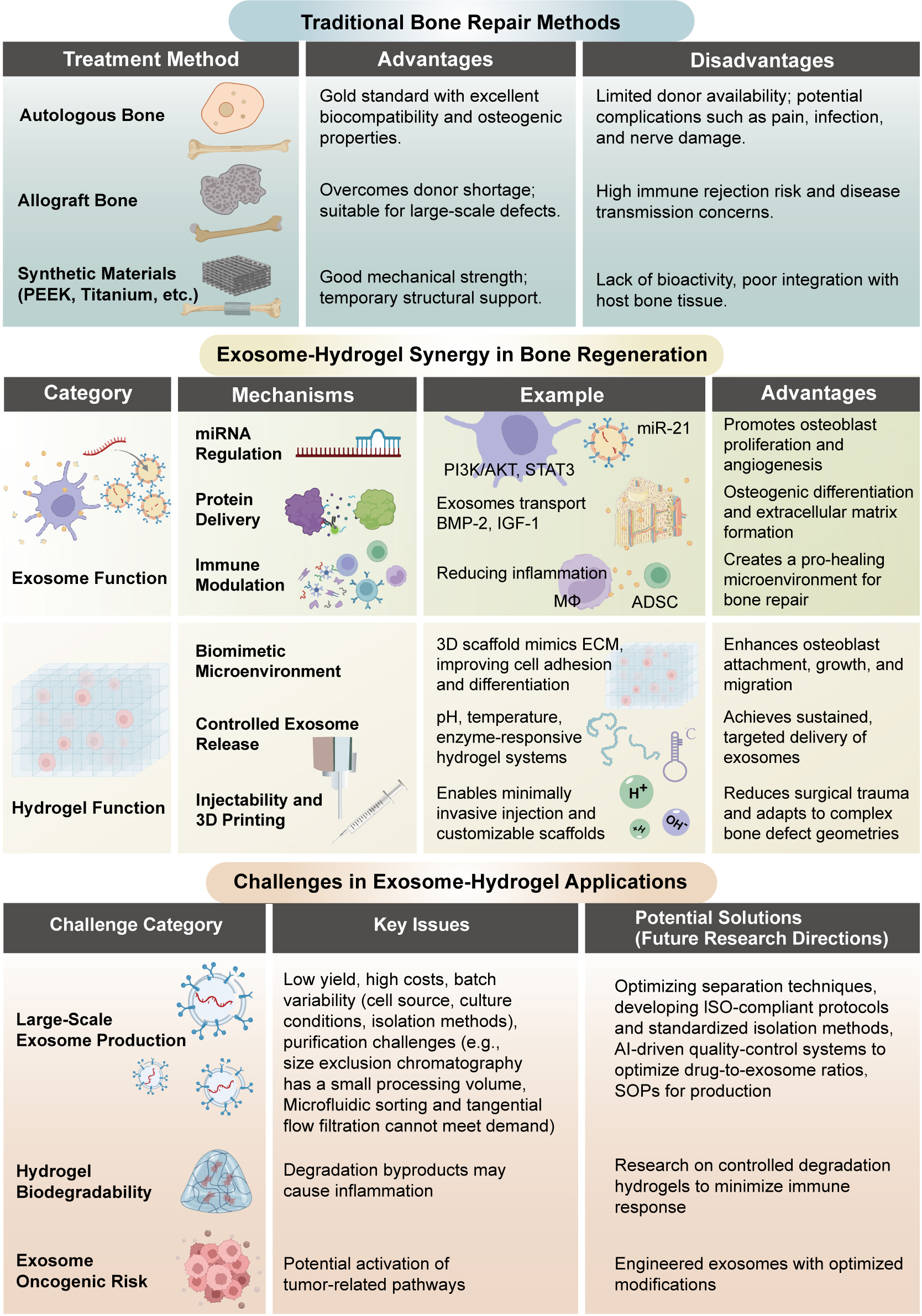
Figure 2. Comparison of traditional bone repair and hydrogel-exosome synergy for bone regeneration. This figure compares traditional bone repair methods with the innovative hydrogel-exosome system. The top panel illustrates three traditional approaches: Autografts, which offer high compatibility but may cause donor site complications; Allografts, which reduce the need for donor tissue but carry immune rejection risks; and Synthetic Materials, which provide temporary support but lack bioactivity. The bottom panel highlights the Hydrogel-Exosome Synergy, where exosomes deliver crucial signals for osteoblast proliferation, immune modulation, and angiogenesis, while hydrogels provide a controlled, biodegradable environment that ensures targeted release and 3D printability. In addition to these regenerative benefits, exosomes may carry oncogenic microRNAs or proteins that could activate tumor-related pathways, representing a potential oncogenic risk that must be carefully evaluated in clinical translation. This combination promotes effective bone remodeling. Challenges including exosome yield, hydrogel degradation, and safety concerns such as tumorigenic potential are emphasized, suggesting directions for future research to optimize these systems for clinical use.