
fig11
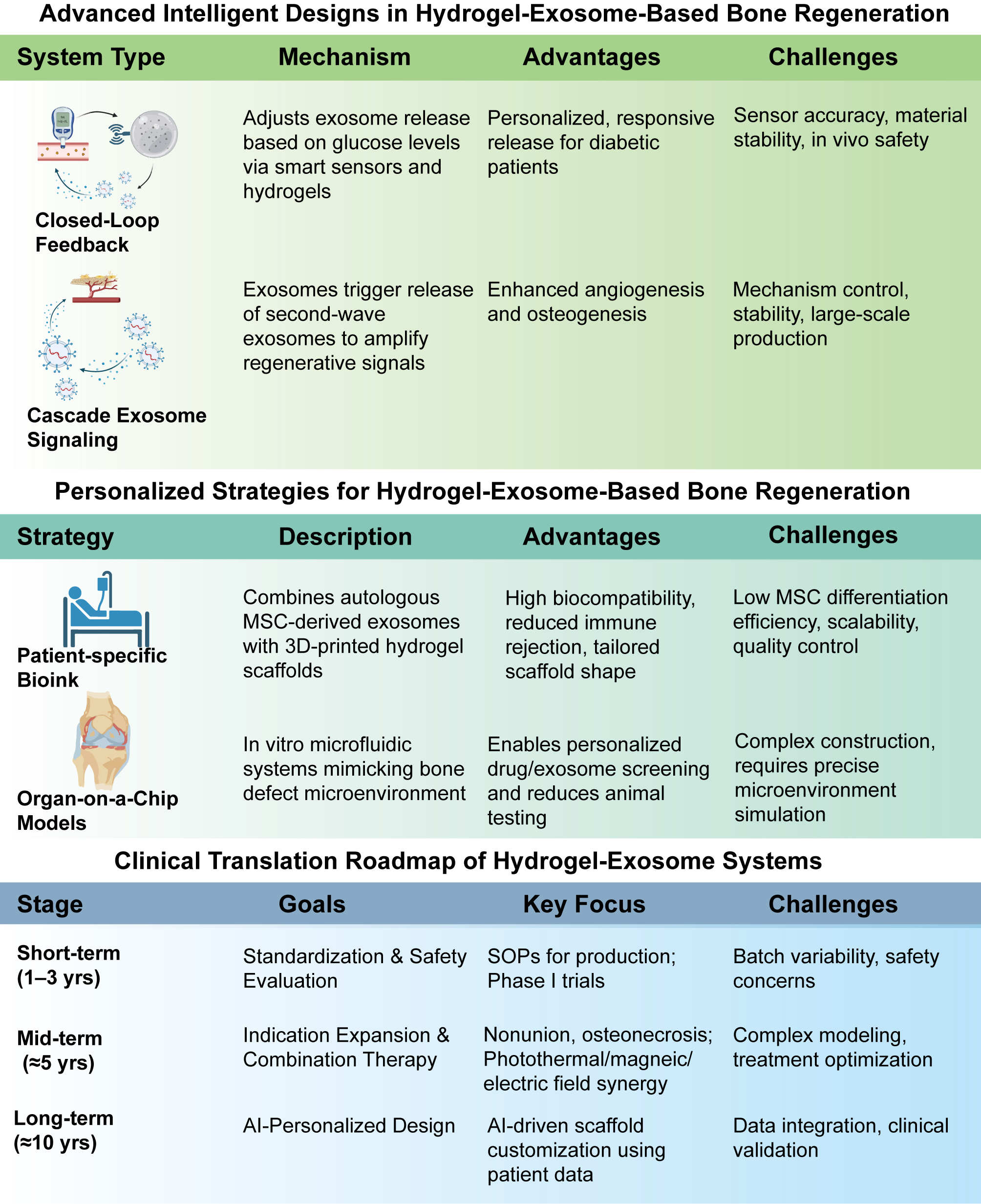
Figure 11. Advanced intelligent designs and personalized strategies for hydrogel-exosome-based bone regeneration. Advanced Intelligent Designs include two systems: the Closed-Loop Feedback system, which modulates exosome release based on glucose levels using smart sensors and hydrogels, tailored for diabetic patients but facing sensor accuracy and material stability challenges; and the Cascade Exosome Signaling system, where primary exosomes release secondary exosomes to boost angiogenesis and osteogenesis, though stability and scalability need to be improved. Personalized Strategies feature a patient-specific bioink approach, combining autologous MSC-derived exosomes with 3D-printed hydrogels for better biocompatibility, though challenges with MSC differentiation remain. Organ-on-a-Chip Models can simulate bone defects for personalized screening, but struggle with construction complexity and environment simulation. The Clinical Translation Roadmap outlines three stages: Short-term (1-3 years) for standardization and Phase I trials, Mid-term (≈5 years) for therapy combinations and expanded indications, and Long-term (≈10 years) for AI-driven designs. Challenges include batch variability, optimization, and data integration, emphasizing the innovations, strategies, and obstacles in advancing hydrogel-exosome systems.