

fig1
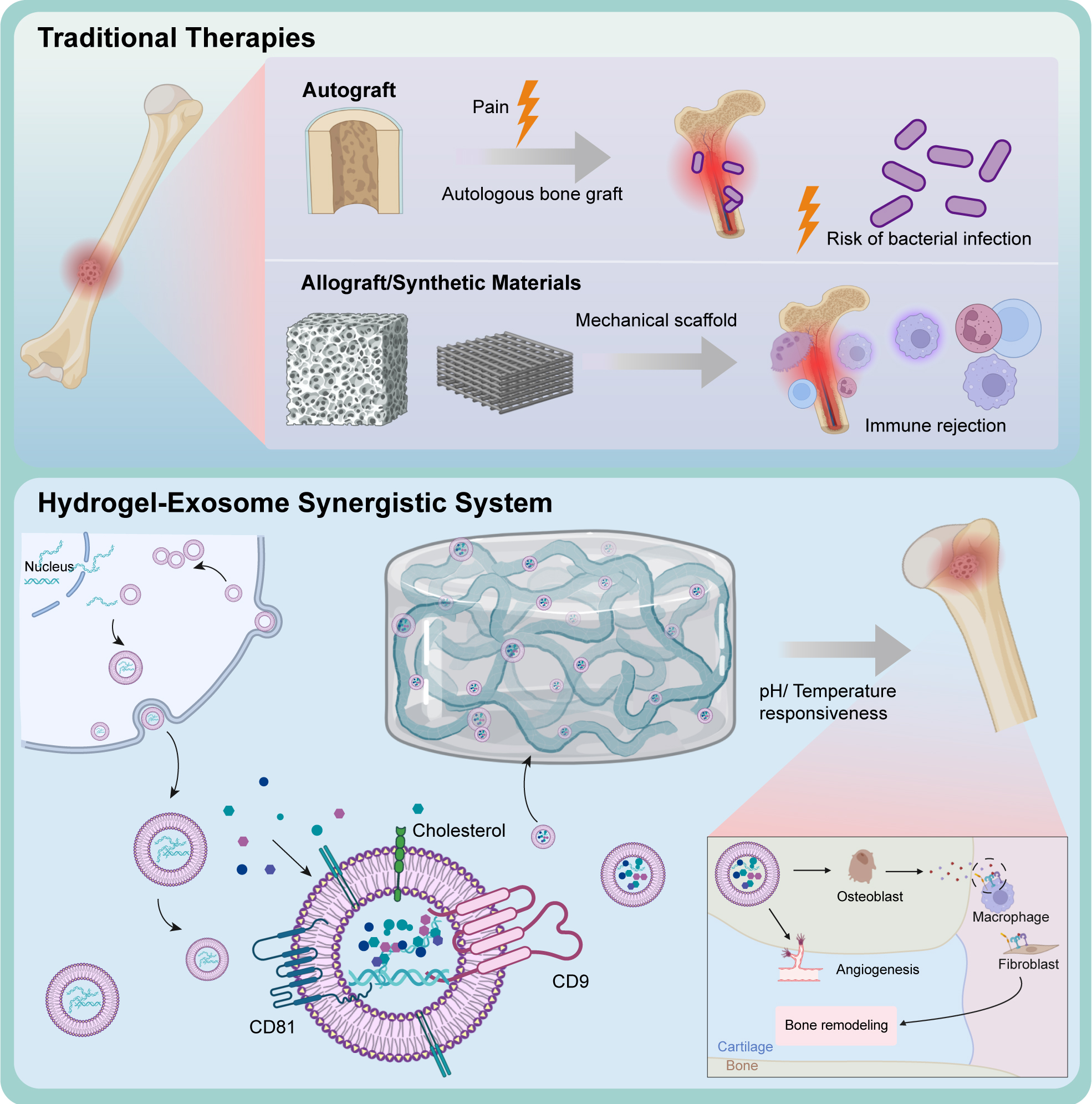
Figure 1. Comparison of traditional bone therapies and hydrogel-exosome synergistic systems. Traditional bone therapies such as autografts, allografts, and synthetic materials present several limitations. Autografts, though biocompatible, often lead to donor site pain and carry a risk of bacterial infection. Allografts and synthetic scaffolds may offer structural support but are prone to immune rejection due to foreign material implantation. In contrast, hydrogel-exosome synergistic systems provide a promising alternative. These systems utilize hydrogels as smart carriers that respond to environmental stimuli such as pH and temperature, allowing for controlled exosome release. Exosomes enriched with proteins such as CD81 and CD9 enhance cellular communication and tissue regeneration. The combined system supports osteogenesis, angiogenesis, and immune regulation through interactions with osteoblasts, macrophages, and fibroblasts.