
fig1
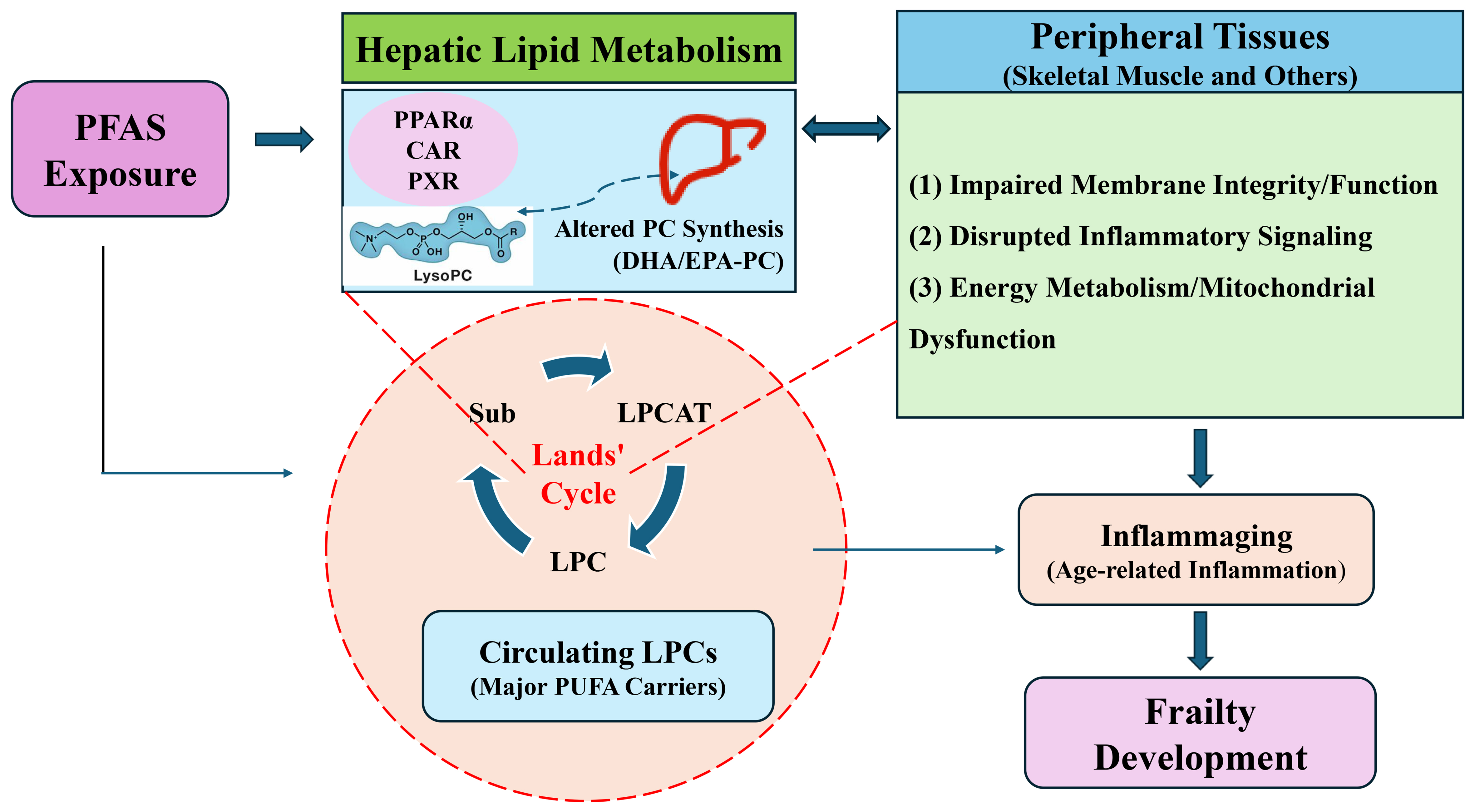
Figure 1. Conceptual framework illustrating the hypothesized PFAS-lipid-frailty nexus. The LIVER icon was adapted from Iconfont (https://www.iconfont.cn/). PFAS are proposed to disrupt hepatic lipid metabolism via PPARα and other pathways, altering the pool of DHA/EPA-containing PCs. This changes the substrate for PLA2, impacting the production of specific LPCs within the Lands’ cycle (LPCAT-mediated reacylation). The resulting alteration in the circulating LPC profile affects the delivery of DHA/EPA to peripheral tissues (e.g., skeletal muscle), influencing membrane function, inflammatory tone, and energy metabolism. These disruptions, superimposed on age-related inflammaging, contribute to frailty pathophysiology. Direct PFAS toxicity in muscle and other tissues may also occur. The pathways depicted are hypothetical and require empirical validation. PFAS: Per- and polyfluoroalkyl substances; PPARα: peroxisome proliferator-activated receptor alpha; DHA: docosahexaenoic acid; EPA: eicosapentaenoic acid; PCs: phosphatidylcholines; PLA2: phospholipase A2; LPCs: lysophosphatidylcholines; LPCAT: lysophosphatidylcholine acyltransferase; CAR: constitutive androstane receptor; PXR: pregnane X receptor; Sub: Substrate; PUFA: polyunsaturated fatty acid.