

fig2
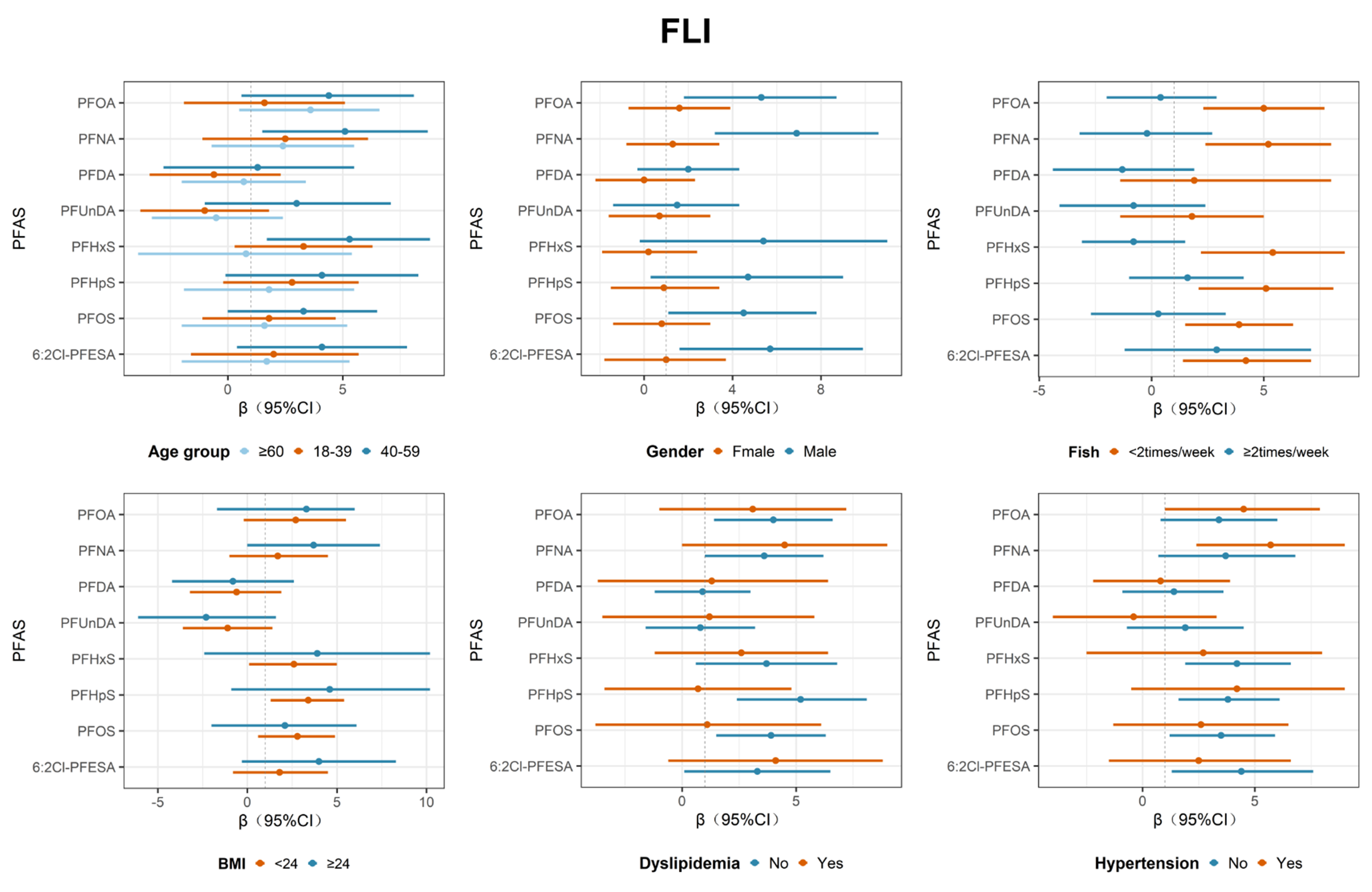
Figure 2. Association between PFAS and FLI in different sexes, age, BMI, frequency of fish consumption, dyslipidemia and hypertension. Adjusted for age, gender, marriage, study site, nationality, education, occupation and household income, smoking, drinking, fish consumption frequency, meat consumption frequency, activity, BMI, CKD, dyslipidemia and hypertension (When grouped by sex, the covariates did not include sex; When grouped by age, the covariates did not include age; When grouped by fish consumption frequency, the covariates did not include fish consumption frequency; When grouped by BMI, the covariates did not include BMI; When grouped by dyslipidemia, the covariates did not include dyslipidemia; When grouped by hypertension, the covariates did not include hypertension). PFAS: Per- and polyfluoroalkyl substances; FLI: fatty liver index; BMI: body mass index; CKD: chronic kidney disease; PFOA: perfluorooctanoic acid; PFNA: perfluorononanoic acid; PFDA: perfluorodecanoic acid; PFUnDA: perfluoroundecanoic acid; PFHxS: perfluorohexane sulfonic acid; PFHpS: perfluoroheptane sulfonic acid; PFOS: perfluorooctane sulfonic acid; 6:2 Cl-PFESA: 6:2 chlorinated polyfluoropolyether sulfonic acid; CI: confidence interval.