

fig1
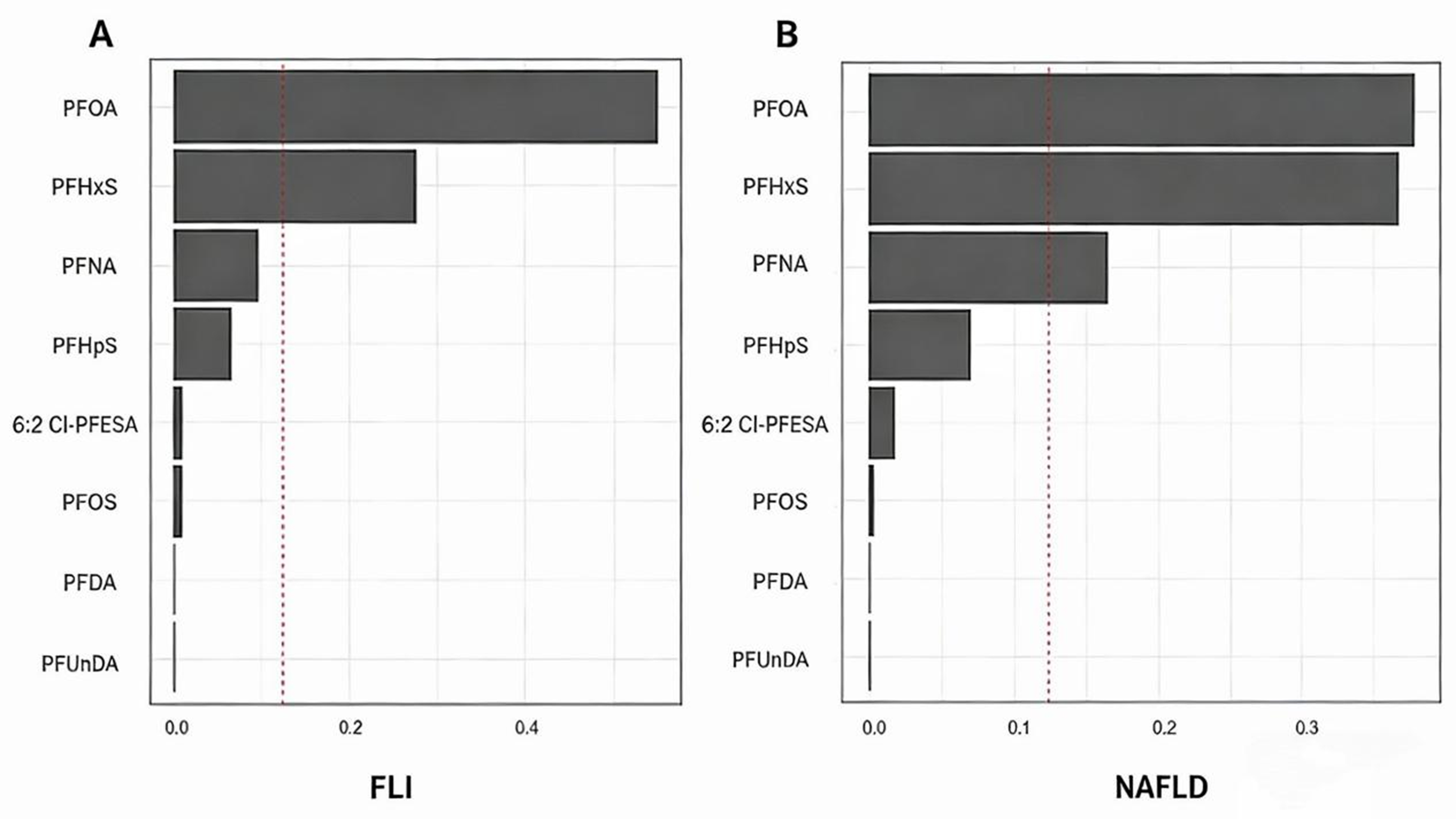
Figure 1. The weight of each PFAS component in the effect of exposure to PFAS mixture on FLI and NAFLD by WQS model. (A) Weight of each PFAS on the associations of PFAS mixtures with FLI; (B) Weight of each PFAS on the associations of PFAS mixtures with NAFLD. Positive WQS models were fitted for all participants. Weights of each PFAS congener are represented by the bar-chart. Models were adjusted by age, gender, marriage, study site, nationality, education, occupation and household income, smoking, drinking, fish consumption frequency, meat consumption frequency, activity, BMI, CKD, dyslipidemia and hypertension. PFAS: Per- and polyfluoroalkyl substances; FLI: fatty liver index; NAFLD: nonalcoholic fatty liver disease; WQS: weighted quantile sum regression; BMI: body mass index; CKD: chronic kidney disease; PFOA: perfluorooctanoic acid; PFHxS: perfluorohexane sulfonic acid; PFNA: perfluorononanoic acid; PFHpS: perfluoroheptane sulfonic acid; 6:2 Cl-PFESA: 6:2 chlorinated polyfluoropolyether sulfonic acid; PFOS: perfluorooctane sulfonic acid; PFDA: perfluorodecanoic acid; PFUnDA: perfluoroundecanoic acid.