
fig3
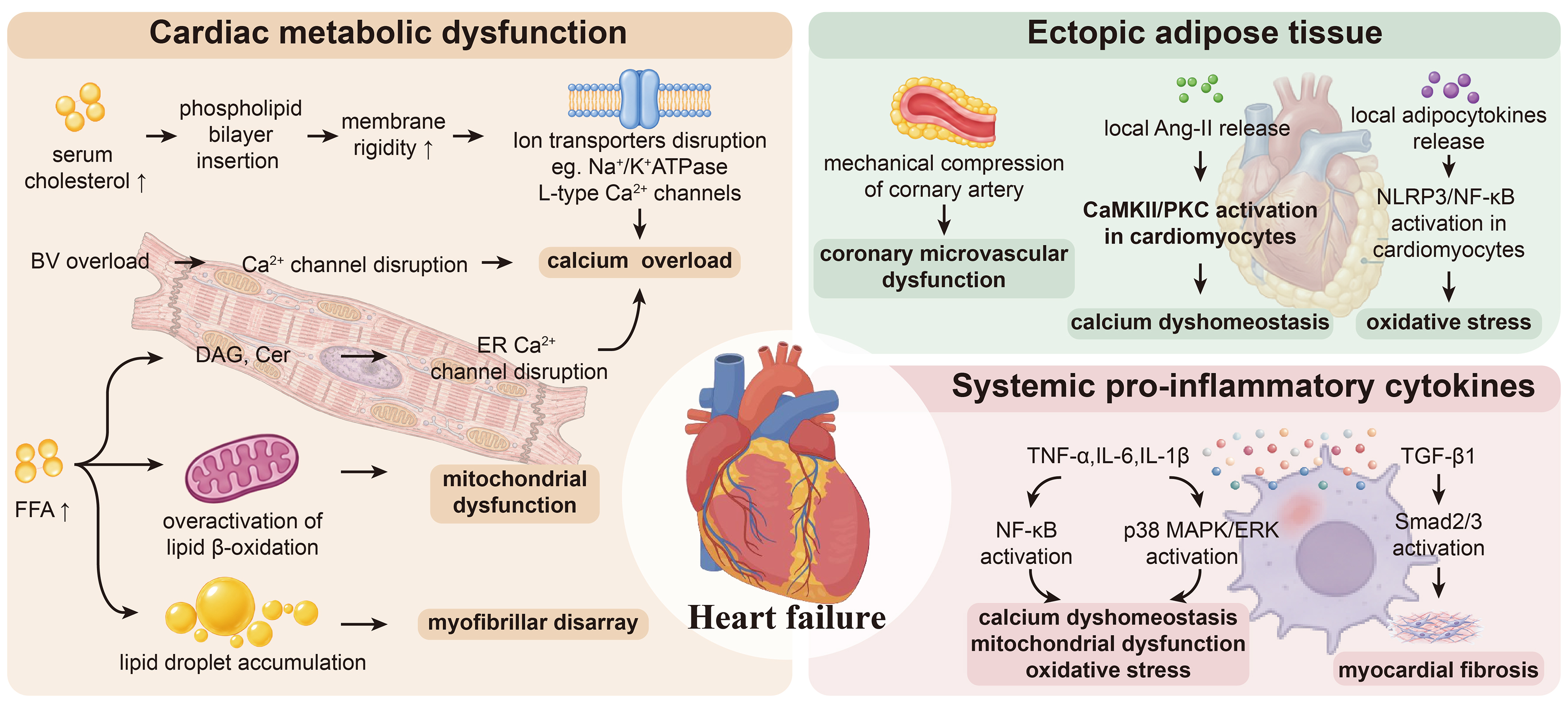
Figure 3. Mechanisms of obesity-associated HF. Obesity promotes heart failure through interconnected metabolic dysfunction and ectopic adipose tissue-mediated mechanisms. In cardiomyocytes, elevated circulating cholesterol alters membrane lipid composition and increases membrane rigidity, thereby impairing membrane transporters and ion channels, including Na+/K+-ATPase and L-type Ca2+ channels, and disrupting intracellular ionic homeostasis. Volume overload and abnormal sarcoplasmic/endoplasmic reticulum Ca2+ handling further aggravate Ca2+ dyshomeostasis. Excess free fatty acids promote lipid droplet accumulation and the generation of lipotoxic intermediates, including DAGs and Cer, while excessive fatty acid β-oxidation imposes mitochondrial metabolic stress, resulting in impaired ATP production, increased ROS generation, and myofibrillar disruption. Ectopic adipose tissue, particularly EAT, further contributes to cardiac dysfunction through mechanical compression of the coronary circulation and the local release of Ang-II and pro-inflammatory adipocytokines. These mediators activate NLRP3/NF-κB signaling, enhance oxidative stress, impair SERCA2a-dependent Ca2+ handling, and promote coronary microvascular dysfunction. In parallel, pro-inflammatory cytokines, including TNF-α, IL-6, and IL-1β, activate NF-κB and p38 MAPK/ERK signaling, thereby exacerbating mitochondrial dysfunction, lipid accumulation, oxidative stress, and cardiomyocyte injury. TGF-β1-mediated Smad2/3 signaling further promotes the expression of collagen-associated genes, including COL1A1 and COL3A1, leading to extracellular matrix deposition, myocardial fibrosis, increased ventricular stiffness, and ultimately heart failure. FFA: Free fatty acids; DAGs: diacylglycerols; Cer: ceramide; ATP: adenosine triphosphate; ROS: reactive oxygen species; Ang-II: angiotensin II; NLRP3: NOD-like receptor family pyrin domain-containing 3; NF-κB: nuclear factor κB; SERCA2a: sarco/endoplasmic reticulum Ca2+-ATPase 2a; TNF-α: tumor necrosis factor-α; IL: interleukin; MAPK: mitogen-activated protein kinase; ERK: extracellular signal-regulated kinase; TGF-β1: transforming growth factor-β1; COL1A1: collagen type I alpha 1 chain; COL3A1: collagen type III alpha 1 chain.