
fig1
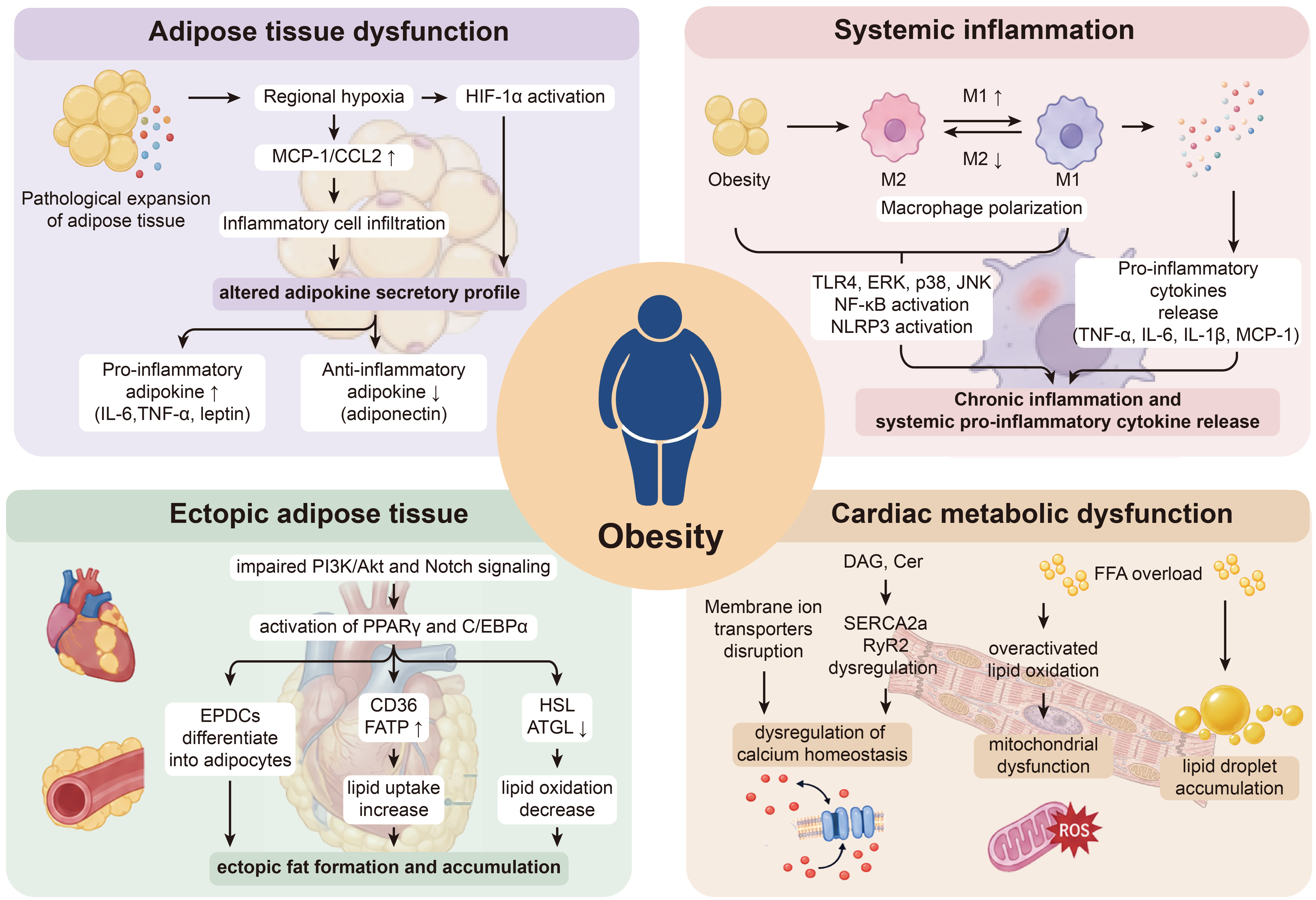
Figure 1. Molecular mechanisms linking obesity to CVD. Obesity promotes cardiovascular injury through four interconnected mechanisms: adipose tissue dysfunction, systemic inflammation, ectopic adipose tissue accumulation, and cardiac metabolic dysfunction. Pathological expansion of adipose tissue induces regional hypoxia and HIF-1α activation, accompanied by increased MCP-1/CCL2 expression and inflammatory cell infiltration, ultimately shifting the adipokine secretory profile toward increased pro-inflammatory adipokines, including IL-6, TNF-α, and leptin, and reduced anti-inflammatory adiponectin. Obesity also promotes macrophage polarization toward a pro-inflammatory M1 phenotype and suppresses the M2 phenotype. Activation of TLR4-ERK/p38/JNK, NF-κB, and NLRP3 signaling enhances the release of pro-inflammatory cytokines, including TNF-α, IL-6, IL-1β, and MCP-1, thereby sustaining chronic systemic inflammation. In parallel, impaired PI3K/Akt and Notch signaling activates PPARγ- and C/EBPα-dependent adipogenic programs, promotes the differentiation of epicardial progenitor-derived cells into adipocytes, increases CD36/FATP-mediated lipid uptake, and reduces HSL/ATGL-mediated lipid mobilization, collectively facilitating ectopic fat formation and accumulation. In cardiomyocytes, DAG and Cer disrupt membrane ion transport and SERCA2a/RyR2-mediated Ca2+ handling, whereas FFA overload promotes excessive lipid oxidation, mitochondrial dysfunction, ROS generation, and lipid droplet accumulation. Together, these processes contribute to obesity-associated cardiovascular dysfunction and remodeling. HIF-1α: Hypoxia-inducible factor-1α; MCP-1/CCL2: monocyte chemoattractant protein-1/C-C motif chemokine ligand 2; IL: interleukin; TNF-α: tumor necrosis factor-α; TLR4: Toll-like receptor 4; ERK: extracellular signal-regulated kinase; JNK: c-Jun N-terminal kinase; NF-κB: nuclear factor κB; NLRP3: NOD-like receptor family pyrin domain-containing 3; PI3K/Akt: phosphoinositide 3-kinase/protein kinase B; PPARγ: peroxisome proliferator-activated receptor γ; C/EBPα: CCAAT/enhancer-binding protein α; EPDCs: epicardium-derived progenitor cells; FATP: fatty acid transport protein; HSL: hormone-sensitive lipase; ATGL: adipose triglyceride lipase; DAG: diacylglycerol; Cer: ceramide; FFA: free fatty acid; SERCA2a: sarco/endoplasmic reticulum Ca2+-ATPase 2a; RyR2: ryanodine receptor 2; ROS: reactive oxygen species.