


U-shaped relationship between guideline-directed medical therapy initiation timing and long-term adverse outcomes in acute heart failure
 0
0 Abstract
Aim: The early initiation of guideline-directed medical therapy (GDMT) in patients with acute heart failure (AHF) is significantly associated with clinical prognosis. However, the optimal timing for initiating GDMT in AHF patients requiring Intensive Care Unit (ICU) admission remains unclear. This study aims to investigate the association between the timing of GDMT initiation and prognosis in ICU patients with acute heart failure.
Methods: This study identified ICU-admitted AHF patients from the Medical Information Mart for Intensive Care IV (MIMIC-IV) database and determined GDMT initiation timing based on clinical treatment context. Patients were categorized into three groups according to the timing of GDMT initiation. Primary endpoints were 1-year all-cause mortality and the composite endpoint of 1-year all-cause mortality and heart failure rehospitalization. Cox proportional hazards regression and restricted cubic splines were utilized to elucidate the association between GDMT initiation timing and long-term adverse outcomes in patients with acute heart failure.
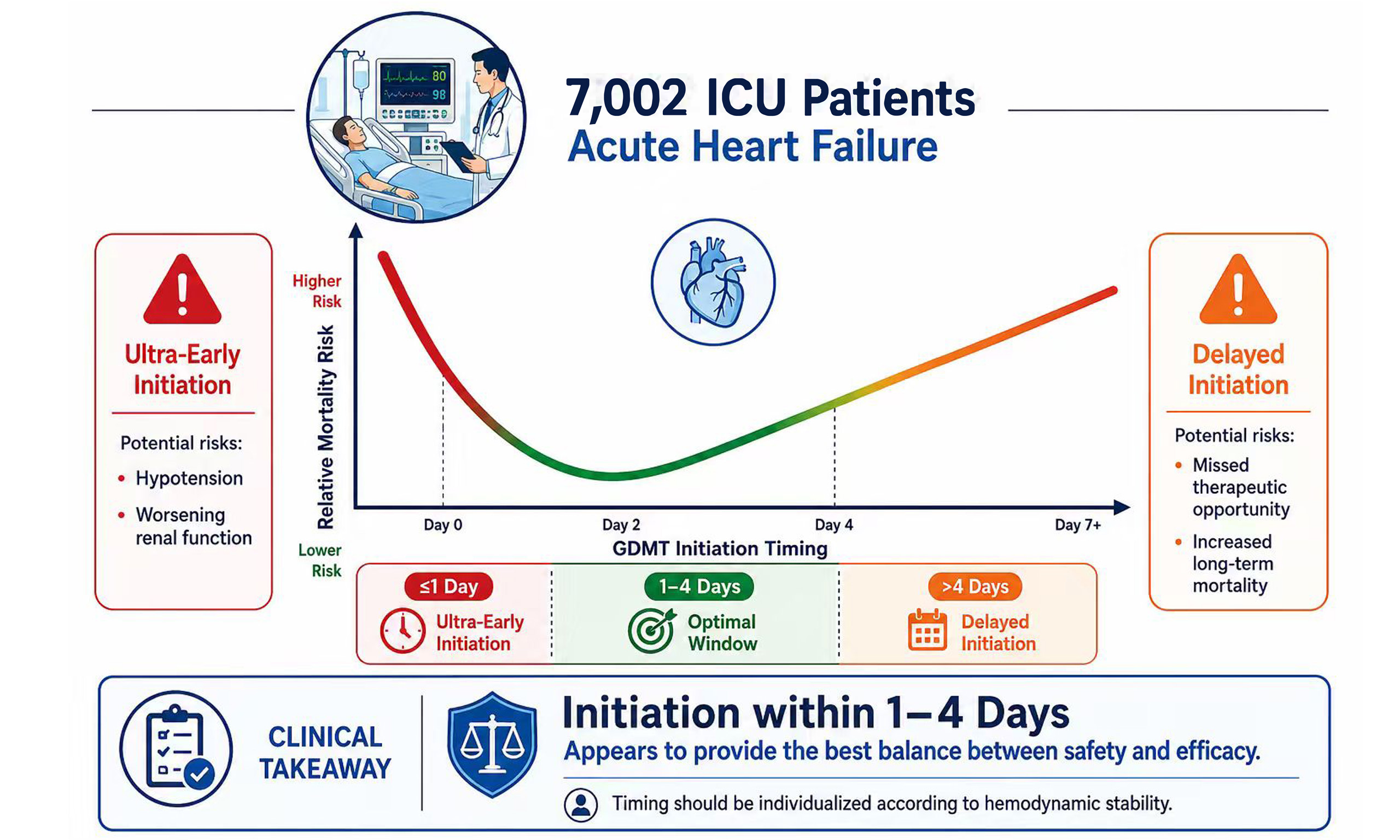
Results: A total of 7,002 patients were included in this study, of whom 4,260 (60.7%) received GDMT within one day after AHF onset. Compared to patients who initiated GDMT between one and four days, those who received GDMT within one day and those who received GDMT after four days had a higher composite risk of one-year all-cause mortality and heart failure rehospitalization. The restricted cubic spline analysis demonstrated a U-shaped relationship between GDMT initiation timing and the primary outcome. The composite risk of one-year all-cause mortality and heart failure rehospitalization decreased as GDMT initiation was delayed, reaching its lowest point around two days, after which the risk began to rise and eventually stabilized.
Conclusion: In critically ill acute heart failure patients, a nonlinear U-curve relationship emerged between GDMT initiation timing and all-cause mortality. The optimal therapeutic window diverges across patient subgroups defined by clinical characteristics, notably warranting individualized timing strategies - particularly in geriatric populations.
Keywords
INTRODUCTION
Acute heart failure (AHF) is a leading global cause of hospitalization, characterized by high post-discharge mortality and readmission rates[1-6]. Current American College of Cardiology (ACC) guidelines recommend cautiously initiating the four-pillar therapy - comprising sodium-glucose cotransporter-2 inhibitors (SGLT2i), angiotensin receptor-neprilysin inhibitors (ARNI)/angiotensin-converting enzyme inhibitors (ACEI), beta-blockers, and mineralocorticoid receptor antagonists (MRA) - as early as possible following hemodynamic stabilization[7]. While guideline-directed medical therapy (GDMT) has revolutionized the chronic management of heart failure, the optimal timing for initiating GDMT during acute hospitalization remains controversial[8-16]. Data from the EMPULSE (Impact of empagliflozin on decongestion in acute heart failure) and PIONEER-HF (Angiotensin-neprilysin inhibition in acute decompensated heart failure) trials highlight the feasibility of initiating SGLT2i or transitioning to ARNI during hospitalization in hemodynamically stabilized patients with acute decompensated heart failure (ADHF), with evidence linking these interventions to improved clinical outcomes. Retrospective studies further underscore that delayed GDMT initiation or discontinuation during hospitalization is associated with higher mortality rates, emphasizing the importance of timely therapy[17,18].
Despite well-established benefits of GDMT, persistent underprescription and failure to reach therapeutic doses are observed across both outpatient and hospitalized heart failure patients[19,20]. Furthermore, evidence suggests that withdrawing beta-blockers during acute decompensation may increase short-term mortality risk, underscoring the complexity of managing GDMT timing across the acute-to-chronic care continuum[21]. Multiple retrospective cohort studies and registry analyses have proven that in-hospital GDMT interruption or delayed initiation independently predicts higher risks of long-term all-cause mortality and heart failure rehospitalization, while interruptions to the renin-angiotensin-aldosterone system (RAAS) inhibitors and beta-blockers during admission are both linked to worsened post-discharge prognosis[22-25]. Current international heart failure guidelines uniformly advocate early GDMT initiation and gradual dose titration following hemodynamic stabilization[26-28]. However, these conclusions are not fully applicable to critically ill AHF patients admitted to the Intensive Care Unit (ICU).
Unlike ward patients, most ICU patients present with severe hemodynamic instability, hypotension, and require vasopressors or inotropic support during the acute phase. These clinical features greatly increase the risk of adverse events after early GDMT administration, making the optimal initiation timing far more controversial in the ICU setting. In addition, ICU patients often have multiple concurrent complications such as respiratory failure and acute kidney injury, which further complicate the selection of GDMT
METHODS
Data source
This retrospective cohort study utilized data exclusively from the MIMIC-IV database, a publicly accessible critical care electronic health record repository. Collaboratively developed by Massachusetts Institute of Technology (Cambridge, MA) and Beth Israel Deaconess Medical Center (Boston, MA), this database aggregates de-identified clinical records from over 40,000 ICU admissions between 2008 and 2019. It encompasses comprehensive critical care parameters including demographics, physiological measurements, laboratory results, medication administration, and diagnostic coding[31]. The institutional review boards of MIT and Beth Israel Deaconess Medical Center approved the original database creation under waiver of informed consent due to deidentification standards. The study only conducts secondary retrospective analysis on this publicly available, fully de-identified open database. According to the ethical regulations of Renmin Hospital of Wuhan University, secondary analyses of publicly released de-identified clinical databases that have obtained complete Institutional Review Board approval from the original custodian do not require additional local ethical review or patient informed consent. Therefore, no separate local ethical approval was required for this study.
Study trials
We extracted data from hospitalization records of all patients diagnosed with AHF and acute exacerbation of chronic heart failure (CHF-AE). For patients with multiple ICU admissions, we primarily collected all records from their first ICU admission. Our inclusion criteria were: (1) Adult patients aged 18 years or older; (2) A confirmed diagnosis of AHF or CHF-AE during the hospitalization record. Our exclusion criteria were: (1) No record of ICU admission; (2) Hospital stay time exceeding 90 days; (3) Complete absence of vital signs data. AHF and CHF-AE were identified from International Classification of Diseases, 9th/10th Revision (ICD-9/10). Detailed ICD codes are shown in Supplementary Table 1. Finally, a total of 7,002 patients were enrolled in this study. According to the ICD-9 and ICD-10 diagnostic codes, we further classified all enrolled patients into two heart failure phenotypes for subsequent stratified statistical analyses. Specifically, all patients with ICD-9/10 codes indicating isolated systolic heart failure, combined systolic-diastolic heart failure, or right heart failure secondary to systolic dysfunction were categorized as Heart Failure with reduced Ejection Fraction (HFrEF); patients with codes exclusively indicating isolated diastolic heart failure without systolic impairment were categorized as Heart Failure with preserved Ejection Fraction (HFpEF).
To obtain the exposure of interest “GDMT initiation time”, we developed the following search strategy. All data were extracted using structured query language (SQL). According to the standards outlined in European Society of Cardiology (ESA) and American Heart Association guidelines, GDMT medications include four main categories: RAAS inhibitors/ARNI, beta-blockers, MRAs, and SGLT2 inhibitors[28,29]. However, as SGLT2 inhibitors were first included in guidelines in 2020, and the MIMIC-IV database consists of hospitalized patients from 2008 to 2019, this study did not include SGLT2 inhibitors. Therefore, this study’s analyzed GDMT regimen only comprises three drug classes (RAAS inhibitors/ARNI, beta-blockers, MRAs) and does not reflect the contemporary complete four-pillar heart failure guideline-directed medical therapy. We conducted a keyword search for all drug names corresponding to the aforementioned three categories in the database and excluded medications unlikely to be used for heart failure treatment. Detailed information on the screened medications is presented in Supplementary Table 2. Using patients’ medication administration records and admission times, we determined the GDMT initiation time. GDMT initiation time was defined as the interval between the initiation of any GDMT medication and the onset of acute heart failure. We defined the onset of AHF as the time of ICU admission. The core GDMT for heart failure consisted entirely of oral medications. Intravenous drugs were applied as rescue therapy to relieve acute symptoms during hospital stay, and were not included in the standardized oral GDMT regimen. Figure 1 illustrates the five possible scenarios present in the collected dataset.
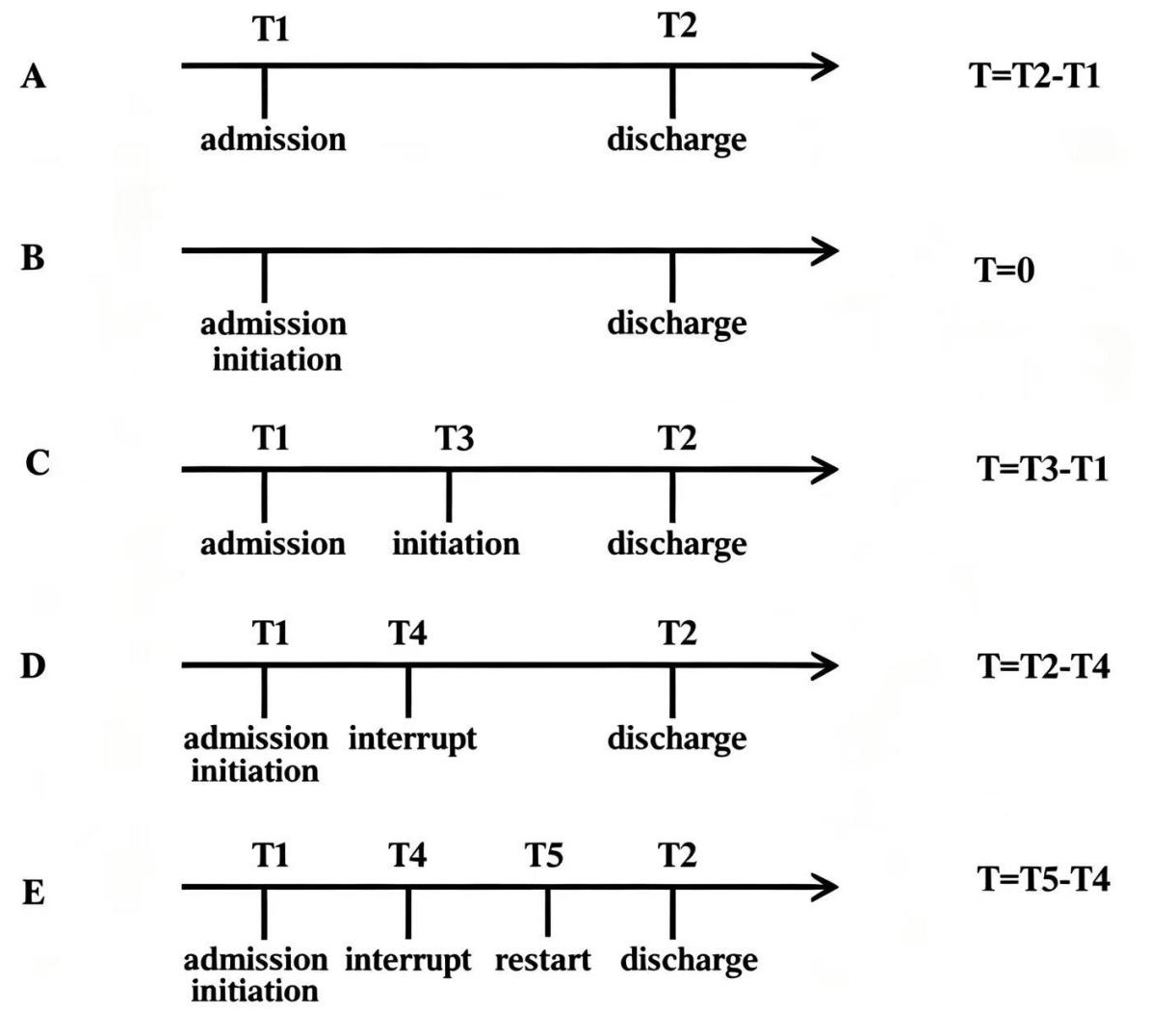
Figure 1. Definition of the GDMT initiation time. (A) The patient did not receive GDMT treatment during hospitalization but started GDMT after discharge, the GDMT initiation time is considered to be the length of the hospital stay; (B) The patient started GDMT treatment at admission or before admission and continued GDMT throughout the entire hospital stay, the GDMT initiation time is considered as 0; (C) The patient initiated GDMT treatment during hospitalization and continued it after discharge, the GDMT initiation time is considered as the interval between the initiation and the admission time; (D) The patient discontinued GDMT treatment during hospitalization and did not resume it, the GDMT initiation time is considered as the interval between the discontinuation and the discharge time; (E) The patient discontinued GDMT treatment during hospitalization and then resumed it during the same hospital stay, the GDMT initiation time is considered as the interval between the resumption and discontinuation times. GDMT: Guideline-directed medical therapy.
Considering the delay in clinical medication use records, we considered GDMT initiation within 1 day as uninterrupted GDMT medication use or very early initiation. According to guideline recommendations, reversible acute decompensated heart failure should recover hemodynamic stability within 24 h; cardiorenal syndrome or hypotension patients should correct hemodynamic instability within 72 h; and refractory heart failure patients should be evaluated for long-term support strategies after 72 h[7,28,29]. For most acute heart failure patients, hemodynamic stability should be achieved within 72 h of ICU admission, and GDMT should be initiated within 24 h after hemodynamic stability. Therefore, this study divided the time to initiation of GDMT into three groups: 0 ≤ T ≤ 1 day, 1 day < T ≤ 4 days, and T > 4 days. Figure 2 shows the research flowchart. For patients who never received GDMT during hospitalization, we imputed initiation time as the length of stay, assuming therapy began immediately post-discharge. Although this approach is pragmatic given data limitations, it may introduce misclassification bias.
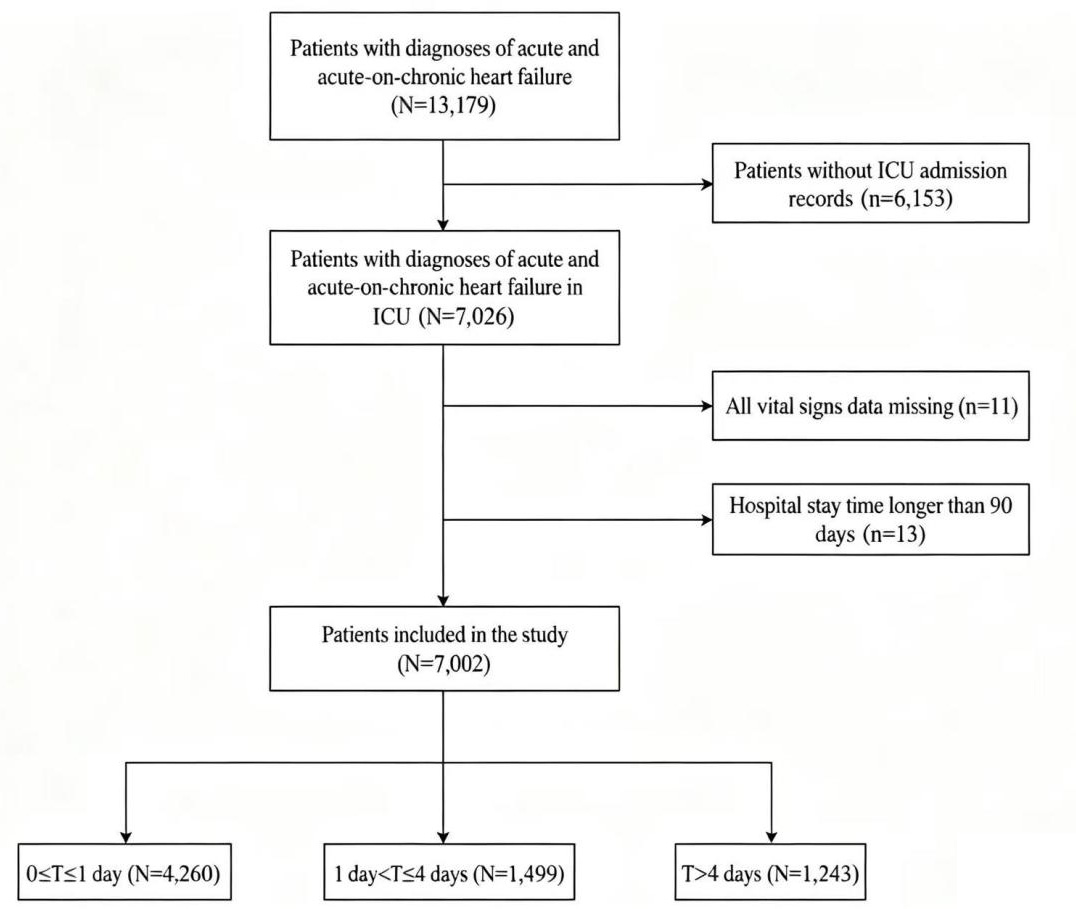
Figure 2. Research Flowchart. T was defined as the interval between the initiation of any GDMT medication and the onset of acute heart failure. We extracted data from hospitalization records of all patients diagnosed with acute heart failure (AHF) and acute exacerbation of chronic heart failure (CHF-AE). For patients with multiple Intensive Care Unit (ICU) admissions, we primarily collected all records from their first ICU admission Our exclusion criteria were: (1) No record of ICU admission; (2) Hospital staytime exceeding 90 days; (3) Complete absence of vital signs data. Finally, a total of 7,002 patients were enrolled in this study. T was divided into three groups: 0 ≤ T ≤ 1 day, 1 day < T ≤ 4 days, and T > 4 days. GDMT: Guideline-directed medical therapy.
Data extraction
We collected demographic data, including age, sex, and race. Vital signs measured at ICU admission included heart rate, blood pressure (BP), and oxygen saturation (SpO2). Recorded comorbidities included hypertension, diabetes, chronic lung disease, and chronic kidney disease. Key laboratory parameters, such as hemoglobin, glucose, serum creatinine, blood urea nitrogen (BUN), potassium, and sodium levels, were carefully documented. Disease severity was assessed using the Glasgow Coma Scale (GCS), the Sequential Organ Failure Assessment (SOFA) score[32], and the Simplified Acute Physiology Score II (SAPSII)[33] in the first 24 h of ICU admission. Additionally, data on GDMT-related medication use and other relevant clinical interventions were collected. The measured outcomes included 1-year and 90-day survival rates, mortality rates, heart failure rehospitalization rates, as well as hospital and ICU lengths of stay. Notably, the missing rates of N-terminal pro-B-type natriuretic peptide (NT-proBNP) and left ventricular ejection fraction (LVEF) exceeded 20%, therefore, we incorporated heart failure subtype and hemodynamic stability status as surrogate markers to account for cardiac function and hemodynamic characteristics. In this study, the baseline hemodynamic status was comprehensively determined based on blood pressure, heart rate, and the use of vasoactive medications within the first 24 h after ICU admission. Hemodynamic instability was defined as meeting any of the following criteria: (1) 24 h average heart rate > 100 beats per minute (bpm) in conjunction with an average systolic blood pressure (SBP) < 90 mmHg; (2) 24 h average heart rate > 100 bpm accompanied by a decrease in systolic blood pressure > 40 mmHg; or (3) the administration of vasoactive drugs during the initial 24 h period.
Outcomes
The primary outcomes were defined as the composite endpoint of 1-year all-cause mortality and heart failure rehospitalization, as well as 1-year all-cause mortality alone. The secondary outcomes included 1-year heart failure rehospitalization; the composite endpoint of 90-day all-cause mortality and heart failure rehospitalization; 90-day all-cause mortality; 90-day heart failure rehospitalization; ICU length of stay; and hospital length of stay. In the MIMIC-IV database, the date of death for each patient was recorded, and for surviving patients, the maximum follow-up period was defined as one year after the last discharge record.
Statistical analysis
In our study, missing data for all variables were less than 10%. Per MIMIC-IV documentation, laboratory missingness is not random and may correlate with clinical states. We therefore conducted delta-adjusted sensitivity analyses and adjusted for missingness indicator variables in regression models. We performed all sensitivity analyses using the “mice” package in R software[34]. For normally distributed data, continuous variables are expressed as mean (SD), and for non-normally distributed data, they are expressed as median (IQR). Categorical variables are expressed as numbers and percentages (%). Inter-group differences were calculated using the Kruskal-Wallis test and Mann-Whitney U test for non-normally distributed continuous variables, and Fisher’s exact test or chi-square test for categorical variables.
We used the Kaplan-Meier method to generate 1-year survival curves to illustrate survival outcomes based on GDMT initiation timing. To assess the impact of GDMT initiation timing on mortality and heart failure readmission rates, we employed a multivariate Cox regression model, adjusting for demographic characteristics such as age, sex, and race, as well as comorbidities including hypertension, atrial fibrillation (AF), anemia, and chronic kidney disease (CKD). Additionally, we adjusted for vital signs such as heart rate, blood pressure, and hemodynamic parameters, as well as laboratory markers including hemoglobin, serum creatinine, BUN, sodium, and potassium. The results were expressed as hazard ratio (HR) with 95% confidence intervals (CI). The above survival analyses and conventional Cox regression were performed using the “survival” package in R.
Considering that mortality is a competing event for heart failure readmission, we employed a competing risk model to adjust for the risk of death and estimate the effect of GDMT initiation timing on heart failure readmission rates, which was implemented using the “cmprsk” package. To further explore the association between GDMT initiation timing and primary outcomes, we used restricted cubic spline curves to analyze the nonlinear relationship between GDMT initiation timing and primary outcomes via the “rms” package. The restricted cubic splines included five knots at the 5th, 27.5th, 50th, 72.5th, and 95th percentiles to flexibly model the relationship between GDMT initiation timing and mortality, with the median GDMT initiation time as the reference point[35]. Given the inability to track GDMT initiation timing outside the hospital, there may be misclassification in calculating initiation timing for patients who did not receive GDMT during hospitalization. To address this, a sensitivity analysis excluded these patients, and the primary outcomes were reanalyzed using a mixed-effects Cox regression model via the “coxme” package to verify the consistency and robustness of our results.
We then conducted subgroup analyses to identify differences in GDMT initiation timing among AHF patients with different clinical characteristics. Subgroups were classified based on age, sex, comorbidities, hemodynamic parameters, and severity scores. The Wald test was used to examine statistical significance. Categorical variables, such as sex and comorbidities (e.g., hypertension, atrial fibrillation, stroke), were divided into two groups, while continuous variables, including age, SAPS II, SOFA score, baseline SBP, hemoglobin, and creatinine, were divided into quartiles. These subgroup analyses aimed to explore the optimal GDMT initiation timing in specific populations and provide individualized treatment recommendations. All analyses were performed using R software version 4.3.2, with statistical significance set at P < 0.05.
RESULTS
Patient characteristics
We retrieved a total of 13,179 hospitalization cases of acute heart failure from the database. According to our exclusion criteria, 7,002 patients were selected for the study. Baseline characteristics of the Patients are shown in Table 1. Among them, 4,260 patients (60.7%) started GDMT treatment within 1 day after acute heart failure, 1,499 patients (21.4%) started GDMT treatment within 1 to 4 days after acute heart failure, and 1,243 patients (17.9%) started GDMT treatment after 4 days after acute heart failure. Figure 2 shows the detailed information of cohort selection. Table 1 describes the baseline and clinical characteristics of the cohort. The median age of the 7,002 patients was 75 years (IQR: 65-84), which is consistent with the age distribution of patients with acute heart failure[1]; among them, 3,776 (53.9%) were male, and 3,226 (46.1%) were female, with no significant difference between groups (P = 0.062). 4,835 (69.1%) were white, 764 (11.8%) were black, 181 (2.3%) were Asian, and 210 (3.0%) were Hispanic, with significant differences in racial distribution between groups (P = 0.002).
Characteristics of patients
| Characteristic | Overall (N = 7,002) | 0 ≤ T ≤ 1 day (N = 4,260) | 1 day < T ≤ 4 days (N = 1,499) | T > 4 days (N = 1,243) | P value | N |
| Age, median [IQR], years | 75 (65-84) | 75 (65-84) | 75 (66-84) | 73 (63-82) | < 0.001 | 0 |
| Gender | ||||||
| Female, n (%) | 3,226 (46.1%) | 2,006 (47.1%) | 682(45.5%) | 538 (43.4%) | 0.062 | 0 |
| Male, n (%) | 3,776 (53.9%) | 2,254 (52.9%) | 817 (54.5%) | 705 (56.6%) | 0.062 | 0 |
| Race | ||||||
| White, n (%) | 4,835 (69.1%) | 2,940 (69.1%) | 1,072 (71.5%) | 823 (66.2%) | < 0.001 | 0 |
| Black, n (%) | 764 (10.9%) | 502 (11.8%) | 134 (8.9%) | 128 (10.4%) | < 0.001 | 0 |
| Asian, n (%) | 181 (2.6%) | 100 (2.3%) | 46 (3.1%) | 35 (2.8%) | < 0.001 | 0 |
| Hispanic, n (%) | 210 (3.0%) | 127 (3.0%) | 37 (2.5%) | 46 (3.7%) | < 0.001 | 0 |
| Other, n (%) | 1,012 (14.4%) | 591 (13.8%) | 210 (14.0%) | 211 (16.9%) | < 0.001 | 0 |
| Comorbidities | ||||||
| Hypertension, n (%) | 2,145 (30.6%) | 1,215 (28.5%) | 481 (32.1%) | 449 (36.2%) | < 0.001 | 0 |
| AF, n (%) | 1,720 (24.6%) | 915 (21.5%) | 392 (26.1%) | 413 (33.1%) | < 0.001 | 0 |
| Anemia, n (%) | 2,190 (31.3%) | 1,129 (26.5%) | 515 (34.3%) | 546 (43.9%) | < 0.001 | 0 |
| Cancer, n (%) | 506 (7.3%) | 275 (6.4%) | 106 (7.1%) | 125 (10.2%) | < 0.001 | 0 |
| CKD, n (%) | 2,933 (41.9%) | 1,774 (41.7%) | 599 (40.0%) | 560 (44.8%) | 0.034 | 0 |
| COPD, n (%) | 1,806 (25.8%) | 1,127 (26.5%) | 388 (25.9%) | 291 (23.3%) | 0.075 | 0 |
| Cardiomyopathy, n (%) | 990 (14.2%) | 578 (13.6%) | 217 (14.5%) | 195 (15.7%) | 0.147 | 0 |
| Stroke, n (%) | 311 (4.5%) | 155 (3.7%) | 76 (5.1%) | 80 (6.6%) | < 0.001 | 0 |
| Valve disorder, n (%) | 581 (8.3%) | 309 (7.2%) | 140 (9.3%) | 132 (10.6%) | < 0.001 | 0 |
| HFrEF, n (%) | 3,873 (55.3%) | 2,304 (54.1%) | 878 (60.6%) | 691 (55.6%) | < 0.001 | 0 |
| HFpEF, n (%) | 3,129 (44.7%) | 1,956 (45.9%) | 621 (42.9%) | 552 (44.4%) | < 0.001 | 0 |
| GCS, median (IQR) | 14 (13-15) | 14 (13-15) | 14 (12-15) | 14 (10-15) | < 0.001 | 14 |
| SOFA, median (IQR) | 5 (3-8) | 4 (2-7) | 6 (3-8) | 7 (4-10) | < 0.001 | 0 |
| SAPSII, median (IQR) | 38 (31-47) | 37 (30-45) | 40 (32-48) | 42 (35-51) | < 0.001 | 0 |
| SBP, median (IQR), mmHg | 113.0 (104.0-125.0) | 115.0 (105.0-127.0) | 111.0 (103.0-122.0) | 109.0 (101.0-120.0) | < 0.001 | 33 |
| Glucose, median (IQR), mg/dL | 135.6 (115-172.7) | 133.0 (114.0, 171.0) | 138.0 (116.0, 172.0) | 139.0 (117.0, 179.0) | < 0.001 | 57 |
| Hemoglobin, median (IQR), g/dL | 10.4 (8.9-12.0) | 10.6 (9.2-12.2) | 10.2 (8.9-11.9) | 9.8 (8.6-11.5) | < 0.001 | 32 |
| BUN, median (IQR), mg/dL | 29.0 (19.5-45.5) | 27.5 (19.0-44.0) | 28.5 (19.5-46.0) | 33.0 (21.5-51.5) | < 0.001 | 21 |
| Calcium, median (IQR), mg/dL | 8.5 (8.1-8.9) | 8.6 (8.2-9.0 ) | 8.4 (8.0 -8.8) | 8.4 (7.9-8.8) | < 0.001 | 289 |
| Creatinine, median (IQR), mg/dL | 1.3 (0.9-2.0) | 1.3 (0.9-2.0) | 1.3 (0.9-2.0) | 1.5 (1.0-2.5) | < 0.001 | 21 |
Effect of GDMT timing on mortality and rehospitalization in acute heart failure
In this study, we used Kaplan-Meier survival analysis to evaluate the long-term survival of patients in different GDMT initiation time groups and plotted the survival curve [Figure 3]. The results showed that patients with earlier GDMT initiation (1 < T ≤ 4 or T ≤ 1) had significantly better survival rates than those with later GDMT initiation (T > 4), and the differences between the three survival curves were statistically significant (Log-rank test, P < 0.0001). However, this unadjusted result does not account for confounders, and subsequent Cox and Restricted Cubic Spline (RCS) analyses revealed a U-shaped relationship, with T ≤ 1 day also associated with increased risk compared to the 1-4 day reference group. Within 360 days of follow-up, the survival probability of patients with later GDMT initiation (T > 4) decreased more rapidly, suggesting that delayed GDMT initiation was associated with a poorer prognosis, consistent with the results of the STRONG-HF (Safety, Tolerability, and Efficacy of Rapid Optimization, Helped by NT-proBNP Testing of Heart Failure Therapies) study[23].
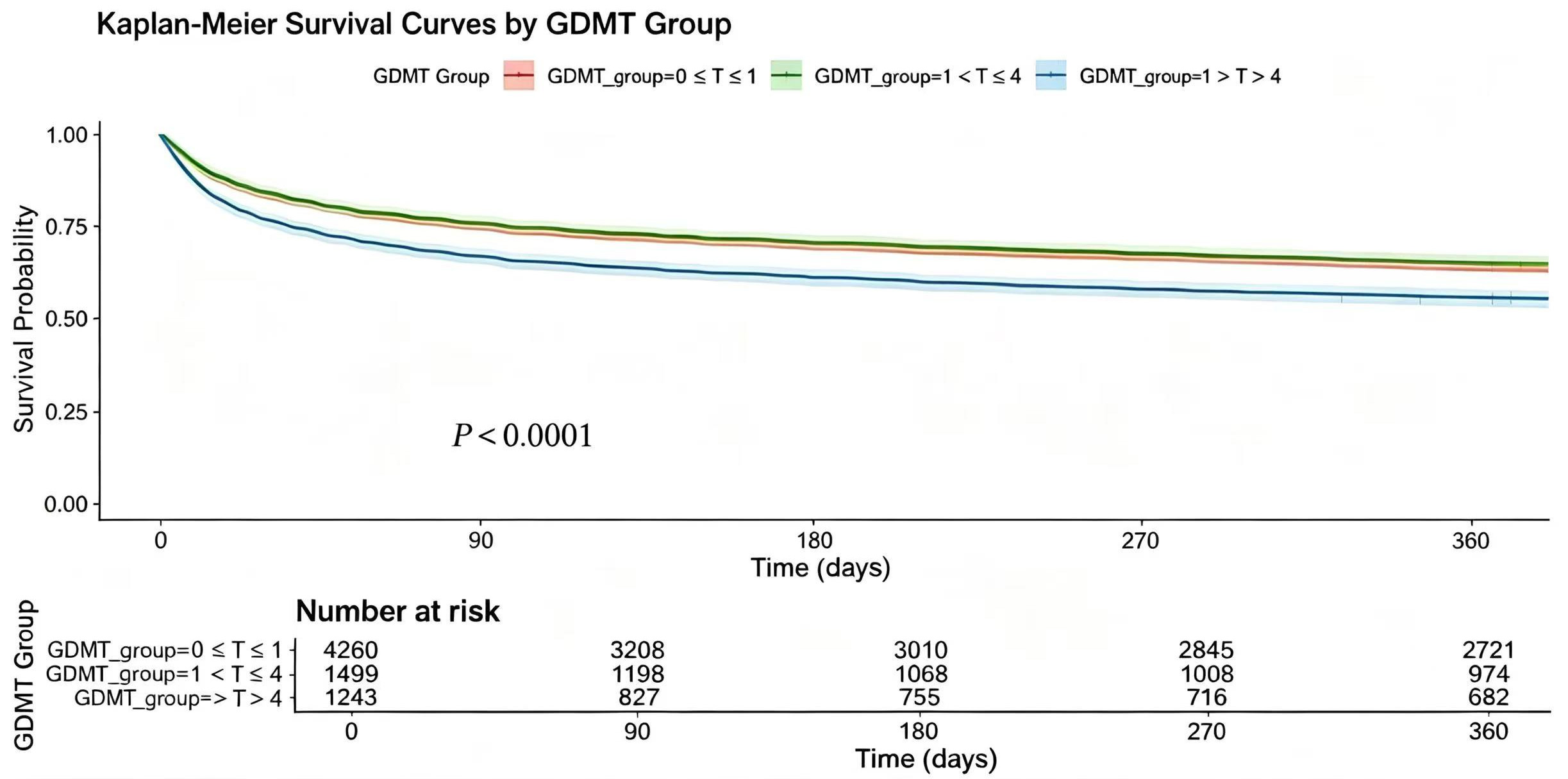
Figure 3. Kaplan-Meier Survival Curves by GDMT Group. Patients were stratified into three groups according to the GDMT initiation time (0 ≤ T ≤ 1 day, 1 day < T ≤ 4 days, and T > 4 days), and the corresponding one-year survival curves were depicted. GDMT: Guideline-directed medical therapy.
We further conducted multivariate Cox regression analyses to explore the independent association between GDMT initiation timing and mortality after adjusting for potential confounders. In the multivariate Cox proportional hazards regression analysis, we adjusted for factors that may affect mortality and heart failure rehospitalization, including demographic characteristics (age, sex), comorbidities (hypertension, atrial fibrillation, chronic kidney disease, etc.), severity of illness scores (SOFA, SAPSII), hemodynamic parameters at ICU admission (blood pressure, heart rate), and laboratory tests (hemoglobin, creatinine, urea nitrogen, etc.). Multivariable Cox regression results are shown in Table 2.
Multivariable Cox regression results
| Outcome | 0 ≤ T ≤ 1 day | 1 day < T ≤ 4 days | T > 4 day | ||||||
| Unadjusted HR (95%CI) | P-value | Adjusted HR (95%CI) | P-value | Unadjusted HR (95%CI) | P-value | Adjusted HR (95%CI) | P-value | ||
| Primary outcome | |||||||||
| All-cause death or heart failure readmission by 1 year | 1.03 (0.96, 1.11) | 0.38 | 1.12 (1.04, 1.21) | 0.003α | Reference | 1.27 (1.16, 1.39) | < 0.001 | 1.16 (1.06, 1.27) | 0.002 |
| All-cause death by 1 year | 1.04 (0.95, 1.15) | 0.39 | 1.26 (1.14, 1.39) | < 0.001 | Reference | 1.42 (1.26, 1.60) | < 0.001 | 1.31 (1.16, 1.48) | < 0.001 |
| Secondary outcome | |||||||||
| Heart failure readmission by 1 year | 1.03 (0.94, 1.13) | 0.50 | 0.96 (0.87, 1.05) | 0.36 | Reference | 0.97 (0.86, 1.10) | 0.66 | 1.01 (0.89, 1.15) | 0.84 |
| All-cause death or heart failure readmission by day 90 | 1.03 (0.95, 1.12) | 0.51 | 1.16 (1.06, 1.27) | < 0.001 | Reference | 1.34 (1.21, 1.49) | < 0.001 | 1.21 (1.09, 1.35) | < 0.001 |
| All-cause death by day 90 | 1.05 (0.93, 1.19) | 0.42 | 1.35 (1.20, 1.53) | < 0.001 | Reference | 1.46 (1.26, 1.68) | < 0.001 | 1.32 (1.15, 1.53) | < 0.001 |
| Heart failure readmission by day 90 | 1.03 (0.92, 1.16) | 0.56 | 0.97 (0.87, 1.09) | 0.61 | Reference | 1.09 (0.95, 1.26) | 0.21 | 1.13 (0.98, 1.30) | 0.11 |
| ICU stay time, median (IQR), days | 2.16 [1.21-3.84] | < 0.001β | 3.14 [1.76-5.44] | 4.94 [2.37-9.69] | < 0.001 | ||||
| Hospital stay time, median (IQR), days | 8 [5-12] | < 0.001 | 10 [7-15] | 18 [12-27] | < 0.001 | ||||
| Sensitivity analyses | |||||||||
| All-cause death or heart failure readmission by 1 year, exclude patients not receive GDMT treatment during hospitalization | 1.02 (0.94, 1.1) | 0.66 | 1.10 (1.01, 1.19) | 0.02 | Reference | 1.28 (1.16, 1.41) | < 0.001 | 1.18 (1.08, 1.31) | < 0.001 |
| All-cause death by 1 year, exclude patients not receive GDMT treatment during hospitalization | 0.98 (0.87, 1.11) | 0.78 | 1.24 (1.10, 1.41) | < 0.001 | Reference | 1.50 (1.29, 1.74) | < 0.001 | 1.38 (1.19, 1.61) | < 0.001 |
| All-cause death or heart failure readmission by 1 year, exclude patients with primary respiratory disorders (including pneumonia, ARDS, and respiratory failure) | 1.01 (0.92, 1.12) | 0.81 | 1.09 (0.98, 1.20) | 0.11α | Reference | 1.33 (1.08, 1.66) | < 0.001 | 1.19 (0.95, 1.48) | 0.13 |
| All-cause death by 1 year, exclude patients with primary respiratory disorders (including pneumonia, ARDS, and respiratory failure) | 1.06 (0.92, 1.23) | 0.44 | 1.25(1.08, 1.45) | < 0.01 | Reference | 1.57 (1.17, 2.12) | < 0.001 | 1.29 (0.96, 1.75) | 0.67 |
The results showed that compared with patients who started GDMT treatment between 1 and 4 days, patients who started GDMT treatment within 1 day (HR, 1.12; 95%CI, 1.04-1.21; P = 0.003) and after 4 days (HR, 1.16; 95%CI, 1.06-1.27; P = 0.002) had a higher composite risk of 1-year all-cause mortality and heart failure rehospitalization. For the primary outcome of 1-year all-cause mortality, the HR was 1.26 (95%CI, 1.14-1.39; P < 0.001) for patients who started GDMT treatment within 1 day and 1.31 (95%CI, 1.16-1.48; P < 0.001) for patients who started GDMT treatment after 4 days, compared with those who started GDMT treatment between 1 to 4 days. To evaluate the difference in heart failure rehospitalization risk among the three groups, we used a competing risk model, considering death as a competing event, and adjusted for similar confounding factors as in the multivariate Cox analysis. Compared with patients who started GDMT treatment between 1 to 4 days, patients who started GDMT treatment within 1 day (P = 0.36) and after 4 days (P = 0.84) did not have a significantly increased risk of heart failure rehospitalization within 1 year. The rate of heart failure rehospitalization may be influenced by multiple factors, such as medication titration and post-discharge management, while the long-term benefits of timely GDMT initiation are more reflected in the reduction of mortality. In the secondary outcomes, the risks of composite events of 90-day all-cause mortality and heart failure rehospitalization and 90-day all-cause mortality were consistent with the results of 1-year outcomes in the primary analysis, and the risk of 90-day heart failure rehospitalization was also not significantly different among the three groups. The later the start of GDMT treatment, the longer the ICU stay and total hospital stay.
To verify the robustness of our findings, we performed two sets of sensitivity analyses. First, considering the inability to track the timing of GDMT initiation outside the hospital, the calculation of initiation timing for patients who did not receive GDMT during hospitalization may be inaccurate. We excluded patients who did not receive GDMT during hospitalization and re-analyzed the primary outcomes using multivariate Cox regression. The U-curve association remained statistically significant, with the HR for 1-year mortality being 1.24 (95%CI, 1.10-1.41) in the T ≤ 1 day group and 1.38 (95%CI, 1.19-1.61) in the T > 4 days group. Second, we further excluded patients complicated with respiratory failure and acute respiratory distress syndrome (ARDS) to eliminate confounding bias caused by severe primary pulmonary diseases. The overall trend of the main results was similar, although some comparisons were no longer statistically significant after this exclusion.
To further analyze the nonlinear association between the timing of GDMT therapy initiation and the primary outcome, we constructed a restricted cubic spline model, adjusting for multiple variables including age, sex, comorbidities, SOFA score, SAPSII score, and hemodynamics. In this model, the association between the timing of GDMT therapy initiation and the primary outcome showed a U-shaped curve, as shown in Figure 4 (P for overall = 0.005). As the time to GDMT therapy initiation increased, the risk of the composite event of 1-year all-cause death and heart failure rehospitalization gradually decreased until approximately 2 days, after which the risk began to gradually increase and eventually stabilized. The results for 1-year all-cause death were consistent with those for the composite event of 1-year all-cause death and heart failure rehospitalization. Considering that hemodynamic recovery in the real world generally occurs within 24-48 h, we speculate that the inflection point of the U-shaped curve may be related to the gradual stabilization of hemodynamics. In the early stages of acute heart failure, patients may experience hypotension or hypoperfusion, and initiating GDMT therapy too early may exacerbate the condition or increase adverse reactions (such as hypotension or worsening renal function). However, after the acute phase (more than
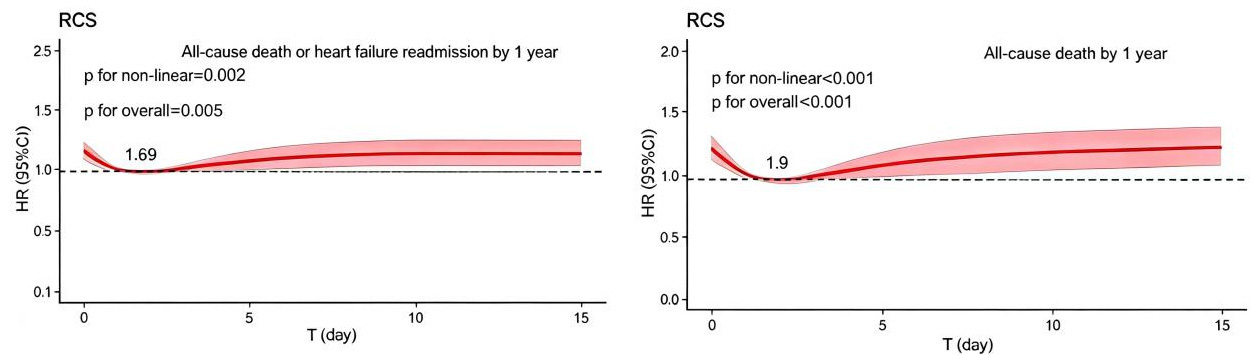
Figure 4. RCS analysis of the primary outcome. The association between GDMT initiation time and the composite outcome of one-year all-cause mortality and heart failure rehospitalization, as well as one-year all-cause mortality, was analyzed. The model was adjusted for multiple variables, including age, sex, comorbidities, SOFA score, SAPSII score, and hemodynamic parameters. The reference point was the median GDMT initiation time. T represents the GDMT initiation time, and the dashed line represents the horizontal line at the HR value corresponding to the minimum point of the curve. The blue number indicates the T value at the minimum point of the curve. GDMT: Guideline-directed medical therapy; SOFA: sequential organ failure assessment; SAPSII: simplified acute physiology score II; HR: hazard ratio; RCS: restricted cubic spline.
Subgroup analysis
We further explored the relationship between GDMT initiation timing and 1-year all-cause mortality in patients with different clinical characteristics to analyze potential reasons for the U-shaped survival curve. Clinical characteristics included age, sex, comorbidities, critical illness scores (e.g., SAPS II, SOFA), and hemodynamic status at baseline. Across all subgroups, patients initiating GDMT within 1 day or after 4 days exhibited higher mortality risks compared to those starting between 1 to 4 days, consistent with results from the mixed-effects Cox regression model [Table 3]. Significant interactions were observed between GDMT initiation timing and variables such as hypertension, chronic obstructive pulmonary disease (COPD), cancer, stroke, SAPS II, SOFA scores, hemodynamic instability, and systolic blood pressure (P < 0.05).
Subgroup analysis of primary outcome (all-cause death by 1 year)
| Subgroup | 0 ≤ T ≤ 1 day HR (95%CI) | P value | 1 day < T ≤ 4 days | T > 4 days HR (95%CI) | P value |
| Age, years | 0.10α | 0.16α | |||
| 18-65 | 1.62 (1.20, 2.19) | < 0.01β | Reference | 1.44 (1.03, 2.00) | 0.03β |
| 65-75 | 1.20 (0.97, 1.50) | 0.10 | Reference | 1.42 (1.11, 1.82) | < 0.01 |
| 75-84 | 1.22 (1.02, 1.47) | 0.03 | Reference | 1.18 (0.95, 1.47) | 0.13 |
| 84-100 | 1.20 (1.00, 1.42) | 0.05 | Reference | 1.17 (0.93, 1.47) | 0.18 |
| Gender | 0.47 | 0.17 | |||
| Male | 1.29 (1.12, 1.48) | < 0.01 | Reference | 1.43 (1.22, 1.68) | < 0.01 |
| Female | 1.24 (1.07, 1.44) | < 0.01 | Reference | 1.16 (0.97, 1.40) | 0.10 |
| Hypertension | < 0.05 | 0.11 | |||
| NOYES | 1.39 (1.23, 1.58) | < 0.01 | Reference | 1.40 (1.20, 1.63) | < 0.01 |
| 1.09 (0.92, 1.30) | 0.30 | Reference | 1.15 (0.94, 1.40) | 0.17 | |
| AF | 0.27 | 0.65 | |||
| NOYES | 1.33 (1.17, 1.50) | < 0.01 | Reference | 1.32 (1.14, 1.53) | < 0.01 |
| 1.14 (0.95, 1.38) | 0.16 | Reference | 1.29 (1.05, 1.59) | 0.02 | |
| Anemia | 0.41 | 0.25 | |||
| NOYES | 1.33 (1.17, 1.50) | < 0.01 | Reference | 1.39 (1.19, 1.62) | < 0.01 |
| 1.20 (1.01, 1.44) | 0.04 | Reference | 1.19 (0.98, 1.44) | 0.08 | |
| Cancer | 0.14 | < 0.05 | |||
| NOYES | 1.32 (1.19, 1.47) | < 0.01 | Reference | 1.36 (1.19, 1.55) | < 0.01 |
| 0.93 (0.69, 1.25) | 0.64 | Reference | 0.85 (0.60, 1.19) | 0.34 | |
| COPD | 0.44 | < 0.05 | |||
| NOYES | 1.31 (1.16, 1.48) | < 0.01 | Reference | 1.40 (1.21, 1.61) | < 0.01 |
| 1.16 (0.97, 1.39) | 0.10 | Reference | 1.04 (0.82, 1.31) | 0.77 | |
| Stroke | < 0.05 | 0.11 | |||
| NOYES | 1.31 (1.18, 1.46) | < 0.01 | Reference | 1.33 (1.17, 1.51) | < 0.01 |
| 0.82 (0.54, 1.24) | 0.35 | Reference | 0.97 (0.59, 1.61) | 0.91 | |
| SAPSII | < 0.05 | 0.53 | |||
| 6-31 | 1.08 (0.80, 1.46) | 0.61 | Reference | 1.18 (0.79, 1.76) | 0.42 |
| 31-38 | 1.09 (0.87, 1.36) | 0.46 | Reference | 1.29 (0.98, 1.70) | 0.07 |
| 38-47 | 1.21 (1.01, 1.46) | 0.04 | Reference | 1.33 (1.06, 1.66) | 0.01 |
| 47-107 | 1.50 (1.27, 1.77) | < 0.01 | Reference | 1.22 (1.01, 1.47) | 0.04 |
| SOFA | < 0.05 | 0.19 | |||
| 0-3 | 1.22 (0.97, 1.53) | 0.09 | Reference | 1.41 (1.03, 1.92) | 0.03 |
| 3-5 | 1.14 (0.93, 1.40) | 0.21 | Reference | 1.48 (1.14, 1.92) | < 0.01 |
| 5-8 | 1.03 (0.84, 1.25) | 0.79 | Reference | 1.32 (1.06, 1.65) | 0.01 |
| 8-21 | 1.83 (1.51, 2.22) | < 0.01 | Reference | 1.17 (0.95, 1.45) | 0.15 |
| Baseline hemodynamics | < 0.05 | 0.21 | |||
| Stable | 1.06 (0.93, 1.22) | 0.39 | Reference | 1.47 (1.24, 1.75) | < 0.01 |
| Unstable | 1.59 (1.37, 1.85) | < 0.01 | Reference | 1.20 (1.01, 1.42) | 0.04 |
| Baseline SBP, mmHg | < 0.05 | 0.43 | |||
| 40-104 | 1.69 (1.41, 2.02) | < 0.01 | Reference | 1.40 (1.14, 1.71) | < 0.01 |
| 104-113 | 1.22 (1.00, 1.48) | 0.05 | Reference | 1.19 (0.94, 1.50) | 0.15 |
| 113-125 | 1.00 (0.81, 1.24) | 1.00 | Reference | 1.10 (0.84, 1.44) | 0.50 |
| 125-203 | 1.08 (0.86, 1.37) | 0.50 | Reference | 1.46 (1.07, 1.99) | 0.02 |
| Baseline hemoglobin, g/dL | 0.65 | 0.90 | |||
| 4.7-8.9 | 1.16 (0.97, 1.40) | 0.10 | Reference | 1.15 (0.93, 1.42) | 0.20 |
| 8.9-10.4 | 1.31 (1.08, 1.59) | 0.01 | Reference | 1.53 (1.22, 1.92) | < 0.01 |
| 10.4-12.0 | 1.35 (1.09, 1.68) | 0.01 | Reference | 1.36 (1.04, 1.77) | 0.02 |
| 12.0-20.0 | 1.34 (1.05, 1.71) | 0.02 | Reference | 1.20 (0.88, 1.62) | 0.25 |
| Baseline creatinine, mg/dL | 0.14 | 0.38 | |||
| 0.1-0.9 | 1.34 (1.06, 1.70) | 0.02 | Reference | 1.52 (1.14, 2.02) | < 0.01 |
| 0.9-1.3 | 1.19 (0.94, 1.51) | 0.15 | Reference | 1.40 (1.05, 1.88) | 0.02 |
| 1.3-2.0 | 1.10 (0.91, 1.33) | 0.34 | Reference | 1.16 (0.92, 1.46) | 0.21 |
| 2.0-19.2 | 1.44 (1.21, 1.72) | < 0.01 | Reference | 1.23 (1.00, 1.51) | 0.05 |
| Classification of heart failure | < 0.05 | 0.12 | |||
| HFrEF | 1.35 (1.18, 1.55) | < 0.01 | Reference | 1.22 (1.01, 1.48) | 0.04 |
| HFpEF | 1.14 (0.91, 1.42) | 0.25 | Reference | 1.32 (1.06, 1.65) | 0.01 |
In age-stratified analyses, younger patients had the lowest mortality risk when starting GDMT between 1 to 4 days, while older patients faced heightened risks with initiation within 1 day. This may reflect poorer GDMT tolerability in older individuals, whereas younger patients require careful balancing of drug tolerance and therapeutic urgency to avoid premature initiation before stabilization. Although sex showed no significant interaction with GDMT timing (P = 0.47 and 0.17), men initiating GDMT within 1 day or after 4 days had significantly elevated 1-year mortality compared to the 1-4 day window. This may relate to faster heart failure progression in men (e.g., higher prevalence of ischemic etiology), aligning with ESC guidelines emphasizing early revascularization combined with GDMT optimization in males. Patients without comorbidities like hypertension or atrial fibrillation may lack compensatory blood pressure regulation (e.g., greater hypotension susceptibility in non-hypertensive individuals), leading to poorer drug tolerability and contraindicating ultra-early GDMT initiation.
For high-risk patients with severe illness or poor baseline status [e.g., elevated SAPS II (38-107), SOFA scores (8-21), hemodynamic instability, low baseline systolic blood pressure, mild-to-moderate anemia (hemoglobin 8.9-12.0 g/dL), or renal dysfunction (creatinine 2.0-19.2 mg/dL)], priority should be given to rapidly restoring hemodynamic stability and improving organ function. Subsequent tolerability assessments (e.g., blood pressure, renal function) are critical before timely GDMT initiation, as both ultra-early and delayed initiation correlated with higher mortality. Conversely, in hemodynamically stable patients, GDMT initiation within 1 day aligns with guideline recommendations, whereas delayed initiation worsened outcomes.
Subgroup analysis by HF phenotype revealed that HFrEF patients had higher mortality when GDMT was initiated within 1 day (HR = 1.35, 95%CI 1.18-1.55, P < 0.01) or after 4 days (HR = 1.22, 95%CI 1.01-1.48, P = 0.04). For HFpEF patients, delayed initiation over 4 days increased mortality (HR = 1.32, 95%CI 1.06-1.65, P = 0.01), while ultra-early initiation within 1 day showed no significant impact. These disparities stem from varied pathophysiology and drug tolerance. HFrEF patients suffer from severe systolic dysfunction and overactive neurohormones, making them vulnerable to both premature and delayed GDMT. HFpEF is mainly driven by diastolic dysfunction; such patients tolerate early GDMT well, yet delayed treatment still worsens prognosis.
We hypothesized that a nonlinear association between GDMT initiation timing and 1-year mortality might also exist across specific subgroups. Restricted cubic spline models were constructed for each subgroup, adjusted for variables including age, sex, comorbidities, SOFA score, SAPS II score, and hemodynamic status. Significant U-shaped relationships were identified in the following subgroups: age (18-75 years), male sex, hemodynamic instability, SOFA score (8-21), and SAPS II score (47-107), with nadirs consistently observed between 1-4 days post-stabilization, aligning with the primary analysis [Figure 5]. These U-shaped associations conflict with studies advocating “the earlier, the better” for GDMT initiation. For high-risk patients (e.g., hemodynamically unstable, uncorrected hypotension, or severe renal dysfunction), premature GDMT initiation may exacerbate clinical deterioration. Instead, prioritizing acute precipitant management (e.g., volume overload, ischemia) or hemodynamic stabilization within the first 24 h, followed by incremental GDMT initiation and close monitoring, may optimize outcomes.
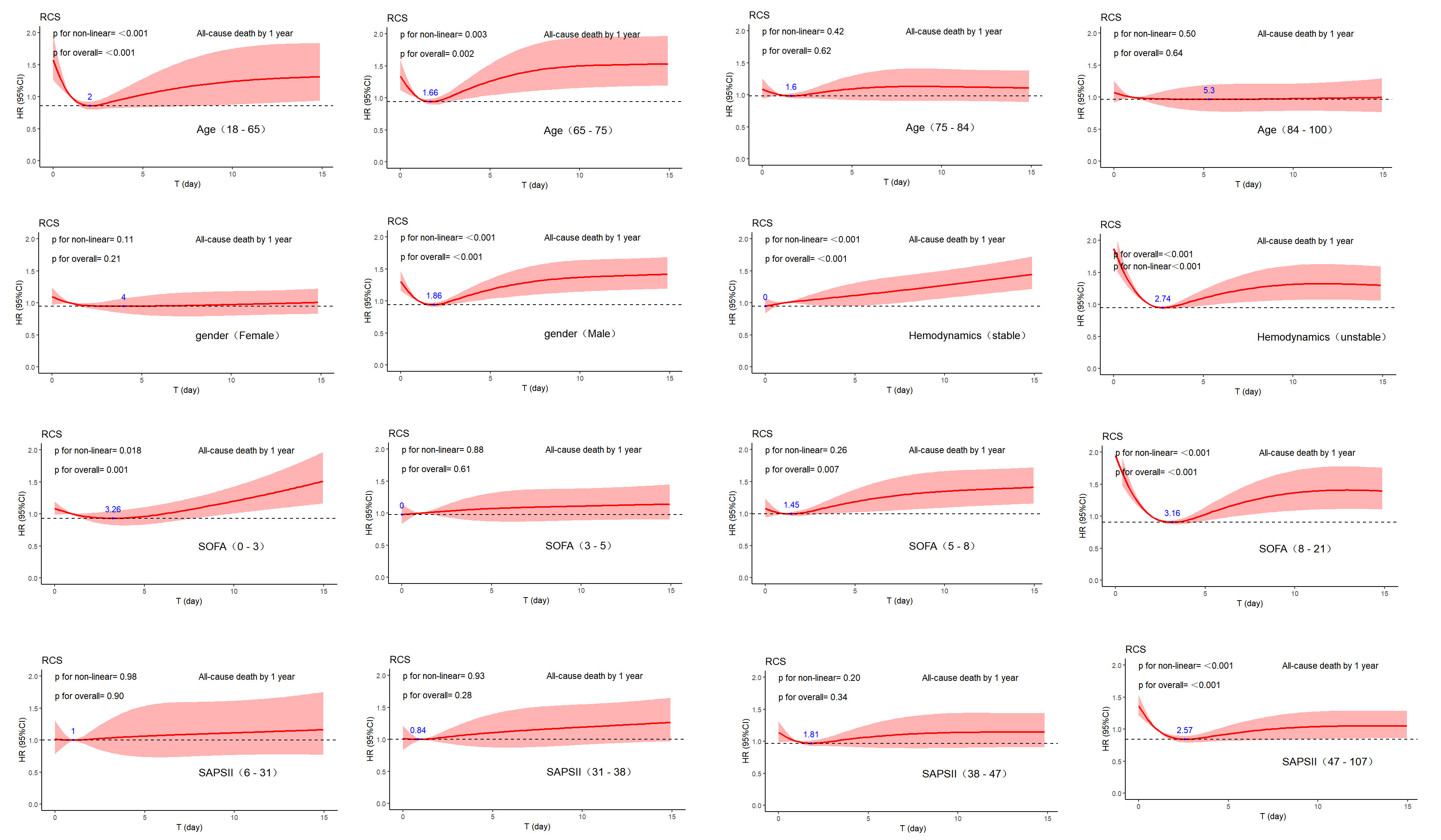
Figure 5. Association with GDMT initiation time and mortality in different patient groups. The restricted cubic splines have five knots at the 5th, 27.5th, 50th, 72.5th, and 95th percentiles to flexibly model the relationship between the timing of GDMT initiation and 1-year mortality, with the reference point being the median GDMT initiation time. The confounding variables adjusted for are consistent with those in the primary analysis. T represents the GDMT initiation time, and the dashed line represents the horizontal line at the HR value corresponding to the minimum point of the curve. The blue number indicates the T value at the minimum point of the curve. GDMT: Guideline-directed medical therapy; SOFA: sequential organ failure assessment; HR: hazard ratio; RCS: restricted cubic spline.
DISCUSSION
Currently, GDMT primarily focuses on long-term management of patients with chronic HFrEF, yet faces challenges such as prolonged treatment duration, poor post-discharge adherence, and low target-dose achievement rates[19,20,36]. Accumulating evidence indicates that optimizing GDMT during hospitalization can improve long-term outcomes in AHF. Multiple studies and clinical trials have confirmed that in-hospital GDMT initiation is linked to lower post-discharge mortality and readmission rates, without excess severe adverse events[23,37,38]. However, current guidelines lack standardized definitions for “early initiation” timeframes and objective criteria for “hemodynamic stability”, driving significant heterogeneity in clinical practice. For instance, the STRONG-HF trial operationalized “stable status” as SBP ≥ 95 mmHg with no intravenous inotrope requirement for ≥ 12 h, whereas the Acute Decompensated Heart Failure National Registry analysis defined it as absence of inotrope use, SBP ≥ 90 mmHg, and mean arterial pressure (MAP) ≥ 65 mmHg[23]. Crucially, most prior studies have focused on hemodynamically stable patients in general wards, with limited evidence guiding GDMT timing in high-risk ICU populations[39,40].
Through simulating the hospitalization process of AHF patients, we analyzed the timing of GDMT initiation post-onset to identify the optimal treatment window. We stratified AHF patients by GDMT initiation timing (≤ 1 day, 1-4 days, > 4 days) and adopted 1-year all-cause mortality and HF rehospitalization as composite endpoints. After confounder adjustment, the 1-4 days group exhibited the lowest risk of adverse events. Competing risk analysis further revealed that the reduced composite endpoint risk was mainly driven by improved survival, rather than decreased rehospitalization. Restricted cubic spline analyses identified a U-shaped association between GDMT initiation time and mortality, with the lowest mortality risk occurring at 1-2 days after AHF onset; this trend persisted across sensitivity analyses. Overall, initiating GDMT within 1-4 days was associated with better 1-year survival, whereas ultra-early (≤ 1 day) or delayed (> 4 days) initiation correlated with higher mortality.
Subgroup analyses showed this U-shaped relationship was more prominent in younger patients, males, and those with hemodynamic instability or higher illness severity scores (SAPS II, SOFA). For low-risk patients, blind ultra-early GDMT initiation is not advisable, and treatment should be started 1-2 days after clinical improvement. For high-risk and critically ill patients, hemodynamic stabilization within 3 days of admission is critical to enhance drug tolerance; GDMT should be commenced after 24 h of stable condition, as initiation beyond 4 days is associated with poor prognosis. Of note, elderly patients are a high-risk subgroup: ultra-early GDMT may bring more harm than benefit. Altered pharmacokinetics in older adults increases the risks of hypotension and renal dysfunction under RAAS inhibitor therapy. Thus, hemodynamic optimization within 48-72 h before GDMT initiation is recommended for elderly individuals.
The divergent associations between GDMT timing and mortality across HFrEF and HFpEF subgroups are mainly attributed to differences in pathophysiology, drug response and clinical characteristics between the two phenotypes. HFrEF patients are characterized by impaired left ventricular systolic function, excessive activation of the RAAS and sympathetic nervous system, and higher sensitivity to GDMT. Initiating GDMT too early in the acute unstable stage easily induces hypotension and impaired organ perfusion; prolonged delay of treatment will lead to progressive cardiac remodeling and worse long-term prognosis. Therefore, these patients present a typical U-shaped risk curve, with the 1-4 day window being the optimal time for intervention. Unlike HFrEF, HFpEF is driven by left ventricular diastolic dysfunction, systemic inflammation and multiple comorbidities rather than dominant neurohormonal overactivation. These patients have relatively low sensitivity to ultra-early GDMT, so initiating treatment within 1 day does not significantly increase mortality. However, delayed GDMT for more than 4 days fails to control persistent volume overload and neurohormonal activation, ultimately leading to increased adverse events. Collectively, individualized GDMT timing strategies should be formulated based on heart failure phenotype in critically ill AHF patients.
It is worth noting that we found no significant statistical difference between starting GDMT treatment within 1 day and starting it between 1 to 4 days before adjusting for confounding factors, while the difference between the two groups was significant after adjusting for confounding factors. It is speculated that this may be due to the fact that some medications in GDMT treatment are also effective for diseases such as hypertension and atrial fibrillation, for example, ACEI/Angiotensin II Receptor Blockers (ARB) class drugs also have a blood pressure lowering effect, so patients with related comorbidities may have additional benefits from early initiation of GDMT treatment. However, how to balance efficacy and safety may be a direction for future research.
In ICU settings, clinicians are often reluctant to launch early GDMT due to concerns over hypotension and worsening renal function. Previous studies excluded hemodynamically unstable patients, likely due to the belief that GDMT is unsuitable for these patients[41,42]. Our real-world findings based on the MIMIC-IV cohort help mitigate these clinical worries. It should be emphasized that this is a retrospective observational study. Although our data demonstrated an association between timely GDMT and favorable survival outcomes, causal relationships cannot be established, and the observed survival benefit should not be interpreted as definitive. Individualized timing strategies, rather than uniform early initiation, are required for AHF patients, especially the critically ill and elderly populations.
Limitations
This study has several notable limitations inherent to retrospective analyses using the MIMIC-IV database, which should be fully acknowledged. First, GDMT initiation time calculation relies solely on in-hospital medication records from MIMIC-IV; post-discharge drug administration cannot be tracked. A total of 1,575 patients received no in-hospital GDMT, for whom we pragmatically imputed GDMT initiation time equivalent to hospital length of stay under the assumption of immediate post-discharge GDMT uptake. This arbitrary imputation creates non-negligible misclassification bias, particularly within the T > 4 days subgroup (879 imputed patients). Although we performed sensitivity analyses excluding all imputed cases to verify result robustness, residual bias cannot be fully eliminated without long-term outpatient pharmacy data linkage.
Second, LVEF and NT-proBNP data had a missing rate exceeding 20% in our cohort. We therefore classified heart failure phenotypes using ICD-9 and ICD-10 codes instead of original LVEF values. Although we conducted subgroup analyses stratified by systolic and diastolic heart failure, this indirect classification cannot completely replace LVEF-based grouping, which may obscure subtle differences in the optimal GDMT window across distinct heart failure subtypes. In addition, detailed real-time dosage and duration of inotropes and vasopressors during GDMT initiation were unavailable. We used 24 h hemodynamic status and critical illness scores (SOFA, SAPS II) for surrogate adjustment, which cannot fully eliminate residual confounding.
Third, this study only focused on the timing of initial GDMT administration, without analyzing drug dosages, dose up-titration strategies, or long-term medication adherence after discharge. These factors are closely linked to clinical outcomes. Simplifying GDMT as a binary “initiated or not” indicator inevitably oversimplifies real-world clinical management of acute heart failure in ICU patients.
Fourth, the MIMIC-IV dataset covers cases from 2008 to 2019. SGLT2i, a core component of current HF GDMT, were not yet widely recommended or used during this period. Therefore, this study’s analyzed GDMT regimen only comprises three drug classes (RAAS inhibitors/ARNI, beta-blockers, MRAs) and does not reflect the contemporary complete four-pillar heart failure guideline-directed medical therapy. Findings cannot be fully generalized to current clinical practice incorporating SGLT2i.
Fifth, as a retrospective observational study, this work is subject to selection bias and confounding by indication. Patients who received GDMT within 1 day generally had more stable hemodynamics and milder illness. The observed association between GDMT timing and survival does not equate to a causal relationship; early GDMT initiation may also serve as a marker of better baseline clinical status, rather than the sole cause of improved prognosis.
Finally, we used the MIMIC-IV database, which, although it serves as the source of numerous high-quality studies[43,44], only contains data from a single hospital. Differences in physician practice patterns and hospital protocols may reduce the external validity of our results. Further large-sample, multicenter prospective studies are required to validate our conclusions and establish causal inference.
Conclusion
In critically ill acute heart failure patients, a nonlinear U-curve relationship emerged between GDMT initiation timing and all-cause mortality, with both premature and delayed initiation linked to elevated risk. The optimal therapeutic window diverges across patient subgroups defined by clinical characteristics, notably warranting individualized timing strategies - particularly in geriatric populations.
DECLARATIONS
Authors’ contributions
This work was written: Zhang H
Data were collected: Zhu L, Guo X
The research was designed: Cui Y, Zhao Y, Hu Y
Statistical analysis was performed: Zhang H, Gao X, Hou B
Approved the final version of this manuscript. She Z, Zhu L
All the authors have read and agreed to the published version of the manuscript.
Availability of data and materials
The data supporting the findings of this study are available from the Medical Information Mart for Intensive Care IV (MIMIC-IV) database via the official PhysioNet platform: https://physionet.org/content/mimiciv/2.1/. Access to the database is granted to credentialed users who meet the required training and data use agreement requirements.
AI and AI-assisted tools statement
During the preparation of this manuscript, the AI tool ChatGPT (version GPT-4o, released 2024-05-13) was used solely for Graphical Abstract. The tool did not influence the study design, data collection, analysis, interpretation, or the scientific content of the work. All authors take full responsibility for the accuracy, integrity, and final content of the manuscript.
Financial support and sponsorship
None.
Conflict of interest
She Z is Associate Editor of The Journal of Cardiovascular Aging. She Z was not involved in any steps of editorial processing, notably including reviewers’ selection, manuscript handling, or decision making. The other authors declare that there are no conflicts of interest.
Ethics approval and consent to participate
The study only conducts secondary retrospective analysis on this publicly available, fully de-identified open database. According to the ethical regulations of Renmin Hospital of Wuhan University, secondary analyses of publicly released de-identified clinical databases that have obtained complete IRB approval from the original custodian do not require additional local ethical review or patient informed consent. Therefore, no separate local ethical approval was required for this study.
Consent for publication
Not applicable.
Copyright
© The Author(s) 2026.
Supplementary Materials
REFERENCES
1. Khan MS, Shahid I, Bennis A, Rakisheva A, Metra M, Butler J. Global epidemiology of heart failure. Nat Rev Cardiol. 2024;21:717-34.
2. Bui AL, Horwich TB, Fonarow GC. Epidemiology and risk profile of heart failure. Nat Rev Cardiol. 2011;8:30-41.
3. Yan T, Zhu S, Yin X, et al. Burden, trends, and inequalities of heart failure globally, 1990 to 2019: a secondary analysis based on the global burden of disease 2019 study. J Am Heart Assoc. 2023;12:e027852.
4. Feng J, Zhang Y, Zhang J. Epidemiology and burden of heart failure in Asia. JACC Asia. 2024;4:249-64.
5. Savarese G, Becher PM, Lund LH, Seferovic P, Rosano GMC, Coats AJS. Global burden of heart failure: a comprehensive and updated review of epidemiology. Cardiovasc Res. 2023;118:3272-87.
6. 2019 Diseases and Injuries Collaborators. Global burden of 369 diseases and injuries in 204 countries and territories, 1990-2019: a systematic analysis for the global burden of disease study 2019. Lancet. 2020;396:1204-22.
7. Hollenberg SM, Stevenson LW, Ahmad T, et al. 2024 ACC expert consensus decision pathway on clinical assessment, management, and trajectory of patients hospitalized with heart failure focused update: a report of the American College of Cardiology Solution Set Oversight Committee. J Am Coll Cardiol. 2024;84:1241-67.
8. Garg R, Yusuf S, Bussmann WD, et al. Overview of randomized trials of angiotensin-converting enzyme inhibitors on mortality and morbidity in patients with heart failure. JAMA. 1995;273:1450-6.
9. Packer M, Poole-Wilson PA, Armstrong PW, et al. Comparative effects of low and high doses of the angiotensin-converting enzyme inhibitor, lisinopril, on morbidity and mortality in chronic heart failure. ATLAS Study Group. Circulation. 1999;100:2312-8.
10. MERIT-HF Study Group. Effect of metoprolol CR/XL in chronic heart failure: metoprolol CR/XL randomised intervention trial in congestive heart failure (MERIT-HF). Lancet. 1999;353:2001-7.
11. Hjalmarson A, Goldstein S, Fagerberg B, et al. Effects of controlled-release metoprolol on total mortality, hospitalizations, and well-being in patients with heart failure: the Metoprolol CR/XL randomized intervention trial in congestive heart failure (MERIT-HF). MERIT-HF Study Group. JAMA. 2000;283:1295-302.
12. Pitt B, Zannad F, Remme WJ, et al. The effect of spironolactone on morbidity and mortality in patients with severe heart failure. Randomized Aldactone Evaluation Study Investigators. N Engl J Med. 1999;341:709-17.
13. Zannad F, McMurray JJ, Krum H, et al. Eplerenone in patients with systolic heart failure and mild symptoms. N Engl J Med. 2011;364:11-21.
14. McMurray JJV, Solomon SD, Inzucchi SE, et al. Dapagliflozin in patients with heart failure and reduced ejection fraction. N Engl J Med. 2019;381:1995-2008.
15. McMurray JJ, Packer M, Desai AS, et al. Angiotensin-neprilysin inhibition versus enalapril in heart failure. N Engl J Med. 2014;371:993-1004.
16. Bassi NS, Ziaeian B, Yancy CW, Fonarow GC. Association of optimal implementation of sodium-glucose cotransporter 2 inhibitor therapy with outcome for patients with heart failure. JAMA Cardiol. 2020;5:948-51.
17. Biegus J, Voors AA, Collins SP, et al. Impact of empagliflozin on decongestion in acute heart failure: the EMPULSE trial. Eur Heart J. 2023;44:41-50.
18. Velazquez EJ, Morrow DA, DeVore AD, et al. Angiotensin-neprilysin inhibition in acute decompensated heart failure. N Engl J Med. 2019;380:539-48.
19. Greene SJ, Butler J, Albert NM, et al. Medical therapy for heart failure with reduced ejection fraction: the CHAMP-HF registry. J Am Coll Cardiol. 2018;72:351-66.
20. Pierce JB, Vaduganathan M, Fonarow GC, et al. Contemporary use of sodium-glucose cotransporter-2 inhibitor therapy among patients hospitalized for heart failure with reduced ejection fraction in the US: the get with the guidelines-heart failure registry. JAMA Cardiol. 2023;8:652-61.
21. Prins KW, Neill JM, Tyler JO, Eckman PM, Duval S. Effects of beta-blocker withdrawal in acute decompensated heart failure: a systematic review and meta-analysis. JACC Heart Fail. 2015;3:647-53.
22. Tran RH, Aldemerdash A, Chang P, et al. Guideline-directed medical therapy and survival following hospitalization in patients with heart failure. Pharmacotherapy. 2018;38:406-16.
23. Bhagat AA, Greene SJ, Vaduganathan M, Fonarow GC, Butler J. Initiation, continuation, switching, and withdrawal of heart failure medical therapies during hospitalization. JACC Heart Fail. 2019;7:1-12.
24. Gilstrap LG, Fonarow GC, Desai AS, et al. Initiation, continuation, or withdrawal of angiotensin-converting enzyme inhibitors/angiotensin receptor blockers and outcomes in patients hospitalized with heart failure with reduced ejection fraction. J Am Heart Assoc. 2017:6.
25. Fonarow GC, Abraham WT, Albert NM, et al. Influence of beta-blocker continuation or withdrawal on outcomes in patients hospitalized with heart failure: findings from the OPTIMIZE-HF program. J Am Coll Cardiol. 2008;52:190-9.
26. McDonagh TA, Metra M, Adamo M, et al. 2021 ESC Guidelines for the diagnosis and treatment of acute and chronic heart failure: developed by the task force for the diagnosis and treatment of acute and chronic heart failure of the European Society of Cardiology (ESC). With the special contribution of the Heart Failure Association (HFA) of the ESC. Eur J Heart Fail. 2022;24:4-131.
27. Heidenreich PA, Bozkurt B, Aguilar D, et al. 2022 AHA/ACC/HFSA guideline for the management of heart failure: a report of the American College of Cardiology/American Heart Association Joint Committee on Clinical Practice Guidelines. Circulation. 2022;145:e895-e1032.
28. McDonagh TA, Metra M, Adamo M, et al. 2023 focused update of the 2021 ESC guidelines for the diagnosis and treatment of acute and chronic heart failure: developed by the task force for the diagnosis and treatment of acute and chronic heart failure of the European Society of Cardiology (ESC) With the special contribution of the Heart Failure Association (HFA) of the ESC. Eur J Heart Fail. 2024;26:5-17.
29. Berg DD, Samsky MD, Velazquez EJ, et al. Efficacy and safety of sacubitril/valsartan in high-risk patients in the PIONEER-HF trial. Circ Heart Fail. 2021;14:e007034.
30. Mebazaa A, Davison B, Chioncel O, et al. Safety, tolerability and efficacy of up-titration of guideline-directed medical therapies for acute heart failure (STRONG-HF): a multinational, open-label, randomised, trial. Lancet. 2022;400:1938-52.
31. Johnson AEW, Bulgarelli L, Shen L, et al. MIMIC-IV, a freely accessible electronic health record dataset. Sci Data. 2023;10:1.
32. Vincent JL, Moreno R, Takala J, et al. The SOFA (sepsis-related organ failure assessment) score to describe organ dysfunction/failure. On behalf of the working group on sepsis-related problems of the European Society of Intensive Care Medicine. Intensive Care Med. 1996;22:707-10.
33. Le Gall JR, Klar J, Lemeshow S, et al. The logistic organ dysfunction system. A new way to assess organ dysfunction in the intensive care unit. ICU Scoring Group. JAMA. 1996;276:802-10.
34. Austin PC, White IR, Lee DS, van Buuren S. Missing data in clinical research: a tutorial on multiple imputation. Can J Cardiol. 2021;37:1322-31.
35. Roshani D, Ghaderi E. Comparing smoothing techniques for fitting the nonlinear effect of covariate in Cox models. Acta Inform Med. 2016;24:38-41.
36. Joseph S, Panniyammakal J, Abdullakutty J, et al. The Cardiology Society of India-Kerala Acute Heart Failure Registry: poor adherence to guideline-directed medical therapy. Eur Heart J. ;2021:ehab793.
37. Cotter G, Deniau B, Davison B, et al. Optimization of evidence-based heart failure medications after an acute heart failure admission: a secondary analysis of the STRONG-HF randomized clinical trial. JAMA Cardiol. 2024;9:114-24.
38. Pagnesi M, Vilamajó OAG, Meiriño A, et al. Blood pressure and intensive treatment up-titration after acute heart failure hospitalization: insights from the STRONG-HF trial. Eur J Heart Fail. 2024;26:638-51.
39. Shoji S, Kaltenbach L, Granger BB, et al. Guideline-directed medical therapy after hospitalization for acute heart failure: insights from the CONNECT-HF. J Am Heart Assoc. 2024;13:e036998.
40. Zheng J, Sandhu AT, Bhatt AS, et al. Inpatient use of guideline-directed medical therapy during heart failure hospitalizations among community-based health systems. JACC Heart Fail. 2025;13:43-54.
41. Farmakis D, Davison B, Fountoulaki K, et al. Rapid uptitration of guideline-directed medical therapies in acute heart failure with and without atrial fibrillation. JACC Heart Fail. 2024;12:1845-58.
42. Ter Maaten JM, Mebazaa A, Davison B, et al. Early changes in renal function during rapid up-titration of guideline-directed medical therapy following an admission for acute heart failure. Eur J Heart Fail. 2023;25:2230-42.
43. Yang Z, Gong H, Kan F, Ji N. Association between the triglyceride glucose (TyG) index and the risk of acute kidney injury in critically ill patients with heart failure: analysis of the MIMIC-IV database. Cardiovasc Diabetol. 2023;22:232.
Cite This Article
 Open Access
How to Cite
Download Citation
Export Citation File:
Type of Import
Tips on Downloading Citation
Citation Manager File Format
Type of Import
Direct Import: When the Direct Import option is selected (the default state), a dialogue box will give you the option to Save or Open the downloaded citation data. Choosing Open will either launch your citation manager or give you a choice of applications with which to use the metadata. The Save option saves the file locally for later use.
Indirect Import: When the Indirect Import option is selected, the metadata is displayed and may be copied and pasted as needed.
About This Article
Copyright

Data & Comments
Data
0










Comments
Comments must be written in English. Spam, offensive content, impersonation, and private information will not be permitted. If any comment is reported and identified as inappropriate content by OAE staff, the comment will be removed without notice. If you have any queries or need any help, please contact us at [email protected].