

fig1
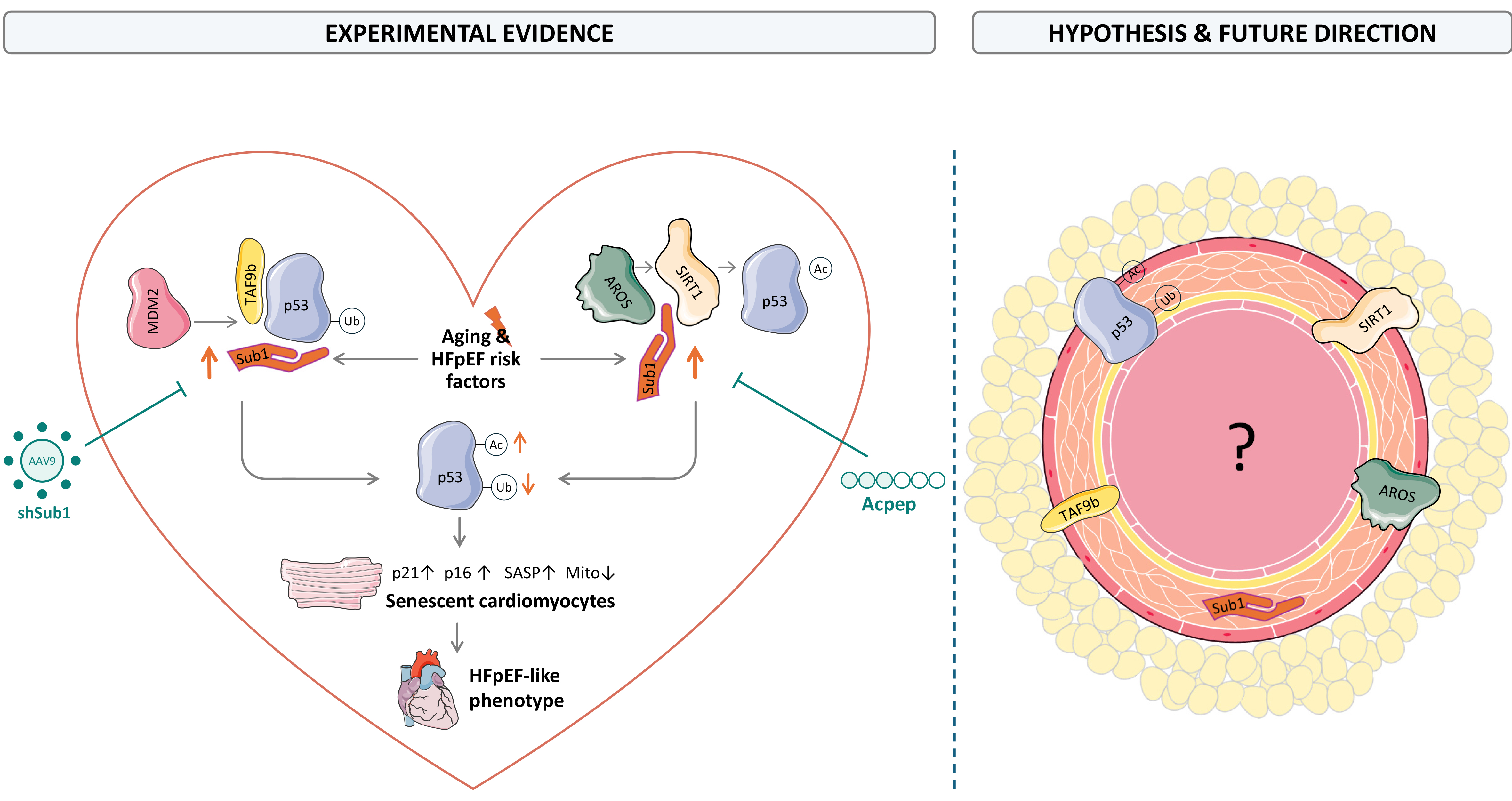
Figure 1. Sub1-p53 signaling links cardiac aging to HFpEF and raises unresolved questions about vascular aging. Age-related upregulation of Sub1 in cardiomyocytes enhances p53 stability and activity through two cooperating mechanisms (left). Acting as a “supporting hand”, Sub1 facilitates TAF9b-p53 association, potentially limiting MDM2 binding and thereby reducing MDM2-mediated p53 ubiquitination and proteasomal degradation. In parallel, acting as an “intercepting hand”, Sub1 binds AROS and reduces the AROS-SIRT1 association, thereby limiting AROS-dependent SIRT1 activation and preserving p53 acetylation. The resulting increases in p53 abundance and transcriptional activity promote cardiomyocyte senescence, characterized by increased p21, p16, and SASP markers together with mitochondrial dysfunction, thereby contributing to cardiac aging, remodeling, and HFpEF phenotypes in mice. Sub1 deficiency and cardiomyocyte-directed Sub1 knockdown ameliorated aging- and HFpEF-associated phenotypes, whereas Acpep-mediated disruption of the Sub1-p53 interaction attenuated senescence in cultured cardiomyocytes and cardiac organoids. Right: The extent to which cardiomyocyte-directed Sub1 suppression generalizes across experimental models and human HFpEF, whether its effects are sex-dependent, and whether Sub1-p53 signaling promotes vascular-cell senescence and contributes to hypertension or atherosclerosis remain unresolved. The pictures of the proteins, the cardiomyocyte, the heart and the artery are from Servier Medical Art (https://smart.servier.com/), licensed under CC BY 4.0. HFpEF: Heart failure with preserved ejection fraction; MDM2: mouse double minute 2 homolog; AROS: active regulator of SIRT1; SIRT1: Sirtuin 1; SASP: senescence-associated secretory phenotype; AAV9: adeno-associated virus serotype 9.