
fig1
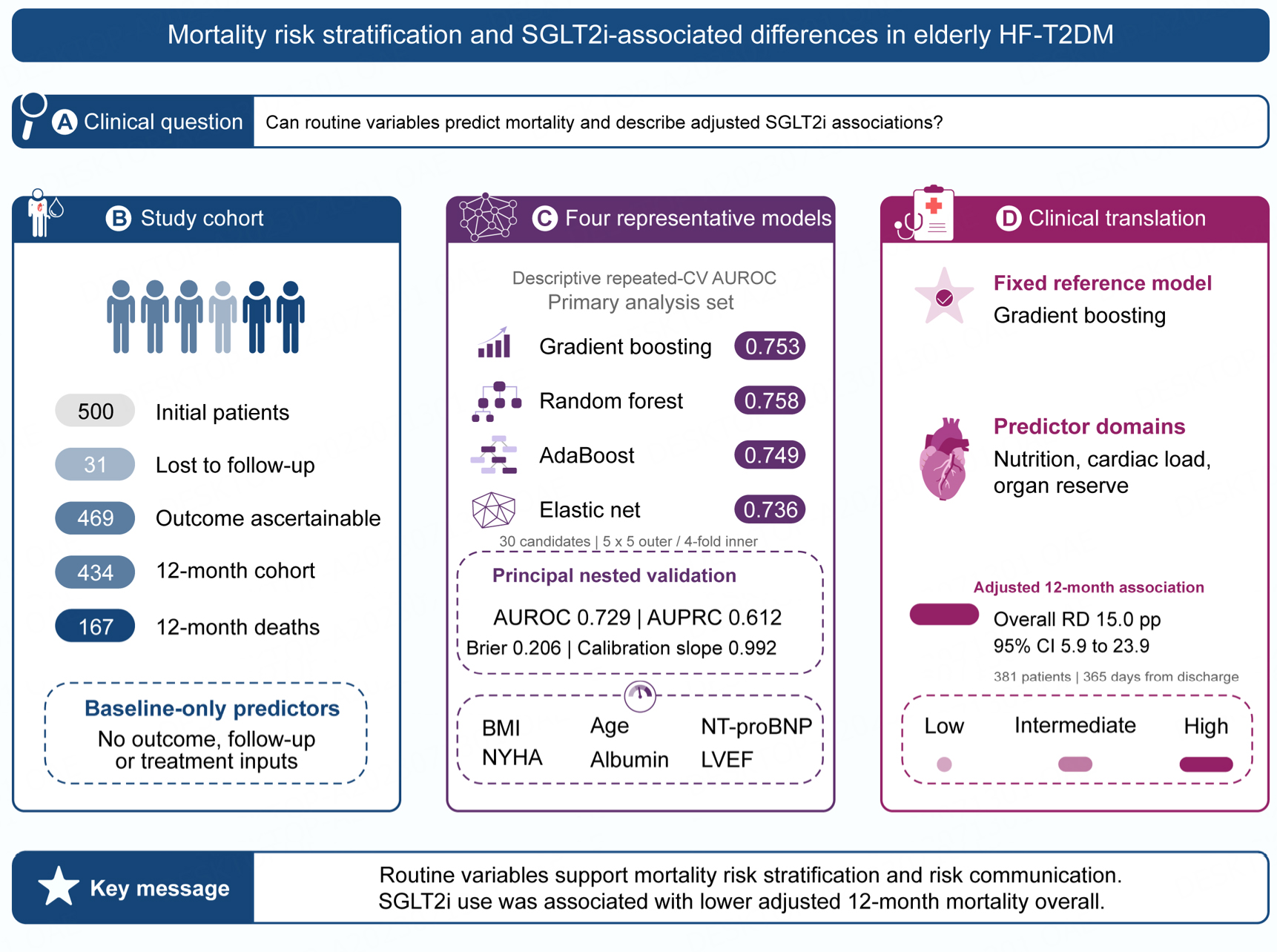
Figure 1. Study overview and principal findings. (A) Clinical question: routine-variable mortality prediction and adjusted SGLT2i-associated differences in older patients with HF and T2DM. (B) Cohort construction: 500 eligible patients, 469 with ascertainable follow-up and 434 with determinable 12-month status, including 167 deaths. (C) Four representative descriptive benchmarks from the ten-algorithm comparison, together with principal mean repeat estimates from nested selection across 30 algorithm-feature-set combinations. These nested estimates evaluate the selection workflow, not one fixed algorithm. The six variables shown below are the display inputs, not the complete predictor roster. (D) Fixed gradient-boosting reference, predictor domains, and the overall overlap-weighted mortality difference in 381 discharge patients through day 365. The low-, intermediate-, and high-risk symbols identify the stratification framework; differential treatment associations are not established. HF: Heart failure; T2DM: type 2 diabetes mellitus; AUROC: area under the receiver operating characteristic curve; AUPRC: area under the precision-recall curve; CV: cross-validation; RD: non-user minus user mortality; CI: confidence interval; pp: percentage points; BMI: body mass index; NYHA: New York Heart Association; LVEF: left ventricular ejection fraction; NT-proBNP: N-terminal pro-B-type natriuretic peptide; SGLT2i: sodium-glucose cotransporter 2 inhibitor.