
fig3
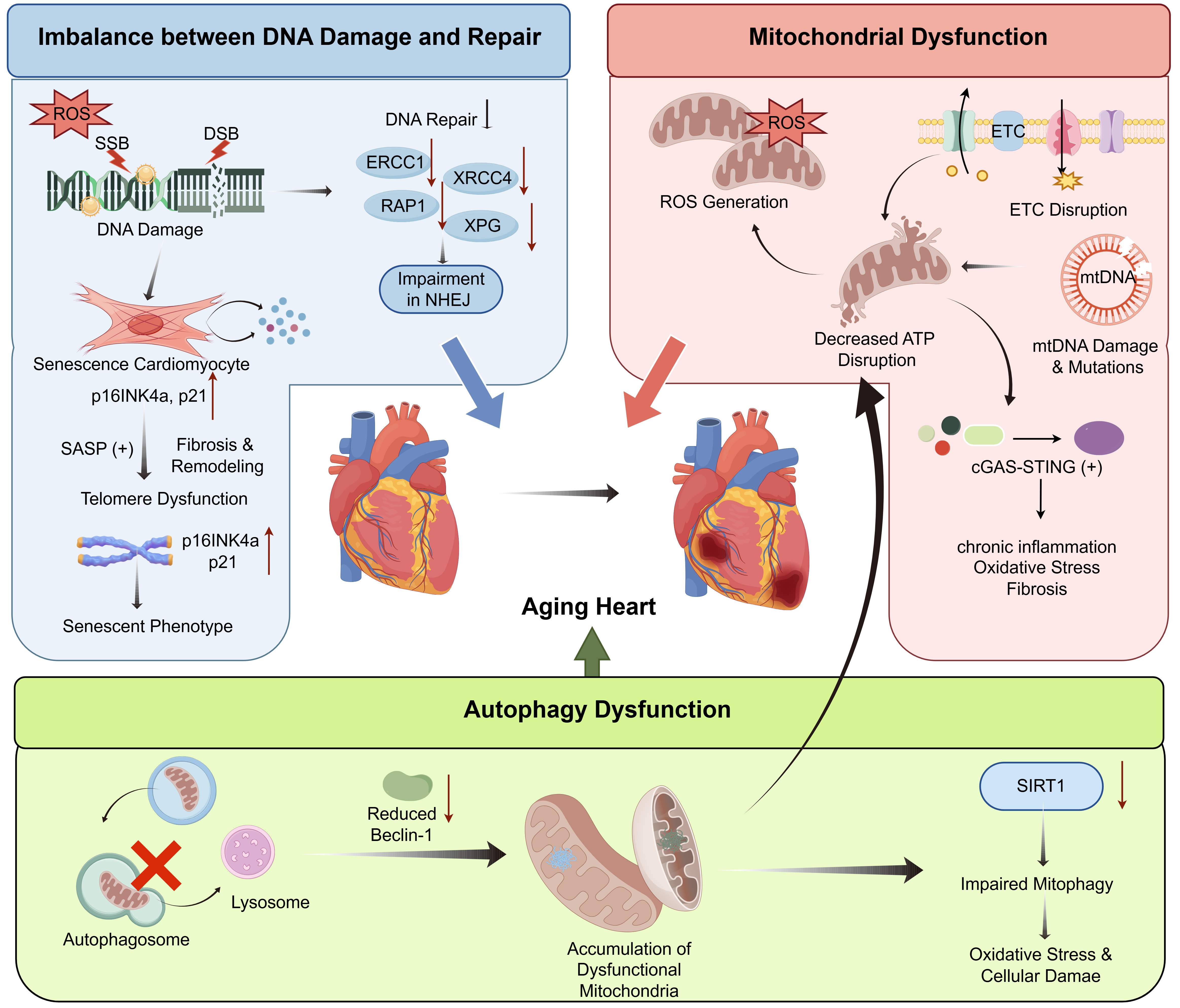
Figure 3. Intracellular mechanisms in cardiac aging. Accumulation of DNA single-strand breaks, double-strand breaks, and oxidative base damage is illustrated in association with elevated reactive oxygen species and impaired DNA repair capacity, including reduced ERCC1, XPG, XRCC4, and disrupted non-homologous end joining. Excessive DNA damage is accompanied by cardiomyocyte senescence marked by increased p16INK4a and p21 expression, activation of senescence-associated secretory phenotype signaling, telomere dysfunction, and fibrotic remodeling. Mitochondrial dysfunction is characterized by enhanced reactive oxygen species generation, disruption of the electron transport chain, mitochondrial DNA damage, and reduced ATP production. Activation of cGAS-STING signaling is shown in association with chronic inflammation, oxidative stress, and fibrosis. Autophagy impairment is depicted by reduced Beclin-1 expression, defective autophagosome–lysosome processing, diminished SIRT1 activity, and accumulation of dysfunctional mitochondria, collectively amplifying oxidative stress and cellular damage. These interconnected intracellular alterations converge on progressive myocardial dysfunction during aging. Created by figdraw.com. (Copyright Code: TIIII906aa). ROS: Reactive oxygen species; SASP: senescence-associated secretory phenotype; NHEJ: non-homologous end joining; ETC: electron transport chain; SSB: Single-strand break; DSB: double-strand break; ATP: adenosine triphosphate; cGAS-STING: cyclic GMP-AMP synthase-stimulator of interferon genes.