

fig1
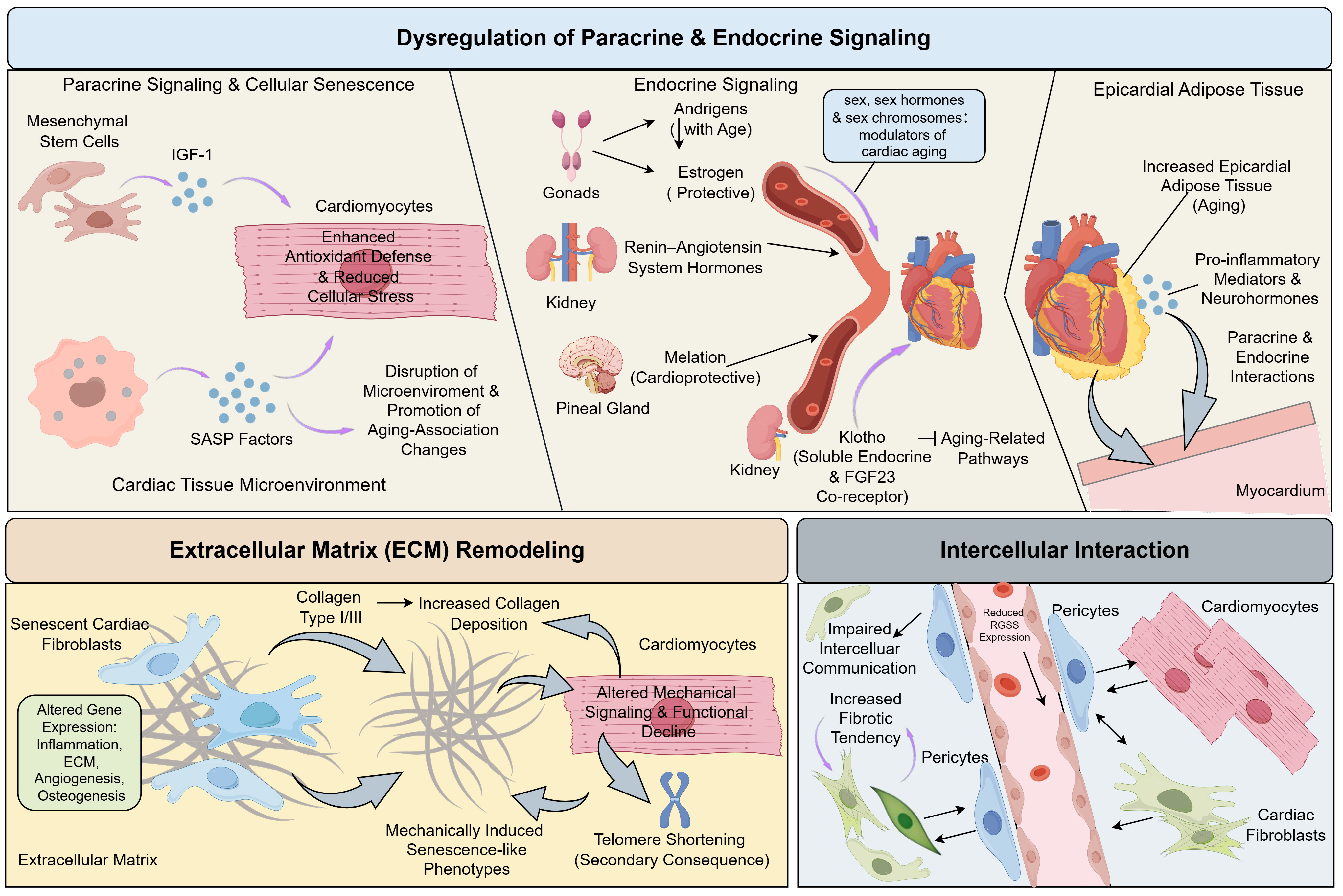
Figure 1. Dysregulation of Paracrine and Endocrine Signaling, extracellular matrix (ECM) Remodeling, and Intercellular Interactions. Paracrine and endocrine signaling, along with changes in the ECM and intercellular interactions, contribute to cardiac aging. In youthful hearts, mesenchymal stem cells (MSCs) release insulin-like growth factor-1 (IGF-1), which enhances SOD2 expression, reducing oxidative stress. However, with aging, senescent cells secrete factors such as cytokines, chemokines, and growth factors, disrupting the tissue microenvironment and accelerating aging. Klotho, a pleiotropic hormone, helps mitigate these aging processes by modulating pathways like TGF-β and NF-κB. In aged hearts, senescent fibroblasts contribute to increased matrix stiffness and diastolic dysfunction through altered collagen deposition. Additionally, loss of RGS5 in pericytes leads to myocardial fibrosis, a hallmark of aging in the heart. The accumulation of epicardial adipose tissue (EAT) also promotes the secretion of pro-inflammatory mediators, further exacerbating cardiac aging. Created by figdraw.com. (Copyright Code: PYYST71664). SASP: Senescence-associated secretory phenotype; TGF-β: transforming growth factor beta; NF-κB: nuclear factor kappa B.