

fig1
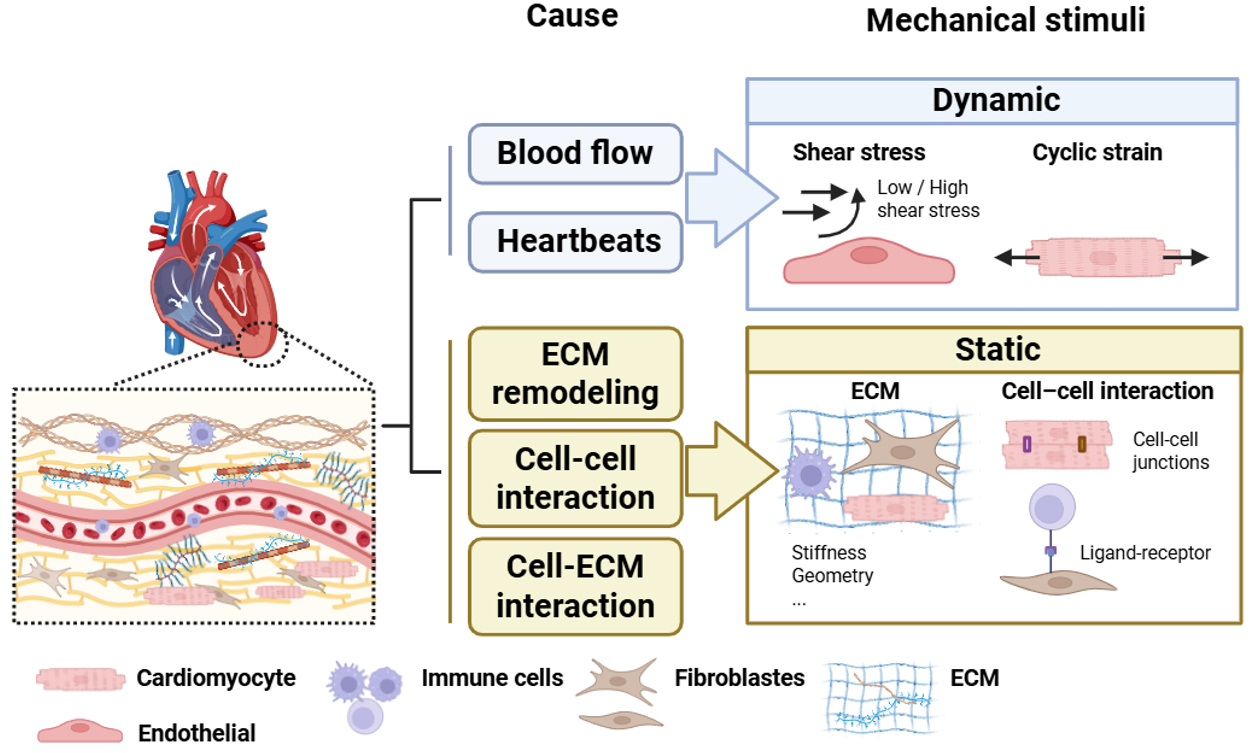
Figure 1. Mechanical stress in the cardiac microenvironment. Mechanical forces in the cardiac microenvironment arise from both hemodynamic activity and structural remodeling. Blood flow and heartbeats generate dynamic mechanical stimuli, including shear stress and cyclic strain. In contrast, ECM remodeling and cell-ECM adhesions produce relatively static mechanical cues, such as ECM stiffness, geometric constraints, and signaling mediated by cell-cell interaction. These mechanical stimuli collectively shape the heart’s biomechanical environment and influence cellular responses during cardiac homeostasis and disease.