

fig4
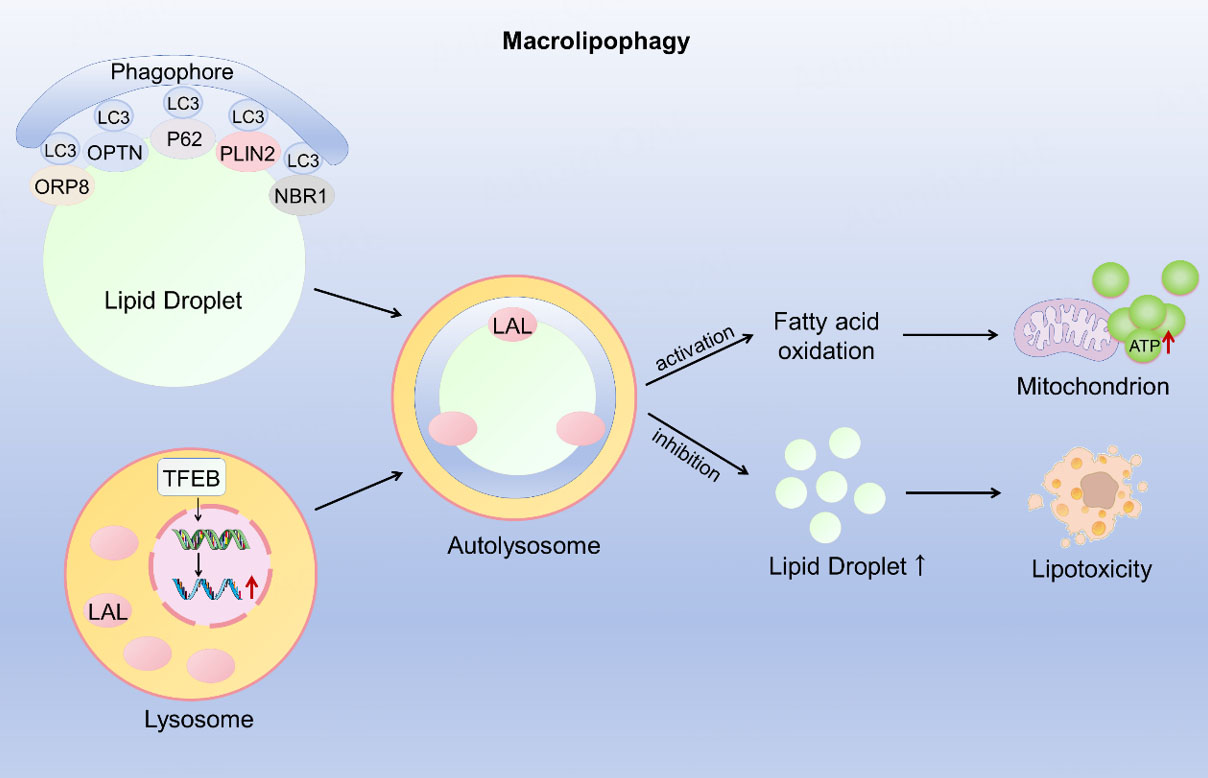
Figure 4. The mechanism of macrolipophagy. Selective autophagy receptors (e.g., p62, NBR1, OPTN) and LD surface proteins (e.g., PLIN2, ORP8) recruit LC3-positive phagophores to engulf lipid droplets, which then fuse with lysosomes to form autolysosomes. Within autolysosomes, lysosomal acid lipase (LAL) hydrolyzes neutral lipids to free fatty acids, while TFEB promotes lysosomal biogenesis. The liberated fatty acids are oxidized in mitochondria to generate ATP; when macrolipophagy is inhibited, lipid droplets accumulate and cause lipotoxicity. LAL: Lysosomal acid lipase; TFEB: transcription factor EB; ORP8: oxysterol-binding protein-related protein 8; ATP: adenosine triphosphate; NBR1: Neighbor of BRCA1 gene 1 protein; PLIN2: perilipin 2; OPTN: optineurin; LC3: microtubule-associated proteins 1A/1B light chain 3B; P62: Sequestosome-1.