
fig2
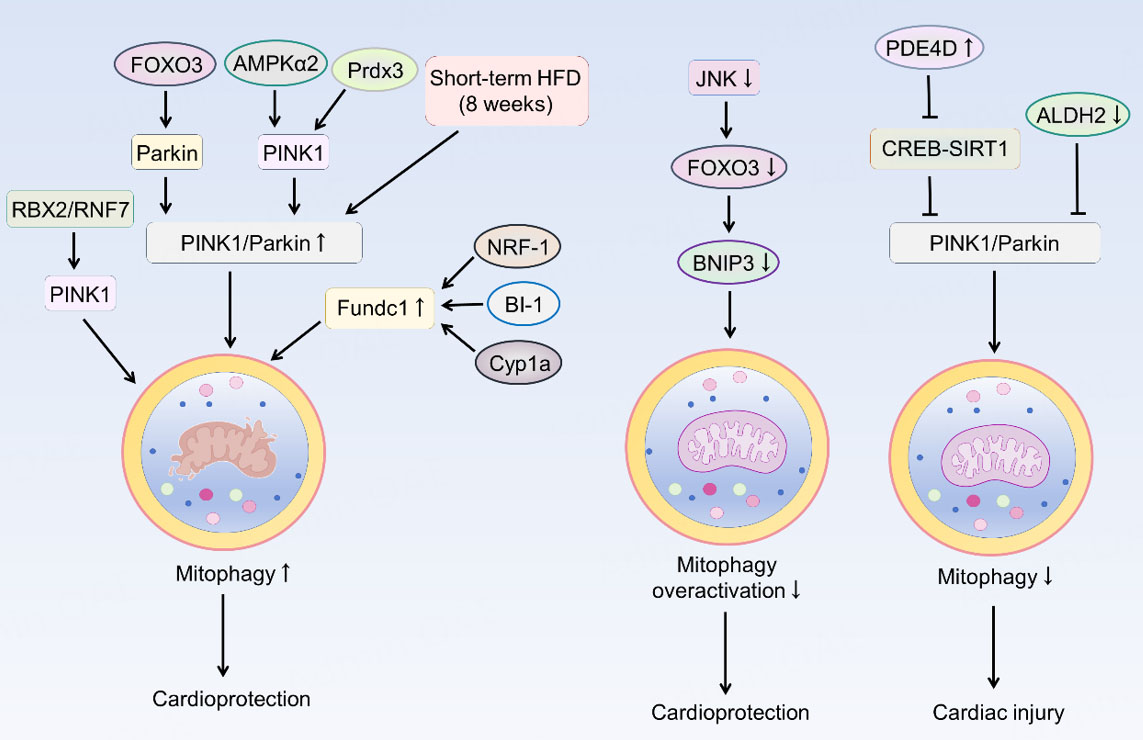
Figure 2. Regulatory mechanisms of mitophagy in heart failure. RBX2/RNF7 promotes mitophagy by enhancing the stability of PINK1. Furthermore, FOXO3, AMPKα2, Prdx3, and a short-term high-fat diet (8 weeks) can augment the PINK1/Parkin pathway, thereby activating mitophagy and conferring cardioprotective effects. Meanwhile, NRF-1, BI-1, and Cyp1a promote this process by upregulating FUNDC1. Inhibiting JNK limits the overactivation of mitophagy via the FOXO3-BNIP3 axis, maintaining mitochondrial homeostasis and protecting the myocardium. The aberrant elevation of PDE4D, which suppresses the CREB-SIRT1 pathway, as well as the downregulation of ALDH2, can lead to the inactivation of the PINK1/Parkin pathway. Consequently, reduced mitophagy leads to cardiac injury. PINK1: PTEN-induced putative kinase protein-1; RBX2: RING box protein 2; RNF7: RING Finger Protein; FOXO3: forkhead box O3; AMPKα2: AMP-activated protein kinase α2; Prdx3: peroxiredoxin 3; HFD: high-fat diet; NRF-1: nuclear respiratory factor 1; FUNDC1: FUN14 domain-containing 1; BI-1: Bax inhibitor-1; JNK: c-Jun N-terminal kinase; BNIP3: B-cell lymphoma 2 (BCL2) interacting protein 3; PDE4D: phosphodiesterase 4D; ALDH2: aldehyde dehydrogenase 2; SIRT1: sirtuin 1; CREB: cAMP response element-binding protein; Cyp1a: cytochrome P450 1A.