
Hydrogel diodes towards future iontronics devices
 0
0 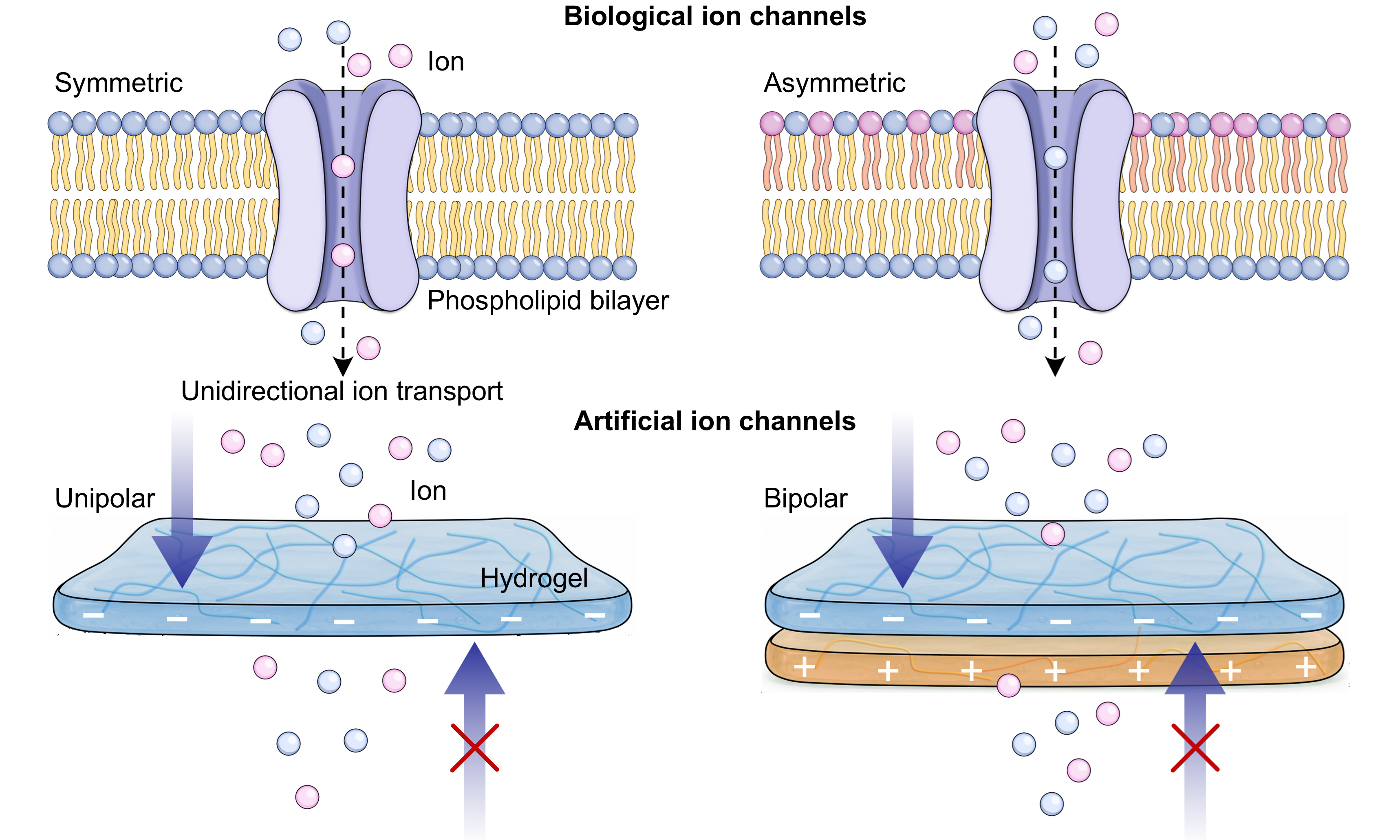
INTRODUCTION
Biological systems are inherently soft and water-rich, relying primarily on ions as charge carriers for information transmission and signal processing, whereas conventional computational hardware predominantly employs electrons[1] [Figure 1A]. These fundamental differences limit the ability of purely electronic or ionic systems to address complex bioelectronic interactions, particularly in terms of flexibility, biocompatibility, and multimodal signal coupling[2]. With the rapid emergence of soft iontronics, this research paradigm has gradually shifted[3]. Hydrogel-based iontronic devices have been developed to bridge the gap between biological systems and conventional electronics[4]. Among the fundamental iontronic components, including ionic diodes, transistors, and memristors, hydrogel ionic diodes are particularly attractive for integrated iontronic platforms because of their unique ion rectification, ion selectivity, and gating capabilities[5].
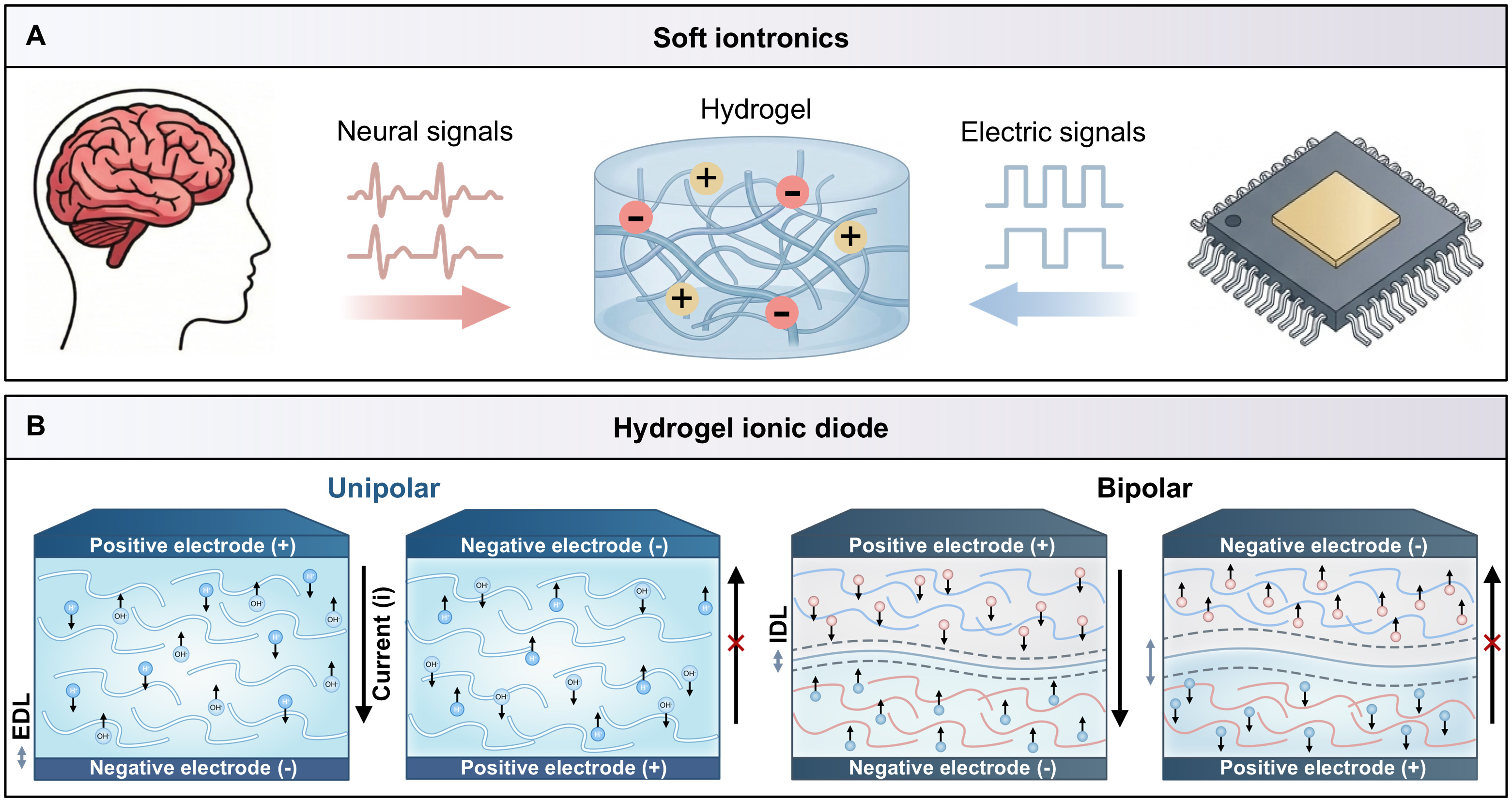
Figure 1. Hydrogel ionic diode as soft iontronics devices for human-computer communication. (A) Soft iontronics devices possess excellent biocompatibility and tunable electrical properties, enabling ion-electron conversion for signal transmission and information processing, serving as an ideal bridge for human-machine communication; (B) Hydrogel ionic diodes, as fundamental logic units of soft iontronics devices, integrate functionalities such as ion rectification, ion selectivity, and ion gating, and can be classified into unipolar and bipolar types based on structural differences. EDL: Electric double layer;
Ion rectification refers to asymmetric ion transport, where ion flow preferentially occurs in one direction under an applied driving force, analogous to electronic diodes[6]. According to the polarity distribution of fixed charges, hydrogel ionic diodes can generally be classified as unipolar or bipolar[7] systems [Figure 1B]. A hydrogel ionic diode containing only one type of fixed charge is defined as a unipolar ionic diode. For example, Guo et al. reported a unipolar hydrogel ionic diode based on an ethylene glycol/water binary solvent, zinc and titanium electrodes, and a transparent ionic gel layer[8]. The asymmetric H+ reduction potentials at different electrode interfaces endowed the device with excellent rectification performance. In contrast, bipolar ionic diodes introduce oppositely charged interfacial structures within the same system[9]. Owing to their greater structural complexity and tunability, bipolar ionic diodes have attracted increasing attention in recent years. Cayre et al. demonstrated that ion rectification can be achieved by contacting two gels containing oppositely charged polyelectrolytes[10]. Benefiting from precise regulation of interfacial charge distributions and ion transport pathways, hydrogel ionic diodes exhibit versatile functionalities and have shown great potential in energy conversion, biochemical sensing, artificial synapses and neuromorphic systems.
This perspective provides a systematic overview of recent advances in hydrogel ionic diodes and their emerging applications. First, we summarize current construction strategies and performance regulation approaches. We further discuss core scientific issues related to ion transport, including rectification mechanisms, ion transport at heterogeneous interfaces, ion-electron signal conversion, and engineering challenges associated with long-term operation, miniaturization, and flexible integration. These discussions aim to inspire new design concepts for hydrogel iontronics from both mechanistic and architectural perspectives. Next, we highlight recent progress in representative application areas and emphasize the important role of hydrogel ionic diodes as functional units in soft electronics and human-machine interfaces. Finally, considering current research bottlenecks and future development demands, we provide an outlook on potential strategies for translating fundamental research into practical iontronic applications, thereby guiding the development of next-generation soft iontronics systems.
OPPORTUNITIES AND CHALLENGES
New mechanism for ion rectification
Conventional ionic diode membranes typically achieve ion rectification through asymmetric geometries, functional group-modified nanochannels, or the integration of nanochannels with distinct geometric and charge distributions. However, these nanoscale rectification strategies are difficult to directly implement in hydrogel systems, as their intrinsically 3D macroporous networks feature pore sizes (1-100 μm) larger than the ionic Debye length (1-100 nm), thereby precluding effective electric double layer overlap [Figure 2A]. This mismatch in structural length scales fundamentally limits the implementation of conventional nanochannel-based rectification mechanisms in hydrogel ionic diodes and remains a major bottleneck for improving rectification performance. Yin et al. constructed a quasi‐solid‐state heterogeneous hydrogel membrane[11] that achieves efficient unidirectional ion transport through the synergistic integration of intrinsic electrochemical gradients, asymmetric geometries and functional groups. By rationally engineering the hydrogel matrix, this strategy establishes a new route for designing hydrogel ionic diodes with enhanced rectification performance.
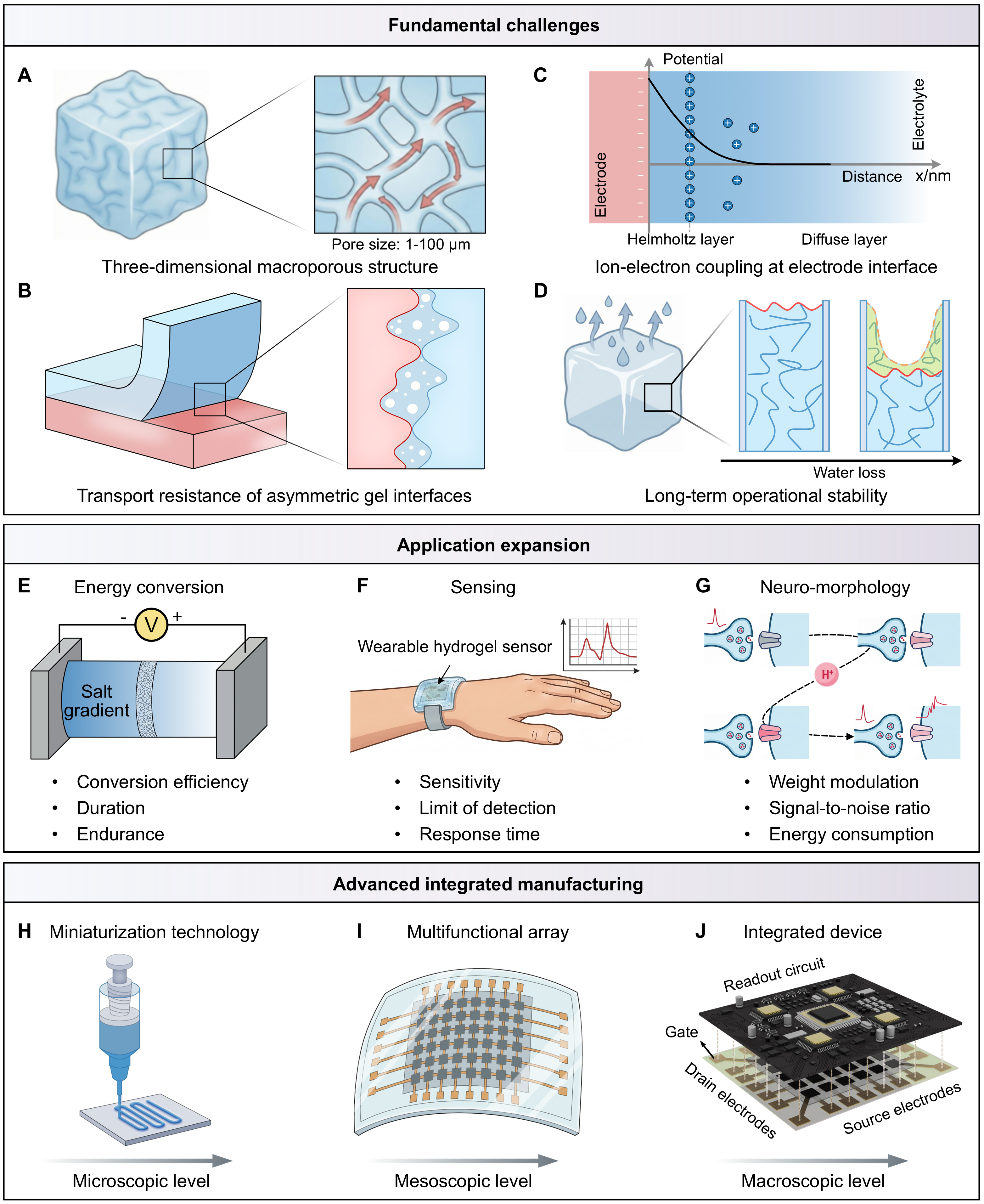
Figure 2. Challenges and opportunities of hydrogel ionic diodes. (A-D) Hydrogel ionic diodes still face challenges in achieving efficient ionic rectification; (E-G) Ion transport in three-dimensional channels and its applications in energy conversion, sensing, and neuromorphic systems; (H-J) The development of hydrogel iontronics devices toward multiscale integration.
Ion transport at asymmetric gel interfaces
The ion transport and rectification efficiency of hydrogel ionic diodes are often limited by interfacial incompatibility, which may induce delamination and increased interfacial resistance. Therefore, reducing ion migration resistance and achieving stable, high-efficiency ion transport across heterogeneous hydrogel interfaces remains a critical challenge [Figure 2B]. Lin et al. developed an integrated dual-gradient heterogeneous hydrogel ionic diode through DC electric field-induced migration of charged 2-(methacryloyloxy)ethyl trimethylammonium chloride and 3-sulfopropyl methacrylate potassium salt monomers[12]. The dual-gradient distribution generates numerous heterogeneous microstructures (microdiodes) with low interfacial resistance throughout the hydrogel bulk. These interconnected micro-heterojunctions bridge dissimilar domains and overcome ion transport limitations commonly observed in conventional asymmetric hydrogels. By combining electric-field-induced ion migration with in situ polymerization, this strategy effectively addresses the challenges of high interfacial resistance and poor interfacial stability. Furthermore, ion transport across asymmetric hydrogel interfaces can be substantially improved through the construction of continuous spatial gradients of cationic and anionic polymers via rapid reaction/diffusion[13], or by incorporating gel layers with robust interfacial adhesion[14].
Ion-electron coupling at electrode interface
Beyond ion transport within the hydrogel matrix, the ion-electron conversion efficiency at the hydrogel-electrode interface critically influences the overall rectification performance of hydrogel ionic diodes [Figure 2C]. As the key bridge connecting ionic transport with external electronic circuits, this interfacial process is governed by ion adsorption, migration kinetics, and selective ion transport. Therefore, precise regulation of ion and electron transport kinetics at the electrode interface is essential for enhancing ion rectification. Wang et al. reported a unipolar hydrogel ionic diode with giant and programmable rectification, achieved through voltage-driven dynamic modulation of the interfacial electric double layer (EDL)[15]. By controlling EDL evolution and associated electrochemical reactions under an external electric field, this strategy enables dynamic control over carrier migration, thereby enhancing interfacial charge transport and storage. Consequently, both ion flux and power output can be significantly improved. Compared with conventional hydrogel ionic diodes, which primarily rely on structural or chemical asymmetry and typically exhibit rectification ratios of 101-102, such interface-engineered devices can achieve rectification ratios exceeding 103 and even reaching 104, highlighting the unique advantages of interfacial engineering in enhancing ionic signal selectivity and transport efficiency. Notably, beyond voltage stimulation, external stimuli such as mechanical stretching[16] or compression[17] also enable dynamic modulation of the interfacial EDL and ion-electron coupling.
Long-term operational stability
The practical application of hydrogel ionic diodes is currently limited by the inherent characteristics of aqueous electrolytes, including solvent evaporation and narrow electrochemical window, both of which compromise long-term rectification stability [Figure 2D]. By judiciously selecting high-boiling-point, low-volatility organic solvents and incorporating them into hydrophobic polymer matrices, solvent evaporation can be effectively suppressed while maintaining excellent thermal stability. For example, Jiang et al. designed an ion-rectifying diode based on an organic gel polymer electrolyte[18]. The use of poly(methyl methacrylate)/propylene carbonate and poly(vinylidene fluoride-co-hexafluoropropylene)/propylene carbonate matrices provides excellent thermal and electrochemical stability, thereby expanding the operational voltage window and enhancing device stability. In addition, incorporating electrochemically stable ionic liquids, salts, and organic solvents as electrolytes can also prevent undesired electrochemical redox reactions (or parasitic faradaic processes), further improving the operational stability of hydrogel ionic diodes.
Expanding application
Over the past decades, the rapid development of functional hydrogel systems has greatly expanded the application scope of hydrogel ionic diodes across multiple fields. In energy harvesting [Figure 2E], they convert environmental stimuli - including light[19], mechanical pressure[20], humidity[21], and salinity gradients[22] - into electrical outputs, enabling sustainable energy technologies such as solar, piezoelectric, hydrovoltaic, and osmotic energy harvesting. In biochemical sensing [Figure 2F], hydrogel ionic diodes serve as self-powered sensing platforms capable of harvesting energy from the environment and converting ion migration into readable electrical signals. This capability enables continuous signal output without external power sources[23]. In artificial synapses and neuromorphic computing [Figure 2G], hydrogel ionic diodes exploit ion rearrangement within confined charged channels to generate history-dependent and tunable conductance, mimicking dynamic behaviors of biological synapses and enabling emulation of synaptic memory and computation[24,25].
Despite these advances, the practical performance of hydrogel ionic diodes remains constrained by low ion-transport efficiency and interfacial incompatibility. In energy-harvesting systems, although power density has improved through rational hydrogel design and surface charge modulation, the overall energy conversion efficiency remains limited by ionic transport resistance within polymer networks, which impedes concentration-gradient-driven ion migration. For biochemical sensing, sensing performance - including sensitivity, response speed, and detection limit - is strongly dependent on ion transport across heterogeneous interfaces and ion-electron coupling at hydrogel-electrode interfaces. Insufficient transport efficiency not only retards signal response but also constrains rapid detection and ultrasensitive sensing at extremely low analyte concentrations. Moreover, in artificial synapses and neuromorphic computing, ion migration in synthetic synaptic devices is constrained by hydrogel networks and heterogeneous interfaces, yielding transport efficiencies far below biological synapses. Consequently, higher operating voltages are required to achieve comparable performance, while parasitic electrochemical reactions prolong response times and increase operational energy consumption by several orders of magnitude. From a bioinspired perspective, improving ion transport efficiency requires drawing on the structural and mechanistic features of biological ion channels. Precisely defined pore sizes, ordered surface charge distributions, and synergistic multi-channel effects can lower the energy barrier for ion migration, enabling highly efficient ion transport pathways approaching the diffusion limit.
Advanced integrated manufacturing
Hydrogel ionic diode systems are gradually evolving from individual functional devices to large-scale integrated iontronic platforms, thereby imposing increasing demands on intelligent and multiscale manufacturing strategies. At the microscale, individual devices achieve controlled water transport, ion migration, and charge transfer through miniaturized design, printing techniques, and functional modulation, providing reliable pathways for stable signal transmission and efficient information processing [Figure 2H]. At the mesoscale, multiple units can be assembled into functional modules or arrays, forming controllably interconnected networks that enable multichannel signal response, parallel processing, and complex logic operations [Figure 2I]. At the macroscale, these modules can be seamlessly integrated into wearable electronics, biointerface devices, intelligent sensing platforms, and soft robotic systems, ultimately yielding fully integrated devices with system-level intelligent functionalities [Figure 2J]. These requirements have driven multi-module integration strategies combining micro/nanofabrication, 3D printing, and self-assembly techniques, supporting hydrogel iontronics applications across multiple fields.
CONCLUSION AND OUTLOOK
With continued interdisciplinary advances, flexible iontronics is emerging as a transformative paradigm for information processing and signal transduction, surpassing limitations of purely ionic or electronic systems in material form factors, signal coupling, and functional integration. Despite the significant progress achieved to date, hydrogel iontronic devices still face critical challenges in scalable integration and complex circuit architectures, particularly in manufacturing, interconnect design, and system-level engineering. To translate current prototype-stage devices into practical applications, several key engineering bottlenecks must be addressed, including highly reproducible hydrogel patterning, precise interface regulation during batch fabrication, compatibility with printing and roll-to-roll manufacturing processes, robust device packaging for long-term environmental stability, and efficient integration with electrodes and external circuits. Overcoming these challenges is expected to accelerate the transition of hydrogel iontronics from proof-of-concept demonstrations toward functional and system-level applications.
Looking forward, these systems may develop into highly integrated platforms [Figure 3A-D]. First, seamless human-machine integration [Figure 3A] could be realized through soft, biocompatible interfaces capable of stable communication with biological tissues, enabling next-generation wearable electronics, implantable devices, and bioelectronic medicine. Second, artificial sensory systems [Figure 3B] may benefit from hydrogel iontronics with intrinsic softness and stimulus responsiveness, allowing adaptive perception of pressure, temperature, humidity, chemical cues, and multimodal environmental signals. Third, neuromorphic systems and artificial intelligence [Figure 3C] could leverage ion-based transport dynamics, memristive behavior, and synaptic plasticity to emulate biological learning and low-power parallel computation. Finally, integrated iontronics information platforms [Figure 3D] may combine sensing, memory, logic, communication, and energy modules into unified soft systems, paving the way for autonomous and intelligent iontronics networks. Overall, continued progress in materials design, device engineering, and system integration is expected to create broad opportunities for next-generation soft iontronics technologies.
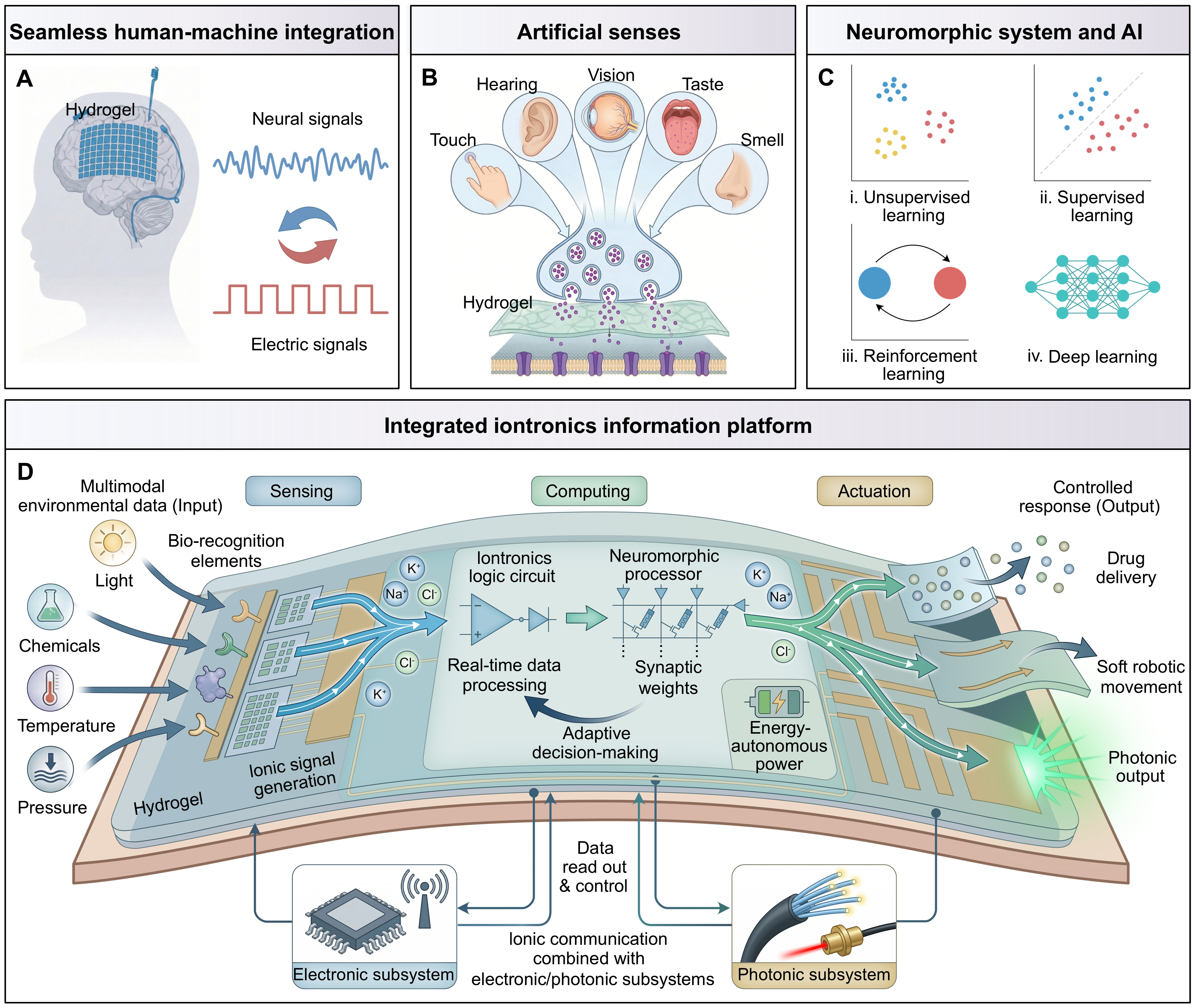
Figure 3. Potential development directions in the field of hydrogel iontronics. (A-D) Hydrogel iontronics devices hold great promise for advanced applications in seamless bio-interfaces, intelligent adaptive sensing, neuromorphic computing and artificial intelligence, as well as information storage. AI: Artificial intelligence.
DECLARATIONS
Authors’ contributions
Wrote the draft: Wang, X.; Zhao, N.; Guo, Y.
Supervised, reviewed and edited the manuscript: Zhang, Z.
Contributed equally to the preparation of this manuscript: Wang, X.; Zhao, N.; Guo, Y.
All authors discussed the review and agreed upon the final version of the manuscript.
Availability of data and materials
Not applicable.
AI and AI-assisted tools statement
Not applicable.
Financial support and sponsorship
This work was supported by the National Natural Science Foundation (52573309), the start-up funding for Suzhou Advanced Research Institute of the University of Science and Technology of China, the Leading Talents of Innovation and Entrepreneurship of Gusu District (ZXL2023341), and Suzhou Key Laboratory of Bioinspired Interfacial Science (SZ2024004).
Conflicts of interest
All authors declared that there are no conflicts of interest.
Ethical approval and consent to participate
Not applicable.
Consent for publication
Not applicable.
Copyright
© The Author(s) 2026.
REFERENCES
2. Harikesh, P. C.; Yang, C.; Wu, H.; et al. Ion-tunable antiambipolarity in mixed ion-electron conducting polymers enables biorealistic organic electrochemical neurons. Nat. Mater. 2023, 22, 242-8.
3. Dai, Y.; Wai, S.; Li, P.; et al. Soft hydrogel semiconductors with augmented biointeractive functions. Science 2024, 386, 431-9.
4. Liu, D.; Bai, J.; Tian, X.; et al. Increasing the dimensionality of transistors with hydrogels. Science 2025, 390, 824-30.
5. Zhu, X.; Wu, Z.; Zhao, Z. Bio-inspired heterointerfacial ion-gating and iontronic neuromorphics. Iontronics 2025, 1.
6. Huang, X.; Kong, X. Y.; Wen, L.; Jiang, L. Bioinspired ionic diodes: from unipolar to bipolar. Adv. Funct. Mater. 2018, 28, 1801079.
7. Nguyen, G.; Vlassiouk, I.; Siwy, Z. S. Comparison of bipolar and unipolar ionic diodes. Nanotechnology 2010, 21, 265301.
8. Guo, Z. H.; Wang, H. L.; Shao, Y.; Li, L.; Jia, L.; Pu, X. Flexible ionic diodes with high rectifying ratio and wide temperature tolerance. Adv. Funct. Mater. 2022, 32, 2112432.
9. Özbay KarakuŞ, M. A guide for cross-linking modulation: the record rectifying ratio of hydrogel-based ultra flexible ionic diodes. Adv. Mater. Inter. 2023, 11, 2300678.
10. Cayre, O. J.; Chang, S. T.; Velev, O. D. Polyelectrolyte diode: nonlinear current response of a junction between aqueous ionic gels. J. Am. Chem. Soc. 2007, 129, 10801-6.
11. Yin, J.; Jia, P.; Ren, Z.; et al. Mechanically enhanced, environmentally stable, and bioinspired charge-gradient hydrogel membranes for efficient ion gradient power generation and linear self-powered sensing. Adv. Mater. 2025, 37, 2417944.
12. Lin, J.; Mao, Y.; Zheng, T.; et al. Electric field-induced dual-gradient heterojunction diodes toward ultrasensitive self-powered ionic skin. Adv. Mater. 2025, 37, 2500949.
13. Bian, G.; Pan, N.; Luan, Z.; et al. Anti-swelling gradient polyelectrolyte hydrogel membranes as high-performance osmotic energy generators. Angew. Chem. Int. Ed. 2021, 60, 20294-300.
14. Liao, H.; Hu, S.; Yang, H.; et al. Data-driven de novo design of super-adhesive hydrogels. Nature 2025, 644, 89-95.
15. Wang, X.; Guo, Y.; Jing, T.; et al. Giant and programmable ionic rectification induced by voltage-driven dynamic modulation of interfacial electric double layer for bioinspired neuromorphic signal conduction. Nano. Lett. 2026, 26, 2842-52.
16. Lee, H. R.; Kim, C. C.; Sun, J. Y. Stretchable ionics - a promising candidate for upcoming wearable devices. Adv. Mater. 2018, 30, 1704403.
17. Li, X.; Li, R.; Li, S.; Wang, Z. L.; Wei, D. Triboiontronics with temporal control of electrical double layer formation. Nat. Commun. 2024, 15, 6182.
18. Jiang, F.; Poh, W. C.; Chen, J.; et al. Ion rectification based on gel polymer electrolyte ionic diode. Nat. Commun. 2022, 13, 6669.
19. Wu, L.; Qi, J.; Zhang, L.; et al. Self-powered photoelectric sensors based on hydrogel diodes doped with photoacid. Chem. Eng. J. 2024, 489, 151215.
20. Zhang, Y.; Jeong, C. K.; Wang, J.; et al. Hydrogel ionic diodes toward harvesting ultralow‐frequency mechanical energy. Adv. Mater. 2021, 33, 2103056.
21. Yin, J.; Liu, N.; Jia, P.; et al. MXene‐enhanced environmentally stable organohydrogel ionic diode toward harvesting ultralow‐frequency mechanical energy and moisture energy. SusMat 2023, 3, 859-76.
22. Huang, Y.; Shen, P.; Ma, Q.; et al. A general approach of reinforcing hydrogels for salinity-gradient energy harvesting. Nano. Energy. 2025, 138, 110898.
23. Du, M.; Zhang, D.; Fan, W.; et al. Ionic diode-based self-powered ionic skins with multiple sensory capabilities. Mater,. Today. Phys. 2022, 26, 100744.
24. Zhang, Y.; Tan, C. M. J.; Toepfer, C. N.; Lu, X.; Bayley, H. Microscale droplet assembly enables biocompatible multifunctional modular iontronics. Science 2024, 386, 1024-30.
Cite This Article
 Open Access
How to Cite
Download Citation
Export Citation File:
Type of Import
Tips on Downloading Citation
Citation Manager File Format
Type of Import
Direct Import: When the Direct Import option is selected (the default state), a dialogue box will give you the option to Save or Open the downloaded citation data. Choosing Open will either launch your citation manager or give you a choice of applications with which to use the metadata. The Save option saves the file locally for later use.
Indirect Import: When the Indirect Import option is selected, the metadata is displayed and may be copied and pasted as needed.
About This Article
Copyright

Data & Comments
Data
0





Comments
Comments must be written in English. Spam, offensive content, impersonation, and private information will not be permitted. If any comment is reported and identified as inappropriate content by OAE staff, the comment will be removed without notice. If you have any queries or need any help, please contact us at [email protected].