

Advances in green and low-energy carbon capture key technologies toward engineering applications
 0
Graphical Abstract
Abstract
Within the United Nations Sustainable Development Goals (SDGs) framework, green and low-energy CO2 capture technologies are essential to reduce greenhouse gas emissions and achieve carbon neutrality. As global carbon capture, utilization, and storage (CCUS) demonstration scales continue to expand, chemical absorption using amine solvents has emerged as the industrial benchmark. However, high energy consumption and poor solvent stability hinder large-scale deployment, while secondary pollution from solvent degradation and amine emissions poses a critical barrier to the green and sustainable development of this technology. To overcome these limitations, research efforts in the CO2 capture field have increasingly focused on the synergistic integration of process intensification and materials innovation. This review summarizes recent advances in green and low-energy CO2 capture technologies for engineering applications. The review first presents mainstream process optimization strategies currently adopted in the CO2 capture industry. Building on this, the development and application of novel green and low-energy CO2 capture systems are discussed in detail, encompassing enzymatic absorption and phase-change absorption systems. Furthermore, catalytic desorption technology is identified as a critical enabler for driving the green transformation of conventional amine-based CO2 capture processes. By analyzing the underlying mechanisms, material selection, and process compatibility, future research directions are briefly discussed. This review aims to guide research, development, and engineering deployment of green, low-energy CO2 capture technologies.
Keywords


 Download PDF
INTRODUCTION
With continued global industrialization, rising atmospheric carbon dioxide (CO2) concentrations have become one of the most serious challenges humanity is facing in the twenty-first century[1-3]. According to the National Oceanic and Atmospheric Administration (NOAA), global atmospheric CO2 concentrations reached 430 ppm in March 2025, more than 53% above pre-industrial levels (approximately 280 ppm) and the highest level in human history. This concentration significantly exceeds the natural fluctuation range of the past 800,000 years (180-300 ppm) and continues to increase by approximately 2-3 ppm annually[4,5]. The World Meteorological Organization (WMO) confirmed that 2024 was the warmest year on record, with the global mean near-surface temperature reaching 1.55 ± 0.13 °C above the pre-industrial (1,850-1,900) average. This marked the first calendar year in which global temperatures exceeded 1.5 °C above pre-industrial levels[6-8]. Amid increasingly frequent extreme climate events, the United Nations Sustainable Development Goals (SDGs), particularly SDG 13 (Climate Action), emphasize the need to accelerate the development and deployment of clean, low-carbon technologies. Reducing greenhouse gas emissions has therefore become a global priority[9-12].
Carbon capture, utilization, and storage (CCUS) is essential for achieving carbon neutrality[1,13]. As shown in Figure 1, the global carbon capture and storage (CCS) facility pipeline expanded rapidly between 2015 and 2025. The statistics summarize the total number of commercial CCS facilities and the total CO2 capture capacity in the global CCS facility pipeline[14]. In 2024, the U.S. Department of Energy allocated an additional $428 million to advance research and development across the CCUS lifecycle, from capture demonstrations to storage verification[15,16]. China has also accelerated CCUS deployment, with the number of planned and operational projects increasing from 40 to 120 between 2021 and 2024 and CO2 capture capacity reaching 6 million tonnes per year[17,18]. Among the stages of CCUS, CO2 capture is the foundation for subsequent utilization and storage. Developing efficient, environmentally friendly, and energy-efficient capture technologies is therefore critical to the overall effectiveness of CCUS[19]. According to the International Energy Agency, global CO2 capture needs to reach approximately 1.0 Gt per year by 2030 under the Net Zero Emissions by 2050 Scenario, highlighting the urgent need to accelerate and scale up the deployment of carbon capture technologies[20].
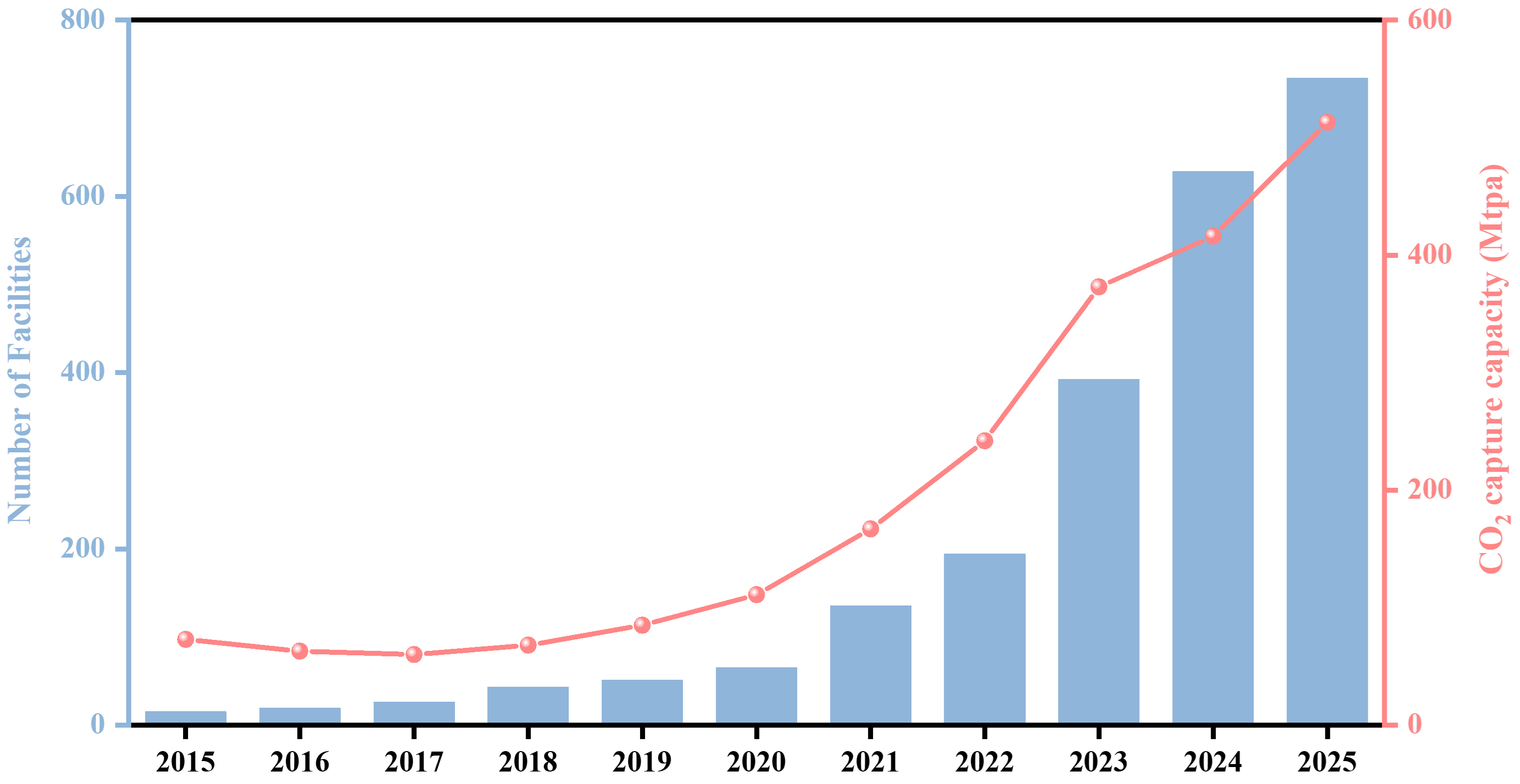
Figure 1. Number of commercial CCS facilities and total CO2 capture capacity in the global CCS facility pipeline since 2015. CCS: Carbon capture and storage.
Currently, chemical absorption using alkanolamine solutions is the most mature CO2 capture technology[21]. This process relies on acid-base reactions to absorb CO2, followed by heating to release the captured gas and regenerate the solvent for reuse[22]. Although monoethanolamine (MEA) remains the benchmark absorbent in research, blended amine systems are widely used in industrial applications. Examples include Shell Cansolv’s proprietary DC-103 solvent, deployed at an early commercial post-combustion CO2 capture plant, and Mitsubishi Heavy Industries’ KS-1 process, which uses sterically hindered amines[23,24]. However, these systems face significant challenges, including high regeneration energy consumption and limited solvent stability. Oxidative and thermal degradation during regeneration can also produce toxic byproducts, such as nitrosamines, resulting in secondary pollution that conflicts with the goals of green, energy-efficient, and sustainable development[25,26].
To address the inherent limitations of blended amine systems, CO2 capture research has increasingly focused on combining process intensification with materials innovation. Novel green absorbents are being developed through molecular design, formulation optimization, and the introduction of alternative chemical systems to reduce energy consumption and environmental impacts[27,28]. Integrating catalytic desorption with conventional amine-based systems offers a potential route to lowering regeneration temperatures, reducing energy demand and secondary pollution, and improving the sustainability of existing capture processes[29,30]. Although previous reviews have extensively examined low-energy CO2 capture technologies and their engineering applications, most have focused primarily on reducing regeneration energy consumption[31]. However, a review that jointly considers energy efficiency, environmental impact, and engineering applicability is still lacking.
This narrative review summarizes advances in green, low-energy CO2 capture technologies relevant to engineering applications. It first examines the thermodynamic contributions to energy consumption in conventional chemical absorption and established process optimization strategies. It then discusses two emerging absorbent systems, enzymatic and phase-change absorption, followed by catalytic desorption as a means of reducing the regeneration energy requirements of established amine processes. Available engineering demonstrations are considered, and outstanding challenges are discussed in the final section.
Literature scope and selection. Literature was identified through Web of Science, Scopus, ScienceDirect, ACS Publications, Wiley Online Library, SpringerLink, and Google Scholar, supplemented by the GHGT conference series and public reports from demonstration plants. The search covered 2010-2026, with emphasis on studies published after 2020. Search terms included CO2 capture, chemical absorption, amine solvent, blended amine, phase-change (biphasic) solvent, non-aqueous solvent, ionic liquid, enzymatic absorption, carbonic anhydrase, catalytic desorption, solid acid catalyst, process intensification, techno-economic assessment, and life cycle assessment. Records were screened by title and abstract, followed by full-text assessment. Studies reporting quantitative data on at least one of the following were retained: regeneration energy, solvent degradation, emissions, corrosion, material stability, cost, or technology readiness. Non-English papers, patents, studies lacking these data, and studies outside the scope of post-combustion chemical absorption were excluded. Because operating temperature, CO2 partial pressure, solvent concentration, and cyclic capacity varied across studies, results were compared individually rather than pooled, and no common database was constructed. A PRISMA-style systematic search was not undertaken; therefore, this article is presented as a narrative review.
CARBON CAPTURE PROCESSES
Chemical absorption is the only post-combustion carbon capture technology to have achieved large-scale commercial application in industry. Its technological maturity and broad applicability have established it as a mainstream carbon capture method. This section systematically outlines the operating mechanisms and energy consumption of conventional chemical absorption and reviews major process intensification strategies, providing a basis for the subsequent discussion of novel green absorbents and catalytic desorption technologies.
Overview of traditional chemical absorption processes
Traditional chemical absorption separates CO2 from flue gas through an absorption-desorption cycle governed by the underlying reaction mechanisms[32]. In a typical process using the industry benchmark of 30 wt.% MEA, pretreated coal-fired flue gas at 40-60 °C, containing 12%-15% CO2 by volume, enters the bottom of the absorption tower and flows counter-currently to the lean amine solution sprayed from the top[33]. The primary amine groups in MEA react with CO2 through a zwitterion mechanism to form carbamates (RNHCOO-). The CO2-rich solution is then preheated to 90-100 °C in a lean-rich heat exchanger before entering the desorption tower. Steam supplied by the reboiler at 110-130 °C provides the heat required for carbamate decomposition and CO2 release. The regenerated lean solution is then recycled to the absorption tower, completing the continuous capture cycle [Figure 2][34,35].
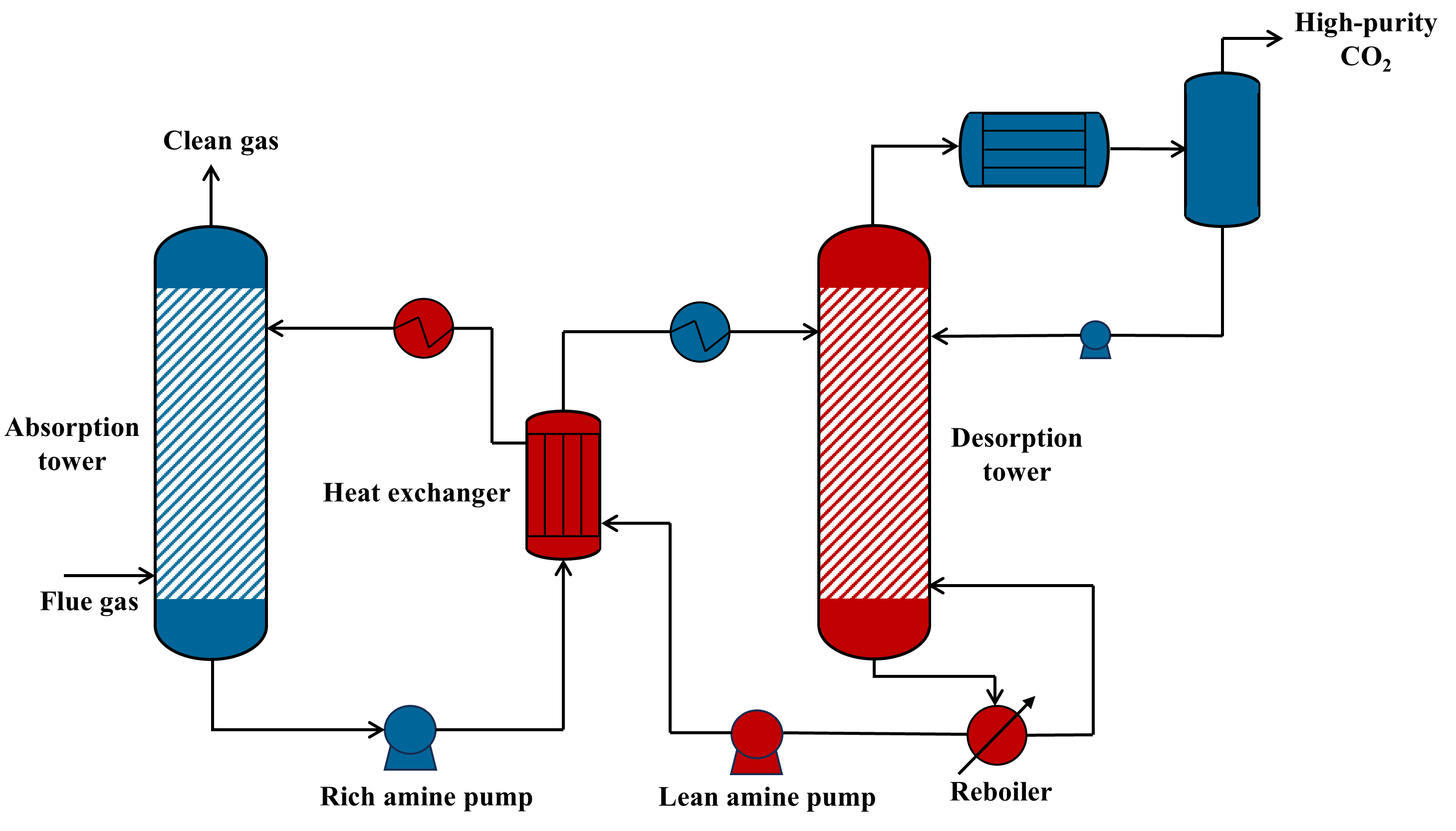
Figure 2. Traditional amine-based carbon capture process.
Because of its high capture efficiency and established engineering reliability, alkanolamine absorption has been widely implemented worldwide. The Boundary Dam project in Canada was the first large-scale carbon capture project at a coal-fired power plant, with a design capture capacity of 1 million tonnes per year. The Petra Nova project in Texas, USA, achieved a capture capacity of up to 1.4 million tonnes per year[36]. China’s Qilu Petrochemical-Shengli Oilfield CCUS project, the country’s first million-tonne-scale carbon capture demonstration project, also employs alkanolamine absorption in its core capture process[37].
Despite extensive engineering validation both domestically and internationally, conventional chemical absorption faces significant operational challenges. High solvent regeneration energy consumption increases energy demand and operating costs, representing a major technical bottleneck. Moreover, amine degradation and volatilization during high-temperature regeneration cause solvent losses and can contribute to secondary pollution and equipment corrosion[31,38]. These limitations hinder the sustainable development of chemical absorption technology and underscore the need for more energy-efficient and environmentally friendly alternatives.
Energy consumption analysis of the absorption-desorption process
The energy consumption of CO2 capture using organic amine absorbents comprises absorption, desorption, compression, purification, and auxiliary equipment. In the benchmark system using 30 wt.% MEA, regeneration energy is approximately 4.0 GJ/t CO2, accounting for over 60% of the total energy requirement of CCS and increasing power generation costs by approximately 80%[39]. As the main energy-consuming stage, solvent regeneration is a key indicator of process economics and comprises three components: (Qrxn), sensible heat (Qsens), and latent heat of vaporization (Qlatent).
The Qrxn is required to break the chemical bonds formed between amine molecules and CO2 and depends on the intrinsic properties of the absorbent. It typically accounts for 50%-60% of total regeneration energy. Qsens is required to raise the temperature of the circulating rich solution from the heat exchanger outlet (90-100 °C) to the reboiler (110-130 °C), contributing approximately 10% of the total. Qlatent accounts for approximately 30%-40% and is associated with water vaporization in the reboiler and subsequent condensation at the top of the desorption tower[40,41].
These energy contributions identify potential pathways for reducing energy consumption in carbon capture technologies. Adjusting heat transfer, operating temperature, gas and liquid partial pressures, and reaction pathways during desorption can reduce regeneration requirements. Research on the absorption side focuses primarily on novel absorbents and hybrid systems, including phase-change absorbents that reduce the volume of the CO2-rich phase requiring regeneration[42,43]. Desorption strategies include thermal desorption, membrane vacuum desorption, ultrasound-assisted desorption, and catalytic desorption[44-46].
Process intensification strategies toward green and low-energy capture
Optimizing absorption-desorption cycles while controlling amine degradation and emissions can reduce energy consumption, solvent loss, and equipment corrosion, improving economic and environmental performance. These measures are essential for advancing chemical absorption toward greener, more energy-efficient operation.
Absorption process optimization
CO2 absorption by amine solutions is strongly exothermic, and increasing the temperature reduces absorption efficiency. Installing intercoolers within the absorption tower removes reaction heat and regulates the temperature profile, increasing the absorption driving force[47]. Further optimization of cooling positions and temperatures can enhance the absorption effect, while multistage cooling enables more precise control of temperature distribution and improves mass transfer performance [Figure 3A][48]. Based on this approach, Liu et al.[49] developed a multistage solvent-circulation process that divided the absorption tower into four functional zones. Circulation tanks with overflows enabled independent regulation of temperature, pH, and liquid-to-gas ratio, helping overcome absorption-capacity limitations and reduce regeneration energy consumption. The Cormos team also optimized an intercooling process using methyldiethanolamine as the absorbent. Regeneration energy ranged from 2.24 to 2.58 MJ/kg, representing a 13.1%-24.6% reduction compared with conventional processes, while net power generation efficiency increased by 2%[50].
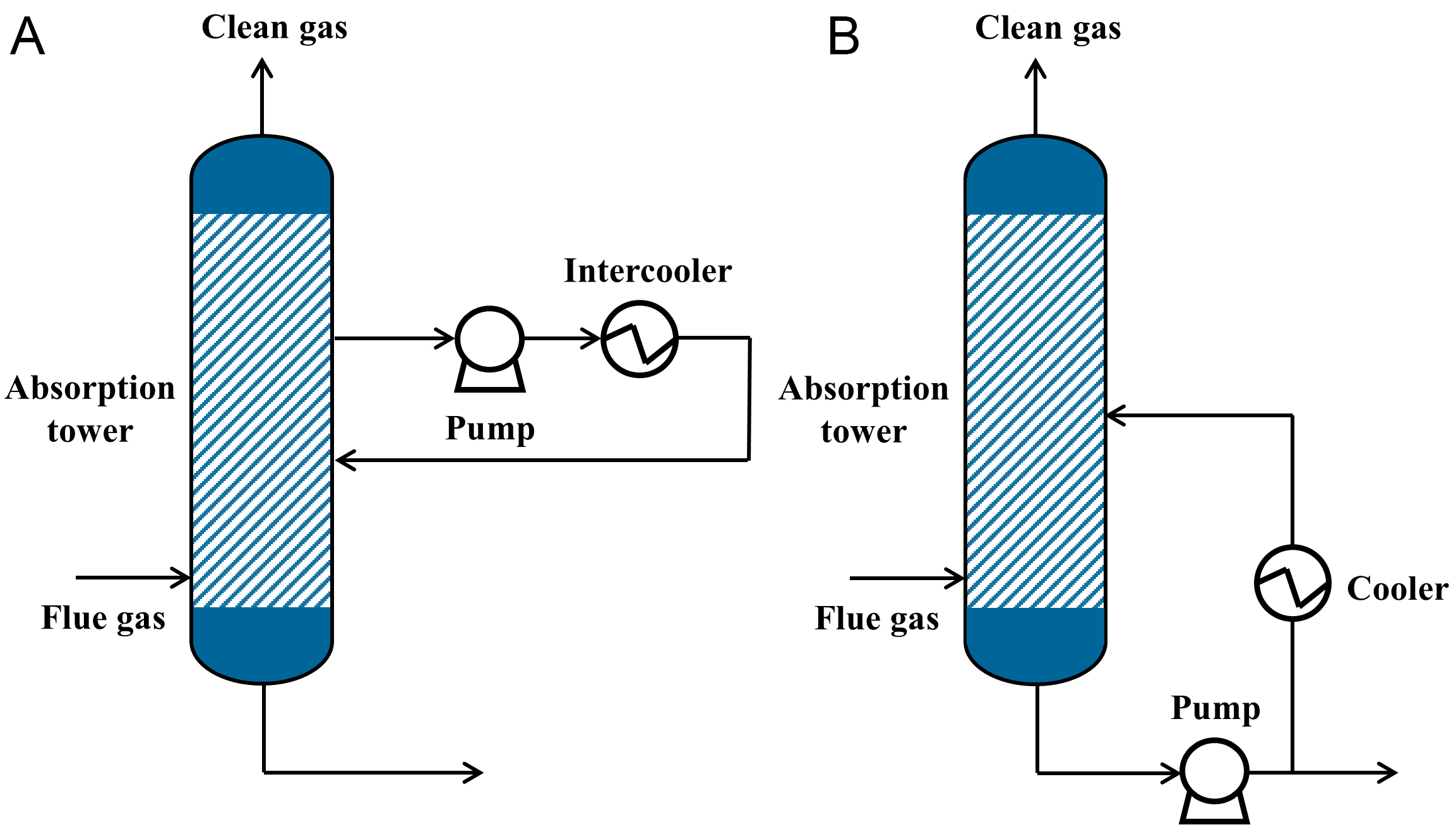
Figure 3. Absorption-side energy-saving process: (A) intercooling; (B) rich liquid recycle.
Rich-solvent recycling provides another means of improving absorption. In this configuration, part of the rich solution is withdrawn from the bottom of the absorption column, cooled, and returned to its middle section for further absorption, extending gas-liquid contact and increasing solvent loading [Figure 3B]. Oh et al.[51] combined flue-gas splitting with multipoint absorbent feeding to optimize temperature and concentration distributions, improving absorption rates while reducing energy consumption. The Dubois team reported that combining rich- and lean-solvent recycling reduced regeneration energy by 4.00%-18.00%[52].
Regeneration process optimization
Desorption is the most energy-intensive stage of carbon capture, and its optimization aims to minimize energy consumption while maintaining desorption efficiency. Common approaches include rich liquid split flow and flash compression.
In the rich liquid split flow process, a portion of the rich liquid recovers the latent heat of the regeneration gas, while the remainder enters the heat exchanger, reducing sensible heat requirements [Figure 4A][53]. Optimizing the split ratio can further improve energy savings. Li et al.[54] found that a split ratio below 0.45 reduced system energy consumption, with a ratio of 0.25 achieving the most significant energy savings.
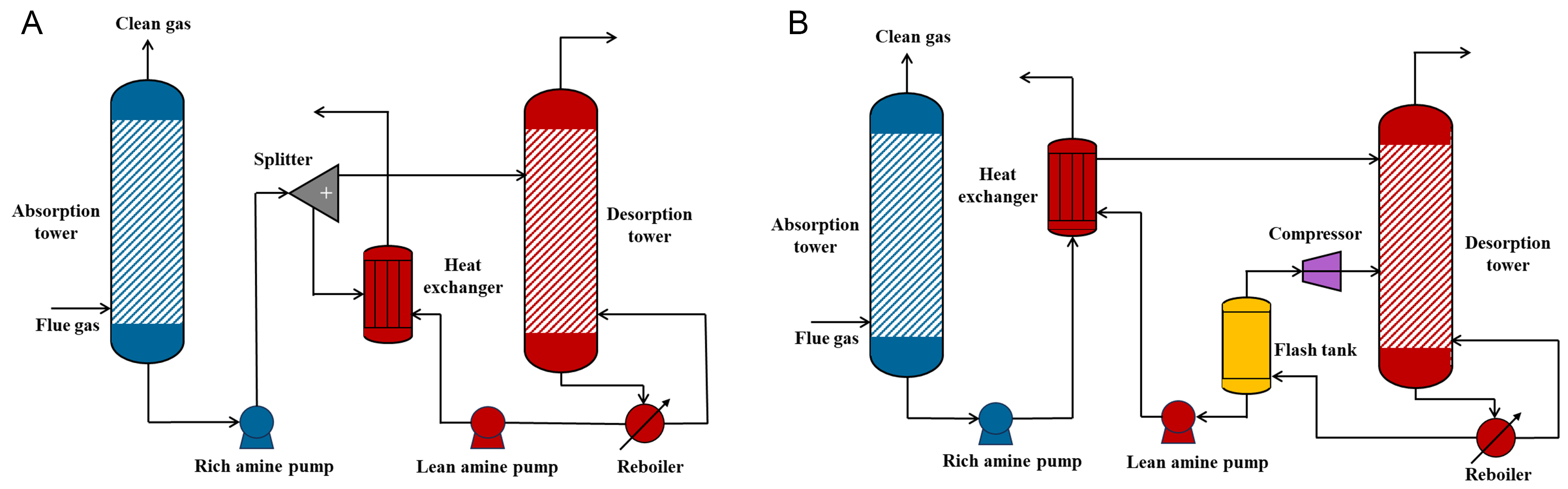
Figure 4. Desorption-side energy-saving process: (A) rich liquid split; (B) lean liquid flash compression.
Flash compression recovers and utilizes higher-grade steam heat through a flasher and heat pump. It can be classified into rich liquid flash compression and lean liquid flash compression[55]. In rich liquid flash compression, hot rich liquid is separated in a flash tank, with the liquid phase sent for desorption and the generated steam compressed and heated by a heat pump to supply heat to the column bottom. However, heat exchange lowers the rich liquid temperature, limiting steam generation and reducing the overall energy savings when compression power is considered[56]. Lean liquid flash compression uses the hotter, CO2-lean solution from the desorption column bottom, achieving higher energy savings [Figure 4B]. Xue et al.[57] reported that lean liquid flash compression reduced the reboiler heat load by 12.8% with MEA and 11.9% with DEA as absorbents.
Amine escape and aerosol control technology
During CO2 capture, absorbents and their degradation products can be released with flue gas, resulting in solvent losses and environmental concerns. In typical MEA absorption systems, solvent emissions range from 0.01 to 0.8 kg per tonne of CO2 captured[58]. Oxidative and thermal degradation also produces organic pollutants, including amines, ammonia, amine polymers, acids, aldehydes, and ketones. After atmospheric release, these substances can react with rainwater and undergo photo-oxidation involving NOx, HNO3, and O3, forming more toxic compounds such as nitrosamines and nitroamines, which are potent carcinogens[59]. Amines can also condense on aerosol particles in the absorber and be discharged with flue gas. These reactions promote heterogeneous nucleation and accelerate the transfer of amines. Mass transfer is driven by differences in amine partial pressure between the gas phase and the solvent and aerosol surfaces. Aerosol emissions depend on flue gas nuclei and absorbent conditions, with greater condensation onto nuclei increasing emissions. Solvent aging further increases the release of degradation products[60,61].
Control strategies for amine aerosols can be divided into two main categories: reducing aerosol formation through the development of novel absorbents and optimization of operating parameters, and lowering emissions through specialized aerosol control technologies[62]. Absorbents used in current demonstration projects all exhibit varying degrees of amine emissions. Therefore, developing efficient aerosol control technologies remains an important approach to reducing amine emissions. Conventional removal devices, such as demisters and water wash towers, have limited efficiency in capturing fine amine aerosols[60,63,64]. Therefore, extensive research has focused on developing more effective removal technologies, primarily comprising condensation pretreatment, in-tower regulation, and end-of-pipe control.
Condensation pretreatment reduces amine aerosol formation through methods such as steam injection and condensation heat exchange, which promote particle growth and decrease aerosol concentrations in the flue gas entering the absorber[65,66]. In-tower regulation targets aerosols formed within the absorption tower through dry beds, temperature adjustment, and acid washing. These methods enable aerosol removal within the tower or establish favorable conditions for downstream treatment[67]. However, due to the complexity of actual flue gas, neither pretreatment nor in-tower regulation alone can completely prevent amine aerosol formation. Specialized end-of-pipe technologies are therefore needed to achieve more comprehensive control of amine emissions throughout the capture system. For example, Shao et al.[68] installed a heat exchanger upstream of a wet electrostatic precipitator (WESP) to promote aerosol growth and improve removal efficiency. By combining aerosol formation control with electrostatic precipitation, the system achieved an aerosol removal efficiency of 99% and reduced emission concentrations to below 5 mg/m3 [Figure 5].
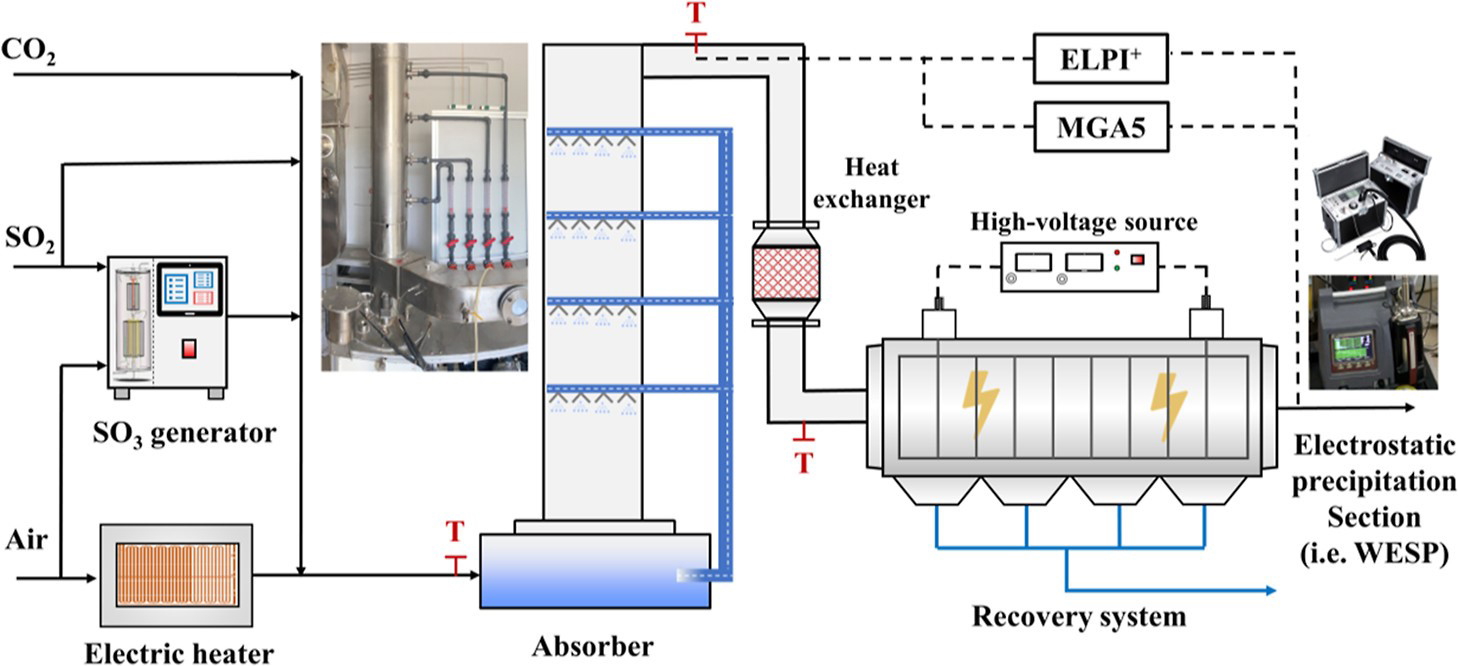
Figure 5. Schematic diagram of the experimental system. The diagram consists of four sections: simulated gas generation, absorber, electrostatic precipitator section, and aerosol measurement[68]. Figure 5 is reprinted with permission from Ref.[68], Copyright © 2022 American Chemical Society. WESP: Wet electrostatic precipitator; ELPI: electrical low-pressure impactor; MGA5: nondispersive infrared multigas analyzer.
GREEN AND LOW-ENERGY ABSORBENT SYSTEMS
To address the high regeneration energy consumption and secondary pollution caused by solvent degradation in conventional alkanolamine absorption, research has increasingly focused on developing novel absorbents. This section discusses two categories of green and low-energy absorbent systems. The first uses biocatalysts to overcome the slow reaction kinetics of low-energy inorganic solvents, such as carbonates, while replacing organic amines with inorganic solvents reduces the risk of secondary pollution. The second comprises phase-change absorption systems, which achieve solvent self-concentration through thermodynamic regulation, reducing the volume of solution requiring regeneration and lowering regeneration energy consumption while improving environmental performance.
Here, “green” encompasses more than low energy demand. Low regeneration temperatures or low vapor pressures do not necessarily indicate environmental superiority. Amine degradation can produce nitrosamines and other hazardous compounds[58]; non-volatile ionic liquids can still exhibit measurable biological toxicity[69]; and biphasic formulations containing lipophilic amines can experience higher solvent losses through evaporation and degradation than aqueous MEA[70]. Following the screening criteria used in a computer-aided molecular design study[71], the assessment therefore also considers toxicity and ecotoxicity, degradation and service life, secondary emissions, corrosivity, waste generation and disposal of spent materials, material preparation burdens, and cradle-to-gate life cycle impacts. The indicators commonly used to assess these dimensions, together with reported values for 30 wt.% MEA and representative alternatives, are presented in Table 1.
Criteria commonly used to judge the environmental sustainability of CO2 capture solvents and processes
| Dimension | Typical indicator | Reported values and remarks |
| Regeneration energy | Heat duty (GJ/t CO2) | 30 wt.% MEA 3.6-4.0[39]; biphasic and non-aqueous systems 1.66-2.14[72-74]; catalytic desorption cuts energy use by 27.6% with catalytic packing and lowers the relative heat duty by 57%-70%[75,76] |
| Volatility and solvent loss | Vapor pressure (kPa); specific solvent loss (kg/t CO2) | MEA 0.01-0.8[58]; losses above MEA reported for biphasic solvents based on lipophilic amines[70] |
| Human toxicity | Oral LD50 (mg/kg) | Applied as a screening criterion in solvent design[71] |
| Ecotoxicity | Fathead minnow 96 h and Daphnia magna 48 h (mg/L) | Applied as a screening criterion in solvent design[71] |
| Environmental fate | Bioaccumulation factor; log P; biodegradability | Enzymes are renewable, non-volatile, and biodegradable[77]; imidazolium ionic liquids show measurable toxicity[69] |
| Safety | Flash point (°C) | Applied as a screening criterion in solvent design[71] |
| Degradation and service life | Degradation rate (%); activity or capacity retained after n cycles | DETA/DEEA oxidizes at roughly a fifth of the MEA rate[72]; TiO(OH)2 holds up over 50 cycles[78]; carbonic anhydrase loses about 20% of its activity in 6 months at 40 °C and 50% in 2 months at 50 °C[79] |
| Secondary emissions | Amine, VOC and aerosol concentrations (mg Nm-3) | 3.5-7 after a water wash[80]; below 5 mg m-3 with combined inhibition and wet electrostatic precipitation[68]; low-temperature catalytic desorption limits carcinogenic amine-decomposition products[78] |
| Corrosivity | Corrosion rate (mpy or mm/a) | 5 M MEA 136.4 mpy; ionic-liquid biphasic rich phase 0.1896 mpy[81]; non-aqueous biphasic systems are non-corrosive or of low corrosivity[73,74] |
| Material preparation | Feedstock abundance and renewability; synthesis route; dosage | Fe- and Ce-based catalysts use earth-abundant, low-cost precursors, and Fe-based systems are of low toxicity[82,83]; 0.1 wt.% catalyst is enough[84]; hybrid solid acids depend jointly on Brønsted/Lewis acidity and mesopore surface area[85]; some amines are obtainable from renewable resources[86] |
| Waste and spent material | Disposal route; leaching of active species | Spent immobilized enzyme is incinerated, and the carrier adds cost[87]; MoO3, V2O5 and WO3 dissolve in the rich amine and cannot be reused[88] |
| Life cycle impacts | Cradle-to-gate LCA; net CO2 avoided | Impacts of solvent manufacture and use-stage EHS burdens[71]; steam raising accounts for about 80% of the environmental hotspot[21]; net reduction assessed by process carbon accounting[75] |
| Cost and maturity | Capture cost ($/t CO2); TRL or demonstration hours | DETA/DEEA at 31.6[72]; catalytic packing demonstrated at TRL 6 with a 10.5% cut in total cost[75]; enzymatic system run for 3,460 h on real flue gas[80] |
Enzymatic absorption
Aqueous potassium carbonate (PC) solution is a promising green solvent for CO2 capture because of its low regeneration energy requirements, limited degradation, and low corrosivity. Lu et al.[89] introduced the Integrated Vacuum Carbonate Absorption Process (IVCAP), which uses PC solution to capture CO2 through its reaction with water to form potassium bicarbonate. During desorption, the CO2-rich solution is heated, causing potassium bicarbonate to release CO2 and regenerate PC for reuse in the absorption cycle[90,91].
CO32- + CO2 + H2O → 2HCO3- (1)
The main limitation of PC absorption is its slower reaction kinetics with CO2 than MEA-based systems, particularly at low temperatures and low CO2 partial pressures, under which its performance approaches that of physical absorption[92]. To address this limitation, activators are commonly added to PC solutions. These are generally classified into three categories: inorganic activators, such as arsenite and borate; organic activators, such as amino acid salts; and biological activators, such as carbonic anhydrase (CA)[93,94]. These additives accelerate absorption kinetics, potentially reducing the size and cost of the required absorption equipment.
In recent years, enzymatic reaction-based CO2 capture technology has emerged as a cutting-edge environmental solution with significant potential to reduce carbon emissions. CA is particularly effective because it accelerates CO2 absorption and can reduce energy consumption during the capture process. Its active site, which includes a zinc-ion coordination center, catalyzes CO2 hydration and facilitates the conversion of CO2 into bicarbonate ions[95]. The superimposed crystal structures of CA II bound to CO2 and HCO3- illustrate the catalytic domain involved in CO2 hydration [Figure 6A][96]. According to the classical mass transfer resistance model, the liquid-side mass transfer coefficient (KG) during reactive CO2 absorption is affected by the enhancement factor (E). Incorporating free or immobilized CA increases (E), reducing the liquid-phase mass transfer resistance that governs the overall process[97].
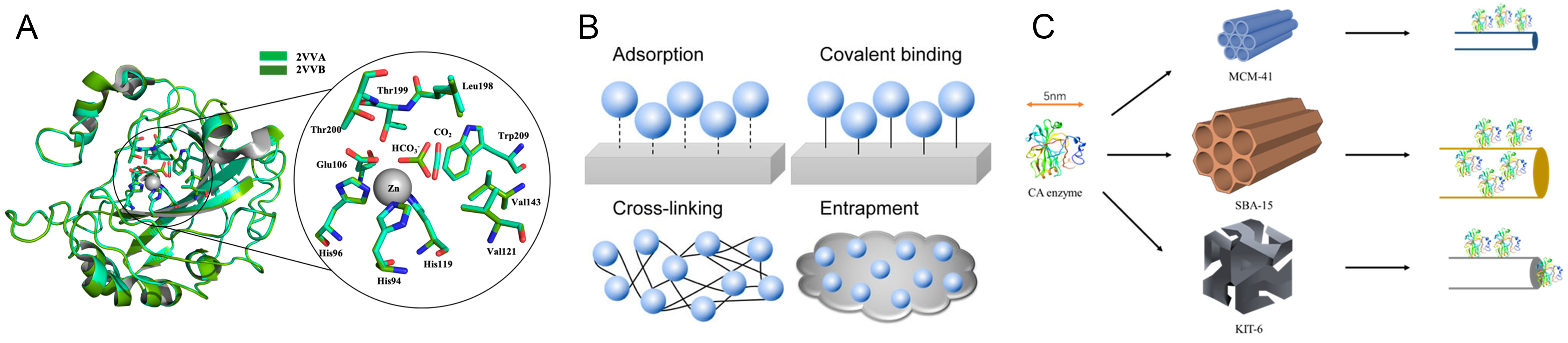
Figure 6. (A) Superposition of CA II crystal structure in complex with CO2 (pdb 2VVA) and HCO3- (pdb 2VVB) are shown in lime green and split pea, respectively. The circle highlights the catalytic domain[96]. Figure 6A is reprinted with permission from Ref.[96], Copyright © 2021. Licensed under CC BY 4.0; (B) Immobilization of cold-adapted enzymes[105]. Figure 6B is reprinted with permission from Ref.[105], Copyright © 2017. Licensed under CC BY 4.0; (C) Schematic diagram of CA enzyme distribution on MMS[107]. Figure 6C is reprinted with permission from Ref.[107], Copyright © 2020 American Chemical Society. MCM-41: Mobil composition of matter No.41; SBA-15: santa barbara amorphous No.15; KIT-6: Korea Advanced Institute of Science and Technology No.6; MMS: mesoporous molecular sieves.
Compared with conventional chemical absorption, enzymatic methods offer faster reaction rates and higher selectivity, potentially achieving comparable absorption performance under milder operating conditions[98]. Moreover, using aqueous PC for CO2 capture avoids the risk of secondary pollution from organic amine degradation products, combining low energy demand with improved environmental performance[99].
Enzyme-catalyzed solvent uptake of free CA
CA exhibits an exceptionally high CO2 conversion rate of up to 106 s-1, significantly enhancing reaction kinetics and potentially reducing solvent regeneration energy requirements[100-102]. Penders et al.[103] demonstrated that incorporating CA into aqueous Na2CO3 or MDEA solutions substantially increased CO2 absorption rates. Their model analysis showed that an aqueous Na2CO3 solution containing 1 kg/m3 CA or an aqueous MDEA solution containing 0.5 kg/m3 CA achieved mass transfer rates comparable to those of 30 wt.% MEA. This improvement could reduce the height of a commercial-scale CO2 absorber by 90% compared with MEA-based systems. Ye et al.[79] experimentally demonstrated that adding CA to a 20 wt.% K2CO3-KHCO3 solution increased the CO2 absorption rate by two- to sixfold at temperatures of 40-60 °C. However, enzyme activity, evaluated using the absorption enhancement factor, decreased by approximately 20% after six months at 40 °C and by approximately 60% after only one month at 60 °C. This pronounced temperature dependence indicates that the operating temperature directly affects enzyme make-up and replacement requirements and should therefore be considered together with enzyme price when assessing operating costs. Further comparative studies showed that CA had a significantly greater effect on the PC system than on the MEA system. This difference can be attributed to the greater contribution of liquid-phase mass transfer resistance in PC systems, where enzyme addition effectively alleviates this rate-limiting step. To further optimize the industrial application of free CA, researchers have investigated the synergistic effects of surfactants and enzymes. The results showed that cationic surfactants improved enzyme activity through electrostatic interactions, whereas non-ionic surfactants enhanced enzyme stability through hydrophobic interactions[104]. These findings provide a basis for optimizing CA performance by selecting appropriate surfactant types and concentrations.
Immobilized CA enzyme-catalyzed solvent absorption
Flue gas temperatures of 40-60 °C and the complexities of industrial environments pose significant challenges to the activity and stability of CA enzymes. Enzyme immobilization offers an effective approach to addressing these challenges by improving enzyme stability and facilitating recovery and reuse[87]. Studies over the past decade have demonstrated that immobilization can improve the thermal and chemical stability of CA, supporting its application in CO2 capture with chemical absorbents.
Early research on enzyme immobilization focused primarily on improving stability. Common enzyme immobilization methods include adsorption, covalent binding, cross-linking, and entrapment[Figure 6B][105]. Studies have shown that immobilizing CA increases its stability at elevated temperatures and under acidic or alkaline conditions, although this often comes at the expense of enzyme activity[105]. Tang et al.[106] encapsulated CA in sodium alginate and cross-linked it with glutaraldehyde, obtaining an immobilized enzyme that retained 56.3% of its original activity. Although this approach improved stability, enzyme activity decreased significantly. These findings highlighted the importance of selecting suitable carrier materials and optimizing immobilization parameters to preserve enzyme activity while improving stability. Shao et al.[107] demonstrated that modifying support structures could improve both enzyme stability and activity. To investigate the effects of support physicochemical properties on CA immobilization, they selected mesoporous molecular sieves (MMS) with different particle sizes and pore diameters as carriers. Their high specific surface area, ordered hexagonal pore structure, and adjustable pore size facilitate rapid reactant diffusion to the enzyme’s active sites. Consequently, immobilized CA exhibited improved stability and activity during CO2 absorption in K2CO3 solution [Figure 6C].
Although carrier design can help preserve enzyme activity, activity loss during immobilization remains a challenge. Advances in immobilization technology have therefore increasingly focused on strategies that improve activity and stability simultaneously. Metal-organic frameworks (MOFs) have attracted significant interest as immobilization platforms because their metal centers can provide a suitable environment for the Zn2+ active center of CA. In particular, the organic ligands of zeolitic imidazolate frameworks (ZIFs) directly affect the microenvironment of the enzyme[108]. Shao et al.[109] investigated the effects of ZIFs with different organic ligands, including ZIF-8, ZIF-11, and ZIF-90, on CA immobilization. Their results showed that hydrophilic supports with larger specific surface areas were more effective in preserving enzyme activity, whereas supports containing carbonyl, aldehyde, or sulfonyl groups tended to inhibit activity to varying degrees. Support morphology also played an important role in enzyme loading and substrate accessibility. By adjusting the ratio and concentration of Zn2+ and 2-Hmim and using different surfactants to modify carrier morphology, the researchers optimized the activity retention of immobilized CA within the ZIFs. Among the investigated materials, ZIF-8 achieved the best performance, retaining approximately 92% of the activity of free CA[110].
Immobilization improves enzyme recovery and retention, but support preparation, enzyme attachment and diffusion resistance increase the cost of maintaining effective catalytic activity[106-111]. The economic assessment should therefore consider enzyme price, carrier preparation, immobilization yield, retained activity, and replacement interval together[87,111].
Engineering applications of enzymatic absorption
In recent years, research on enzymatic CO2 absorption has gradually progressed from evaluating material performance toward engineering applications. Kunze et al.[77] scaled up CA-enhanced MDEA and K2CO3 systems from laboratory experiments to pilot-scale tests using a packed column with a diameter of 56 mm and a height of 2.3 m. The results showed that the increase in absorbed molar flow in the presence of the biocatalyst at the pilot scale agreed well with laboratory-scale findings. No undesirable effects, such as foaming or aggregation, were observed. Then, Leimbrink et al.[112] further demonstrated the feasibility of enhancing CO2 absorption into aqueous MDEA solutions using free and immobilized CA in pilot-scale packed columns. They also developed a rate-based model of enzymatic reactive absorption (ERA).
Long-term operation under actual flue gas conditions has further demonstrated the scale-up potential of enzymatic absorption systems. Reardon et al.[80] immobilized CA on the surface of structured packing and conducted field tests at the National Carbon Capture Center (NCCC) using actual coal-fired flue gas. Over a cumulative operating period of 3,460 h, the biocatalyst system achieved a six- to sevenfold increase in the volumetric average mass transfer coefficient at 40 °C, with an average CO2 capture rate of approximately 80%.
At a larger engineering scale, Clerveaux et al.[113] reported a 30 t CO2/d enzymatic CO2 capture unit installed at the Saint-Félicien pulp mill in Quebec, Canada. The unit employs a conventional absorption-desorption configuration, using a CA-activated K2CO3 solution combined with low-temperature vacuum regeneration. Residual hot water from the pulp mill serves as the heat source for solvent regeneration. The unit has completed on-site commissioning and demonstration operation, representing an important step in advancing enzymatic CO2 capture from pilot-scale validation toward industrial application. Further operating records are needed to establish enzyme consumption, make-up or replacement frequency, and capture cost at the 30 t CO2/d scale. These requirements should be assessed alongside sustained capture performance[80,113].
Phase-change absorption
Phase-change absorption has emerged as an efficient CO2 capture method with considerable energy-saving potential [Figure 7]. Following CO2 absorption, the solvent separates into two phases, with more than 90% of the absorbed CO2 typically concentrated in the rich phase. Because only the rich phase requires regeneration, the volume of solution undergoing regeneration is reduced, lowering sensible heat requirements and associated regeneration and equipment costs. Furthermore, the high CO2 concentration in the rich phase results in a CO2 loading substantially greater than that of MEA. This higher loading increases the CO2 partial pressure, facilitating stripping and reducing the heat required for water evaporation. The resulting increase in total stripper pressure can also reduce the mechanical compression requirements for subsequent CO2 compression[42]. To further improve performance, biphasic absorbents can be formulated with organic amines that have lower reaction enthalpies than MEA. This approach maintains desirable solvent properties while reducing the contribution of reaction heat to regeneration energy consumption[114]. Among phase-change systems, ionic liquid-based formulations have attracted particular interest because their low vapor pressure and high chemical stability can reduce solvent evaporation and degradation[69]. These properties offer potential advantages in both energy efficiency and environmental performance, although the overall sustainability of these systems also depends on solvent toxicity, degradation products, and other life cycle impacts. For ionic-liquid-containing formulations, environmental evaluation should additionally consider biodegradability, environmental persistence, synthesis routes, recyclability, and end-of-life disposal.
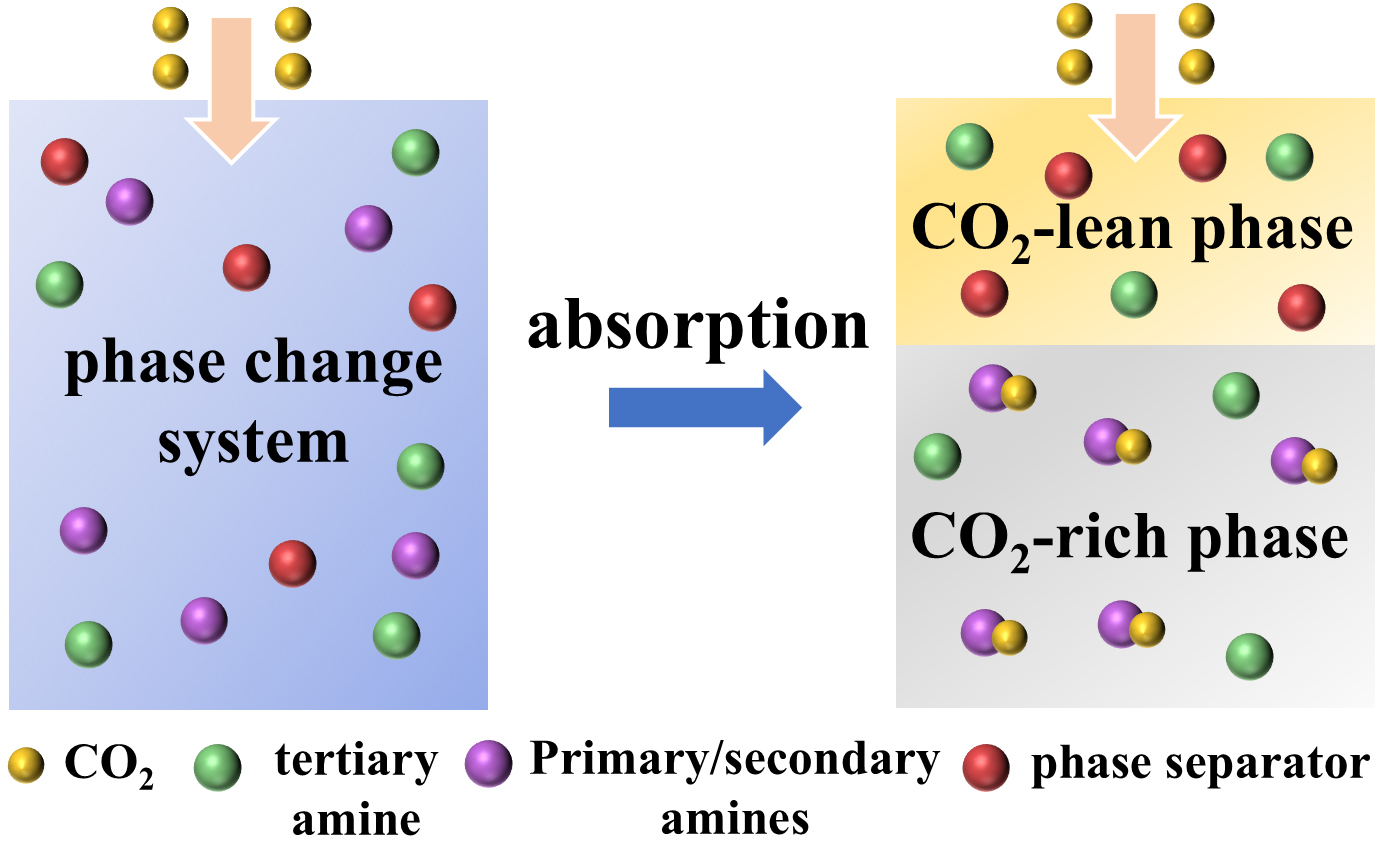
Figure 7. Schematic of the absorption process in liquid-liquid phase-change absorbents.
Advanced phase-change absorbers
Current research on liquid-liquid biphasic absorption systems primarily focuses on three categories: blended amine systems, ionic liquid systems, and non-aqueous systems.
Blended amine biphasic absorbents consist of active amines, which serve as the primary CO2-absorbing components, and lipophilic amines. During the initial stage of absorption, the reaction between CO2 and the active amines predominates. As the CO2 loading increases, a proportion of the lipophilic amines also participates in the reaction, forming bicarbonate and carbonate species (HCO3-/CO32-). Because of their high total amine concentrations, these absorbents typically show rapid absorption rates and high cyclic CO2 capacities[70,115]. Zhang et al.[116] developed a biphasic solvent, triethylenetetramine (TETA) - N,N-dimethylcyclohexylamine (DMCA) (4 M, 1:3), which achieved an absorption rate comparable to that of MEA, a high cyclic capacity, and significantly lower thermal regeneration energy. The regeneration heat of the TETA-DMCA blend was approximately 40% lower than that of the 5 M MEA benchmark. An et al.[72] investigated the phase-transition behavior, reaction mechanism, mass-transfer kinetics, and thermodynamics of the diethylenetriamine/diethylaminoethanol (DETA/DEEA) system under various conditions. Their results showed that the CO2 absorption capacity of DETA/DEEA was 47.7% higher than that of MEA solution, while its regeneration energy consumption was reduced to 2.14 GJ/t CO2. Cost analysis further showed that, compared with the MEA process, the DETA/DEEA biphasic process reduced capital costs and operating capture costs by 2.5% and 36.4%, respectively.
Ionic liquids (ILs) possess low vapor pressure and tunable cation-anion structures, which allow their CO2 affinity and phase behavior to be adjusted through molecular design. These features have encouraged their incorporation into biphasic absorbents, although biological toxicity, ecotoxicity, biodegradability, and environmental persistence vary significantly with the selected ions and solvent composition[69]. Jia et al.[117] introduced 1-butyl-3-methylimidazolium tetrafluoroborate ([Bmim][BF4]) into a DEEA/AEEA/H2O mixture. The addition of [Bmim][BF4] improved both absorption and regeneration, reducing the regeneration energy consumption to 2.06 GJ/t CO2, 45.8% lower than that of 30 wt.% MEA. Mao et al.[118] synthesized a dual-functionalized ionic liquid, [DMAPA][TZ], and combined it with polyethylene glycol dimethyl ether (NHD) and H2O to prepare a biphasic absorbent. The resulting system formed a rich phase accounting for 40% of the total solution volume, which contained a CO2 loading of up to 4.65 mol/L, corresponding to 95.4% of the total CO2 loading. At 373 K, the rich phase achieved a regeneration rate of 92.3% within 10 min. Due to its lower Qrxn, specific heat capacity, and solvent loss, the [DMAPA][TZ]/NHD/H2O system achieved a regeneration energy consumption as low as 1.335 GJ/t CO2.
However, describing IL-based absorbents as green solvents requires strict qualification beyond their low volatility and low regeneration heat. In their review of IL- and PIL-based CO2 capture, Kharade et al.[119] identify solvent leaching, multi-step synthesis, persistent fluorinated anions, and structure-dependent toxicity as constraints on sustainability. They also call for life-cycle and techno-economic assessment alongside capture performance. In post-combustion CO2 capture, these factors further interact with operational solvent loss, recyclability, reclamation waste generation, and end-of-life disposal. Rational selection of IL components therefore requires balancing absorption-regeneration performance against cradle-to-gate manufacturing burdens and long-term environmental risks.
Conventional amine absorbents generally use water as the solvent. The high specific heat capacity and latent heat of vaporization of water are major contributors to the energy required for solvent regeneration. Replacing aqueous solutions with non-aqueous solvents to formulate water-free absorbents can accelerate reaction rates, mitigate equipment corrosion, and significantly reduce both Qsens and Qlatent. Zhou et al.[73] investigated a blended non-aqueous biphasic absorbent comprising 2-[(2-aminoethyl)amino]ethanol (AEEA), dimethyl sulfoxide (DMSO), and N,N,N′,N″,N″-pentamethyldiethylenetriamine (PMDETA). The system achieved a regeneration energy consumption of only 1.66 GJ/t CO2. Chen et al.[86] separately dissolved N-ethylethanolamine (EMEA) in water and ethanol to compare the absorption and desorption characteristics of the EMEA/ethanol and EMEA/water systems. At the same regeneration temperature, the EMEA/ethanol system achieved a regeneration efficiency of 86.9%, representing a 50% improvement over the aqueous EMEA system.
Table 2 summarizes the relevant research findings of the three types of phase-change absorbents. Because the reported values were obtained under different solvent compositions, CO2 loadings, operating temperatures, process configurations and evaluation scales, key experimental and heat-evaluation conditions and MEA reference duties and explicitly labelled common-benchmark calculations are explicitly listed alongside the heat duties to avoid direct over-comparison across incompatible baselines.
CO2 absorption capacity/loading and regeneration heat of phase-change absorbents
| Absorbent type | Absorbent | Process configuration and key conditions | Capacity/ loading1 | Regeneration heat2 (GJ/t CO2) | Reduction vs. MEA3 | Ref. |
| Blended amine absorbents | TETA/DMCA | 1 M TETA/3 M DMCA; absorption 313 K. Rich-phase regeneration model: lean loading 0.45 mol/mol; stripper bottom/top 393/383 K | 0.88 mol/mola | 2.07d | 40.0% 5 M MEA (3.45) | [116] |
| DETA/DEEA | 2 M DETA/3 M DEEA; 12% CO2, 298 K. Absorption → separation → rich-phase regeneration; minimum regeneration heat was estimated for a flue gas containing 12% CO2 | 4.96 mol/Lb | 2.14d | 43.7% 5 M MEA (≈ 3.8g) | [72] | |
| DEEA/AEEA/H2O | 50 wt.% DEEA/25 wt.% AEEA/water. Absorption → settling → lower-rich-phase regeneration → remixing; phase split within minutes; no process optimization | 0.64 mol/mola | 2.58 | 32.0% 30 wt.% MEA (≈ 3.8g) | [70] | |
| DETA/PMDETA/sulfolane | Rich phase 27.1 vol%. Heat model: lean loading 0.55 mol/mol; selective rich-phase regeneration | 6.48 mol/Lb | 1.86d | 53.4% 5 M MEA (3.99) | [120] | |
| Ionic liquid absorbents | DEEA/AEEA/[Bmim][BF4]/H2O | IL-promoted DEEA/AEEA/water; IL enters the lower rich phase for regeneration | 2.50 mol/Lb | 2.06 | 45.8% 30 wt.% MEA (3.80) | [117] |
| [DMAPA][TZ]/NHD/H2O | 40 vol% rich phase contains 95.4% of absorbed CO2 Rich-phase regeneration: 373 K, 10 min (92.3%) | 4.65 mol/Lb | 1.335 | ≈ 67% 30 wt% MEA (3.99) | [118] | |
| [TEPAH][Pro]/NPA/H2O | NPA-induced splitting; viscosity 8.06 mPa·s. Selective rich-phase regeneration | 2.01 mol/mola | 2.39 | 37.0% 30 wt% MEA (≈ 3.8g) | [121] | |
| [DETAH][Tz]/1-propanol/H2O | 0.5 mol/L IL, 50 vol% 1-propanol; 25 mL. Absorption 303.15 K; rich-phase regeneration 393.15 K, 60 min; heat-model ΔT 5 K. | 1.71 mol/mola | 1.99de | 47.63% MEA (3.80) | [122] | |
| Non-aqueous absorbents | AEEA/DMSO/PMDETA | 1 M AEEA; DMSO:PMDETA 4:6; 25 mL, CO2 80 mL/min Absorption 313.15 K; rich-phase regeneration 393.15 K; exchanger ΔT 10 K | 1.75 mol/mola | 1.66d | 53.8% MEA (3.59) | [73] |
| PMDETA/MEA/DMSO | Solubilizer homogenizes fresh liquid → absorption-induced splitting → selective rich-phase regeneration | 0.55 mol/mola | 2.18 | 42.6%f Benchmark (3.80) | [123] | |
| DGA/PMDETA/EG | Anhydrous DGA/PMDETA/EG; upper PMDETA-rich lean phase and lower product-rich phase for regeneration. EG lowers viscosity and splitting time | 3.11 mol/kgc | 2.26 | 40.5%f Benchmark (3.80) | [124] |
Phase regulation mechanism
Although various phase-change absorption systems have demonstrated considerable energy-saving potential, precise control over the rich-phase volume and CO2 loading requires a deeper understanding of the molecular mechanisms and thermodynamic principles governing phase separation. One key factor is how amine molecular structure affects the stability of reaction products. Studies have shown that[115], for linear amines, carbamate stability decreases as the number of nitrogen atoms in the primary amine increases. Based on phase separation behavior and the inflection point in the CO2 absorption rate, the absorption process in biphasic solvents can be divided into two stages. During the initial stage, when the concentration of active amine groups is high, protons are transferred from amphoteric amines to tertiary amines, with primary amines acting as intermediates. At this stage, the CO2 absorption rate is primarily governed by reaction kinetics, resulting in rapid absorption and limited phase separation. Then, as the concentration of active amines decreases, the absorption rate declines sharply because the reaction involving diamines becomes rate-limiting, with protons transferred directly from amphoteric amines to tertiary amines [Figure 8A].
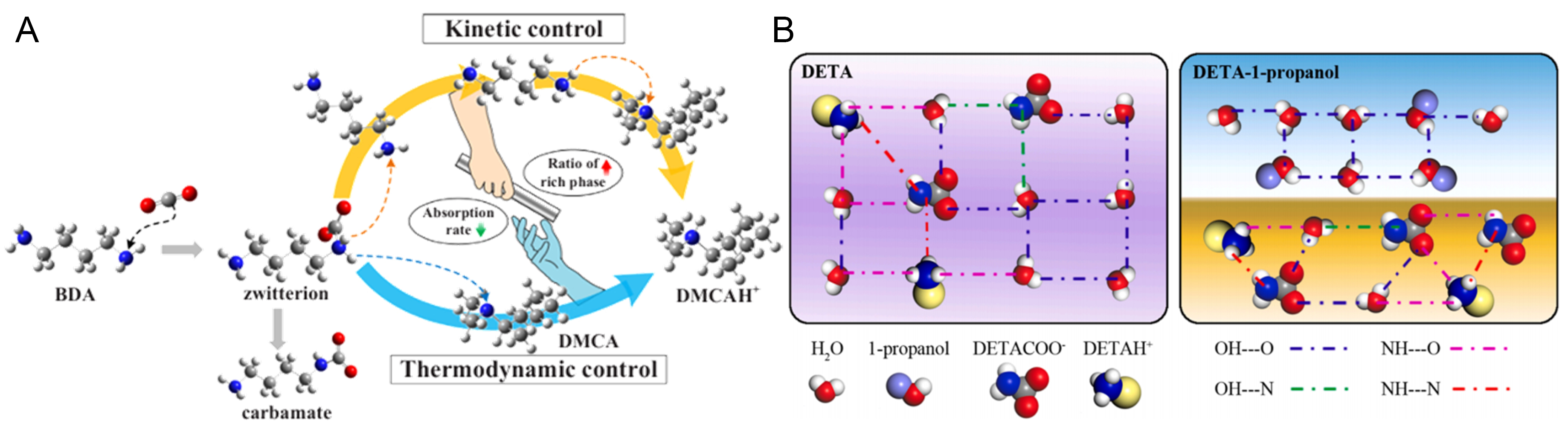
Figure 8. (A) Schematic diagram of the two-stage interaction mechanism for CO2 absorption into the biphasic solvent BDA-DMCA[115]. Figure 8A is reprinted with permission from Ref.[115] under Elsevier’s author reuse rights, Copyright © 2019 Elsevier Ltd; (B) Hydrogen bond interactions in the DETA and DETA-1-propanol system, and the phase separation mechanism for the DETA-1-propanol system[125]. Figure 8B is reprinted with permission from Ref.[125] under Elsevier’s author reuse rights, Copyright © 2021 Elsevier Ltd. BDA: 1,4-Butanediamine; DMCA: N,N-dimethylcyclohexylamine; DMCAH+: protonated N,N-dimethylcyclohexylamine; DETACOO-: diethylenetriamine carbamate; DETAH+: protonated diethylenetriamine; DETA: diethylenetriamine.
Based on this mechanism, phase separation can be actively regulated by introducing functional phase separators. Wang et al.[120] used sulfolane as a phase separator to improve the phase separation performance of the DETA-PMDETA biphasic absorbent. The addition of sulfolane increased the absorption capacity from 3.56 to 6.48 mol/L while reducing the volume of the CO2-rich phase from 100% to 27.1%. At a lean CO2 loading of 0.55 mol/mol, the DETA-PMDETA-sulfolane system achieved a minimum regeneration heat of 1.86 GJ/t CO2. Wang et al.[125] found that adding 1-propanol to the DETA-1-propanol biphasic solvent system promoted phase separation through strong hydrogen-bonding interactions between exposed diethylenetriamine carbamate (DETACOO-) and protonated diethylenetriamine (DETAH+) groups [Figure 8B]. Furthermore, 1-propanol acted as an absorption activator, increasing the overall total mass-transfer coefficient from 2.11 × 10⁻¹⁰ to 3.22 × 10⁻¹⁰ mol/cm2·s·Pa. The regeneration heat of this system was 2.12 GJ/t CO2, 46.9% lower than that of the 5 M MEA solvent.
Engineering applications of phase-change absorption
The industrial application of phase-change solvents requires a shift from static phase-equilibrium studies toward the verification of dynamic engineering performance. Gas-liquid mass-transfer resistance and control of rich-phase viscosity are two key factors determining process feasibility. Regarding dynamic mass-transfer characteristics, Wang et al.[126] used a blend of DETA and DEEA as a novel phase-change absorbent to investigate how phase-change behavior affects CO2 absorption and mass transfer in a wetted-wall column. They also evaluated the effects of temperature, CO2 loading, and gas flow rate on the overall mass-transfer coefficient. The results showed that temperature and CO2 loading were the dominant variables affecting the overall mass-transfer coefficient, whereas gas flow rate had a minimal effect. These findings suggest that mass-transfer resistance in the system is primarily concentrated on the liquid-film side. This provides an important basis for designing industrial absorption towers, highlighting the need to strengthen liquid-phase turbulence to improve overall capture efficiency. To address the transport and mass-transfer challenges caused by the high viscosity of the rich solution, Zhou et al.[127] proposed a two-stage phase separation strategy. The study demonstrated that separating the CO2-rich phase at the right load and in the appropriate proportion could enhance the CO2 absorption rate. At an absorption load of 0.3 mol/mol and 50 vol% of the CO2-rich phase separated, viscosity decreased by 16.9% at 50 °C, while the absorption rate increased by 49%. This approach also led to reduced energy consumption, as the two-stage phase separation operation minimized the number of amines and their products in the CO2-rich phase, lowering the solvent’s viscosity [Figure 9].
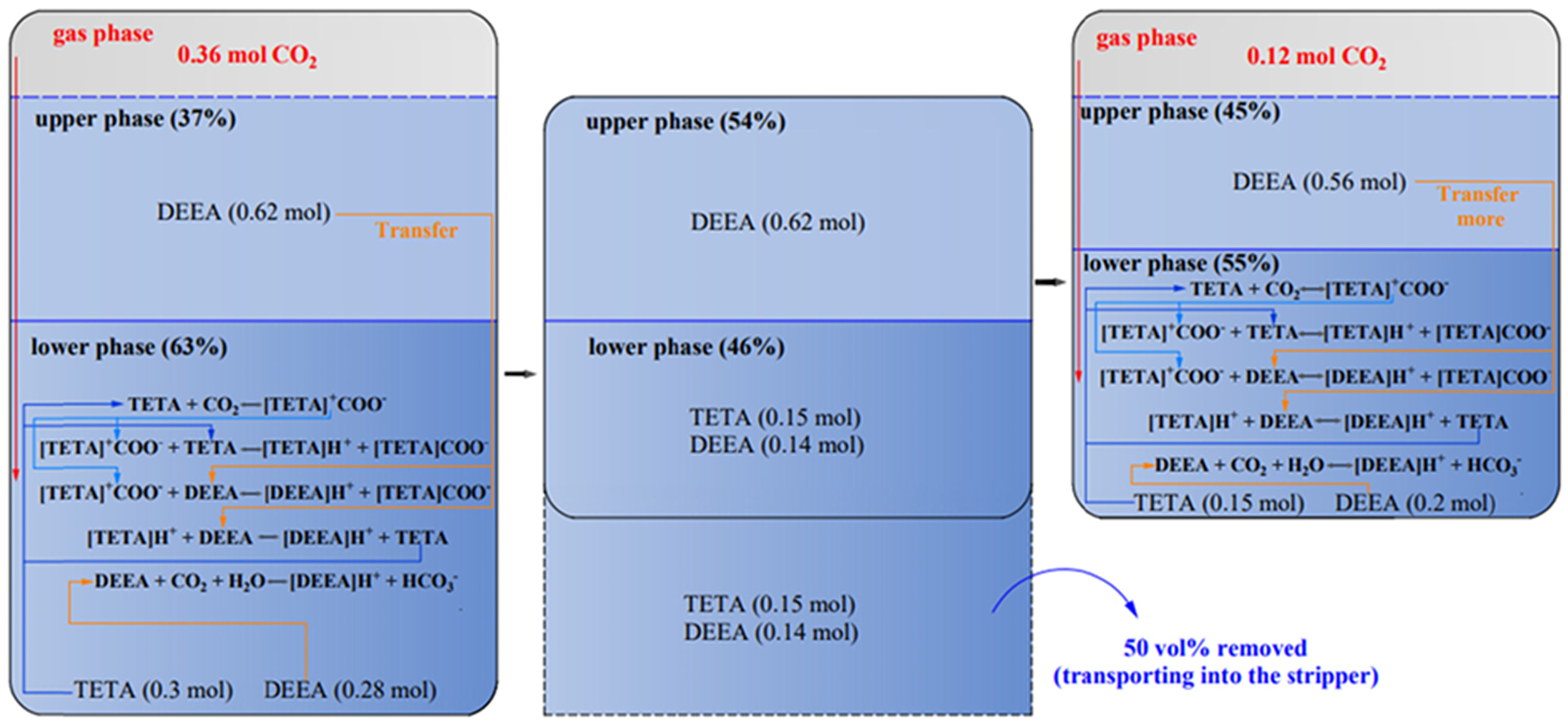
Figure 9. Schematic diagram of the CO2 absorption mechanism into TETA-DEEA and its migration between the upper and lower phases in the dual-stage phase separation process[127]. Figure 9 is reprinted with permission from Ref.[127], Copyright © 2021 American Chemical Society. TETA: Triethylenetetramine; DEEA: diethylaminoethanol.
Slow phase separation increases separator residence-volume requirements, while entrainment carries additional solvent into regeneration. Phase fraction and separator residence time should therefore be assessed alongside mass transfer and pumping demand[70,126,127].
Building on these findings, phase-change absorbents have gradually progressed from laboratory-scale process studies to continuous pilot-scale testing. Nessi et al.[128,129] conducted continuous pilot-scale tests to evaluate the performance of the S1N/DMCA phase-change absorbent under more complex operating conditions. In a pilot-scale absorption-desorption unit, S1N/DMCA exhibited stable cyclic performance across different liquid-to-gas ratios, achieving a CO2 cyclic capacity of 0.63 mol CO2/kg, approximately twice that of MEA. Its regeneration energy consumption was 2.3 GJ/t CO2, approximately 45% lower than that of MEA. These results demonstrated that the energy-saving advantages of phase-change absorbents can be maintained under continuous operating conditions. The effects of accumulated sulfate and nitrate anions on system performance were subsequently investigated at the pilot scale. The results showed that these anionic contaminants reduced CO2 absorption efficiency by 7.5% and cyclic capacity by 23%, while increasing regeneration energy consumption by 20%. Although the system continued to outperform MEA overall, these findings indicate that engineering evaluations of phase-change absorbents should also consider tolerance to flue-gas impurities and long-term cyclic stability.
Changes in water content and the amine-to-phase-splitter ratio affect phase behavior and cyclic capacity, making solvent make-up and reclamation part of process design. Corrosion and degradation should also be assessed during continuous cycling under representative flue-gas conditions[72,129].
Jia et al.[130] combined an ionic-liquid-promoted multicomponent phase-change absorbent with a HiGee rotating packed bed and validated the process in a pilot unit at the hundred-ton scale. Compared with conventional packed towers, the intensified HiGee rotating packed bed improved capture efficiency and reduced regeneration energy consumption. The system achieved an energy consumption of 2.01 GJ/t CO2 and a capture efficiency of 91.64% during long-term stable operation. This work provides an important demonstration of the practical potential of phase-change absorbents for low-energy CO2 capture.
CATALYST-AIDED CO2 DESORPTION
The high reaction enthalpy between alkanolamine absorbents and CO2, together with the aggregation of carbamate absorption products into macromolecular hydrogen-bonded networks, hinders proton transfer under high-temperature alkaline conditions and leads to excessive regeneration energy consumption. Promoting C-N bond cleavage in carbamates and facilitating proton transfer are therefore key scientific challenges in CO2 desorption. Accelerating proton transfer can lower the desorption temperature, reducing sensible and latent heat requirements. This can also mitigate solvent volatilization and thermal degradation, while reducing secondary pollution. Catalyst-aided desorption thus represents an important engineering approach for advancing conventional amine-based systems toward greener, lower-energy operation.
Solid acid catalysts
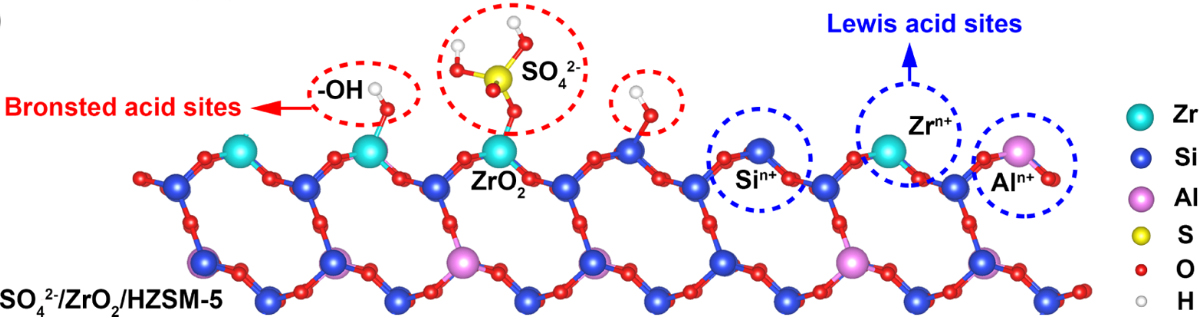
A promising, energy-saving solvent regeneration technology that has gained attention in recent years uses solid acid catalysts (SACs) during the CO2 stripping process. SACs significantly enhance the CO2 desorption rate and reduce the regeneration temperature and heat load in solvent regeneration. The Brønsted acid sites (BASs) in SACs, such as -OH[131], -SO3H[132], and -HPO3[133], donate protons and facilitate proton transfer in CO2-loaded solvents. Similarly, the Lewis acid sites (LASs) in SACs, such as unsaturated Co, Fe, and Zr sites, serve as electron acceptors for nitrogen (N) and oxygen (O) atoms in carbamate (RNHCOO-). This interaction catalyzes the N-C bond cleavage process, which helps to decompose RNHCOO- more effectively, leading to an increase in the rate of CO2 release[34,39]. Figure 10 schematically illustrates the BASs and LASs in the SO42-/ZrO2/ proton-form zeolite socony mobil-5 (HZSM-5) solid acid catalyst[134].
The characteristics of BASs and LASs in SACs can generally be investigated using ammonia temperature-programmed desorption (NH3-TPD) and pyridine infrared spectroscopy (Py-IR). NH3-TPD is primarily used to assess total acidity and the distribution of acid strength, with desorption peaks at different temperatures reflecting the relative proportions of weak, medium, and strong acid sites. Py-IR distinguishes BASs from LASs based on the characteristic vibrational bands of pyridine adsorbed on different types of acidic sites, enabling semi-quantitative analysis of acid-site concentrations[135]. Combining NH3-TPD to assess acid density and strength with Py-IR to identify acid types therefore provides experimental evidence for the presence of BASs and LASs and helps establish their relationship with catalytic CO₂ desorption performance. However, detecting acidic sites alone is insufficient to establish that they are the actual active sites. Correlations between changes in acid-site characteristics and catalytic desorption performance must also be considered[136].
In 2011, Idem et al.[137] introduced γ-Al2O3 and HZSM-5 as desorption catalysts for a 5 mol/L MEA absorbent system. The surface acid sites of γ-Al2O3 are primarily L-acids, which help reduce the regeneration temperature to 90-95 °C and decrease regeneration energy consumption by 27%. HZSM-5, a commercial B-acid catalyst, further reduces the relative heat load to 62.7% at 90 °C. These findings demonstrate that HZSM-5 outperforms γ-Al2O3 as a desorption catalyst. The difference in catalytic performance between the two is attributed to their distinct accessible acid sites. As a Lewis acid catalyst with low surface area, γ-Al2O3 limits access of CO2-loaded materials to active acid sites. HZSM-5, with its larger surface area and predominance of BASs, significantly improves acid-site availability, thus improving catalytic efficiency[138].
Over the past decade, various solid acid materials have been explored to optimize the CO2 desorption effect of MEA solutions within the temperature range of 86-98 °C. These materials include metal oxides and their modified forms, such as V2O5[88], ZrO(OH)2[139], and SO42-/TiO2[140]; molecular sieves and their composite materials, such as MCM-41-SO3H[141], Al2O3/HZSM-5[85], and CuO-KIT-6[142]; as well as metal-organic frameworks (MOFs) and their derivatives, including UiO-66[143], MOF-808-SO4[144], and Fe3O4@MOF-SO4[84]. These studies aim to address the limitations of single-component catalysts, such as low specific surface area or the presence of only one type of acid site. Surface modification strategies, including loading, coating, and heterojunction engineering, have been used to regulate acid-site density and strength, facilitating proton transfer and promoting C-N bond cleavage.
Non-acidic electron-tuning materials
A common challenge for SACs is performance degradation during cyclic tests, making them less suitable for large-scale industrial applications. This degradation often results from the alkalinity of the regeneration solution and high regeneration temperatures, both of which can degrade acidic sites. To address this issue, Li et al.[145] investigated the regeneration process of amine absorbents using a series of non-acidic carbon materials, such as carbon molecular sieves, porous carbon, graphene, and carbon nanotubes, effectively avoiding catalyst deactivation [Figure 11A]. Their study showed that non-acidic carbon materials can catalyze amine regeneration via electron transfer, significantly increasing CO2 desorption by 47.1% to 72.3% and reducing energy consumption by 32% to 42%. These carbon materials showed desorption performance similar to SACs but with better stability.
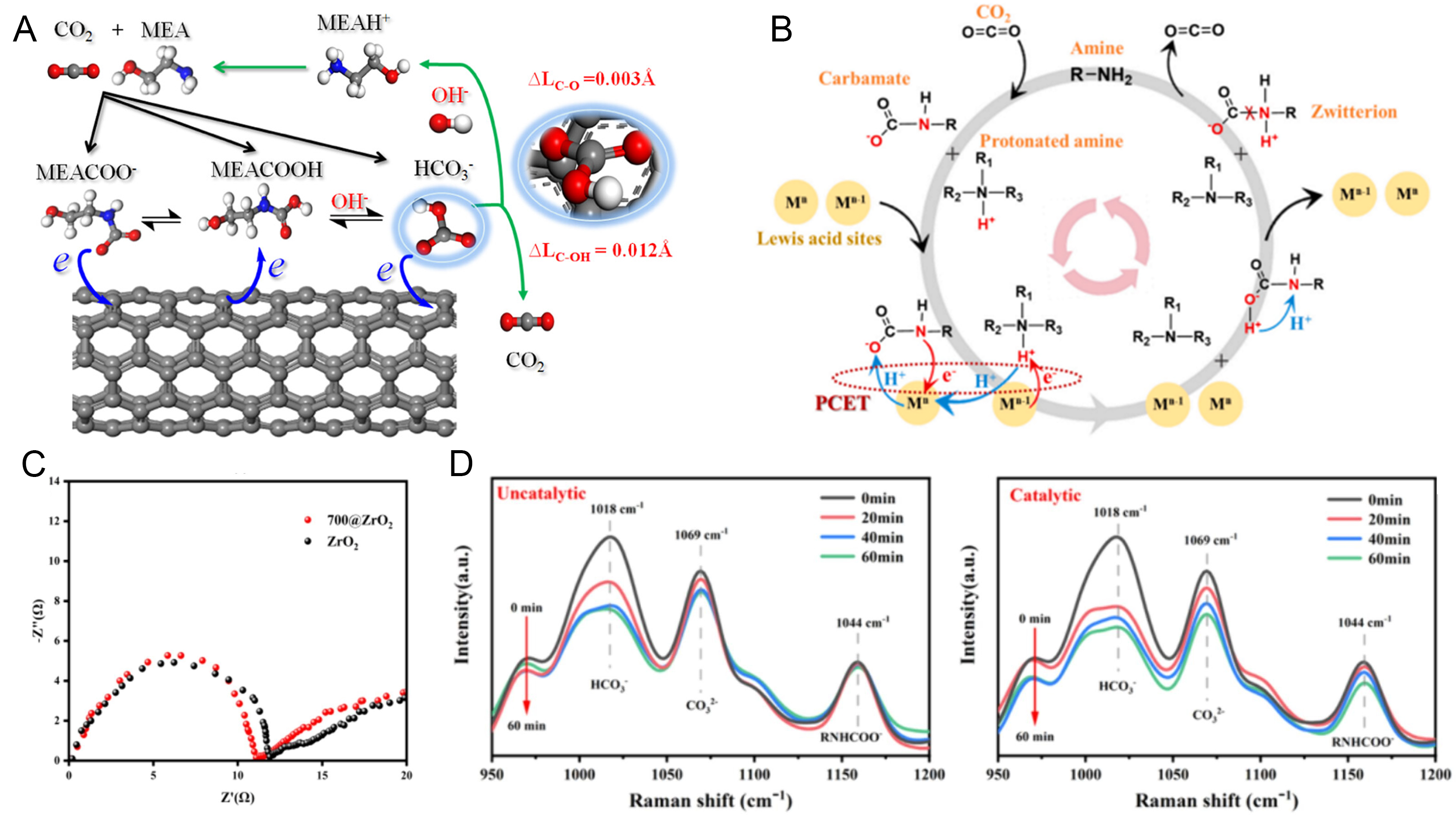
Figure 11. (A) Possible catalytic mechanism of CNT for amine regeneration. C, N, O, and H are shown in gray, blue, red, and white, respectively[145]. Figure 11A is reprinted with permission from Ref.[145], Copyright © 2023 American Chemical Society; (B) Schematic diagram of the regeneration mechanism for PCET catalyst amine solution[26]. Figure 11B is reprinted with permission from Ref.[26] under Elsevier’s author reuse rights, Copyright © 2025 Elsevier B.V; (C) Nyquist plots of C@ZrO2 and nano-ZrO2; (D) Raman spectra of the MEA solution at different times during the CO2 desorption experiments, with and without a catalyst[76]. Figure 11C and D is reprinted with permission from Ref.[76] under Elsevier’s author reuse rights, Copyright © 2024 Elsevier B.V. MEA: Monoethanolamine; CNT: carbon nanotube; MEAH+: protonated monoethanolamine; MEACOO-: monoethanolamine carbamate anion; PCET: proton-coupled electron transfer.
Building on this finding, the proton-coupled electron transfer (PCET) mechanism has emerged as a key principle in the design of next-generation catalytic materials. In particular, the synergistic acceleration of proton transport and electron transfer has become an important research direction for developing efficient and stable desorption materials [Figure 11B][26]. Shen et al.[76] developed a C@ZrO2 hollow composite catalyst. Its hollow structure reduces mass-transfer resistance and exposes abundant Lewis acid sites (LASs), while the external carbon shell provides efficient electron-transfer pathways. These structural features promote PCET in C@ZrO2 and improve CO2 desorption kinetics. Experimental results showed that C@ZrO2 increased the CO2 desorption rate of 5 M MEA solution by 126% at 95 °C, reduced the relative thermal load by 69.9%, and maintained excellent stability over 10 cycles. The catalyst was also effective in the high-viscosity TETA-DEEA phase-change absorbent system, where it reduced the relative thermal load by 57.3%. To further verify interfacial electron transfer and the PCET mechanism in C@ZrO2, we combined electrochemical impedance spectroscopy (EIS), Raman spectroscopy, Carbon-13 nuclear magnetic resonance spectroscopy (13C NMR), and density functional theory (DFT) calculations. The EIS results showed that the charge-transfer resistance of the system decreased after introducing the carbon layer, indicating that the carbon layer could promote interfacial electron transfer [Figure 11C]. Raman spectroscopy was used to track the concentration changes of desorption products such as CO32-, HCO3-, and RNHCOO- during the desorption process. Under catalytic conditions, these characteristic peaks decreased rapidly, indicating that C@ZrO2 accelerated carbamate decomposition [Figure 11D]. 13C NMR further showed that no other by-products were formed during the desorption reaction. DFT calculations showed that the carbon layer-promoted PCET could enhance the interaction between carbamate and the catalyst surface and stretch its C-N bond, reducing the proton-transfer energy barrier by 66.8%. These results provide experimental and theoretical evidence for the catalyst’s PCET effect.
Table 3 compares the CO2 desorption performance of various catalyst types in the 30wt.% MEA system, demonstrating their significant potential to reduce regeneration energy.
Comparison of different catalysts for CO2 catalytic desorption
| Samples | Temperature (°C) | Desorption rate enhancement (%) | Relative heat duty (%) | Ref. |
| MoO3 | 86 | 84 | / | [88] |
| V2O5 | 86 | 70 | / | [88] |
| Cr2O3 | 86 | 40 | / | [88] |
| TiO2 | 86 | 40 | / | [88] |
| WO3 | 86 | 29 | / | [88] |
| ZrO2 | 86 | 48 | / | [146] |
| ZnO | 86 | 46 | / | [146] |
| TiO(OH)2 | 88 | 87 | / | [78] |
| HZSM-5 | 98 | 15.23 | 81 | [134] |
| γ-Al2O3 | 88 | 17 | 93.3 | [147] |
| SO42-/TiO2 | 96 | 20 | 82.9 | [140] |
| Nb-HZSM-5 | 90 | 61 | 63.5 | [148] |
| CeO2-MOF-HPW | 88 | 166 | 70.6 | [82] |
| Fe3O4@UiO-66-SO4 | 88 | / | 55.3 | [84] |
| Ni/Fe@COF | 88 | 114.3 | 42.45 | [149] |
| SO42−/ZrO2‑HZSM‑5 | 98 | 37.07 | 69 | [134] |
| ZrOxHy | 88 | 154 | 27 | [150] |
| Zr/Al2O3 | 88 | 80 | 73 | [147] |
| CNT | 98 | 47 | 60 | [145] |
| Graphene | 98 | 36 | 68 | [145] |
| C@ZrO2 | 95 | 126 | 30.1 | [76] |
| TiO2/Ti3C2 | 98 | 150 | / | [26] |
| Fe2O3-Fe | 95 | 130 | 52 | [83] |
| SO42-/ZIF-67-C@TiO2 | 88 | 153 | 64 | [151] |
| Co-N-C NSs | 88 | 281 | 58 | [152] |
Engineering applications of desorption catalysts
Although catalytic materials have shown significant improvements in reaction kinetics, most studies of catalyst performance remain limited to laboratory-scale batch reactors. Industrial carbon capture, however, relies on continuous cyclic operation, creating significant challenges when translating laboratory findings into practical applications. Engineering assessments of catalytic desorption must therefore consider not only desorption rates and energy savings but also catalyst dosage, service life, poisoning, mechanical attrition, pressure drop, preparation and regeneration costs, and compatibility with continuous regeneration columns. For the powder catalysts discussed in Sections Solid acid catalysts and Non-acidic electron-tuning materials, two major engineering challenges remain: the loss of active components due to fluid scouring and the difficulty of solid-liquid separation in slurry systems. Recent studies have suggested that core-shell structure construction and magnetic functionalization can reinforce catalyst structures and facilitate catalyst recovery[151,152].
At present, a few studies have begun to progress from laboratory-scale batch experiments toward continuous-flow operation, pilot-scale validation, and industrial system integration. Zhou et al.[150] investigated a practical-to-synthesize, highly efficient, stable, and recyclable ZrOxHy solid catalyst, whose performance was validated in a fixed-bed continuous reactor, demonstrating significant contact-time shortening (up to 85%) compared with the non-catalytic system. Xing et al.[75] designed a monolithic structured ZrO2/Al2O3 packing catalyst and conducted scale-up evaluation in a laboratory-scale continuous desorption column. At a catalyst dosage of 1.0 wt.%, stable performance was maintained during 168 h of continuous operation. The introduction of the catalytic packing did not greatly change the original flow form of the solvent or influence the pressure drop, while the metal extraction ratio was lower than 0.004 wt.%. This work is the first to investigate the ability of high technology readiness (technology readiness level 6, TRL 6) for catalytic amine-solvent regeneration. In further industrial-system validation, 150 kg of ZrO2/Al2O3 catalytic packing was integrated into an actual industrial regeneration column. After ten months of operation, only trace amounts of Zr and Al leaching were detected, further demonstrating its potential for long-term continuous operation and industrial integration. In addition, Aspen Plus process simulation was used to further evaluate the effect of catalytic packing dosage on process performance. With increasing catalytic packing dosage, the CO2 desorption amount and capture efficiency first increased and then decreased, whereas the heat duty showed the opposite trend. At a catalytic packing dosage of 60%, the CO2 desorption amount reached 27.22 t CO2/h, the capture efficiency reached 95.48%, and the heat duty decreased to 3.01 GJ/t CO2, showing the best overall performance. Further techno-economic analysis showed that, at a capture efficiency of approximately 95%, the catalytic process reduced the heat duty by about 27.6% and the overall cost by about 10.5%. Li et al.[153] directly constructed an Fe-O-C catalytic layer on industrial stainless-steel packing and completed pilot-scale validation at 150 N·m3/h [Figure 12A-C]. The catalytic packing achieved a capture efficiency approaching 100% at 100 °C, while the regeneration energy consumption was reduced to 2.18 GJ/t CO2, representing a 28.8% decrease compared with the unmodified packing.
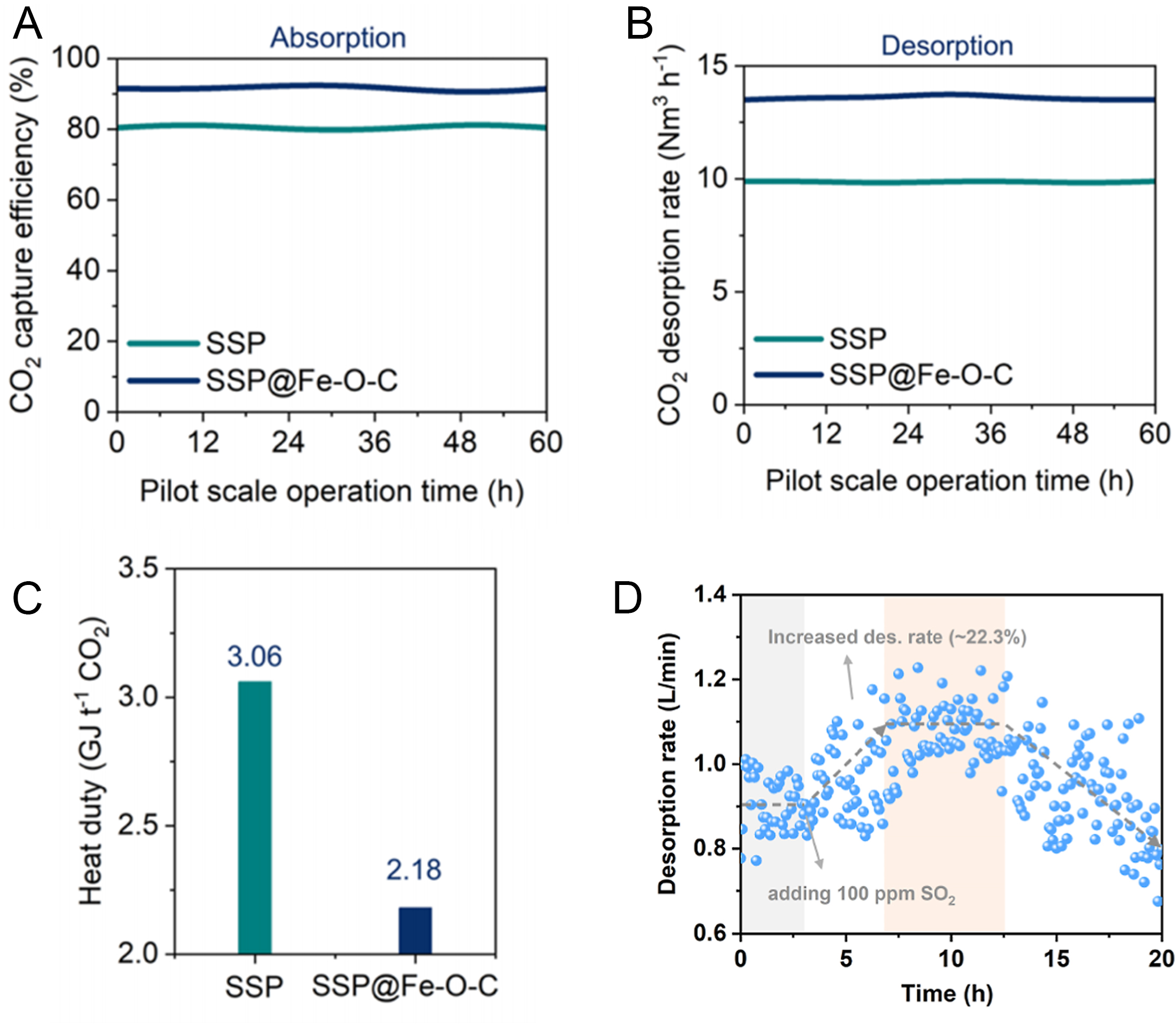
Figure 12. (A-C) Pilot-scale performance metrics for SSP (commercial 316L stainless steel used as the substrate, processed into Φ200 × 180 mm structural modules) and SSP@Fe-O-C: capture efficiency (A), desorption rate (B), and regeneration heat load (C)[153]. Figure 12A-C is reprinted with permission from Ref.[153], Copyright © 2026 American Chemical Society; (D) Results of the 20 h continuous stability test for C@Mn3O4[154]. Figure 12D is reprinted with permission from Ref.[154], Copyright © 2024 American Chemical Society. SSP: Stainless steel structured packing.
In addition, Xing et al.[154] developed a core-shell C@Mn3O4 catalyst that transforms hazardous SO2-poisoning species into active sites through ingenious material design. The catalyst promotes sulfur migration from SO2-poisoned amine and the in situ reconstruction of active -SO3H sites, thereby improving the regeneration performance of poisoned amine solvents. A continuous CO2 absorption and desorption experiment was conducted in a bench-scale system using simulated flue gas containing 100 ppm SO2. The results showed that, at 107 °C, C@Mn3O4 increased the CO2 desorption rate by 45.5% compared with the blank case, increased the capture efficiency from 56.8% to 72.8%, and reduced the regeneration heat duty of the SO2-poisoned MEA solvent by 32%. The durability of C@Mn3O4 catalysts was well validated by a 20 h continuous experiment in the presence of 100 ppm of SO2 [Figure 12D]; only approximately 50 ppm Mn2+ leaching was detected.
REMARKS AND PERSPECTIVES
Maintaining the energy-saving effect under continuous operation is a common requirement for the engineering development of these capture technologies [Table 4]. Conventional amine absorption provides an established industrial benchmark (TRL 9) for process intensification[36,37], whereas enzymatic absorption has progressed to long-term field testing and a reported 30 t CO2/d demonstration plant (indicative TRL 6-7)[80,113], and phase-change solvents have been validated in continuous pilot and hundred-ton-scale HiGee pilot units (indicative TRL 5-6)[128-130]. In enzymatic absorption, this engineering progress shifts attention from initial hydration activity to thermal stability and enzyme replacement schedules. For phase-change solvents, sustaining the pilot energy benefit depends on stable phase separation, viscosity control, and tolerance to accumulated flue-gas impurities. Catalytic desorption, while still predominantly studied in laboratory batch and continuous fixed-bed reactors (indicative TRL 3-4), has recently advanced toward bench-scale continuous operation and industrial-column packing integration with metal-leaching assessment after ten months (TRL 6)[75,150,154], highlighting the need to connect short-cycle activity with long-term catalyst lifetime, attrition resistance, and hydraulic compatibility. Consequently, material consumption, secondary emissions and operating cost must be evaluated alongside regeneration heat. These requirements guide the following discussion of data-driven absorbent development, anti-poisoning mechanisms, and future directions for desorption catalysts.
Technical performance and engineering maturity of CO2 capture technologies
| Comparison | Conventional amine absorption | Enzymatic absorption | Phase-change absorption | Catalytic desorption |
| Capture efficiency | ~ 90% (industrial benchmark)[31,36,37] | ~ 80% capture in coal flue-gas field test[80] | 91.64% capture in HiGee pilot plant[130] | 72.8% capture[154]; 99.5% at a packing-section temperature of 90 °C in a bench column[75] Selected batch desorption-rate enhancements: 15.2%-281%a [Table 3][134,152]. |
| Regeneration energy | 3.6-4.0 GJ/t CO2, typical MEA benchmark[39]; study-specific references in Table 2 | Low-grade heat or vacuum regeneration; duty depends on solvent and process integration[89,113] | 1.335-2.58 GJ/t CO2 in selected lab systems[70,118]; 2.01-2.30 GJ/t CO2 in pilots[128,130] | Bench: 11.2% lower heat duty at a packing-section temperature of 90 °C. Simulation: 3.01 GJ/t CO2 at 60% catalytic packing; a separate matched-capture comparison gives 27.6% lower duty[75]. Selected batch heat reductions: 6.7%-73%b [Table 3][147,150] |
| Stability | Long-term industrial operation[39,40]; thermal and oxidative degradation[31,38] | 3,460 h field test[80]; ~ 20% loss in 6 months at 40 °C (50% in 2 months at 50 °C)[79] | 5-10 lab cycles[118,121]; 83% regeneration after 10 cycles[118]. DETA/DEEA oxidation rate: 20.7% of MEA[72] | 10-50 batch cycles[76,78]; 20 h with SO2[154]. 168 h bench test; industrial packing leaching assessed after 10 months[75] |
| Emissions | MEA emissions to air: 0.01-0.8 kg/t CO2[58]; < 5 mg/m3 aerosol with formation inhibition plus WESP[68]; nitrosamines[59] | Amine-free carbonate; reported emissions after water wash: 3.5-7 mg/Nm3[80]. Enzyme production and replacement also require assessment | Low IL volatility, but lipophilic amine loss can exceed MEA[70]; IL ecotoxicity[69] | Solvent loss and catalyst manufacture; metal extraction < 0.004 wt.% in a 30 d immersion test at 120 °C[75] |
| Operating conditions | 40-60 °C absorption; 110-130 °C regeneration[32-34] | Field absorption at about 40 °C[80]; plant regeneration under vacuum below 100 °C[113] | Study-specific absorption, phase separation and selective rich-phase regeneration; compositions and conditions are detailed in Table 2 | Bench packing-section temperatures of 88-90 °C; simulated catalytic packing fraction up to 60%[75]. Batch temperatures in Table 3 |
| Scale / maturity (TRL) | Commercial (1.0-1.4 Mt/a plants; TRL 9)[39,40] | Field tests & reported 30 t/d plant (indicative TRL 6-7)[80,113] | Continuous pilots and a hundred-ton-scale HiGee pilot plant (indicative TRL 5-6)[128-130] | Laboratory batch/continuous reactors (indicative TRL 3-4); bench-scale validation and industrial-column packing integration (reported TRL 6)[75,150] |
| Cost indicators | ~ $42-74/t CO2[31]; steam demand & solvent make-up | Enzyme synthesis, carrier immobilization & periodic replacement[80,87,111] | Estimated operating cost: $31.6/t CO2; capital and operating costs respectively 2.5% and 36.4% below MEA[72] | ~ 10.5% lower total cost with catalytic packing[75]; catalyst synthesis & replacement |
| Major limitations | Heat duty; corrosion; thermal/oxidative degradation and solvent management[19,58] | Thermal deactivation; immobilization/diffusion penalties; enzyme retention and replacement cost[79,111] | High rich-phase viscosity; SOx/NOx acid accumulation; phase-split control[70,127,129] | Acid-site deactivation and impurity effects[154]; long-term packing integration[75]. Attrition and pressure drop require engineering assessment |
Data-driven absorbent development
Traditional absorbent system development has relied primarily on experience and extensive experimental screening. While this method can provide intuitive experimental results, it is time-consuming and lacks scalability across different systems. Machine learning offers a powerful alternative by uncovering patterns in high-dimensional data. In recent years, ML has gained popularity in CO2 capture research, helping to elucidate the relationship between material properties and performance[155,156]. For example, Cheng et al.[157] developed a prediction model for the CO2 absorption capacity of organic amines using the quantitative structure-activity relationship method in computational chemistry. This model considered factors such as the number of hydroxyl groups and the amine’s spatial structure and achieved high predictive accuracy, with an error of around 8%. Similarly, Zhao et al.[158] applied the salting-out effect theory and key computational chemical properties to construct an empirical expression for predicting the phase separation behavior in organic amine-organic solvent-water systems. Shen et al.[159] have also developed an evaluation system based on ML and quantum computing to screen absorbents. This system links activators’ physicochemical properties to their adsorption performance, offering a novel approach to developing phase-change solvents with excellent absorption capacity and low heat load.
Although ML holds significant promise for advancing CO2 capture technologies, several challenges continue to limit its effectiveness in this field. One major issue is the variability in experimental conditions across different studies. Researchers often run experiments under different conditions, complicating efforts to isolate the impact of a material’s intrinsic properties on performance. This variability makes it difficult to generate consistent, integrated data for ML applications. Another challenge is verifying the accuracy of ML-derived results. While theoretical calculations can generate large datasets, corresponding experimental data to validate these results is lacking. As a result, the accuracy of ML models for designing CO2 absorbents remains unproven. Currently, the validation process relies on a non-rigorous cycle in which CO2 performance is predicted through calculations, and similar calculations are repeated to verify their accuracy. While this approach can yield self-consistent results, these predictions may not accurately reflect real-world performance[160]. Future efforts should prioritize establishing standardized experimental databases and systematically incorporating green metrics such as solvent toxicity, degradation propensity, and emission risk into evaluation frameworks to fully realize the potential of data-driven approaches in the rational design of green, low-energy absorbents.
Highly stable anti-poisoning mechanism
In addition to CO2, fossil fuel combustion produces harmful gaseous pollutants, including SO2 and NOx, which generally require dedicated removal methods[161]. However, even trace amounts of SO2 can preferentially react with amines in the presence of CO2, forming S-N bonds and poisoning amine solvents. This reaction deactivates the solvent and reduces CO2 capture efficiency. Studies have shown that SO2 reacts with MEA and substantially impairs its CO2 absorption performance, with increasing SO2 concentrations accelerating MEA degradation[162,163].
Developing a technology that can simultaneously remove CO2 and other gaseous pollutants holds significant promise for various applications. For instance, Luo et al.[164] conducted experiments using a bubbling reactor with a composite amine sulfone solution, made from N-methyldiethanolamine (MDEA) and dimethyl sulfoxide (DMSO), to capture CO2, SO2, and NOx. The results revealed that a 5 mol/L MDEA + 2.5 mol/L DMSO solution provided the best absorption performance, achieving absorption efficiencies of 91.04% for CO2, 100% for SO2, 97.14% for NO, and 100% for NO2. The MDEA + DMSO solution also demonstrated good reusability and stability during absorption-desorption cycles. Developing novel poison-resistant absorbents that can withstand impurity gases such as SO2 and NOx is a key research direction for improving the green sustainability and economic reliability of CO2 capture technology[165].
Future directions for desorption catalysts
Although catalytic desorption has progressed from laboratory studies toward continuous operation and scale-up validation, several engineering challenges must be addressed before wider industrial deployment. First, catalyst lifetime, poisoning, and mechanical attrition directly affect long-term operational reliability; however, quantitative data on these indicators remain limited across different catalyst systems. Second, catalyst dosage and pressure drop, along with their interactions with mass transfer and fluid distribution within regeneration columns, require further optimization to prevent catalytic intensification from adding transport resistance and equipment burdens. Furthermore, high-performance catalysts often involve complex preparation procedures and high production costs. Achieving genuinely green and sustainable industrial applications will also require incorporating comprehensive life-cycle environmental assessments into catalyst evaluation frameworks. Future research should therefore focus on developing low-pollution, low-cost preparation methods while maintaining long-term catalytic performance. These efforts are essential for advancing catalytic desorption toward green industrial implementation.
CONCLUSIONS
In response to the challenges of global climate change and the requirements of the Sustainable Development Goals, efficient, green, and low-energy CO2 capture technologies are essential for the industrial application of chemical absorption. This review summarizes recent advances in key technologies for green, low-energy CO2 capture, with a focus on engineering applications from two perspectives: process intensification and materials innovation.
At the process intensification level, optimization strategies such as intercooling and rich-solvent splitting can reduce system energy consumption within existing process configurations, while aerosol control technologies provide important engineering measures for reducing amine emissions. These approaches establish an engineering basis for advancing chemical absorption toward greener, lower-energy operation.
At the materials innovation level, enzyme-promoted absorption systems use CA to accelerate CO2 absorption in inorganic carbonate solutions, reducing the risk of secondary pollution from organic amine degradation products at the source. Phase-change absorption systems achieve solvent self-concentration through thermodynamically driven phase separation, significantly reducing the volume of solvent requiring regeneration and the associated energy consumption. Ionic liquid-based absorbents also show potential for green, low-energy capture because of their low vapor pressure and high chemical stability, although their overall environmental performance requires further assessment. For conventional amine-based systems, coupling absorption with catalytic desorption can lower desorption temperatures by facilitating proton transfer and C-N bond cleavage, reducing energy consumption and potentially mitigating secondary pollution. This approach offers an important engineering pathway for the green and sustainable transformation of existing capture processes.
Commercial amine absorption and improvements to existing process configurations offer the most immediate basis for implementation. Enzymatic demonstrations and phase-change pilot systems require further validation of material consumption and continuous performance. Catalytic systems should be distinguished by configuration: structured packing has reached reported TRL 6 validation, whereas many powder catalysts remain at laboratory scale [Table 4].
Looking ahead, key research priorities include developing novel green absorbents, deepening understanding of poisoning-resistance mechanisms, and validating and conducting techno-economic assessments of catalytic desorption from laboratory to industrial scale. Addressing these areas will help advance CO2 capture technologies toward green, energy-efficient, and sustainable industrial deployment. Priority should first be given to a comparison under matched process conditions, using a common 90% capture case with the same feed composition and CO2 product specification, and reporting regeneration heat (GJ/t CO2), auxiliary electricity (kWh/t CO2), and material make-up. Long-term continuous tests should then establish activity or capacity retention, corrosion, and material loss. These results should support estimates of cost per tonne of CO2 avoided and net CO2 avoidance. The 90% capture case is a comparison scenario rather than a universal deployment threshold.
Beyond the capture unit, integration with CO2 utilization, mineralization, and storage offers opportunities to extend the overall environmental benefit. For example, Vo et al.[166] developed an electrochemical process combining magnesium and calcium recovery from desalination brine with CO2 mineralization. Such resource recovery provides a potential downstream route for captured CO2. Coupling with absorption requires matching CO2 purity and pressure, energy supply and feedstock availability, while accounting for reagent consumption, product recovery and carbon-storage durability.
DECLARATIONS
Acknowledgements
The enzyme-immobilization and electron-transfer schematics in the Graphical Abstract are reprinted with permission from Ref.[26,98] under Elsevier’s author reuse rights, Copyright 2025 Elsevier B.V. The solid-acid-site schematic is reprinted with permission from Ref.[134], Copyright © 2020 American Chemical Society.
Authors’ contributions
Writing original draft: Sun, Y.; Ye, F.
Literature collection: Sun, Y.; Ye, F.; Jin, W.
Formal analysis: Shao, Z.
Drawing the figures: Pan, X.
Writing and conceptualization: Shao, P.; Ying, Z.
Review and editing: Zhao, J.; Ye, J.
Supervision: Shen, Y.; Zhang, S.
Funding acquisition: Shen, Y.; Zhang, S.
Availability of data and materials
Not applicable.
AI and AI-assisted tools statement
Not applicable.
Financial support and sponsorship
We appreciate the funding support from the National Key Research and Development Program of China (No. 2024YFE0206300), the National Natural Science Foundation of China (Nos. 52670148 and U23A20677), and the Fundamental Research Funds for the Provincial Universities (No. RF-A2025004).
Conflicts of interest
Zhang, S. is an Editorial Board Member and the Guest Editor of the Special Topic “CO2 Capture and Conversion” of Greenverse Science. He had no involvement in the review or editorial process of this manuscript, including but not limited to reviewer selection, evaluation, or the final decision, while the other authors have declared that they have no conflicts of interest.
Ethical approval and consent to participate
Not applicable.
Consent for publication
Not applicable.
Copyright
© The Author(s) 2026.
REFERENCES
1. Sultan, N. S.; Hieba, E. M.; Hamed, R. R.; et al. Carbon dioxide capture, utilization, and storage: recent approaches, challenges, and future prospects toward a carbon-free world. Clean. Techn. Environ. Policy. 2026, 28, 3374.
2. Fratalocchi, L.; Rossini, S. A review on the role of carbon capture, utilization and storage (CCUS) in energy transition: an industrial perspective. Appl. Catal. A-Gen. 2026, 709, 120660.
3. Shen, Y.; Pang, K.; Zhao, W.; et al. Proton trap engineered electric swing adsorption for scalable and cost-effective direct air capture. Nat. Commun. 2026, 17, 75916.
4. Friedlingstein, P.; Sitch, S.; O’Sullivan, M. China’s land carbon budget in the context of the global carbon budget. Natl. Sci. Rev. 2025, 12, nwaf073.
5. Ciais, P.; Ke, P.; Yao, Y.; et al. Low latency global carbon budget indicates reduced land carbon sink in the year 2024. Natl. Sci. Rev. 2026, 13, nwaf594.
6. Jewell, J.; Kazlou, T. Major step up in carbon capture and storage needed to keep warming below 2 °C. Nat. Clim. Chang. 2024, 14, 1022-3.
7. Vitillo, J. G.; Eisaman, M. D.; Aradóttir, E. S.; Passarini, F.; Wang, T.; Sheehan, S. W. The role of carbon capture, utilization, and storage for economic pathways that limit global warming to below 1.5 °C. iScience 2022, 25, 104237.
8. Sandford, C.; Dunn, R.; Killick, R.; et al. Global and regional climate in 2024. Weather 2025, 80, 401-10.
9. Akash, F. A.; Nahar, S.; Shovon, S. M.; et al. Advancements and challenges in carbon capture, utilization, and storage (CCUS) with a special emphasis on SDG: a comprehensive review and future prospect in Bangladesh. Int. J. Environ. Res. 2026, 20, 966.
10. Razzaq, I.; Amjad, M.; Qamar, A.; et al. Reduction in energy consumption and CO2 emissions by retrofitting an existing building to a net zero energy building for the implementation of SDGs 7 and 13. Front. Environ. Sci. 2023, 10, 1028793.
11. Liu, Z.; Fang, K.; Xu, A.; et al. CO2 sequestration technologies may undermine China’s sustainable development goals through the climate-energy-air-health cascade. Environ. Sci. Technol. 2025, 59, 23-34.
12. Huicong, Z.; Lei, J.; Danyang, L.; et al. Analyses and prospects of steel mill gas resource utilization and development under carbon neutrality background. Energy. Environ. Prot. 2025, 39, 74-87.
13. Yuan, H.; Chen, Y.; Hao, L.; et al. Research progress of solid amine adsorbents for direct air capture. Energy. Environ. Prot. 2025, 39, 16-28.
14. Global Status of CCS 2025. 2025. https://www.globalccsinstitute.com/global-status-of-ccs-2025/ (accessed 2026-11-10).
15. Wang, Z.; Yuan, P.; Yu, H.; Ma, Q.; Xu, B.; Zhao, D. Carbon capture, utilization and storage: technology, application, and policy. Processes 2025, 13, 3414.
16. National Innovation Pathway of the United States. 2023. https://bidenwhitehouse.archives.gov/wp-content/uploads/2023/04/US-National-Innovation-Pathway.pdf (accessed 2026-11-10).
17. Liu, G.; Cai, B.; Li, Q.; Zhang, X.; Ouyang, T. China’s pathways of CO2 capture, utilization and storage under carbon neutrality vision 2060. Carbon. Manage. 2022, 13, 435-49.
18. Wang, P.; Zhang, Y.; Wang, F.; Xu, M. Carbon capture, utilization, and storage in China’s high-emission industries: optimal deployment under carbon neutrality goals. Energy 2025, 323, 135774.
19. Halim, A.; Mohee, F. M.; Liang, R. L.; Gormaly, M. F. Advances in amine-based CO2 capture technologies and future directions - a comprehensive analysis of absorption, regeneration, and emerging systems. Chem. Eng. J. 2026, 535, 172747.
20. International Energy Agency. Net zero roadmap: A global pathway to keep the 1.5 ℃ goal in reach. 2023. https://www.iea.org/reports/net-zero-roadmap-a-global-pathway-to-keep-the-15-c-goal-in-reach (accessed 2026-11-10).
21. Zhang, H.; Cao, Y.; Ma, Y.; et al. Life cycle assessment and multi-objective optimization of CO2 capture via organic amine-based chemical absorption. J. Environ. Chem. Eng. 2026, 14, 121365.
22. Gautam, A.; Mondal, M. K. Review of recent trends and various techniques for CO2 capture: special emphasis on biphasic amine solvents. Fuel 2023, 334, 126616.
23. Singh, A.; Stéphenne, K. Shell Cansolv CO2 capture technology: achievement from first commercial plant. Energy. Procedia. 2014, 63, 1678-85.
24. Miyamoto, O.; Maas, C.; Tsujiuchi, T.; et al. KM CDR ProcessTM project update and the new novel solvent development. Energy. Procedia. 2017, 114, 5616-23.
25. Acampora, L.; Grilletta, S.; Costa, G. The integration of carbon capture, utilization, and storage (CCUS) in waste-to-energy plants: a review. Energies 2025, 18, 1883.
26. Sun, Y.; Yang, X.; Zhou, H.; et al. Constructing the electron transfer channels between TiO2 nano-islands to promote efficient and robust CO2 capture. Chem. Eng. J. 2025, 525, 169926.
27. Cheng, S.; Zheng, Y.; Li, G.; Gao, J.; Li, R.; Yue, T. Research progress on phase change absorbents for CO2 capture in industrial flue gas: principles and application prospects. Sep. Purif. Technol. 2025, 354, 129296.
28. Xu, X.; Liu, Y.; Cui, H.; Liu, J.; Guo, R. A review on CO2 capture using phase change amine absorbents. Energy. Fuels. 2026, 40, 1020-41.
29. Wang, B.; Han, W.; Dong, F.; Feng, H.; Tang, Z. Breaking the energy bottleneck in amine regeneration: Fe-HZSM-5 catalysts with tunable acid sites for high-performance CO2 desorption. Mol. Catal. 2026, 592, 115736.
30. Liu, L.; Wang, N.; Ding, W.; et al. Boosting proton-coupled electron transfer for efficient CO2 desorption: synergistic catalysis through hollow carbon spheres with CeO2 and Zn/CeO2 nanoparticles encapsulated in shells. Fuel 2026, 425, 139477.
31. Ren, L.; Cheng, S.; Xie, T.; et al. Low-energy regeneration technologies for industrial CO2 capture: advances, challenges, and engineering applications. Sustainability 2025, 17, 9796.
32. Wu, H.; Zhang, X.; Wu, Q. Research progress of carbon capture technology based on alcohol amine solution. Sep. Purif. Technol. 2024, 333, 125715.
33. Afify, N. D.; Sweatman, M. B. Solvent-mediated modification of thermodynamics and kinetics of monoethanolamine regeneration reaction in amine-stripping carbon capture: computational chemistry study. J. Chem. Phys. 2024, 160, 014501.
34. Alivand, M. S.; Mazaheri, O.; Wu, Y.; Stevens, G. W.; Scholes, C. A.; Mumford, K. A. Catalytic solvent regeneration for energy-efficient CO2 capture. ACS. Sustainable. Chem. Eng. 2020, 8, 18755-88.
35. Du, J.; Yang, W.; Xu, L.; et al. Review on post-combustion CO2 capture by amine blended solvents and aqueous ammonia. Chem. Eng. J. 2024, 488, 150954.
36. Li, S.; Gao, L.; He, S.; Yang, D.; Wang, C.; Zheng, Y. Carbon capture in power sector of China towards carbon neutrality and its comparison to renewable power. Fundam. Res. 2024, 4, 916-25.
37. Lu, S.; Yang, F.; Wang, F.; et al. Research and design experience of a 1 million tons/year CO2 capture project in the Shengli oilfield of Qilu petrochemical. Sci. Rep. 2025, 15, 11133.
38. Gao, W.; Liang, S.; Wang, R.; et al. Industrial carbon dioxide capture and utilization: state of the art and future challenges. Chem. Soc. Rev. 2020, 49, 8584-686.
39. An, S.; Xu, T.; Xing, L.; et al. Recent progress and prospects in solid acid-catalyzed CO2 desorption from amine-rich liquid. Gas. Sci. Eng. 2023, 120, 205152.
40. Lin, P.; Wong, D. S. H. Carbon dioxide capture and regeneration with amine/alcohol/water blends. Int. J. Greenhouse. Gas. Control. 2014, 26, 69-75.
41. Svendsen, H. F.; Hessen, E. T.; Mejdell, T. Carbon dioxide capture by absorption, challenges and possibilities. Chem. Eng. J. 2011, 171, 718-24.
42. Zhang, S.; Shen, Y.; Wang, L.; Chen, J.; Lu, Y. Phase change solvents for post-combustion CO2 capture: principle, advances, and challenges. Appl. Energy. 2019, 239, 876-97.
43. Aghel, B.; Janati, S.; Wongwises, S.; Shadloo, M. S. Review on CO2 capture by blended amine solutions. Int. J. Greenhouse. Gas. Control. 2022, 119, 103715.
44. Li, T.; Keener, T. C. A review: desorption of CO2 from rich solutions in chemical absorption processes. Int. J. Greenhouse. Gas. Control. 2016, 51, 290-304.
45. Vadillo, J. M.; Gómez-Coma, L.; Garea, A.; Irabien, A. Hollow fiber membrane contactors in CO2 desorption: a review. Energy. Fuels. 2021, 35, 111-36.
46. kumar M, Balraj A, Nagarajan R, Babarao R. Intensification of sono-assisted CO2 stripping/carbon-rich solvent regeneration by Fe2O3 hydrophobic micronized particles. Ind. Eng. Chem. Res. 2023, 62, 7072-9.
47. Freguia, S.; Rochelle, G. T. Modeling of CO2 capture by aqueous monoethanolamine. AIChE. J. 2003, 49, 1676-86.
48. Sanpasertparnich, T.; Idem, R.; Bolea, I.; deMontigny, D.; Tontiwachwuthikul, P. Integration of post-combustion capture and storage into a pulverized coal-fired power plant. Int. J. Greenhouse. Gas. Control. 2010, 4, 499-510.
49. Liu, C.; Shao, L.; Pan, C.; et al. Multi-stage solvent circulation absorption enhancement: system optimization for energy-saving CO2 capture. Sep. Purif. Technol. 2024, 332, 125644.
50. Cormos, A.; Dinca, C.; Cormos, C. Energy efficiency improvements of post-combustion CO2 capture based on reactive gas-liquid absorption applied for super-critical circulating fluidized bed combustion (CFBC) power plants. Clean. Techn. Environ. Policy. 2018, 20, 1311-21.
51. Oh, S.; Binns, M.; Cho, H.; Kim, J. Energy minimization of MEA-based CO2 capture process. Appl. Energy. 2016, 169, 353-62.
52. Dubois, L.; Thomas, D. Comparison of various configurations of the absorption-regeneration process using different solvents for the post-combustion CO2 capture applied to cement plant flue gases. Int. J. Greenhouse. Gas. Control. 2018, 69, 20-35.
53. Bhattacharyya, D.; Miller, D. C. Post-combustion CO2 capture technologies - a review of processes for solvent-based and sorbent-based CO2 capture. Curr. Opin. Chem. Eng. 2017, 17, 78-92.
54. Li, K.; Cousins, A.; Yu, H.; et al. Systematic study of aqueous monoethanolamine‐based CO2 capture process: model development and process improvement. Energy. Sci. Eng. 2016, 4, 23-39.
55. Li, B.; Li, B.; Deng, J.; et al. Study of greenhouse gas emissions from smoldering coal fires: estimation considering the indirect greenhouse effect of precursors. J. Clean. Prod. 2024, 443, 141113.
56. Jung, J.; Jeong, Y. S.; Lee, U.; Lim, Y.; Han, C. New configuration of the CO2 capture process using aqueous monoethanolamine for coal-fired power plants. Ind. Eng. Chem. Res. 2015, 54, 3865-78.
57. Xue, B.; Yu, Y.; Chen, J.; Luo, X.; Wang, M. A comparative study of MEA and DEA for post-combustion CO2 capture with different process configurations. Int. J. Coal. Sci. Technol. 2017, 4, 15-24.
58. Karl, M.; Wright, R. F.; Berglen, T. F.; Denby, B. Worst case scenario study to assess the environmental impact of amine emissions from a CO2 capture plant. Int. J. Greenhouse. Gas. Control. 2011, 5, 439-47.
59. Nielsen, C. J.; D’anna, B.; Dye, C.; et al. Atmospheric chemistry of 2-aminoethanol (MEA). Energy. Procedia. 2011, 4, 2245-52.
60. Khakharia, P.; Brachert, L.; Mertens, J.; et al. Understanding aerosol based emissions in a post combustion CO2 capture process: parameter testing and mechanisms. Int. J. Greenhouse. Gas. Control. 2015, 34, 63-74.
61. Zhengda, Y.; Zhennan, X.; Lingyu, S.; et al. Research status of amine aerosol formation and emission in amine carbon capture process. Energy. Environ. Prot. 2023, 37, 195-203.
62. Yi, N.; Fang, M.; Di, W.; Xia, Z.; Wang, T.; Wang, Q. Aerosol emissions of amine-based CO2 absorption system: effects of condensation nuclei and operating conditions. Environ. Sci. Technol. 2021, 55, 5152-60.
63. Mertens, J.; Lepaumier, H.; Desagher, D.; Thielens, M. Understanding ethanolamine (MEA) and ammonia emissions from amine based post combustion carbon capture: lessons learned from field tests. Int. J. Greenhouse. Gas. Control. 2013, 13, 72-7.
64. Gupta, V.; Mobley, P.; Tanthana, J.; et al. Aerosol emissions from water-lean solvents for post-combustion CO2 capture. Int. J. Greenhouse. Gas. Control. 2021, 106, 103284.
65. Mertens, J.; Anderlohr, C.; Rogiers, P.; et al. A wet electrostatic precipitator (WESP) as countermeasure to mist formation in amine based carbon capture. Int. J. Greenhouse. Gas. Control. 2014, 31, 175-81.
66. Moser, P.; Schmidt, S.; Stahl, K.; et al. Demonstrating emission reduction - results from the post-combustion capture pilot plant at niederaussem. Energy. Procedia. 2014, 63, 902-10.
67. Knudsen, J. N.; Bade, O. M.; Anheden, M.; Bjorklund, R.; Gorset, O.; Woodhouse, S. Novel concept for emission control in post combustion capture. Energy. Procedia. 2013, 37, 1804-13.
68. Shao, L.; Liu, C.; Wang, Y.; et al. Preventing aerosol emissions in a CO2 capture system: combining aerosol formation inhibition and wet electrostatic precipitation. Environ. Sci. Technol. 2022, 56, 16167-77.
69. Lian, S.; Song, C.; Liu, Q.; Duan, E.; Ren, H.; Kitamura, Y. Recent advances in ionic liquids-based hybrid processes for CO2 capture and utilization. J. Environ. Sci. 2021, 99, 281-95.
70. Liu, F.; Fang, M.; Dong, W.; et al. Carbon dioxide absorption in aqueous alkanolamine blends for biphasic solvents screening and evaluation. Appl. Energy. 2019, 233-234, 468-77.
71. Papadopoulos, A. I.; Perdomo, F. A.; Tzirakis, F.; et al. Molecular engineering of sustainable phase-change solvents: from digital design to scaling-up for CO2 capture. Chem. Eng. J. 2021, 420, 127624.
72. An, S.; Huang, X.; Li, N.; et al. Comprehensive performance of a diethylenetriamine/2-diethylaminoethanol biphasic absorbent for CO2 capture. Fuel 2023, 353, 129178.
73. Zhou, X.; Li, X.; Wei, J.; Fan, Y.; Liao, L.; Wang, H. Novel Nonaqueous liquid-liquid biphasic solvent for energy-efficient carbon dioxide capture with low corrosivity. Environ. Sci. Technol. 2020, 54, 16138-46.
74. Bihong, L.; Kexuan, Y.; Xiaobin, Z.; Zuoming, Z.; Guohua, J. 2-Amino-2-methyl-1-propanol based non-aqueous absorbent for energy-efficient and non-corrosive carbon dioxide capture. Appl. Energy. 2020, 264, 114703.
75. Xing, L.; Chen, Z.; Zhan, G.; Huang, Z.; Wang, L.; Li, J. Efficient CO2 desorption catalysts: from material design to kinetics analysis and application evaluation. Engineering 2025, 49, 251-9.
76. Shen, Y.; Wang, K.; Li, L.; et al. Facilitating proton-coupled electron transfer for energy-efficient CO2 desorption by C@ZrO2 hollow composites. Chem. Eng. J. 2024, 495, 153332.
77. Kunze, A.; Dojchinov, G.; Haritos, V. S.; Lutze, P. Reactive absorption of CO2 into enzyme accelerated solvents: from laboratory to pilot scale. Appl. Energy. 2015, 156, 676-85.
78. Lai, Q.; Toan, S.; Assiri, M. A.; et al. Catalyst-TiO(OH)2 could drastically reduce the energy consumption of CO2 capture. Nat. Commun. 2018, 9, 5145.
79. Ye, X.; Lu, Y. CO2 absorption into catalyzed potassium carbonate-bicarbonate solutions: kinetics and stability of the enzyme carbonic anhydrase as a biocatalyst. Chem. Eng. Sci. 2014, 116, 567-75.
80. Reardon, J.; Bucholz, T.; Hulvey, M.; et al. Low energy CO2 capture enabled by biocatalyst delivery system. Energy. Procedia. 2014, 63, 301-21.
81. Mao, J.; Li, C.; Yun, Y.; et al. Biphasic solvents based on dual-functionalized ionic liquid for enhanced post-combustion CO2 capture and corrosion inhibition during the absorption process. Chem. Eng. J. 2024, 481, 148691.
82. Wei, K.; Xing, L.; Li, Y.; Xu, T.; Li, Q.; Wang, L. Heteropolyacid modified Cerium-based MOFs catalyst for amine solution regeneration in CO2 capture. Sep. Purif. Technol. 2022, 293, 121144.
83. Ye, J.; Qian, Y.; Pan, X.; et al. Tailoring ohmic contacts of Fe2O3-Fe to facilitate the energy-efficient CO2 capture. Sep. Purif. Technol. 2026, 389, 136887.
84. Alivand, M. S.; Mazaheri, O.; Wu, Y.; et al. Engineered assembly of water-dispersible nanocatalysts enables low-cost and green CO2 capture. Nat. Commun. 2022, 13, 28869.
85. Liang, Z.; Idem, R.; Tontiwachwuthikul, P.; Yu, F.; Liu, H.; Rongwong, W. Experimental study on the solvent regeneration of a CO2‐loaded MEA solution using single and hybrid solid acid catalysts. AIChE. J. 2016, 62, 753-65.
86. Chen, S.; Chen, S.; Zhang, Y.; Qin, L.; Guo, C.; Chen, J. Species distribution of CO2 absorption/desorption in aqueous and non-aqueous N -ethylmonoethanolamine solutions. Int. J. Greenhouse. Gas. Control. 2016, 47, 151-8.
87. Basso, A.; Serban, S. Industrial applications of immobilized enzymes - a review. Mol. Catal. 2019, 479, 110607.
88. Bhatti, U. H.; Shah, A. K.; Kim, J. N.; et al. Effects of transition metal oxide catalysts on MEA solvent regeneration for the post-combustion carbon capture process. ACS. Sustainable. Chem. Eng. 2017, 5, 5862-8.
89. Lu, Y.; Ye, X.; Zhang, Z.; Khodayari, A.; Djukadi, T. Development of a carbonate absorption-based process for post-combustion CO2 capture: the role of biocatalyst to promote CO2 absorption rate. Energy. Procedia. 2011, 4, 1286-93.
90. Borhani, T. N. G.; Azarpour, A.; Akbari, V.; Wan, Alwi. S. R.; Manan, Z. A. CO2 capture with potassium carbonate solutions: a state-of-the-art review. Int. J. Greenhouse. Gas. Control. 2015, 41, 142-62.
91. Hu, G.; Nicholas, N. J.; Smith, K. H.; Mumford, K. A.; Kentish, S. E.; Stevens, G. W. Carbon dioxide absorption into promoted potassium carbonate solutions: a review. Int. J. Greenhouse. Gas. Control. 2016, 53, 28-40.
92. Mumford, K. A.; Smith, K. H.; Anderson, C. J.; et al. Post-combustion capture of CO2: results from the solvent absorption capture plant at hazelwood power station using potassium carbonate solvent. Energy. Fuels. 2012, 26, 138-46.
93. Phan, D. T.; Maeder, M.; Burns, R. C.; Puxty, G. Catalysis of CO2 absorption in aqueous solution by inorganic oxoanions and their application to post combustion capture. Environ. Sci. Technol. 2014, 48, 4623-9.
94. Grimekis, D.; Giannoulidis, S.; Manou, K.; Panopoulos, K. D.; Karellas, S. Experimental investigation of CO2 solubility and its absorption rate into promoted aqueous potassium carbonate solutions at elevated temperatures. Int. J. Greenhouse. Gas. Control. 2019, 81, 83-92.
96. Ciccone, L.; Cerri, C.; Nencetti, S.; Orlandini, E. Carbonic anhydrase inhibitors and epilepsy: state of the art and future perspectives. Molecules 2021, 26, 6380.
97. Zhang, S.; Lu, Y. Kinetic performance of CO2 absorption into a potassium carbonate solution promoted with the enzyme carbonic anhydrase: comparison with a monoethanolamine solution. Chem. Eng. J. 2015, 279, 335-43.
98. Shao, P.; Ye, J.; Shen, Y.; Zhang, S.; Zhao, J. Recent advancements in carbonic anhydrase for CO2 capture: a mini review. Gas. Sci. Eng. 2024, 123, 205237.
99. Grant, T.; Anderson, C.; Hooper, B. Comparative life cycle assessment of potassium carbonate and monoethanolamine solvents for CO2 capture from post combustion flue gases. Int. J. Greenhouse. Gas. Control. 2014, 28, 35-44.
100. Yadav, S.; Kalita, S.; Dubey, K. D. Mechanism of a novel metal-free carbonic anhydrase. Phys. Chem. Chem. Phys. 2024, 26, 28124-32.
101. Lindskog, S.; Coleman, J. E. The catalytic mechanism of carbonic anhydrase. Proc. Natl. Acad. Sci. U. S. A. 1973, 70, 2505-8.
103. Elk, N. J.; Hamborg, E. S.; Huttenhuis, P. J.; Fradette, S.; Carley, J. A.; Versteeg, G. F. Kinetics of absorption of carbon dioxide in aqueous amine and carbonate solutions with carbonic anhydrase. Int. J. Greenhouse. Gas. Control. 2013, 12, 259-68.
104. Zhang, S.; Lu, Y. Surfactants facilitating carbonic anhydrase enzyme-mediated CO2 absorption into a carbonate solution. Environ. Sci. Technol. 2017, 51, 8537-43.
105. Lee, C.; Jang, S.; Chung, H. Improving the stability of cold-adapted enzymes by immobilization. Catalysts 2017, 7, 112.
106. Tang, Q.; Zhu, Y.; Chen, Y.; et al. Research on enzymatic properties of immobilized carbonic anhydrase and catalytic absorption of CO2. Acta. Scientiae. Circumstantiae. 2015, 35, 3473-78.
107. Shao, P.; Chen, H.; Ying, Q.; Zhang, S. Structure-activity relationship of carbonic anhydrase enzyme immobilized on various silica-based mesoporous molecular sieves for CO2 absorption into a potassium carbonate solution. Energy. Fuels. 2020, 34, 2089-96.
108. Zhang, S.; Du, M.; Shao, P.; et al. Carbonic anhydrase enzyme-MOFs composite with a superior catalytic performance to promote CO2 absorption into tertiary amine solution. Environ. Sci. Technol. 2018, 52, 12708-16.
109. Shao, P.; He, Z.; Hu, Y.; Shen, Y.; Zhang, S.; Yu, Y. Zeolitic imidazolate frameworks with different organic ligands as carriers for Carbonic anhydrase immobilization to promote the absorption of CO2 into tertiary amine solution. Chem. Eng. J. 2022, 435, 134957.
110. Shao, P.; Shen, Y.; Ye, J.; Zhao, J.; Wang, L.; Zhang, S. Shape controlled ZIF-8 crystals for carbonic anhydrase immobilization to boost CO2 uptake into aqueous MDEA solution. Sep. Purif. Technol. 2023, 315, 123683.
111. Effendi, S. S. W.; Ng, I. The prospective and potential of carbonic anhydrase for carbon dioxide sequestration: a critical review. Process. Biochem. 2019, 87, 55-65.
112. Leimbrink, M.; Tlatlik, S.; Salmon, S.; et al. Pilot scale testing and modeling of enzymatic reactive absorption in packed columns for CO2 capture. Int. J. Greenhouse. Gas. Control. 2017, 62, 100-12.
113. Clerveaux, F.; Gingras, J.; Madore, E.; et al. Performance of a 30-ton-per-day CO2 capture plant using the CO2 solutions by Saipem technology. 17th International Conference on Greenhouse Gas Control Technologies. Canada, 2024.
114. Chang, J.; Chen, K.; Li, J.; et al. Liquid amine-based CO2 capture: a review of absorbent systems innovation, multi-scenario applications, and machine learning-assisted optimization. Renew. Sust. Energ. Rev. 2026, 231, 116754.
115. Shen, Y.; Chen, H.; Wang, J.; et al. Two-stage interaction performance of CO2 absorption into biphasic solvents: mechanism analysis, quantum calculation and energy consumption. Appl. Energy. 2020, 260, 114343.
116. Zhang, S.; Shen, Y.; Shao, P.; Chen, J.; Wang, L. Kinetics, thermodynamics, and mechanism of a novel biphasic solvent for CO2 capture from flue gas. Environ. Sci. Technol. 2018, 52, 3660-8.
117. Jia, R.; Xu, Y.; Zhang, J.; Zhang, L.; Chu, G.; Chen, J. A novel phase change absorbent with ionic liquid as promoter for low energy-consuming CO2 capture. Sep. Purif. Technol. 2023, 315, 123740.
118. Mao, J.; Yun, Y.; Li, M.; et al. Dual-functionalized ionic liquid biphasic solvents with aqueous-lean for industrial carbon capture: energy-saving and high efficiency. Sep. Purif. Technol. 2023, 315, 123722.
119. Kharade, J.; Lozano, K. Ionic liquids and poly (ionic liquids) for CO2 capture: a comprehensive review. Energies 2025, 18, 4257.
120. Wang, R.; Jiang, L.; Li, Q.; Gao, G.; Zhang, S.; Wang, L. Energy-saving CO2 capture using sulfolane-regulated biphasic solvent. Energy 2020, 211, 118667.
121. Song, T.; Chen, W.; Zhang, Y.; et al. Mass transfer and reaction mechanism of CO2 capture into a novel amino acid ionic liquid phase-change absorbent. Sep. Purif. Technol. 2024, 330, 125538.
122. Zhan, X.; Lv, B.; Yang, K.; Jing, G.; Zhou, Z. Dual-functionalized ionic liquid biphasic solvent for carbon dioxide capture: high-efficiency and energy saving. Environ. Sci. Technol. 2020, 54, 6281-8.
123. Jin, L.; Zhan, L.; Hou, X.; et al. Solubilizer reconstructs the influences of the hydrogen-bond network of nonaqueous biphasic solvent on the absorption, phase splitting and desorption. Sep. Purif. Technol. 2024, 338, 126324.
124. Shen, Z.; Tang, S.; Lu, H.; et al. Effect of alcohols on CO2 absorption, phase splitting, and desorption behaviors of biphasic anhydrous system: the primary amine-tertiary amine of DGA-PMDETA. Chem. Eng. Sci. 2023, 281, 119083.
125. Wang, R.; Yang, Y.; Wang, M.; et al. Energy efficient diethylenetriamine-1-propanol biphasic solvent for CO2 capture: experimental and theoretical study. Appl. Energy. 2021, 290, 116768.
126. Wang, L.; An, S.; Yu, S.; et al. Mass transfer characteristics of CO2 absorption into a phase-change solvent in a wetted-wall column. Int. J. Greenhouse. Gas. Control. 2017, 64, 276-83.
127. Zhou, X.; Shen, Y.; Liu, F.; et al. A novel dual-stage phase separation process for CO2 absorption into a biphasic solvent with low energy penalty. Environ. Sci. Technol. 2021, 55, 15313-22.
128. Nessi, E.; Papadopoulos, A. I.; Kazepidis, P.; et al. Pilot scale assessment of a novel phase-change solvent for energy efficient post -combustion CO2 capture. J. Environ. Manage. 2022, 317, 115489.
129. Nessi, E.; Psaroudas, T.; Kazepidis, P.; Voutetakis, S.; Papadopoulos, A. I.; Seferlis, P. Pilot-scale assessment of a phase-change CO2 capture solvent and process in the presence of sulfuric and nitric ions. Chem. Eng. Sci. 2026, 321, 122837.
130. Jia, R.; Xue, Z.; Chu, G.; Chen, J.; Zhang, L. HiGee intensified low-energy carbon dioxide capture using phase-change absorbent: a pilot-scale study. Ind. Eng. Chem. Res. 2026, 65, 10583-93.
131. Fellenz, N.; Bengoa, J.; Marchetti, S.; Gervasini, A. Influence of the Brönsted and Lewis acid sites on the catalytic activity and selectivity of Fe/MCM-41 system. Appl. Catal. A-Gen. 2012, 435-436, 187-96.
132. Li, Y.; Xing, L.; Chen, Z.; et al. Covalent organic frameworks with tunable Co-N-C for high-performance carbamate decomposition via sulfonic modification in amine-based CO2 capture. Appl. Catal. B. Environ. Energy. 2024, 358, 124350.
133. Xiong, J.; Sun, Q.; Gao, H.; Liang, Z. Advancing efficient green CO2 capture with hydrothermally recyclable Zr(HPO4)2 catalysts: experimental and DFT insights. AIChE. J. 2025, 71, e18885.
134. Xing, L.; Wei, K.; Li, Q.; Wang, R.; Zhang, S.; Wang, L. One-step synthesized SO42-/ZrO2‑HZSM‑5 solid acid catalyst for carbamate decomposition in CO2 capture. Environ. Sci. Technol. 2020, 54, 13944-52.
135. Loveless, B. T.; Gyanani, A.; Muggli, D. S. Discrepancy between TPD- and FTIR-based measurements of Brønsted and Lewis acidity for sulfated zirconia. Appl. Catal. B. Environ. 2008, 84, 591-7.
136. Min, G. H.; Park, H. J.; Son, Y. S.; et al. Effective amine solvent regeneration over NiO-modified SBA-15 catalysts for energy-saving CO2 capture. , 85, 102873.
137. Idem, R.; Shi, H.; Gelowitz, D.; et al. Catalytic method and apparatus for separating a gaseous component from an incoming gas stream. 2011. https://patents.google.com/patent/WO2011120138A1/en.
138. Xu, Y.; Jin, B.; Jiang, H.; Li, L.; Wei, J. Investigation of the regeneration of a CO2-loaded ammonia solution with solid acid catalysts: a promising alternative for reducing regeneration energy. Fuel. Process. Technol. 2020, 205, 106452.
139. Ji, L.; Li, J.; Zhai, R.; et al. Metal oxyhydroxide catalysts promoted CO2 absorption and desorption in amine-based carbon capture: a feasibility study. ACS. Omega. 2022, 7, 44620-30.
140. Zhang, X.; Zhang, X.; Liu, H.; et al. Reduction of energy requirement of CO2 desorption from a rich CO2-loaded MEA solution by using solid acid catalysts. Appl. Energy. 2017, 202, 673-84.
141. Sun, Q.; Li, T.; Mao, Y.; et al. Reducing heat duty of MEA regeneration using a sulfonic acid-functionalized mesoporous MCM-41 catalyst. Ind. Eng. Chem. Res. 2021, 60, 18304-15.
142. Zhang, R.; Li, T.; Zhang, Y.; et al. CuO modified KIT-6 as a high-efficiency catalyst for energy-efficient amine solvent regeneration. Sep. Purif. Technol. 2022, 300, 121702.
143. Trickett, C. A.; Osborn, Popp. T. M.; Su, J.; et al. Identification of the strong Brønsted acid site in a metal-organic framework solid acid catalyst. Nature. Chem. 2019, 11, 170-6.
144. Jiang, J.; Gándara, F.; Zhang, Y.; Na, K.; Yaghi, O. M.; Klemperer, W. G. Superacidity in sulfated metal-organic framework-808. J. Am. Chem. Soc. 2014, 136, 12844-7.
145. Li, X.; Xu, Q.; Liu, Z.; et al. Nonacid carbon materials as catalysts for monoethanolamine energy-efficient regeneration. Environ. Sci. Technol. 2023, 57, 9975-83.
146. Bhatti, U.; Nam, S.; Park, S.; Baek, I. H. Performance and mechanism of metal oxide catalyst-aided amine solvent regeneration. ACS. Sustain. Chem. Eng. 2018, 6, 12079-87.
147. Chen, Z.; Xing, L.; Zhan, G.; et al. Integration of strong oxide-support interaction and mesoporous confinement to engineer efficient and durable Zr/Al2O3 for catalytic solvent regeneration in CO2 capture. Appl. Catal. B. Environ. Energy. 2024, 351, 124000.
148. Song, Y.; Lang, J.; Zeng, Q.; Cheng, J.; Long, M. Niobium-modified HZSM-5 zeolite catalyzes low-energy regeneration of CO2-captured amine solution. ACS. Sustainable. Chem. Eng. 2024, 12, 9045-53.
149. Li, Y.; Chen, Z.; Zhan, G.; Yuan, B.; Wang, L.; Li, J. Inducing efficient proton transfer through Fe/Ni@COF to promote amine-based solvent regeneration for achieving low-cost capture of CO2 from industrial flue gas. Sep. Purif. Technol. 2022, 298, 121676.
150. Zhou, C.; Beydokhti, M. T.; Rammal, F.; et al. Proximity-independent acid-base synergy in a solid ZrOxHy catalyst for amine regeneration in post-combustion CO2 capture. Nat. Catal. 2025, 8, 270-81.
151. Xing, L.; Wei, K.; Li, Y.; et al. TiO2 coating strategy for robust catalysis of the metal-organic framework toward energy-efficient CO2 capture. Environ. Sci. Technol. 2021, 55, 11216-24.
152. Xing, L.; Li, M.; Li, M.; et al. MOF-derived robust and synergetic acid sites inducing C-N bond disruption for energy-efficient CO2 desorption. Environ. Sci. Technol. 2022, 56, 17936-45.
153. Li, S.; Wang, Y.; Chen, Z.; et al. Advanced CO2 capture from flue gas by promoting amine solvent regeneration using dual-functional graphitized packing. Environ. Sci. Technol. 2026, 60, 26646-54.
154. Xing, L.; Chen, Z.; Zhan, G.; et al. Sulfur migration enhanced proton-coupled electron transfer for efficient CO2 desorption with core-shelled C@Mn3O4. Environ. Sci. Technol. 2024, 58, 4606-16.
155. Zhang, R.; Cui, G.; Zhang, W.; et al. Artificial intelligence-enhanced CO2 capture capacity predictions of functional ionic liquids based on group contribution descriptors. ACS. Sustainable. Chem. Eng. 2025, 13, 19977-94.
156. Jerng, S. E.; Park, Y. J.; Li, J. Machine learning for CO2 capture and conversion: a review. Energy. and. AI. 2024, 16, 100361.
157. Cheng, J.; Zhu, K.; Lu, H.; et al. Quantitative relationship between CO2 absorption capacity and amine water system: DFT, statistical, and experimental study. Ind. Eng. Chem. Res. 2019, 58, 13848-57.
158. Zhao, X.; Li, X.; Liu, C.; et al. The quasi-activity coefficients of non-electrolytes in aqueous solution with organic ions and its application on the phase splitting behaviors prediction for CO2 absorption. Chin. J. Chem. Eng. 2022, 43, 316-23.
159. Shen, Y.; Gong, Y.; Sun, L.; et al. Machine learning-driven assessment of relationship between activator properties in phase change solvent and its absorption performance for CO2 capture. Sep. Purif. Technol. 2023, 309, 123092.
160. Yang, Z.; Chen, B.; Chen, H.; Li, H. A critical review on machine-learning-assisted screening and design of effective sorbents for carbon dioxide (CO2) capture. Front. Energy. Res. 2023, 10, 1043064.
161. Chen, R.; Zhang, T.; Guo, Y.; Wang, J.; Wei, J.; Yu, Q. Recent advances in simultaneous removal of SO2 and NOx from exhaust gases: removal process, mechanism and kinetics. Chem. Eng. J. 2021, 420, 127588.
162. Liu, C.; Zhao, Z.; Shao, L.; et al. Experimental study and modified modeling on effect of SO2 on CO2 absorption using amine solution. Chem. Eng. J. 2022, 448, 137751.
163. Supap, T.; Idem, R.; Tontiwachwuthikul, P.; Saiwan, C. Kinetics of sulfur dioxide- and oxygen-induced degradation of aqueous monoethanolamine solution during CO2 absorption from power plant flue gas streams. Int. J. Greenhouse. Gas. Control. 2009, 3, 133-42.
164. Luo, Q.; Feng, B.; Liu, Z.; Zhou, Q.; Zhang, Y.; Li, N. Experimental study on simultaneous absorption and desorption of CO2, SO2, and NOx Using aqueous n -methyldiethanolamine and dimethyl sulfoxide solutions. Energy. Fuels. 2018, 32, 3647-59.
165. Zheng, S.; Jia, S.; Wu, Y.; Wang, Q.; Jiang, Y.; Cui, P. Insights into the impact of trace SO2 on amine absorbents for chemical absorption of CO2. Ind. Eng. Chem. Res. 2025, 64, 1752-61.
Cite This Article
 Open Access
How to Cite
Sun, Y.; Ye, F.; Jin, W.; Shao, Z.; Pan, X.; Shao, P.; Ying, Z.; Zhao, J.; Ye, J.; Shen, Y.; Zhang, S. Advances in green and low-energy carbon capture key technologies toward engineering applications. Greenverse Sci. 2026, 1, 18. https://dx.doi.org/10.20517/greenvsci.2026.26
Download Citation
If you have the appropriate software installed, you can download article citation data to the citation manager of your choice. Simply select your manager software from the list below and click on download.
Export Citation File
Type of Import
Tips on Downloading Citation
Citation Manager File Format
Type of Import
Direct Import: When the Direct Import option is selected (the default state), a dialogue box will give you the option to Save or Open the downloaded citation data. Choosing Open will either launch your citation manager or give you a choice of applications with which to use the metadata. The Save option saves the file locally for later use.
Indirect Import: When the Indirect Import option is selected, the metadata is displayed and may be copied and pasted as needed.
About This Article
Special Topic
Copyright

Data & Comments
Data
0








Comments
Comments must be written in English. Spam, offensive content, impersonation, and private information will not be permitted. If any comment is reported and identified as inappropriate content by OAE staff, the comment will be removed without notice. If you have any queries or need any help, please contact us at [email protected].