

fig1
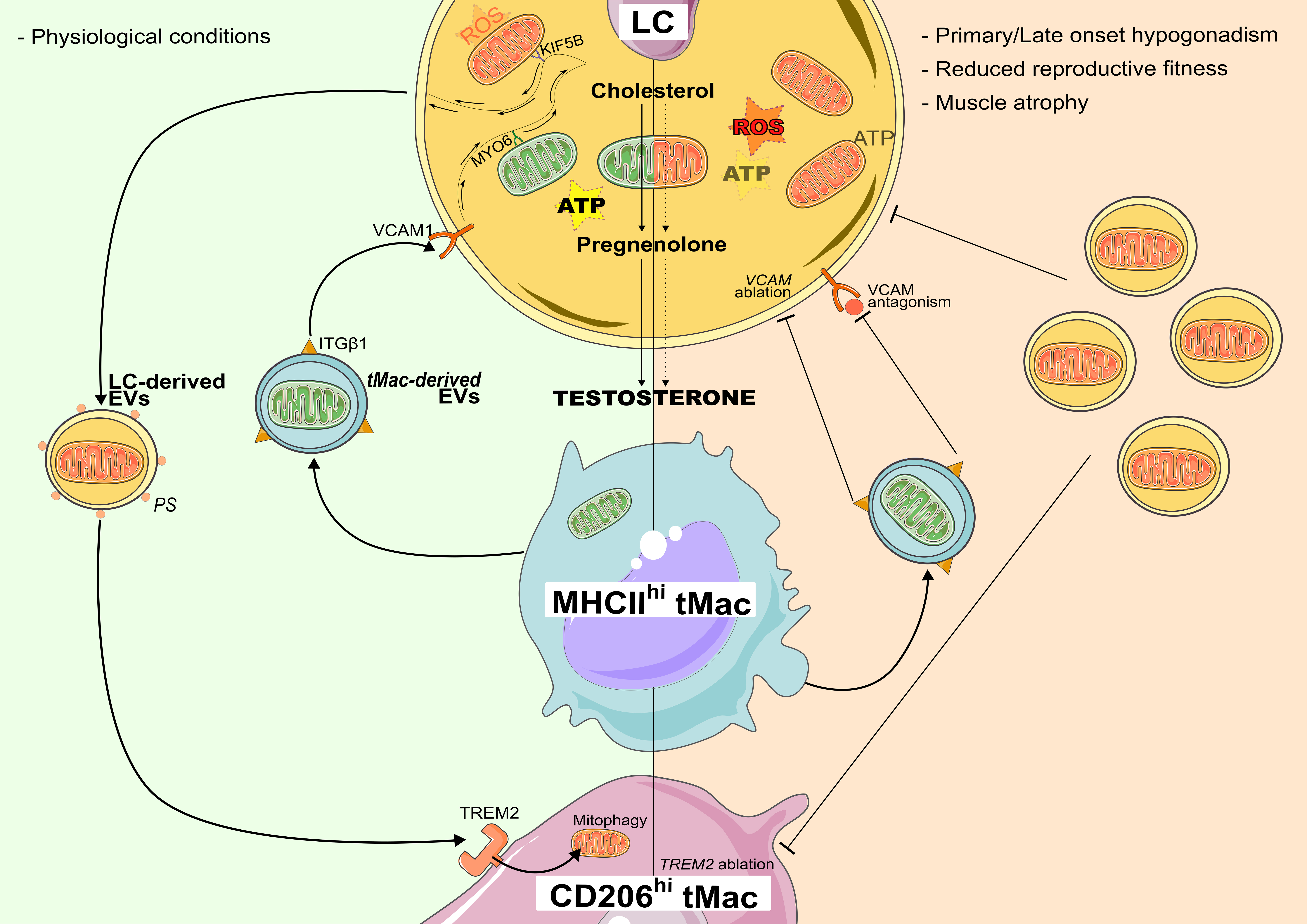
Figure 1. Proposed EV-mediated mitochondrial exchange between LC and tMacs. To manage the metabolic demands and ROS generated during steroidogenesis, LCs release extracellular particles containing damaged or functionally compromised mitochondria, which are taken up by CD206hi tMacs. This clearance is governed by the TREM2 receptor recognizing surface-exposed PS. Selective cargo sorting utilizes KIF5B for export, while MYO6 retains healthy organelles. Concurrently, LCs internalize functional mitochondria from MHCIIhi tMacs via an ITGβ1-VCAM1 interaction. Disruption of this network leads to the accumulation of dysfunctional mitochondria, impairing testosterone production and mirroring features of hypogonadism and reduced reproductive fitness. Figure was created using stock images provided by Servier Medical Art (https://smart.servier.com), licensed under CC BY 4.0 (https://creativecommons.org/licenses/by/4.0/). ATP: Adenosine triphosphate; CD206: cluster of differentiation 206; EV: extracellular vesicle; ITGB1: integrin beta 1; KIF5B: kinesin family member 5B; LC: Leydig cell; MHCII: major histocompatibility complex class II; MYO6: myosin VI; PS: phosphatidylserine; ROS: reactive oxygen species; tMac: testicular macrophage; TREM2: triggering receptor expressed on myeloid cells 2; VCAM1: vascular cell adhesion molecule 1.