

fig3
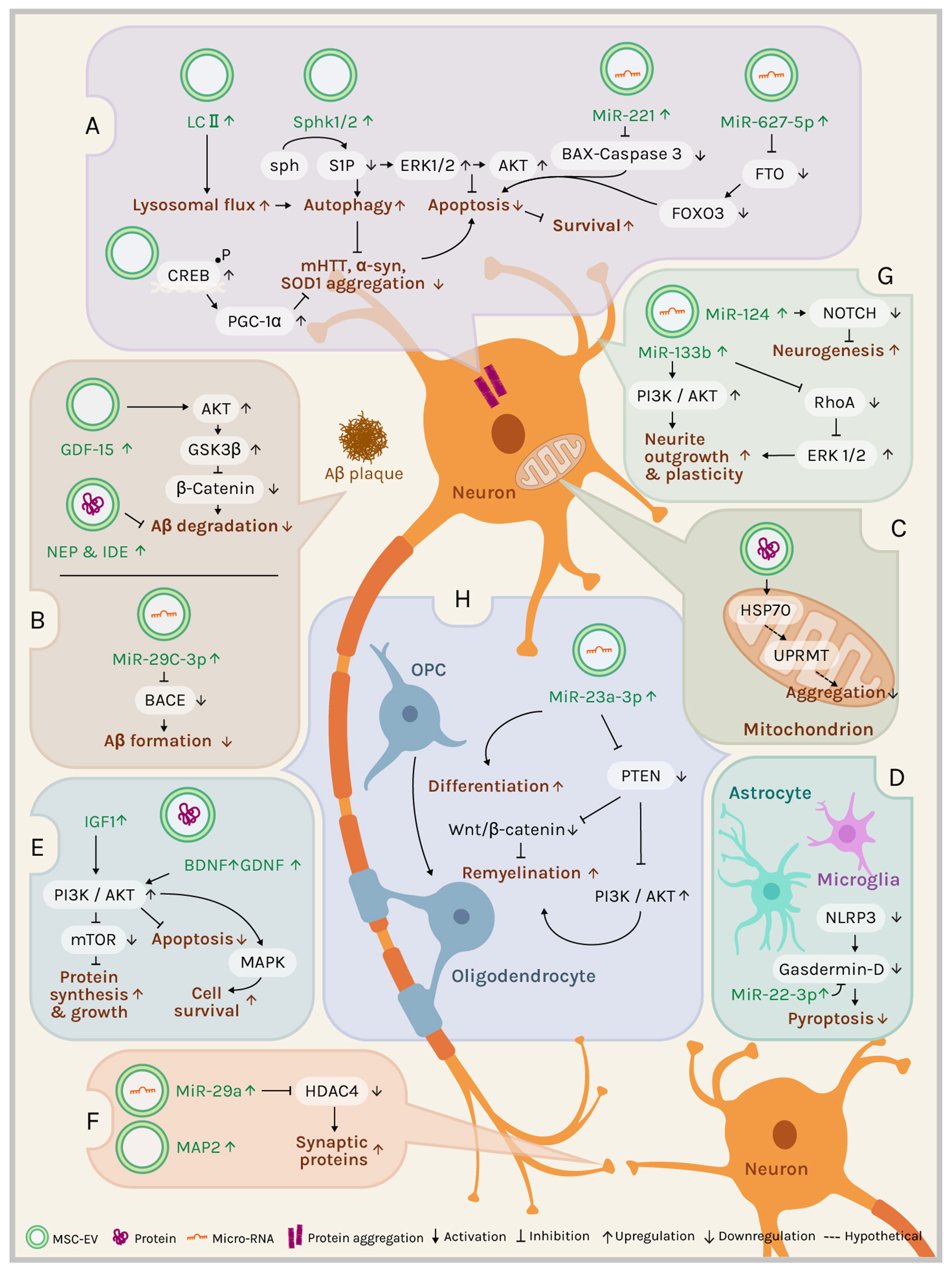
Figure 3. MSC-EVs reprogram proteotoxic stress toward neurotrophic recovery. Schematic illustrates how MSC-EVs act across multiple, interconnected layers of the proteotoxic cascade while simultaneously reinforcing neurotrophic and regenerative signalling. At the level of aggregate burden, MSC-EV cargo promotes clearance of pathogenic proteins, including Aβ, α-synuclein, mutant SOD1 and mHTT, through activation of intracellular degradation pathways. (A) This includes engagement of autophagic and lysosomal flux as well as enhancement of proteolytic capacity; (B) thereby reducing aggregate accumulation and associated cellular death. In parallel, MSC-EV-associated regulatory cargo modulates signalling pathways that reduce amyloidogenic processing and reinforce chaperone (HSP70)-mediated folding responses and restrain stress-induced apoptotic and pyroptotic cell death[65] (C and D). These proteostatic effects are closely coupled to activation of survival and metabolic transcriptional programmes that support neuronal viability under chronic stress. Beyond aggregate handling, MSC-EVs deliver neurotrophic signals that re-engage growth, plasticity, and repair pathways in neurons and glial cells. Growth factors and regulatory miRNAs converge on PI3K/Akt and MAPK signalling to promote neurite outgrowth (E); synaptic protein expression (F); cytoskeletal stability (G); and network function. In OPCs, MSC-EV cargo further supports differentiation and remyelination, indirectly reinforcing long-term proteostatic balance[66] (H). MSC-EV: Mesenchymal stem cell-derived extracellular vesicle; Aβ: amyloid-beta; SOD1: superoxide dismutase 1; mHTT: mutant huntingtin; HSP70: heat shock protein 70; UPRMT: mitochondrial unfolded protein response; PI3K: phosphatidylinositol 3-kinase; AKT: protein kinase B; MAPK: mitogen-activated protein kinase; OPC: oligodendrocyte progenitor cell; LC3-II: microtubule-associated protein 1 light chain 3-II; SphK: sphingosine kinase; S1P: sphingosine-1-phosphate; ERK: extracellular signal-regulated kinase; GDF-15: growth differentiation factor 15; GSK-3β: glycogen synthase kinase 3 beta; NEP: neprilysin; IDE: insulin-degrading enzyme; BACE1: beta-site amyloid precursor protein cleaving enzyme 1; IGF-1: insulin-like growth factor 1; BDNF: brain-derived neurotrophic factor; GDNF: glial cell line-derived neurotrophic factor; mTOR: mammalian target of rapamycin; HDAC4: histone deacetylase 4; MAP2: microtubule-associated protein 2; NLRP3: NOD-like receptor family pyrin domain containing 3; NOTCH: Notch receptor; RhoA: Ras homolog family member A; ERK1/2: extracellular signal-regulated kinase 1/2; PTEN: phosphatase and tensin homolog; AMPK: AMP-activated protein kinase.