
fig5
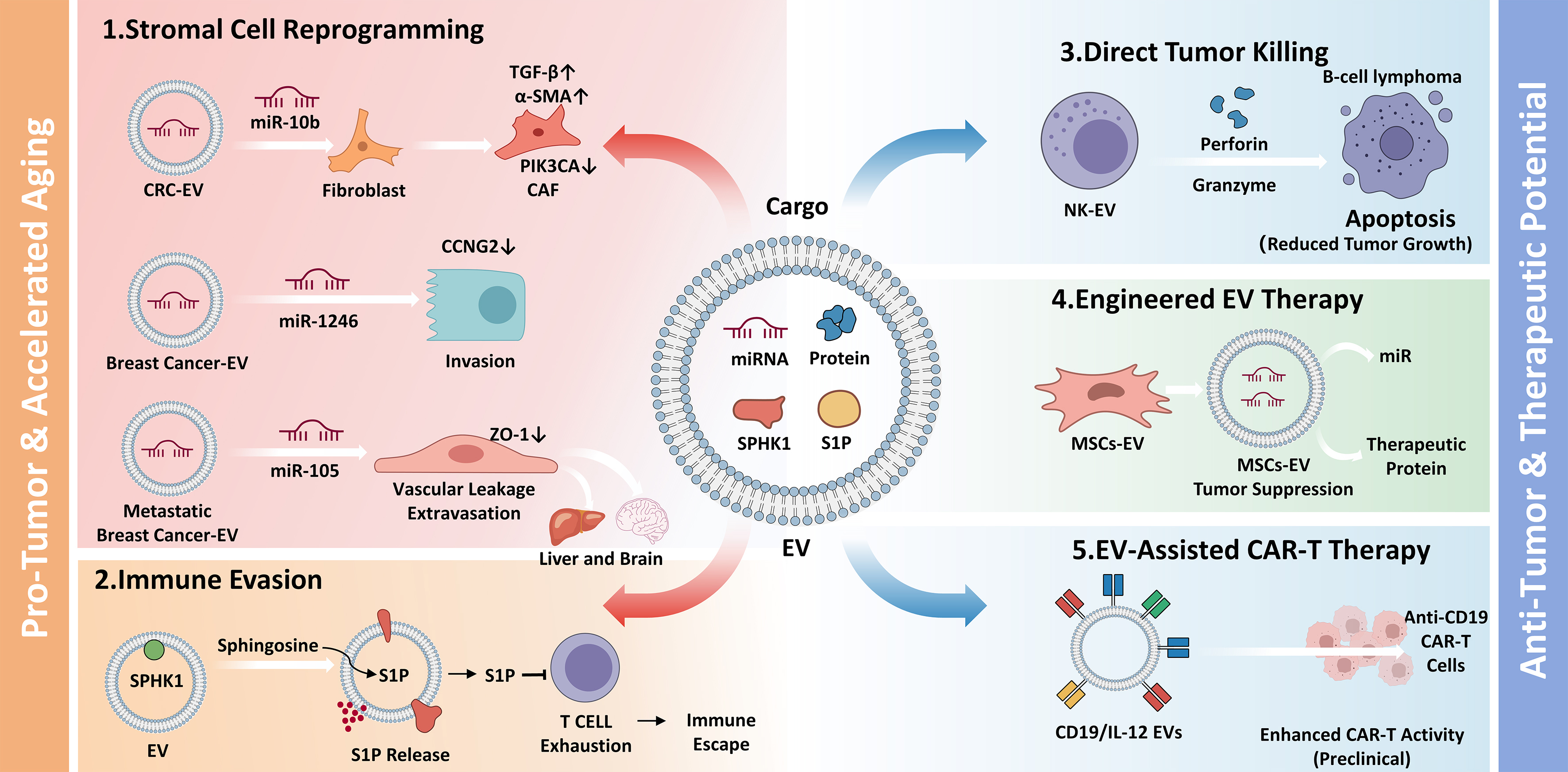
Figure 5. EV-mediated tumor remodeling and experimental antitumor strategies. Tumor-associated EVs can reshape stromal cells, support invasive behavior, alter vascular permeability, and suppress T-cell activity through miRNA transfer and lipid signaling[114,115,119,124]. Specifically, colorectal cancer EV miR-10b promotes fibroblast activation through PIK3CA downregulation[116]; breast cancer exosomal miR-1246 targets CCNG2[117], whereas secreted miR-105 compromises endothelial ZO-1-dependent barrier integrity[118]. The therapeutic examples depict NK cell-derived EV cytotoxicity[19], MSC EV delivery systems[125], and CD19/IL-12-bearing engineered HEK293T EVs that enhance CAR-T-cell activity[18]. These mechanisms originate from distinct experimental studies. They do not establish a universal causal link between tumor EV signaling and accelerated organismal aging. Upward and downward arrows indicate increased and decreased levels, respectively. EV: Extracellular vesicle; CAF: cancer-associated fibroblast; miR: microRNA; MSC: mesenchymal stem cell; NK: natural killer; CAR-T: chimeric antigen receptor T cell; IL-12: interleukin-12; SPHK1: sphingosine kinase 1; S1P: sphingosine-1-phosphate; TGF-β: transforming growth factor beta; PIK3CA: phosphatidylinositol-4,5-bisphosphate 3-kinase catalytic subunit alpha; CCNG2: cyclin G2; ZO-1: zonula occludens-1; α-SMA: alpha-smooth muscle actin; CRC: colorectal cancer.