
fig2
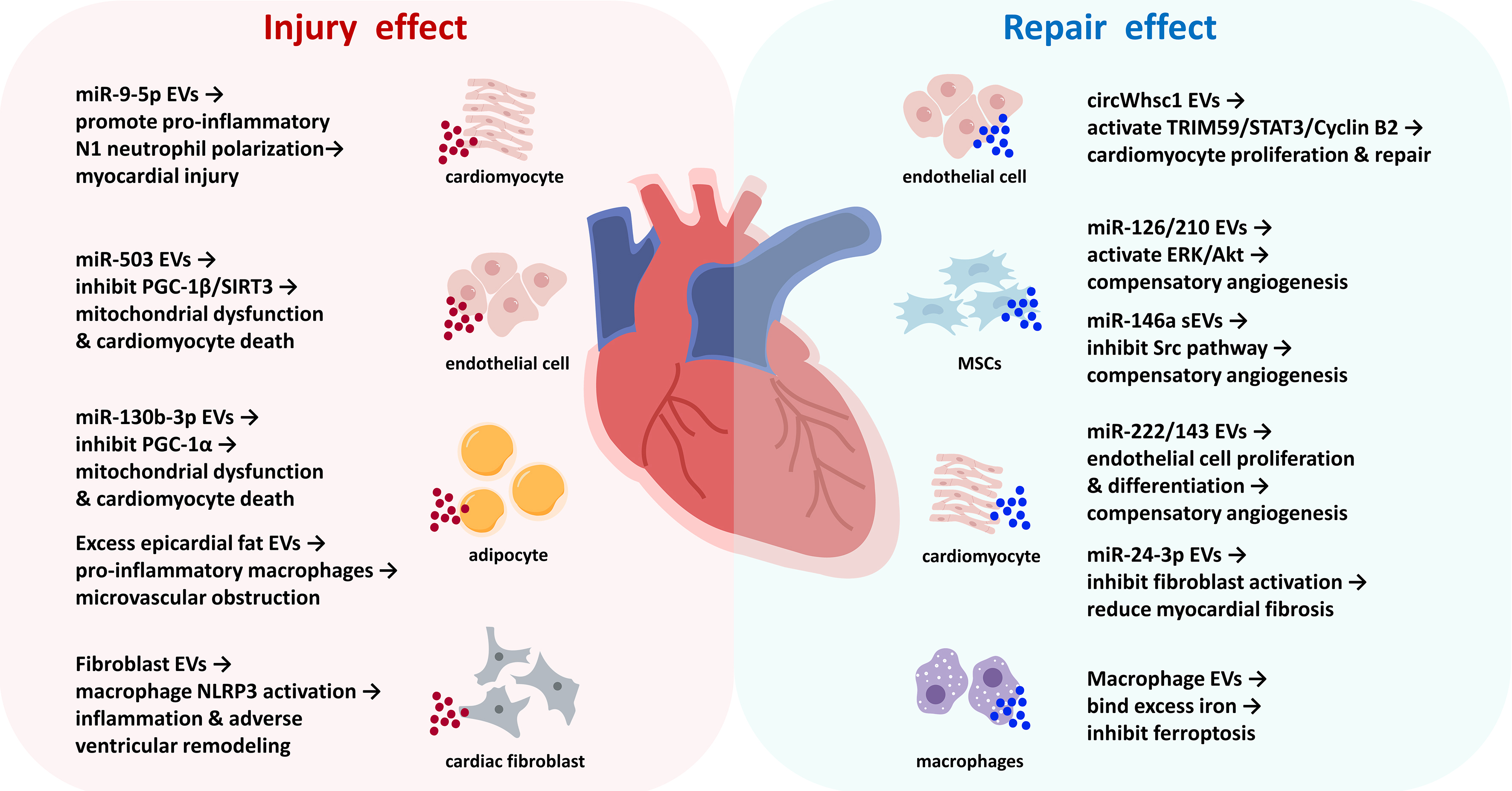
Figure 2. Injury- and repair-associated EV signaling after MI. Injury-associated EVs released by cardiomyocytes, endothelial cells, adipocytes, and cardiac fibroblasts can amplify neutrophil activation, mitochondrial stress, and inflammation in experimental ischemic heart injury. Specifically, endothelial EV-associated miR-503 targets PGC-1β/SIRT3 to induce mitochondrial dysfunction and cardiomyocyte death[57], whereas adipocyte-derived EV-associated miR-130b-3p suppresses PGC-1α and triggers mitochondrial dysfunction and cardiomyocyte apoptosis[55]. Other injury-related EV pathways include cardiomyocyte EV-associated miR-9-5p promoting pro-inflammatory N1 neutrophil polarization[59] and cardiac fibroblast-derived mitochondria-enriched EVs regulating inflammation and adverse ventricular remodeling through the NLRP3 pathway[58]. Epicardial adipose tissue-derived EVs can also contribute to macrophage