
fig1
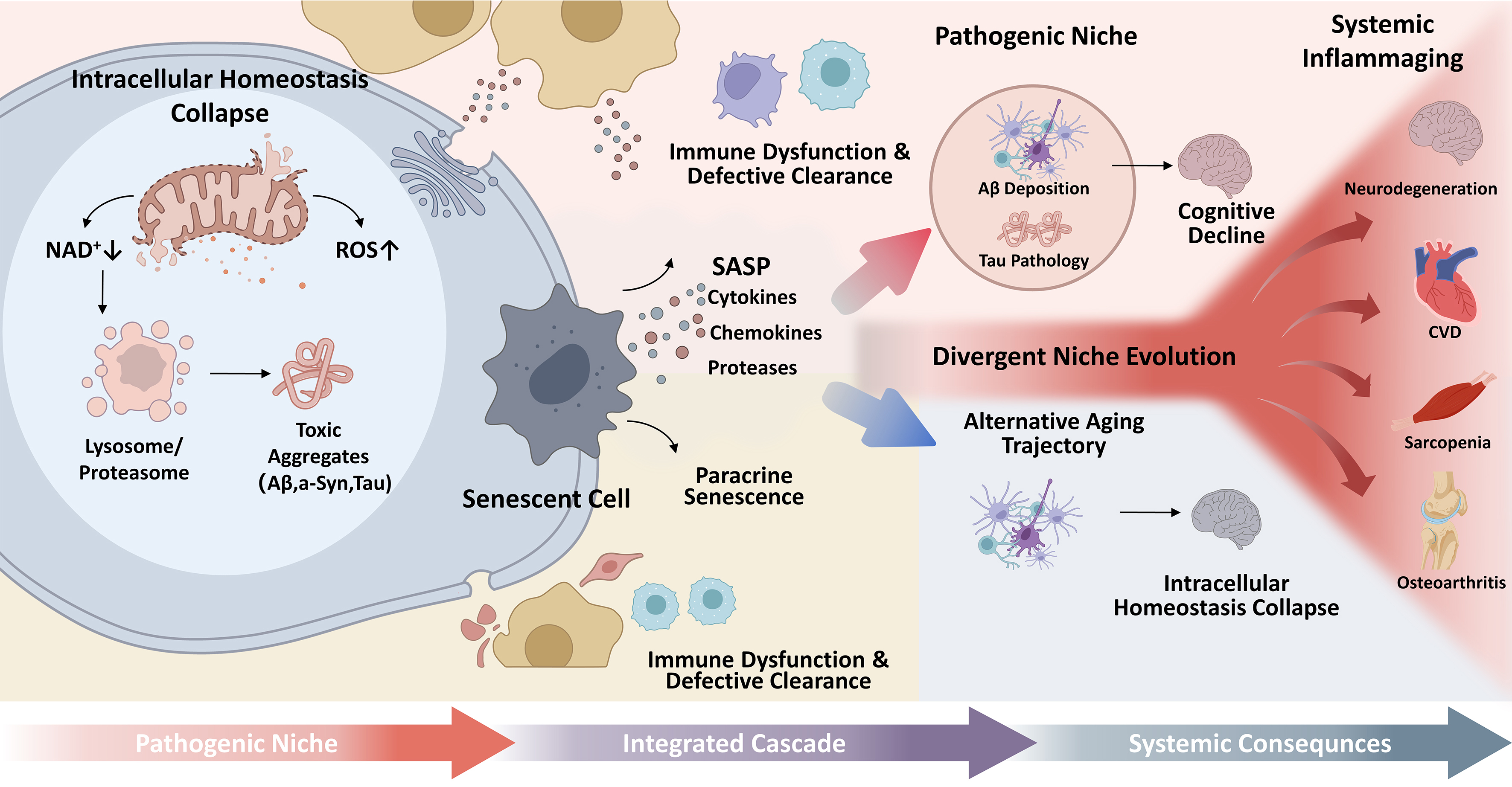
Figure 1. EV-associated remodeling of the aging microenvironment. Age-related proteostatic and mitochondrial stress, senescence-associated secretory activity, and altered EV signaling can reshape local tissue environments. EV cargo transfer contributes to paracrine senescence and may influence inflammatory signaling, extracellular matrix remodeling, and inter-organ communication[24,25,33,34,36,41,44,45]. Together, these processes connect impaired cellular homeostasis with diverse tissue-level consequences of aging. The labels “pathogenic niche,” “divergent niche evolution,” “alternative aging trajectory,” “integrated cascade,” and “systemic inflammaging” denote the conceptual progression from local senescence-associated signaling to heterogeneous tissue and systemic inflammatory outcomes, rather than separate validated EV pathways. Local niche remodeling corresponds to Section “Pathological remodeling of the local microenvironment by EVs”, and the proposed systemic connections correspond to Section “Circulating EVs and the formation of cross-organ aging networks”. EV: Extracellular vesicle; SASP: senescence-associated secretory phenotype; ROS: reactive oxygen species; NAD+: nicotinamide adenine dinucleotide; Aβ: amyloid-beta; α-syn: alpha-synuclein; Tau: microtubule-associated protein tau; CVD: cardiovascular disease.