

fig2
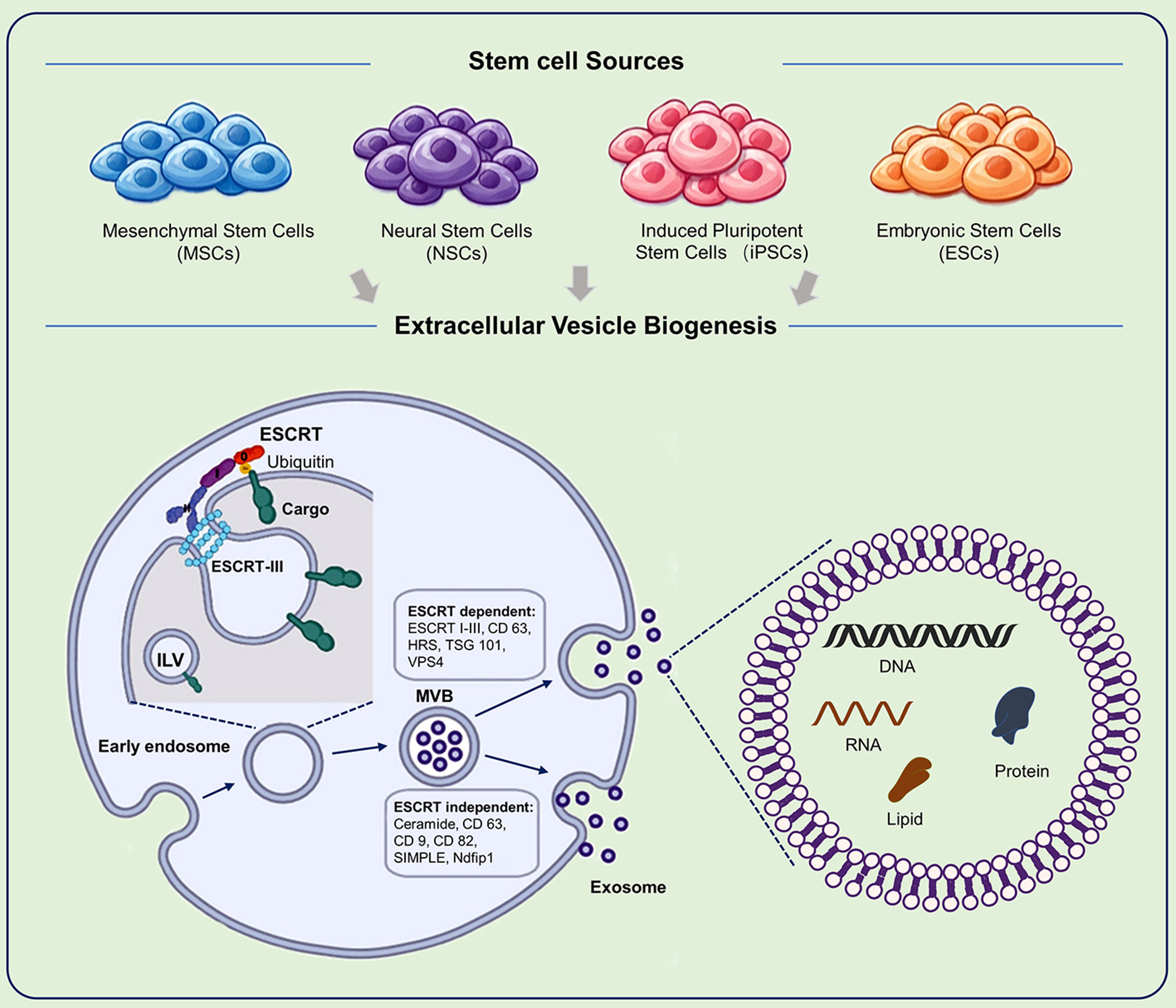
Figure 2. Biogenesis and Release of SC-EVs. This schematic illustrates the cellular pathways involved in the formation, maturation, and secretion of SC-EVs. The upper panel represents the parent stem cell, whereas the lower panel depicts key stages of vesicle biogenesis. The process begins with invagination of the plasma membrane to form early endosomes, which subsequently mature into late endosomes or MVBs. During this process, inward budding of the endosomal membrane encapsulates selected proteins, lipids, and nucleic acids within ILVs. Cargo sorting is regulated by both ESCRT-dependent and ESCRT-independent mechanisms. Upon maturation, MVBs fuse with the plasma membrane, releasing ILVs into the extracellular space as exosomes. In contrast, microvesicles are generated through direct outward budding and fission of the plasma membrane. SC-EVs: Stem cell-derived extracellular vesicles; ESCRT: endosomal sorting complex required for transport; HRS: hepatocyte growth factor-regulated tyrosine kinase substrate; TSG101: tumor susceptibility gene 101; VPS4: vacuolar protein sorting-associated protein 4; ILV: intraluminal vesicle; MVB: multivesicular body; SIMPLE:small integral membrane protein of the endosome; Ndfip1: Nedd4 family interacting protein 1; DNA: deoxyribonucleic acid; RNA: ribonucleic acid.