

fig3
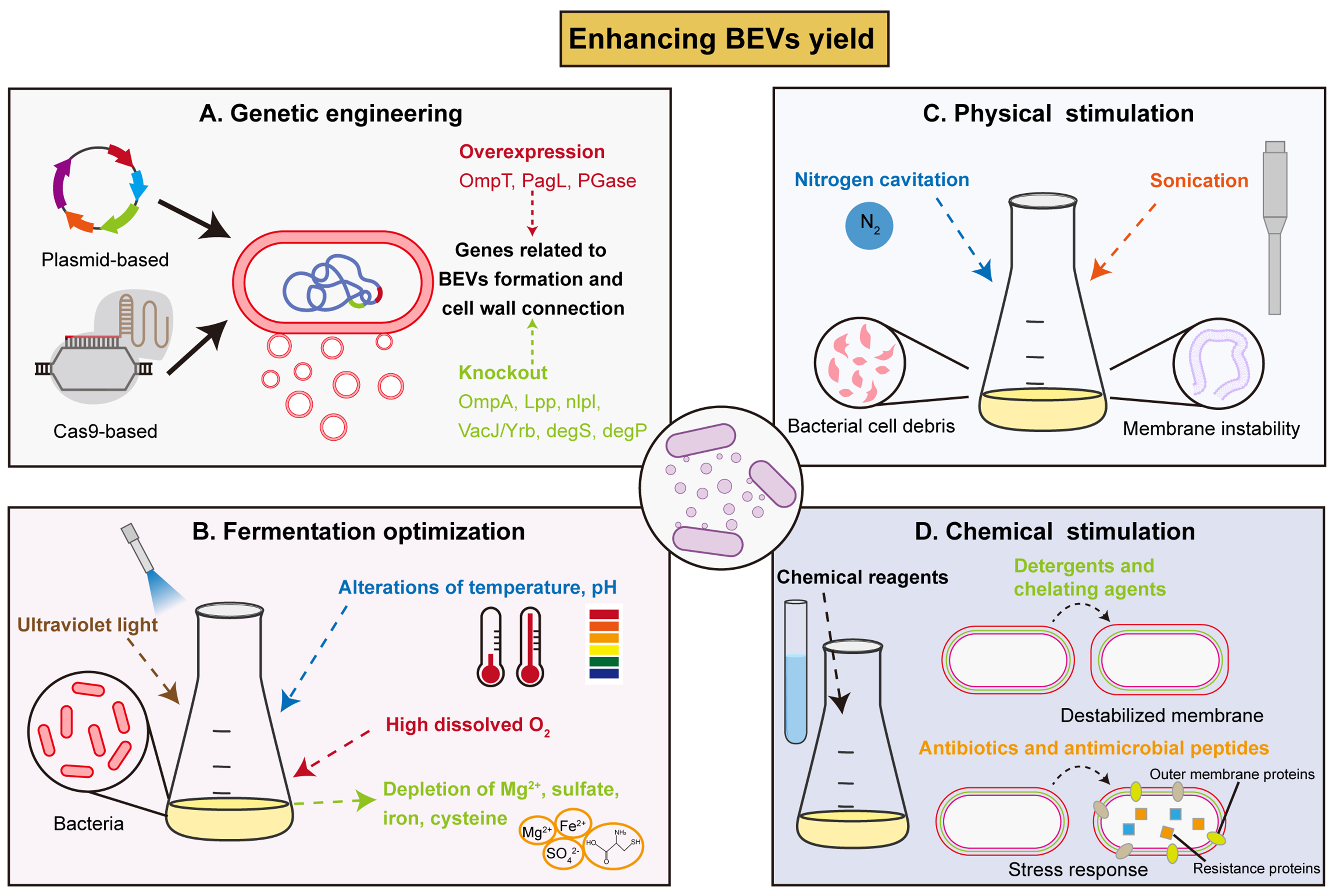
Figure 3. Strategies to enhance BEVs yield. (A) Utilization of genetic engineering techniques (recombinant plasmids, CRISPR-Cas9) to overexpress or knockout genes related to BEVs formation and cell wall composition; (B) Fermentation optimization, such as UV light stimulation, temperature/ pH alteration, and depletion of nutrients to enhance BEVs yield; (C) Physical stimulation with extreme environmental forces (nitrogen cavitation, sonication) to produce cell debris and induce membrane instability, thus enhance BEVs production; (D) Chemical reagents treatment (detergents, chelating agents, antibiotics) to induce more BEVs production as a self-protective response. BEVs: Bacterial extracellular vesicles; OmpT: outer membrane protease T; PagL: lipid A 3-O-deacylase PagL; PGase: peptidoglycan hydrolase; OmpA: outer membrane protein A; Lpp: murein lipoprotein; NlpI: lipoprotein NlpI; DegP: periplasmic serine endoprotease DegP; CRISPR-Cas9: clustered regularly interspaced short palindromic repeats-associated protein 9; UV: ultraviolet.