

fig1
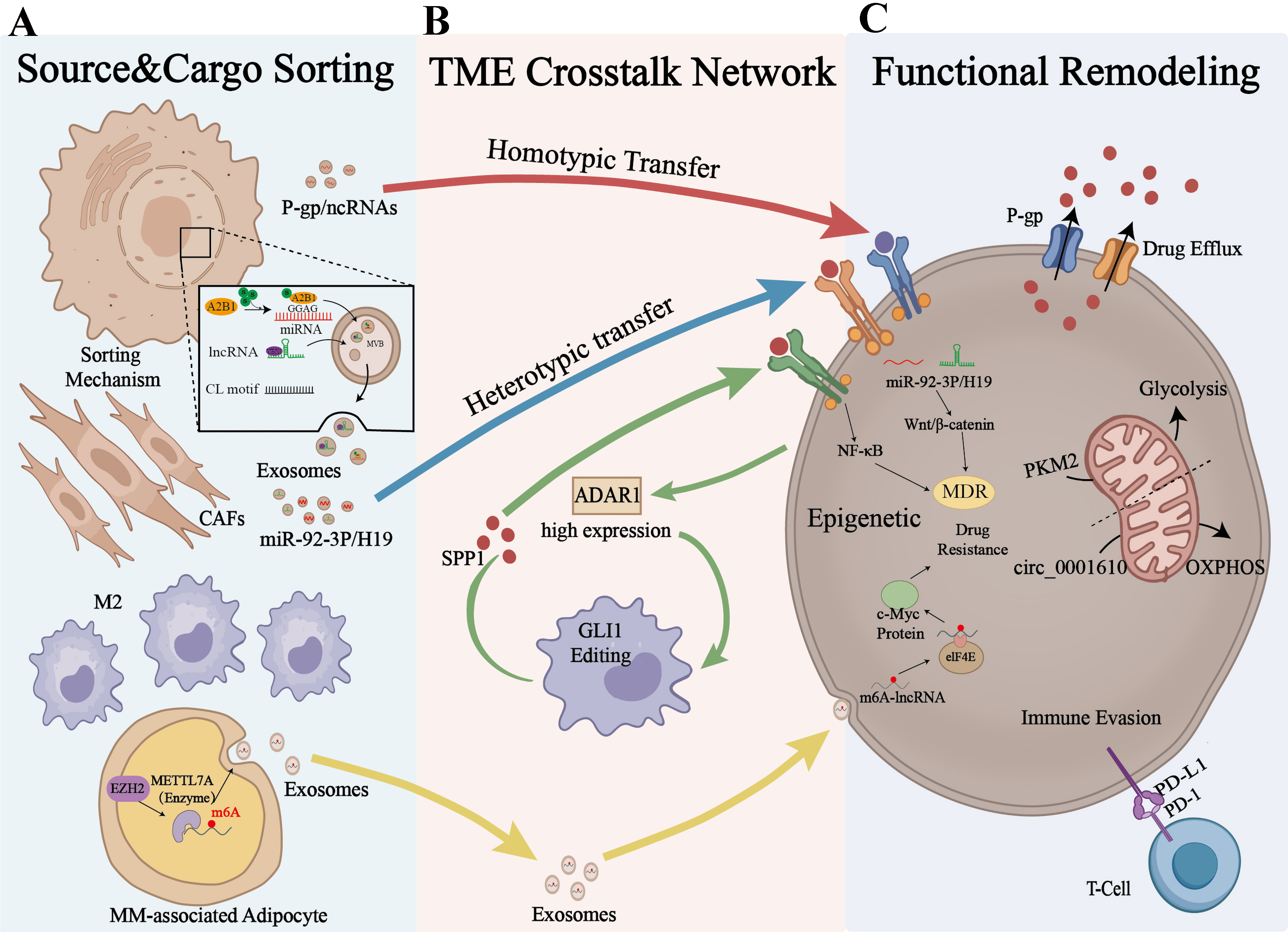
Figure 1. Schematic illustration of the major mechanisms by which Exos participate in tumor multidrug resistance. (A) Sorting and loading of exosomal cargo. Drug resistance-related cells can selectively enrich ncRNAs, functional proteins, and metabolism-related molecules and package them into Exos with the involvement of RNA-binding proteins (such as YBX1 and hnRNPA2B1) and RNA modifications; (B) Exos mediate the transmission of drug resistance-related information among drug-resistant cells, drug-sensitive cells, and tumor microenvironment-associated cells, and influence the functional states of CAFs, TAMs, and T cells, thereby forming a pro-resistance intercellular communication network; (C) Functional alterations in recipient cells. After uptake of Exos, recipient cells may undergo a variety of drug resistance-related molecular and phenotypic changes, including activation of classical signaling pathways, epitranscriptomic regulation, metabolic reprogramming, and inhibition of programmed cell death, which may further promote stemness maintenance and therapeutic resistance. This figure was created by the authors using Adobe Illustrator. Exos: Exosomes; ncRNAs: noncoding RNAs; YBX1: Y-box binding protein 1; hnRNPA2B1: heterogeneous nuclear ribonucleoprotein A2/B1; CAFs: cancer-associated fibroblasts; TAMs: tumor-associated macrophages; P-gp: P-glycoprotein; lncRNA: long non-coding RNA; CL: cellular-localization; EZH2: enhancer of zeste homolog 2; m6A: N6-methyladenosine; TME: tumor microenvironment; ADAR1: adenosine deaminase acting on RNA 1; SPP1: secreted phosphoprotein 1; GLI1: GLI family zinc finger 1; NF-κB: nuclear factor kappa B; MDR: multidrug resistance; PKM2: pyruvate kinase M2; OXPHOS: oxidative phosphorylation; PD-L1: programmed death-ligand 1; PD-1: programmed cell death protein 1.