
fig3
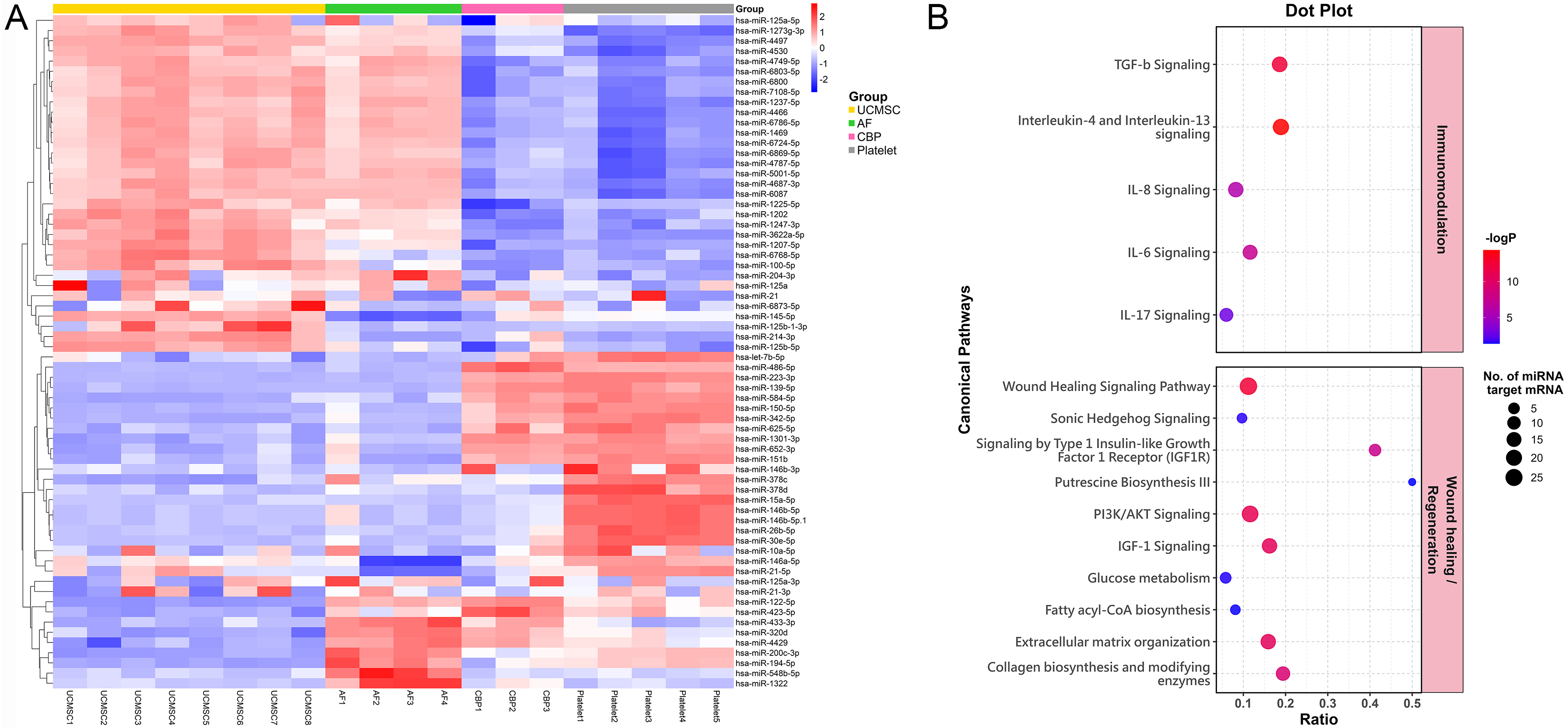
Figure 3. UCMSC-EVs have distinct miRNA profiles targeting DED-relevant mRNA pathways. (A) The heatmap analysis shows that UCMSC-EVs have distinct miRNA profiles as compared to AF, CBP, and platelet-derived EV samples; (B) The dot plot displays key pathways regulated by the miRNAs through their target mRNAs. The y-axis lists the significantly enriched biological pathways identified by the Qiagen IPA (P < 0.05). The x-axis is the ratio, offering additional context by indicating the proportion of miRNA-targeted RNAs from the experimental dataset that are included within a given pathway or disease/function category relative to the total number of mRNA molecules associated with that category in the IPA database. The color scale (blue to red) indicates the -log(P) value, whereas the size of each dot corresponds to the number of miRNAs whose target mRNAs are involved in that specific pathway or category. Larger dots indicate a greater overlap between the identified miRNAs and their targeted mRNAs. AF: Amniotic fluid; CBP: cord blood plasma; DED: dry eye disease; EV: extracellular vesicles; miRNA: microRNA; mRNA: messenger RNA; UCMSC-EVs: umbilical cord mesenchymal stem cell-derived extracellular vesicles; IPA: Ingenuity Pathway Analysis.