
fig6
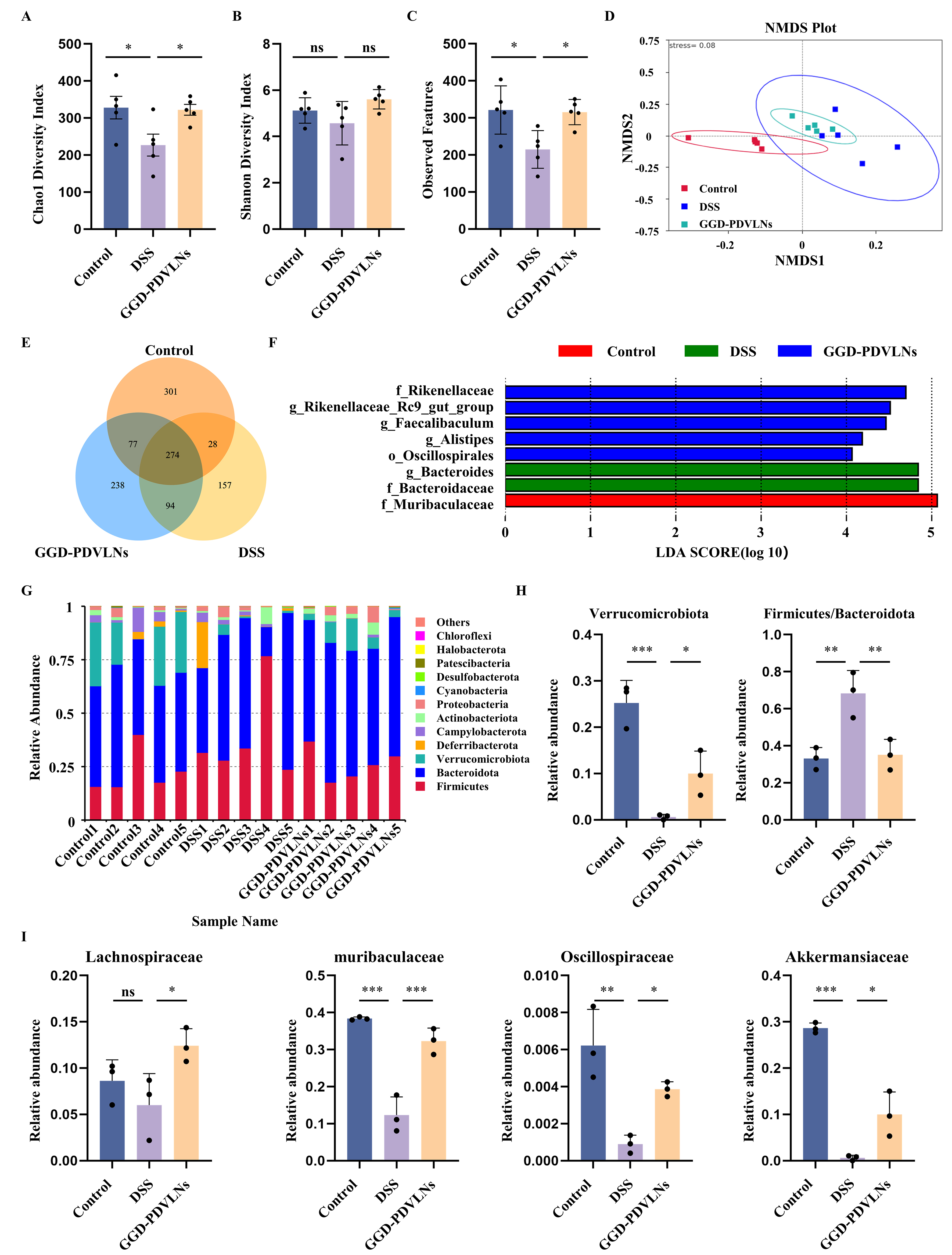
Figure 6. GGD-PDVLNs modulate gut microbiota diversity and increase the abundance of probiotics. (A) Estimation of microbial community observed ASVs richness; (B and C) Analysis of α-diversity (Chao1 and Shannon index); (D) NMDS analysis demonstrating the β-diversity of the intestinal microbiota; (E) Venn diagram of common and unique mouse species per group; (F) LEfSe analysis identifies species that differ significantly between groups of mice; (G) Relative abundance of the intestinal microbiota at the phylum level was determined based on its proportion relative to the total species count. n = 5; (H and I) Relative abundance of representative beneficial flora at both the phylum level and family level, n = 3. Data are shown as means ± SEM. Bar graphs were analyzed using one-way ANOVA. *P < 0.05; **P < 0.01; ***P < 0.001. GGD-PDVLNs: GeGen decoction-derived vesicle-like nanoparticles; ASVs: amplicon sequence variants; NMDS: non-metric multidimensional scaling; LEfSe: linear discriminant analysis effect size; SEM: standard error of the mean; ANOVA: analysis of variance; ns: no significance.