


A universal Ti3C2 assisted strategy facilitates hole extraction of PEDOT:PSS anode interface layer for over 19% efficiency organic photovoltaics
 0
0 Abstract
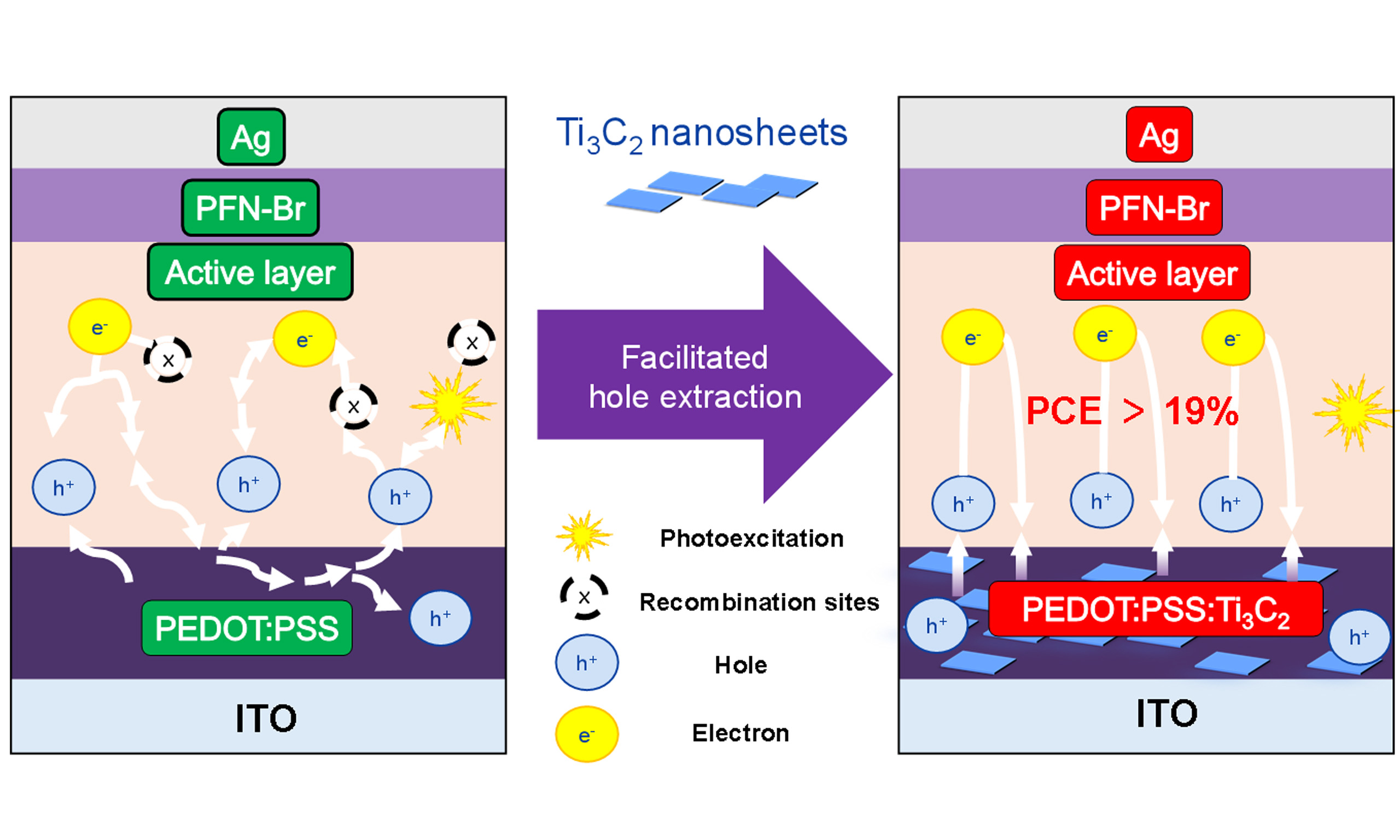
Low hole extraction efficiency is a key factor restricting the performance of organic photovoltaics (OPVs). Improving the conductivity of PEDOT:PSS [poly(3,4-ethylenedioxythiophene):poly(styrenesulfonate)] and reducing its large extraction barrier with the active layer is viewed as an important direction to increase the hole extraction efficiency of OPVs. In this work, few-layer two-dimensional titanium carbide (Ti3C2) nanosheets were prepared by HCl/LiF etching and doped into PEDOT:PSS to fabricate OPV devices. Ti3C2 nanosheets induced the configuration transformation of PEDOT from spiral benzoyl to linear quinone structure, form tightly packed
Keywords
INTRODUCTION
Organic photovoltaics (OPVs) are considered to be a promising low-cost renewable and clean energy because of their light weight, excellent mechanical properties and large-scale production[1-4]. The common device structure of OPVs can be divided into forward devices and reverse devices, where the high efficiency OPVs reported in the literature almost employed forward device structure. Benefitting from the prominent development of donor/acceptor materials, the power conversion efficiency (PCE) of forward OPVs approaches 20%[5,6]. In conventional OPVs, the development of anode interfacial layers (AILs) has progressed substantially slower compared to cathode interfacial layers, primarily due to the limited availability of suitable materials for AIL applications[7-16]. PEDOT:PSS, a conductive polymer blend of poly(3,4-ethylenedioxythiophene) and poly(styrenesulfonate), is widely utilized as an AIL in conventional architecture OPVs, primarily due to its exceptional optical transparency, solution processability, and aqueous solubility[17,18]. Although PEDOT:PSS is in a monopoly position, its own defects are also prominent, which seriously affects its practical application[19-21]. For example, PEDOT:PSS exhibits low conductivity and large extraction barrier with the active layer, which significantly influenced the current mainstream efficient donor with deeper energy level. Therefore, improving the conductivity of PEDOT:PSS and reducing its large extraction barrier with the active layer is viewed as an important strategy to increase the hole extraction efficiency of OPVs[22,23].
The methods of improving the conductivity of PEDOT:PSS can be divided into physical methods and chemical methods[24,25]. Physical methods, such as ultraviolet (UV) light irradiation, improved the conductivity and work function of the PEDOT:PSS film[26]. However, the photovoltaic performance is not significantly improved as the photo-treated or heat-treated PEDOT:PSS films applied to OPVs[27,28]. Chemical methods include adding PEDOT:PSS aqueous solution with an alcohol-soluble polar solvent or slowly fumigating PEDOT:PSS film with solvent steam[29,30], treating the surface of the film with a surfactant[31], and adding PEDOT:PSS aqueous solution with a PH of 1-3 strong acid[32]. However, these modification methods may damage the surface morphology of the thin film or impair the stability of OPVs. In addition to the above modification methods, salt solution doping is most commonly used. Systematic study found that the introduction of Cu2+, Ag+, In3+ has a positive effect on device performance, while the introduction of Na+, Li+, Mg2+ will destroy device performance[33].
The two-dimensional transition metal carbide Ti3C2 exhibits excellent hydrophility, high visible light transmittance and abundant surface functional groups[34,35], which is expected to improve the conductivity of PEDOT:PSS. In this work, few-layer Ti3C2 nanosheets were prepared by HCl/LiF etching and doped into PEDOT:PSS to fabricate OPV devices. Ti3C2 nanosheets induce the configuration transformation of PEDOT from spiral benzoyl to linear quinone structure, form tightly packed large-size PEDOT nanocites, and connect these conductive nanocites to construct a new charge transport channel, thus boosting the conductivity of the PEDOT:PSS film. Furthermore, the incorporation of Ti3C2 as a dopant effectively modulated the work function of PEDOT:PSS, resulting in a significant reduction of the hole extraction barrier at the anode interface in OPV devices. As a result, the maximum PCE of PTzBI-oF:PYF-T-o, D18:L8-BO, and PM6:L8-BO devices boosted from 15.61%, 17.92% and 15.49% to 16.83%, 19.05% and 17.33%, respectively.
EXPERIMENTAL
Materials
The organic materials D18, PM6, PYF-T-o, and L8-BO were sourced from Nanjing Zhiyan Technology
Fabrication of OPVs
The pre-patterned indium tin oxide (ITO)-coated glass substrates underwent a sequential cleaning process, beginning with detergent washing, followed by ultrasonic treatment in deionized water, acetone, and isopropyl alcohol (20 minutes for each solvent), and concluding with overnight drying in an oven[36]. The AIL was deposited by spin-coating the precursor solution onto oxygen plasma-treated ITO substrates
Mobility characterization
The hole-only PTzBI-oF:PYF-T-o device with the structure of ITO/(PEDOT:PSS or Ti3C2:PEDOT:PSS)/PTzBI-oF:PYF-T-o/MoO3/Ag was fabricated to determine mobility μ by the formula J = (9/8)ε0εrμVeff2/d3, in which J, μ, ε0, εr, d and Veff delegate the current density, zero-field charge mobility at, free-space permittivity, material’s relative permittivity, the thickness of PTzBI-oF:PYF-T-o layer and effective voltage, respectively.
Instruments used for characterization
The absorption and photoluminescence (PL) spectra of PTzBI-oF, PYF-T-o, PTzBI-oF:PYF-T-o, PEDOT:PSS and Ti3C2:PEDOT:PSS substances were analyzed by utilizing an absorption photoluminescence spectral analysis system (APLS-AS), specifically model APL-AS II. The current density-voltage (J-V) curves of PTzBI-oF:PYF-T-o (1:1.4) devices, both with and without Ti3C2 incorporated in the PEDOT:PSS interlayer, were measured using a computer-controlled Keithley 2450 SourceMeter. These measurements were conducted under AM 1.5G irradiation provided by a solar simulator (Sirius-SS150A, 150W AAA grade, manufactured by Zolix Instruments). The external quantum efficiency (EQE) spectra of
RESULT AND DISCUSSION
Preparation steps and detailed manifestation of few-layer Ti3C2 nanosheets
The block Ti3AlC2 material was etched with hydrofluoric acid produced in situ by hydrochloric acid and lithium fluoride [Figure 1A]. The specific experimental process was as follows: 20 mL 9 mol/L hydrochloric acid was put into a polytetrafluoroethylene beaker, slowly added 1.6 g LiF, and stirred for 5 min. 1 g of 400 mesh Ti3AlC2 powder was slowly added to the above mixture and continuously stirred at 36 °C for 24 h. After the etching, 5 mL of liquid was added to 30 mL of deionized water, centrifuged at 3500 r/min for
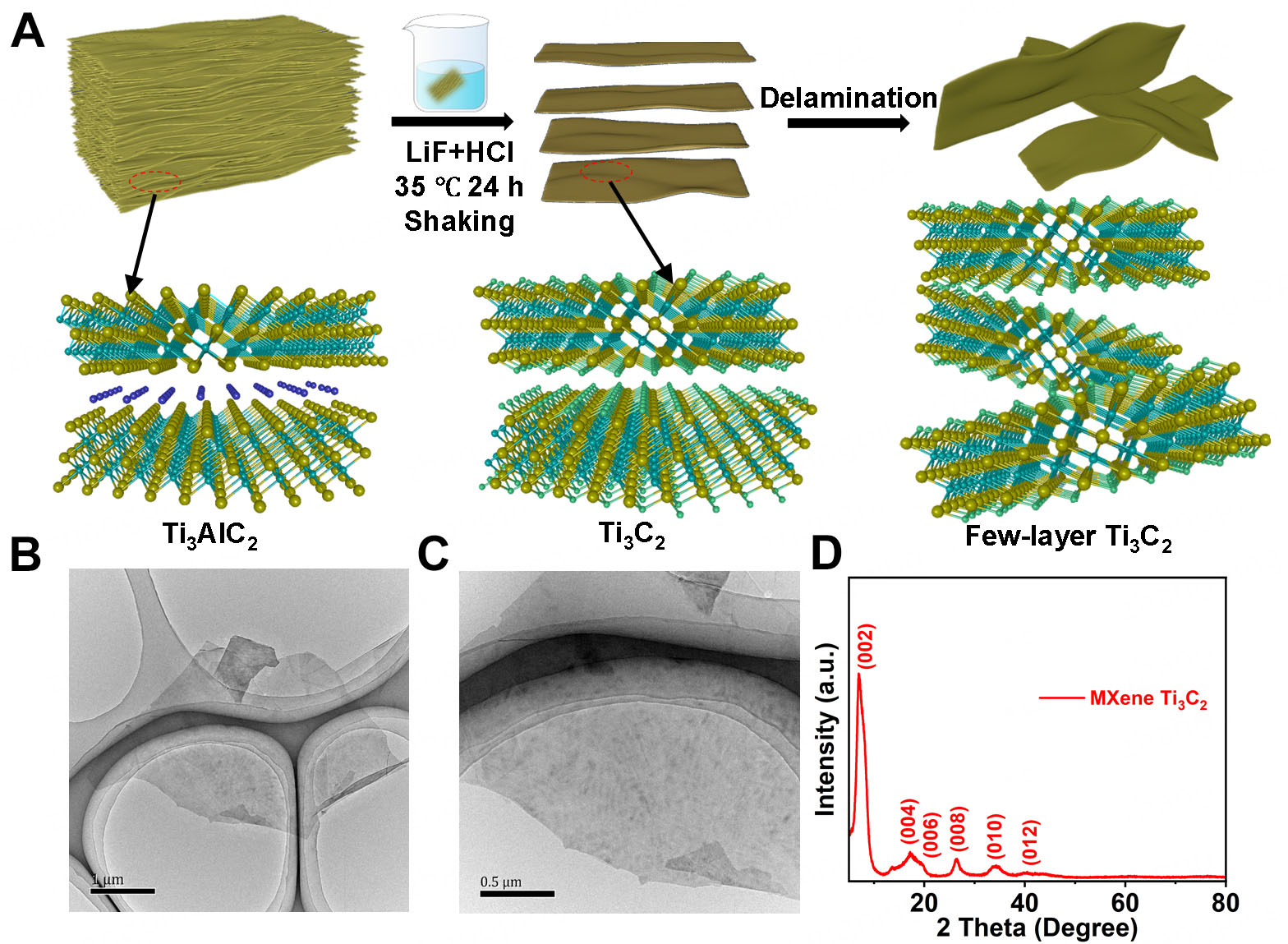
Figure 1. (A) Schematic of the synthesis of few-layer Ti3C2 nanosheet; (B and C) The TEM images for few-layer Ti3C2 nanosheet with different magnifications; (D) The XRD patterns of few-layer Ti3C2 nanosheet. TEM: Transmission electron microscopy; XRD: X-ray diffraction.
A TEM image for a few-layer Ti3C2 nanosheet solution is shown in Figure 1B and C, where its surface is relatively flat and smooth, its edge is clear and dry, and there are no obvious holes on the sheet, which proves that this nanosheet obtained by this method has less defects. From the XRD pattern of Ti3C2 films [Figure 1D], not only the obvious (002) characteristic peak at 5.9° was observed, but also the (004), (006), (008), (010) and (012) crystal faces were observed in the range of 5° ≤ 2θ ≤ 60°, demonstrating that Ti3C2 has been successfully etched and the layers are well separated, forming highly ordered crystal structure.
Effect of Ti3C2 nanosheets on the photoelectric properties of PEDOT:PSS
Ti3C2 nanosheets have good electrical conductivity and water solubility, and the addition of Ti3C2 nanosheets to PEDOT:PSS can form a uniform solution without precipitation. Supplementary Figure 1 displays the preparation process of the Ti3C2:PEDOT:PSS interlayer. The device structure of OPVs with
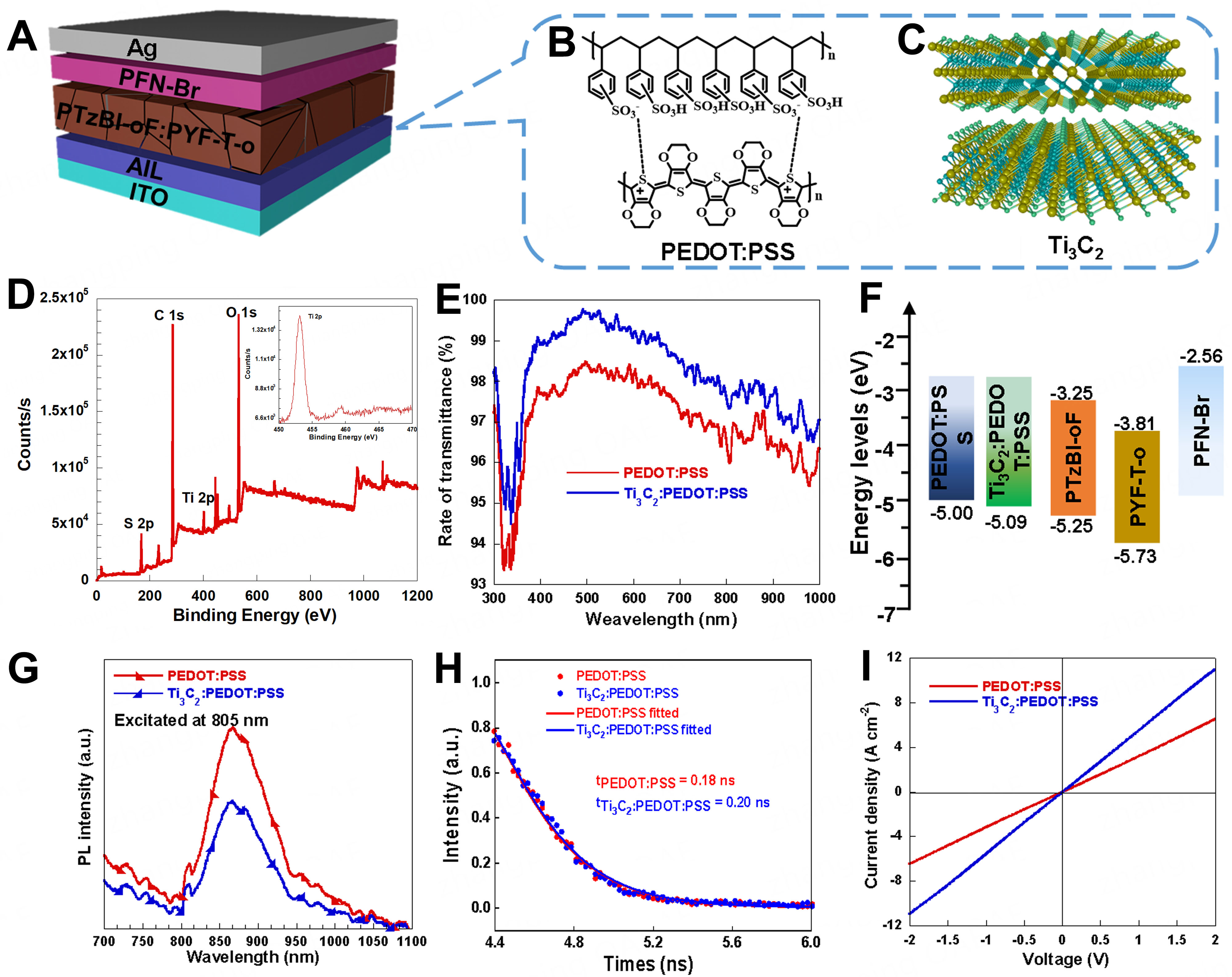
Figure 2. (A) Device structure of OPVs with Ti3C2:PEDOT:PSS hybrid AIL; (B) Chemical structures of PEDOT:PSS; (C) Schematic of Ti3C2 nanosheet; (D) XPS spectrum of Ti3C2:PEDOT:PSS hybrid AIL; (E) Transmittance of hybrid AIL with and without Ti3C2 at different wavelengths; (F) The energy level structures of PEDOT:PSS, Ti3C2:PEDOT:PSS, PTzBI-oF, PYF-T-o and PFN-Br; (G) PL and (H) TRPL spectrum of PTzBI-oF:PYF-T-o blend films with (or without) Ti3C2 in the PEDOT:PSS interlayer; (I) SCLC hole mobility for
Figure 2E illustrates the transmittance variation of PEDOT:PSS films when Ti3C2 is incorporated. The luminance of the PEDOT:PSS film increased by 2% in the wavelength range of 300-1000 nm. This enhancement may facilitate the light absorption capacity of the active layer, thereby boosting the photocurrent in OPVs. To confirm our hypothesis, we systematically analyzed the absorption spectra of PTzBI-oF, PYF-T-o, and PTzBI-oF:PYF-T-o membranes that were spin-coated onto PEDOT:PSS films, both with and without the incorporation of Ti3C2 nanosheets [Supplementary Figure 4]. As Ti3C2 nanosheets added into the PEDOT:PSS interlayer, PTzBI-oF and PYF-T-o films exhibited intensive absorption bands in the range of 450-700 nm and 700-900 nm [Supplementary Figure 4A], respectively. Such strengthened absorption in neat PTzBI-oF (or PYF-T-o) membranes was well retained in
PL spectroscopy was employed to investigate the influence of Ti3C2 nanosheets on charge transfer dynamics in OPV devices. The PL spectra of PTzBI-oF:PYF-T-o films deposited on both pristine PEDOT:PSS and
Role of Ti3C2 doping PEDOT:PSS on the photovoltaic performance of OPVs
To investigate the influence of Ti3C2 incorporation on photovoltaic performance, we fabricated
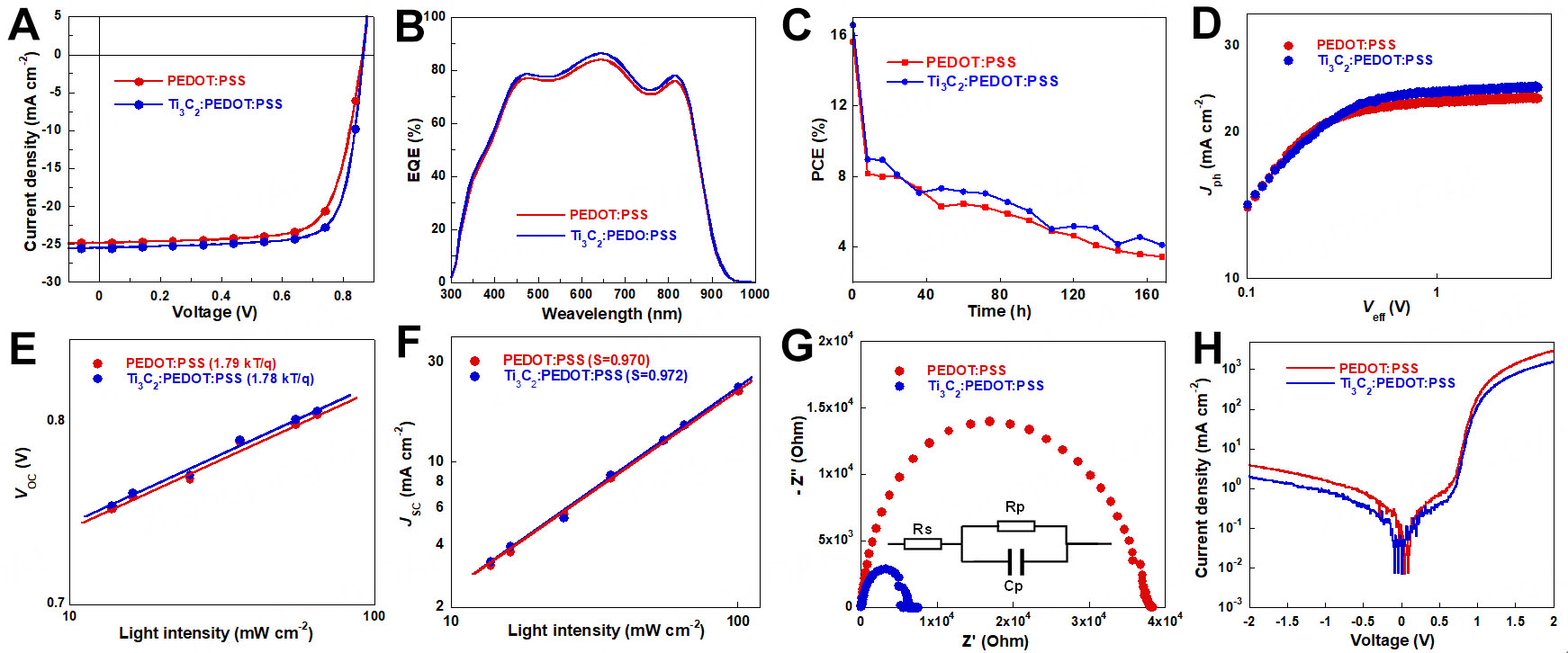
Figure 3. (A) J-V characteristic curve, (B) EQE spectrum, (C) thermal stability curve, (D) Jph-Veff curves, VOC (E) and JSC (F) versus Plight characteristics, (G) impedance plots, and (H) dark J-V curves for PTzBI-oF:PYF-T-o devices with (or without) Ti3C2 doping into PEDOT:PSS AIL. J-V: Current density-voltage; EQE: external quantum efficiency; Jph: photocurrent; Veff: effective applied voltage; VOC: open-circuit voltage; Plight: light intensity; PEDOT:PSS: poly(3,4-ethylenedioxythiophene):poly(styrenesulfonate).
Photovoltaic performance for PTzBI-oF:PYF-T-o (1:1.4) devices with (or without) Ti3C2 doping into PEDOT:PSS AIL
| AIL | VOC (V) | JSCa) (mA cm-2) | JSC, EQEb) (mA cm-2) | FF (%) | PCE avgc) (%) | PCE max (%) | RS (Ω) | Rp (Ω) |
| PEDOT:PSS | 0.86±0.01 | 24.86±0.38 | 24.39 | 72.41±0.69 | 15.35±0.26 | 15.61 | 10.46 | 4410.98 |
| Ti3C2:PEDOT:PSS | 0.86±0.01 | 25.48±0.49 | 25.02 | 76.23±0.82 | 16.51±0.32 | 16.83 | 10.27 | 8745.09 |
Doping physical mechanism in PEDOT:PSS for OPVs
The exciton dissociation and charge collection efficiency of the device were studied by plotting the relationship between photocurrent (Jph) and effective applied voltage (Veff) (Jph-Veff). The devices were characterized under different conditions, and the results are shown in Figure 3D. The dissociation efficiency of excitons can be characterized by normalized optical flux density (ηdiss = Jph/Jsat) when OPVs are in the short-circuit state. At low Veff (< 2V), the Jph of all OPVs reaches saturation[45,46]. Quantitative analysis of exciton dissociation efficiency revealed ηdiss values of 0.980 and 0.985 for OPVs utilizing pristine PEDOT:PSS and TiO2-doped PEDOT:PSS interlayers, respectively. The maximum exciton generation rate was calculated through the relationship Gmax = Jsat/(qL), where q is the elementary charge constant
To gain a deeper understanding of the reasons for the improved photovoltaic performance, carrier recombination dynamics in these devices can be explored by measuring the functional relationship between open-circuit voltage (VOC), JSC and light intensity (Plight). The relationship between the Plight and VOC can be expressed as: VOC ∝ nkT/[qln(Plight)], where k is the Boltzmann constant, T is the absolute temperature, and q is the fundamental charge[48]. By measuring the VOC of the device under different light intensities, the results shown in Figure 3E were obtained through linear fitting. Analysis of the slops revealed comparable values of n = 1.79 and n = 1.78 for PTzBI-oF:PYF-T-o photovoltaic devices fabricated with conventional PEDOT:PSS and Ti3C2-doped PEDOT:PSS interlayers, respectively, suggesting similar recombination characteristics in both device configurations. The light intensity dependence of JSC conforms to the power law relationship: JSC ∝ (Plight)S, where the S value is an exponential factor, and the closer the value is to 1, the charge recombination mechanism of the device tends to be bimolecular recombination mechanism[49]. By measuring the JSC of PTzBI-oF:PYF-T-o device under different light intensities, the results shown in Figure 3F were obtained through linear fitting. Analysis of the recombination parameter (S) revealed values of 0.970 and 0.972 for PTzBI-oF:PYF-T-o photovoltaic devices fabricated with pristine PEDOT:PSS and
In order to describe the effect of Ti3C2 dopant on the charge transport characteristics of the device, RS at the interface of the device was measured by impedance spectrum. The electrochemical impedance characteristics of PTzBI-oF:PYF-T-o photovoltaic devices fabricated with PEDOT:PSS and Ti3C2-doped PEDOT:PSS interlayers are presented in the Nyquist plots shown in Figure 3G. The experimental data were fitted using an equivalent circuit model to quantitatively determine the charge transport and recombination parameters in both device configurations. A smaller RS value indicates that Ti3C2:PEDOT:PSS has a smaller interface resistance than PEDOT:PSS, which means that the double-anode interface layer has fewer interface trap locations that can effectively reduce the trap-assisted recombination at the interface, resulting in a reduction of non-radiative energy loss[50,51]. The dark current behavior of PTzBI-oF:PYF-T-o photovoltaic devices, fabricated with conventional PEDOT:PSS and Ti3C2-incorporated PEDOT:PSS AIL, is presented in the dark J-V characteristics shown in Figure 3H. The leakage current density in PTzBI-oF:PYF-T-o device employing Ti3C2:PEDOT:PSS as AIL slightly decreased compared with that of PTzBI-oF:PYF-T-o device employing PEDOT:PSS as AIL, indicating that Ti3C2 dopant promoted the ohmic contact between the PEDOT:PSS and PTzBI-oF:PYF-T-o layer, and thus boosting the hole extraction of the device.
TPV and TPC were used to probe electron extraction and recombination dynamics [Figure 4A and B][52,53]. Fitting TPV signal by utilizing the formula y = Aexp(-x/τ), PTzBI-oF:PYF-T-o devices employing
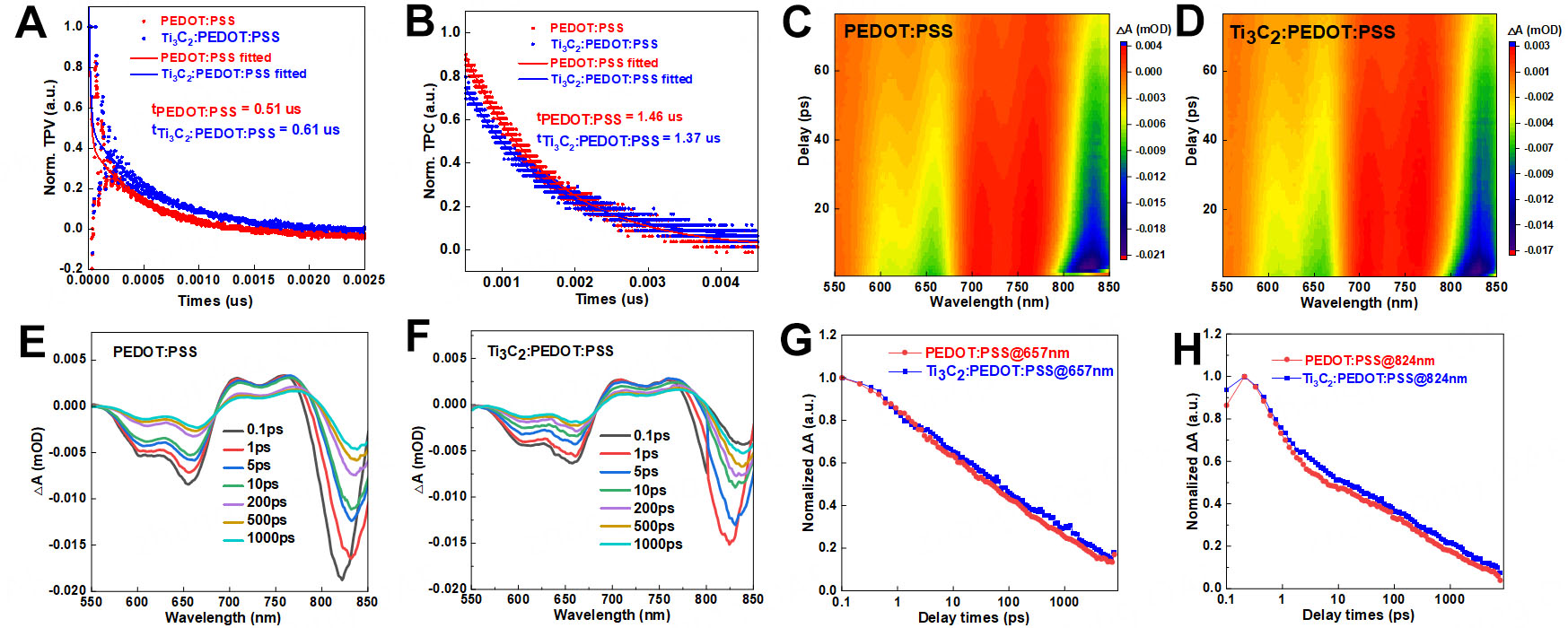
Figure 4. (A) TPV and (B) TPC for PTzBI-oF:PYF-T-o devices with and without Ti3C2 doping in the PEDOT:PSS interlayer; (C and D) Two-dimensional TA color plots, (E and F) TA spectra and (G and H) the trace kinetic of GSB signals of PEDOT:PSS/PTzBI-oF:PYF-T-o and Ti3C2:PEDOT:PSS/ PTzBI-oF:PYF-T-o bilayers. TPV: Transient photovoltage; TPC: transient photocurrent; PEDOT:PSS:
Mechanism analysis for increased mobility of Ti3C2 doping PEDOT:PSS interlayer
The surface morphology of PEDOT:PSS interlayer with (or without) Ti3C2 was measured by AFM. As shown in Figure 5A and B, the height image of PEDOT:PSS clearly shows many crystal particles clustered together and fine particles are distributed on the polymer chain as Ti3C2 doped into PEDOT:PSS. The PEDOT:PSS grains and the PEDOT enrichment domain increase significantly after Ti3C2 doping, which also contributes to the improvement of the conductivity after Ti3C2 doping. The roughness of PEDOT:PSS is 1.59 nm, which is reduced to 1.47 nm with Ti3C2 adulterating into PEDOT:PSS interlayer, mainly due to the enrichment PEDOT on PEDOT:PSS surface. The reduced surface roughness facilitates improved interfacial contact formation with the subsequent active layer while effectively preventing the diffusion of active layer materials into the PEDOT:PSS matrix. This optimized interface morphology contributes to the enhanced JSC and FF observed in the photovoltaic devices. As shown in Figure 5C and D, the phase image of PEDOT:PSS clearly shows PEDOT was slightly separated from PSS as Ti3C2 doped into PEDOT:PSS, which may be a key factor in the increased mobility[54]. The phase separation of PEDOT and PSS often results in changes in the surface composition of PEDOT:PSS films. Therefore, the degree of phase separation between PEDOT and PSS can be determined by the analysis of the surface composition of PEDOT:PSS films.
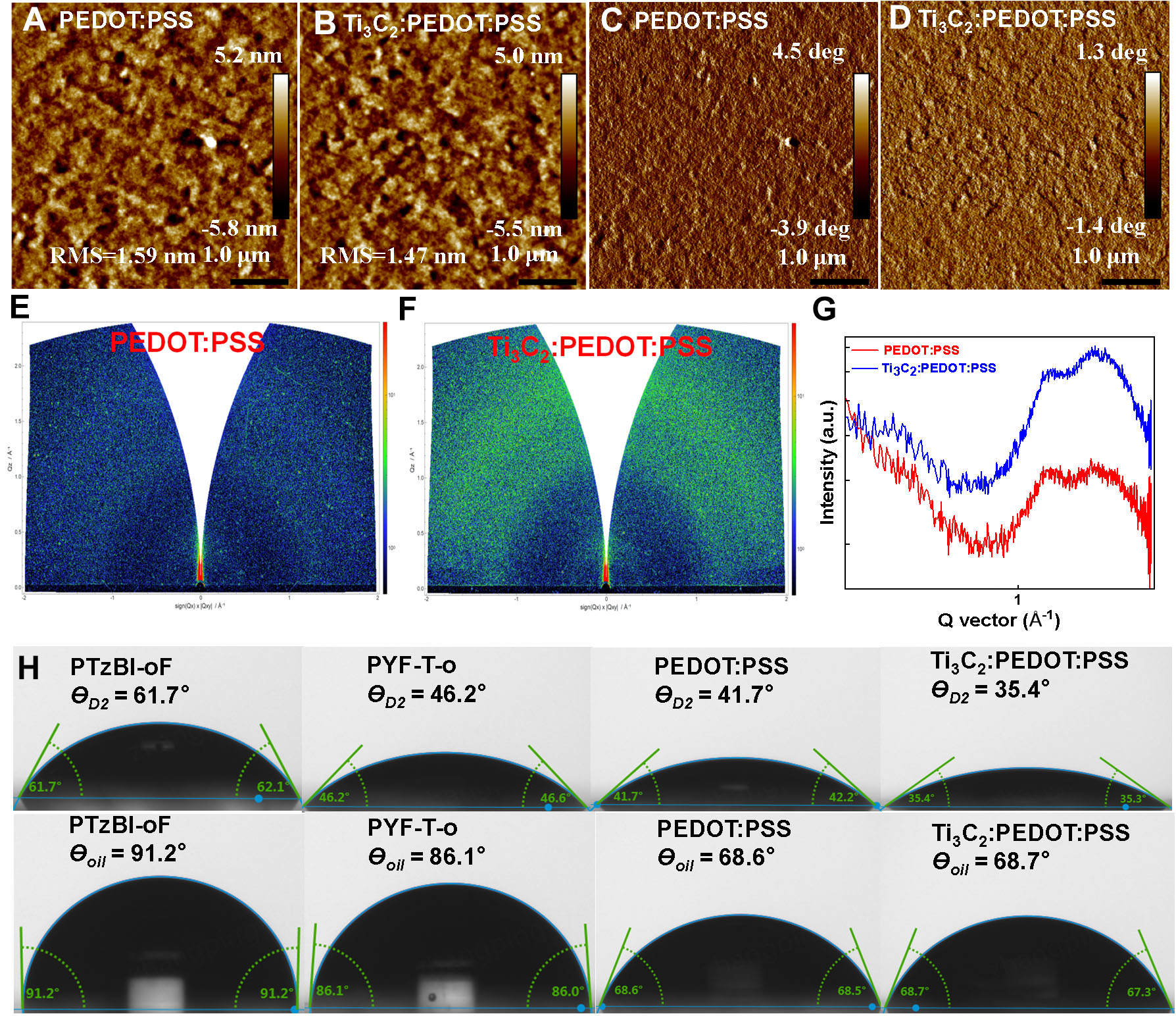
Figure 5. (A and B) AFM height images and (C and D) phase graphics of pristine PEDOT:PSS and Ti3C2-incorporated
The effect of Ti3C2 nanosheets on the crystalline packing of PEDOT:PSS was studied using GIWAXS,
Surface wettability characteristics of PTzBI-oF, PYF-T-o, PEDOT:PSS, and Ti3C2-doped PEDOT:PSS films were evaluated through CA measurements using both water and ethylene glycol as probe liquids [Figure 5H]. These measurements provide critical insights into the interfacial compatibility between the donor/acceptor materials (PTzBI-oF/PYF-T-o) and the respective AIL (PEDOT:PSS/Ti3C2:PEDOT:PSS)[55]. Surface energy (γ) calculations were performed based on the modified Young’s equation (1 + cosθ)γp1 =
Surface properties (contact angle, solubility parameter, surface energy, Flory-Huggins parameters) of PTzBI-oF, PYF-T-o, pristine PEDOT:PSS, and Ti3C2-incorporated PEDOT:PSS materials
| Film >a) | θwat (o) | θoil (o) | γdb) (mN m-1) | γpb) (mN m-1) | γ (mN m-1) | Solubility parameter δ (MPa1/2) | Flory-Huggins interaction parameter χ |
| PTzBI-oF | 61.9 | 91.2 | 24.63 | 0.03 | 24.66 | 18.21 | / |
| PYF-T-o | 46.4 | 86.1 | 26.12 | 0.29 | 26.41 | 18.85 | / |
| PEDOT:PSS | 42.0 | 68.6 | 38.59 | 1.14 | 39.73 | 23.12 | χ13 = 6.20, χ23 = 4.67 |
| Ti3C2:PEDOT:PSS | 35.4 | 68.0 | 41.84 | 0.68 | 42.52 | 23.92 | χ14 = 8.38, χ24 = 6.60 |
In order to provide further evidence of the surface composition changes of PEDOT:PSS, the S elements on the surface of PEDOT:PSS and Ti3C2:PEDOT:PSS films were analyzed by XPS. As shown in Figure 6A, there are two types of peaks in the S 2p signal. The sulfur atoms in PSS correspond to bands ranging from
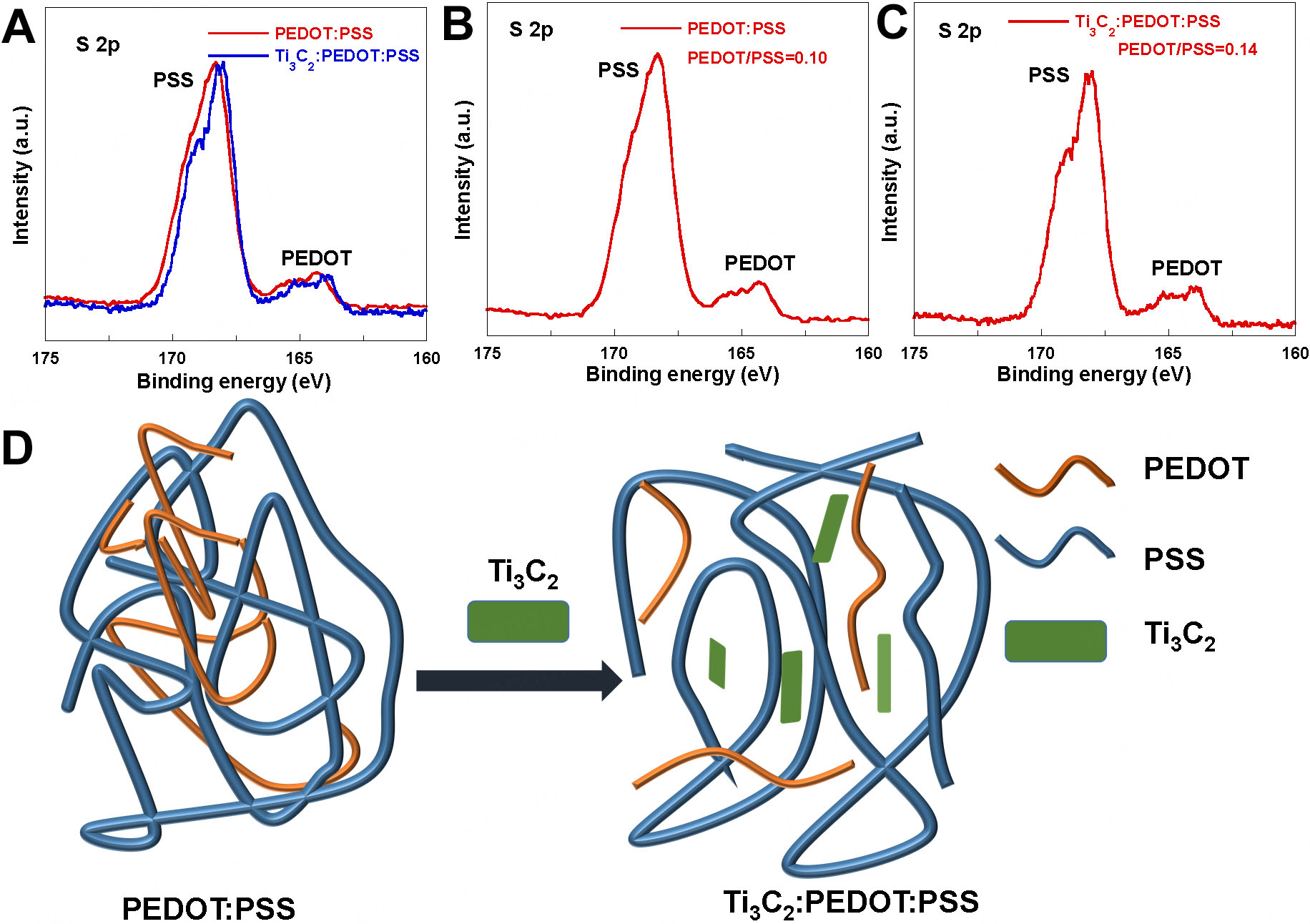
Figure 6. (A) XPS (S 2p) spectra for PEDOT:PSS and Ti3C2 :PEDOT:PSS films; (B) XPS
The peak area of PEDOT and PSS can be calculated by integration, and the relative components of PEDOT and PSS on the membrane surface can be represented by the ratio of PEDOT to PSS. The results showed that the PEDOT/PSS ratio of pure PEDOT:PSS films [Figure 6B] was 0.10. This is consistent with the common belief that the surface of PEDOT:PSS films contains more PSS. For Ti3C2:PEDOT:PSS films, the PEDOT/PSS ratio is estimated to be 0.14 [Figure 6C and Supplementary Table 7], which indicates that more conductive PEDOT components are enriched on the surface of the films after Ti3C2 doping into PEDOT:PSS. The increased conductivity of Ti3C2:PEDOT:PSS is well in accordance with the boosting trend of PEDOT/PSS ratio, which further confirms that the improved conductivity of Ti3C2:PEDOT:PSS is due to the redistribution of PEDOT and PSS chains. The chain rearrangement is mainly attributed to the fact that the Ti3C2 dopant is beneficial to the chain segment movement of PEDOT, which weakens the Coulomb force interaction between PEDOT and PSS.
Based on the above AFM, CA and XPS results, we propose the following mechanism: the size of PEDOT:PSS grains and PEDOT enrichment domains increase significantly after Ti3C2 doping. With the doping of Ti3C2, PEDOT changed from light bulb shape thin fiber to thick fiber, which represents the conformational change of PEDOT chain from spiral benzoyl structure with low electrical conductivity to linear quinone structure with strong electrical conductivity, and the nanophase separation of the film was enhanced [Figure 6D]. The grain size and crystallinity of PEDOT:PSS increase with the doping of Ti3C2, which is one of the main reasons for the high conductivity of Ti3C2:PEDOT:PSS.
The universal applicability of Ti3C2 doping strategy in PEDOT:PSS-based systems
To demonstrate the universal applicability of the Ti3C2 doping strategy in PEDOT:PSS-based systems, we fabricated OPV devices employing two distinct bulk heterojunction systems: D18:L8-BO and PM6:L8-BO, utilizing both pristine PEDOT:PSS and Ti3C2-doped PEDOT:PSS as AIL. Figure 7A-C displayed the molecular structures of D18, L8-BO and PM6, respectively. The J-V curves of D18:L8-BO and PM6:L8-BO devices with (or without) Ti3C2 in the PEDOT:PSS interlayer were measured under simulated AM 1.5G illumination [Figure 7D and E], with the homologous photovoltaic performance summarized in Supplementary Table 8. The incorporation of Ti3C2 into the PEDOT:PSS interlayer resulted in a significant enhancement of photovoltaic performance, with the D18:L8-BO-based device achieving a maximum PCE of 19.05%, a boosted JSC of 27.37 mA cm-2, and improved FF of 76.94%; the maximum PCE of the PM6:L8-BO device is increased to 17.33%, the JSC is increased from 26.71 mA cm-2 to 28.31 mA cm-2, and the FF is increased from 66.48% to 69.23%. The substantial enhancement in PCE observed in both D18:L8-BO and PM6:L8-BO-based OPVs conclusively demonstrates the universal applicability of the Ti3C2 doping strategy in PEDOT:PSS AIL. This innovative approach is anticipated to provide valuable guidance for the development of high-performance, universally applicable AIL in OPVs.
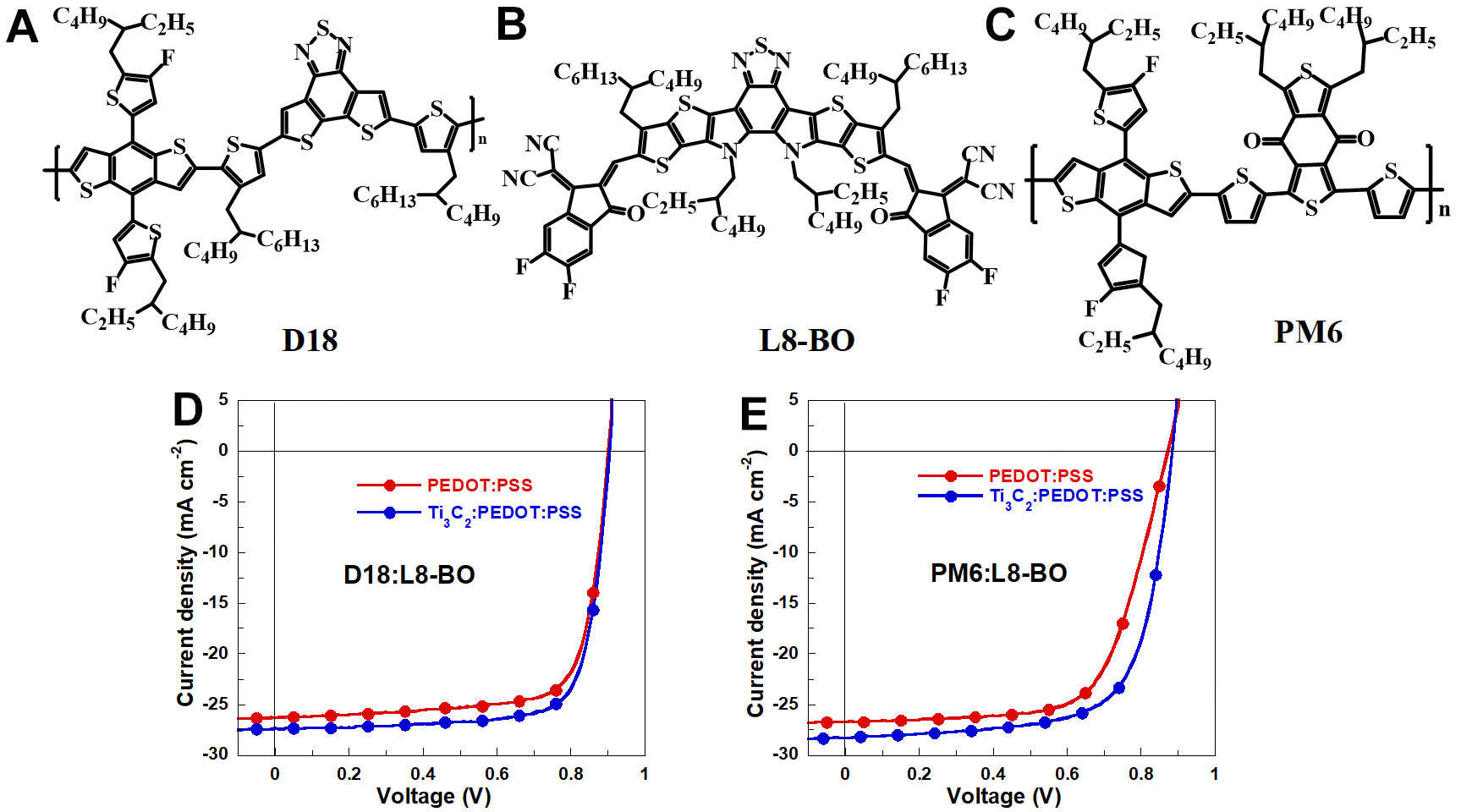
Figure 7. (A-C) Molecular structures of D18, L8-BO and PM6; J-V curves of (D) D18:L8-BO and (E) PM6:L8-BO devices with (or without) Ti3C2 in the PEDOT:PSS interlayer. PEDOT:PSS: Poly(3,4-ethylenedioxythiophene):poly(styrenesulfonate); J-V: current density-voltage.
CONCLUSIONS
In summary, we prepared few-layer Ti3C2 nanosheets by HCl/LiF etching and doped them into PEDOT:PSS to fabricate OPV devices. As 2% volume of Ti3C2 doping into PEDOT:PSS interlayer, the maximum PCE of PTzBI-oF:PYF-T-o, D18:L8-BO, and PM6:L8-BO devices boosted from 15.61%, 17.92%, and 15.49% to 16.83%, 19.05%, and 17.33%, respectively. UPS results showed that Ti3C2 dopants regulated the energy level of PEDOT:PSS, and XPS analysis showed that Ti3C2 dopants induced the configuration change of PEDOT chain from spiral benzoyl structure with low electrical conductivity to linear quinone structure with strong electrical conductivity, and the nanophase separation of the film was enhanced. In addition, the highly conductive Ti3C2 nanosheet plays a connecting role in the PEDOT crystal, constructing a new charge transport channel, and thus realizing the improvement of hole extraction efficiency of PEDOT:PSS interlayer. The application of Ti3C2 doping PEDOT:PSS strategy is expected to bring new opportunities for boosting the intrinsic conductivity of PEDOT:PSS interlayer, so as to facilitate the fast hole extraction from the active layer to the anode and improve the PCE and stability of OPVs. Our work is expected to provide a novel two-dimensional crystal doping concept for efficient and universal AIL design toward
DECLARATIONS
Author’ contribution
Methodology and reviewing the original draft: Liu, Y. L.
Methodology, visualization, and reviewing the original draft: Wang, G.
Review and editing: Wang, W.; Guo, J.; She, L.; Liu, Z.
Methodology, conceptualization, supervision, funding acquisition, writing, review, and editing: Li, Z.
Funding acquisition, review, and editing: Wang, X.
Review, visualization and editing: Zheng, X.
Availability of data and materials
The data supporting the findings of this study are available within this Article and its Supplementary Materials. Further data are available from the corresponding authors upon request.
AI and AI-assisted tools statement
Not applicable.
Financial support and sponsorship
This work was financially supported by the National Natural Science Foundation of China (NSFC, Nos. 62404094 and 12305352), the Natural Science Foundation of Hunan Province (2023JJ40532), the National Key Research and Development Project funding from the Ministry of Science and Technology of China (No. 2021YFE0191500), the Natural Science Foundation of Hunan Province (2023JJ50132), Shenzhen Science and Technology Innovation Committee (Grants Nos. JCYJ20220818100211025, and KCXST20221021111616039), the Fund of University of South China (Nos. 210XQD018, 220XQD016), and the Fund of Hengyang Science and Technology Bureau (No. 202121014588).
Conflict of interest
All authors declared that there are no conflicts of interest.
Ethical approval and consent to participate
Not applicable.
Consent for publication
Not applicable.
Copyright
© The Author(s) 2026.
Supplementary Materials
REFERENCES
1. Li, Y.; Qi, F.; Fan, B.; et al. Eliminating the burn-in loss of efficiency in organic solar cells by applying dimer acceptors as supramolecular stabilizers. Adv. Mater. 2024, 36, 2313393.
2. Cui, Y.; Chen, Z.; Zhu, P.; et al. Enhancing photostability and power conversion efficiency of organic solar cells by a “sunscreen” ternary strategy. Sci. China. Chem. 2023, 66, 1179-89.
3. Yang, S.; Chen, Z.; Zhu, J.; et al. Guest acceptors with lower electrostatic potential in ternary organic solar cells for minimizing voltage losses. Adv. Mater. 2024, 36, 2401789.
4. Zhang, C.; Zhong, X.; Sun, X.; et al. Designing a novel wide bandgap small molecule guest for enhanced stability and morphology mediation in ternary organic solar cells with over 19.3% efficiency. Adv. Sci. 2024, 11, 2401313.
5. Guo, C.; Sun, Y.; Wang, L.; et al. Light-induced quinone conformation of polymer donors toward 19.9% efficiency organic solar cells. Energy. Environ. Sci. 2024, 17, 2492-9.
6. Fu, J.; Yang, Q.; Huang, P.; et al. Rational molecular and device design enables organic solar cells approaching 20% efficiency. Nat. Commun. 2024, 15, 1830.
7. Xu, R.; Jiang, Y.; Liu, F.; et al. High open-circuit voltage organic solar cells with 19.2% efficiency enabled by synergistic side-chain engineering. Adv. Mater. 2024, 36, 2312101.
8. Zhang, G.; Chen, Q.; Zhang, Z.; et al. Co-La-based hole-transporting layers for binary organic solar cells with 18.82% efficiency. Angew. Chem. Int. Ed. 2023, 62, e202216304.
9. Liu, Y.; Zhang, S.; Li, Y.; et al. Solution-processed molybdenum oxide hole transport layer stabilizes organic solar cells. Chin. J. Polym. Sci. 2023, 41, 202-11.
10. Han, N.; Lee, M.; Moon, Y.; Yang, D.; Kim, D. Oxidized carbon materials as hole transport layers for high-performance organic photovoltaics. Solar. RRL. 2023, 7, 2200908.
11. Yi, X.; Liu, H.; Li, Y.; et al. Solution-processed and thickness-insensitive hole transport layer for high efficiency organic solar cells. J. Mater. Chem. C. 2022, 10, 17521-9.
12. Feaugas, F.; Nicolini, T.; Roche, G. H.; Hirsch, L.; Dautel, O. J.; Wantz, G. Homojunction doping for efficient hole extraction in polymer solar cells. Solar. RRL. 2023, 7, 2200815.
13. Le, Q. V.; Nguyen, T. P.; Kim, S. Y. UV/ozone-treated WS2 hole-extraction layer in organic photovoltaic cells. Phys. Status. Solidi. RRL. 2014, 8, 390-4.
14. Yao, J.; Ding, S.; Zhang, R.; et al. Fluorinated perylene-diimides: cathode interlayers facilitating carrier collection for high-performance organic solar cells. Adv. Mater. 2022, 34, 2203690.
15. Liu, L.; Chen, S.; Qu, Y.; et al. Nanographene-osmapentalyne complexes as a cathode interlayer in organic solar cells enhance efficiency over 18%. Adv. Mater. 2021, 33, 2101279.
16. Xiong, X.; Xue, X.; Zhang, M.; et al. Melamine-doped cathode interlayer enables high-efficiency organic solar cells. ACS. Energy. Lett. 2021, 6, 3582-9.
17. Li, J.; Qin, J.; Liu, X.; et al. Enhanced organic photovoltaic performance through promoting crystallinity of photoactive layer and conductivity of hole-transporting layer by V2O5 doped PEDOT:PSS hole-transporting layers. Solar. Energy. 2020, 211, 1102-9.
18. Wang, Y.; Zhu, C.; Pfattner, R.; et al. A highly stretchable, transparent, and conductive polymer. Sci. Adv. 2017, 3, e1602076.
19. Kim J, Biswas S, Kim H. Evaluation of the impact of trivalent metal doping on the performance of titanium dioxide as an electron transport layer of Inverted-Structured organic solar cells. Appl. Surface. Sci. 2023, 613, 156052.
20. Chen, Z.; Huang, Y.; Gao, J.; et al. Synchronous doping effects of cathode interlayers on efficient organic solar cells. ACS. Energy. Lett. 2022, 7, 4052-60.
21. Liang, Q.; Han, J.; Song, C.; et al. Reducing the confinement of PBDB-T to ITIC to improve the crystallinity of PBDB-T/ITIC blends. J. Mater. Chem. A. 2018, 6, 15610-20.
22. Kang, Q.; Liao, Q.; Yang, C.; Yang, Y.; Xu, B.; Hou, J. A new PEDOT derivative for efficient organic solar cell with a fill factor of 0.80. Adv. Energy. Mater. 2022, 12, 2103892.
23. Randell, N. M.; Miclette, L. R.; Tintori, F.; Chernikov, R.; Welch, G. C.; Trudel, S. Photodeposited polyamorphous CuOx hole-transport layers in organic photovoltaics. ACS. Appl. Energy. Mater. 2021, 4, 12900-8.
24. Kim, T. G.; Ha, S. R.; Choi, H.; et al. Polymerizable supramolecular approach to highly conductive PEDOT:PSS patterns. ACS. Appl. Mater. Interfaces. 2017, 9, 19231-7.
25. Zhao, B.; Huang, X.; Chung, S.; et al. Hole-selective-molecule doping improves the layer thickness tolerance of PEDOT:PSS for efficient organic solar cells. eScience 2025, 5, 100305.
26. Rafique, S.; Roslan, N. A.; Abdullah, S. M.; et al. UV-ozone treated graphene oxide/ PEDOT:PSS bilayer as a novel hole transport layer in highly efficient and stable organic solar cells. Org. Electron. 2019, 66, 32-42.
27. Moujoud, A.; Oh, S. H.; Shin, H. S.; Kim, H. J. On the mechanism of conductivity enhancement and work function control in PEDOT:PSS film through UV-light treatment. Phys. Status. Solidi. (a). 2010, 207, 1704-7.
28. Huang, J.; Miller, P.; de, M. J.; de, M. A.; Bradley, D. Influence of thermal treatment on the conductivity and morphology of PEDOT/PSS films. Synth. Met. 2003, 139, 569-72.
29. Li, Q.; Sun, Y.; Yang, C.; et al. Optimizing the component ratio of PEDOT:PSS by water rinse for high efficiency organic solar cells over 16.7%. Sci. Bull. 2020, 65, 747-52.
30. Wei, Q.; Mukaida, M.; Naitoh, Y.; Ishida, T. Morphological change and mobility enhancement in PEDOT:PSS by adding co-solvents. Adv. Mater. 2013, 25, 2831-6.
31. Cameron, J.; Skabara, P. J. The damaging effects of the acidity in PEDOT:PSS on semiconductor device performance and solutions based on non-acidic alternatives. Mater. Horiz. 2020, 7, 1759-72.
32. Adedeji, M. A.; Hamed, M. S.; Mola, G. T. Light trapping using copper decorated nano-composite in the hole transport layer of organic solar cell. Solar. Energy. 2020, 203, 83-90.
33. Lee, E. J.; Choi, M. H.; Han, Y. W.; Moon, D. K. Effect on electrode work function by changing molecular geometry of conjugated polymer electrolytes and application for hole-transporting layer of organic optoelectronic devices. ACS. Appl. Mater. Interfaces. 2017, 9, 44060-9.
34. Liu, Y. L.; Zhang, C.; Guo, L.; et al. Synergistically adsorbing and reducing Uranium from water by a novel nano zero-valent copper/MXene 0D/2D nanocomposite. Water. Res. 2023, 245, 120666.
35. Guo, L.; Liu, Y. L.; Zeng, Q.; et al. A self-driven solar coupling system with TiO2@MXene cathode for effectively eliminating uranium and organics from complex wastewater accompanying with electricity generation. J. Hazard. Mater. 2024, 465, 133415.
36. Bai, H.; Ma, R.; Su, W.; et al. Green-solvent processed blade-coating organic solar cells with an efficiency approaching 19% enabled by alkyl-tailored acceptors. Nano-Micro. Lett. 2023, 15, 241.
37. Li, T.; Wu, Q.; Yao, Z. F.; et al. Trialkylsilyl-thiophene-conjugated acceptor for efficient organic solar cells compatible with spin-coating and blade-coating technologies. Sci. China. Chem. 2024, 67, 4184-93.
38. Gao, J.; Bai, H.; Li, P.; et al. Halogenated dibenzo[f,h]quinoxaline units constructed 2D-conjugated guest acceptors for 19% efficiency organic solar cells. Adv. Sci. 2024, 11, 2403334.
39. Su, W.; Zhou, X.; Yao, Z. F.; et al. Halogenation strategy of thiophene derived solvent additives enables optimized morphology for organic solar cells with 19.17% efficiency. Adv. Funct. Mater. 2024, 34, 2313744.
40. Lei, Y.; Shang, T.; Qiu, Y.; et al. Self-doped alcohol-soluble small molecules as cathode interface layers for organic solar cells. Prog. Org. Coat. 2025, 200, 109060.
41. Wan, J.; Wen, R.; Xia, Y.; et al. All annealing-free solution-processed highly flexible organic solar cells. J. Mater. Chem. A. 2021, 9, 5425-33.
42. Luo, D.; Jiang, Z.; Tan, W. L.; et al. Non-fused ring acceptors achieving over 15.6% efficiency organic solar cell by long exciton diffusion length of alloy-like phase and vertical phase separation induced by hole transport layer. Adv. Energy. Mater. 2023, 13, 2203402.
43. Pei, S.; Xiong, X.; Zhong, W.; et al. Highly efficient organic solar cells enabled by the incorporation of a sulfonated graphene doped PEDOT:PSS interlayer. ACS. Appl. Mater. Interfaces. 2022, 14, 34814-21.
44. Meng, H.; Liao, C.; Deng, M.; Xu, X.; Yu, L.; Peng, Q. 18.77 % efficiency organic solar cells promoted by aqueous solution processed cobalt(II) acetate hole transporting layer. Angew. Chem. Int. Ed. 2021, 60, 22554-61.
45. Zhan, L.; Li, S.; Xia, X.; et al. Layer-by-layer processed ternary organic photovoltaics with efficiency over 18. Adv. Mater. 2021, 33, 2007231.
46. Liu, Z.; Ma, X.; Xu, W.; et al. 15.28% efficiency of conventional layer-by-layer all-polymer solar cells superior to bulk heterojunction or inverted cells. Chem. Eng. J. 2022, 450, 138146.
47. Li, Z.; Zhong, W.; Ying, L.; et al. Morphology optimization via molecular weight tuning of donor polymer enables all-polymer solar cells with simultaneously improved performance and stability. Nano. Energy. 2019, 64, 103931.
48. Gasparini, N.; Salvador, M.; Fladischer, S.; et al. An alternative strategy to adjust the recombination mechanism of organic photovoltaics by implementing ternary compounds. Adv. Energy. Mater. 2015, 5, 1501527.
49. Kyaw, A. K.; Wang, D. H.; Wynands, D.; et al. Improved light harvesting and improved efficiency by insertion of an optical spacer (ZnO) in solution-processed small-molecule solar cells. Nano. Lett. 2013, 13, 3796-801.
50. Huang, Q.; Jing, J.; Zhang, K.; et al. Simultaneous improvement of efficiency and stability of inverted organic solar cell via composite hole transport layer. J. Mater. Chem. A. 2022, 10, 23973-81.
51. Kim, M. S.; Jang, W.; Nguyen, T.; Wang, D. H. Morphology inversion of a non-fullerene acceptor via adhesion controlled decal-coating for efficient conversion and detection in organic electronics. Adv. Funct. Mater. 2021, 31, 2103705.
52. Hamilton, R.; Shuttle, C. G.; O’Regan, B.; Hammant, T. C.; Nelson, J.; Durrant, J. R. Recombination in annealed and nonannealed polythiophene/fullerene solar cells: transient photovoltage studies versus numerical modeling. J. Phys. Chem. Lett. 2010, 1, 1432-6.
53. Wood, S.; Blakesley, J. C.; Castro, F. A. Assessing the validity of transient photovoltage measurements and analysis for organic solar cells. Phys. Rev. Applied. 2018, 10, 024038.
54. Deng, B.; Lian, H.; Xue, B.; et al. Niobium-carbide MXene modified hybrid hole transport layer enabling high-performance organic solar cells over 19. Small 2023, 19, 2207505.
55. Wang, G.; Zhang, M.; Li, Z.; Wang, X.; Kang, X.; Ying, L. Efficient and stable organic solar cells enabled by incorporation of titanium dioxide doped PEDOT:PSS as hole transport layer. Progress. in. Organic. Coatings. 2023, 183, 107819.
56. Shen, H.; Hu, T.; Huang, H.; Wu, D.; Xia, J. Promoting the photovoltaic performance and stability of organic solar cells by imidazole-doped PEDOT:PSS. J. Mater. Sci:. Mater. Electron. 2022, 33, 12083-92.
57. Ding, X.; Ding, Y. F.; Huang, C.; et al. Non-covalent interaction enhancement on active/interfacial layers via two-dimensional vermiculite doping for efficient organic solar cells. Small 2024, 20, 2311715.
58. Ye, L.; Collins, B. A.; Jiao, X.; Zhao, J.; Yan, H.; Ade, H. Miscibility-function relations in organic solar cells: significance of optimal miscibility in relation to percolation. Adv. Energy. Mater. 2018, 8, 1703058.
59. Pang, S.; Zhang, R.; Duan, C.; et al. Alkyl chain length effects of polymer donors on the morphology and device performance of polymer solar cells with different acceptors. Adv. Energy. Mater. 2019, 9, 1901740.
60. Modarresi, M.; Franco-Gonzalez, J. F.; Zozoulenko, I. Morphology and ion diffusion in PEDOT:Tos. A coarse grained molecular dynamics simulation. Phys. Chem. Chem. Phys. 2018, 20, 17188-98.
Cite This Article
 Open Access
How to Cite
Download Citation
Export Citation File:
Type of Import
Tips on Downloading Citation
Citation Manager File Format
Type of Import
Direct Import: When the Direct Import option is selected (the default state), a dialogue box will give you the option to Save or Open the downloaded citation data. Choosing Open will either launch your citation manager or give you a choice of applications with which to use the metadata. The Save option saves the file locally for later use.
Indirect Import: When the Indirect Import option is selected, the metadata is displayed and may be copied and pasted as needed.
About This Article
Copyright

Data & Comments
Data
0











Comments
Comments must be written in English. Spam, offensive content, impersonation, and private information will not be permitted. If any comment is reported and identified as inappropriate content by OAE staff, the comment will be removed without notice. If you have any queries or need any help, please contact us at [email protected].