
Figure8
From: A method for quantifying the upfront carbon footprint of urban densification in Texas through 2050
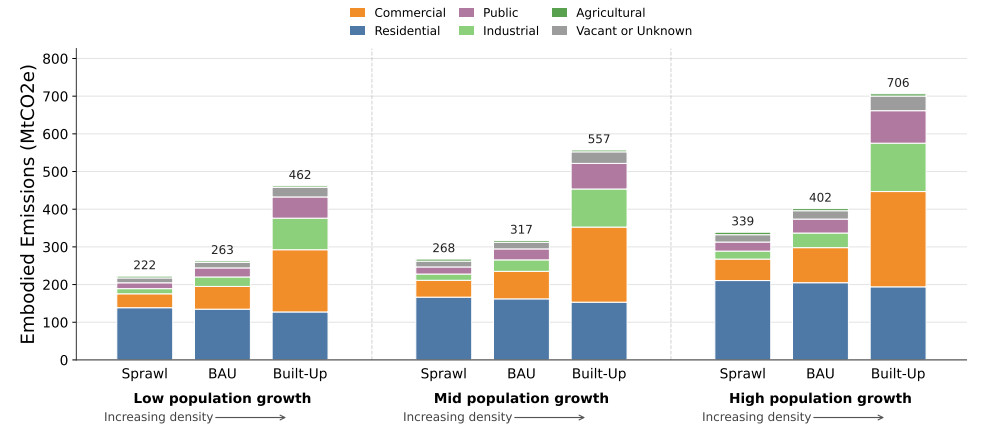
Figure 8. Total cumulative embodied emissions of projected Texas building stock through 2050. Although residential FAC decreases with increasing density, residential embodied emissions remain relatively similar across scenarios because denser residential development shifts more floor area into taller, multi-family buildings with higher embodied emissions intensities. In Built-Up scenarios, commercial, industrial, and public buildings account for a larger share of total embodied emissions, consistent with literature suggesting that higher-density urban environments can be associated with greater non-residential activity and consumption-related demand. Values are rounded; see Supplementary Table 9 for full precision.