
fig3
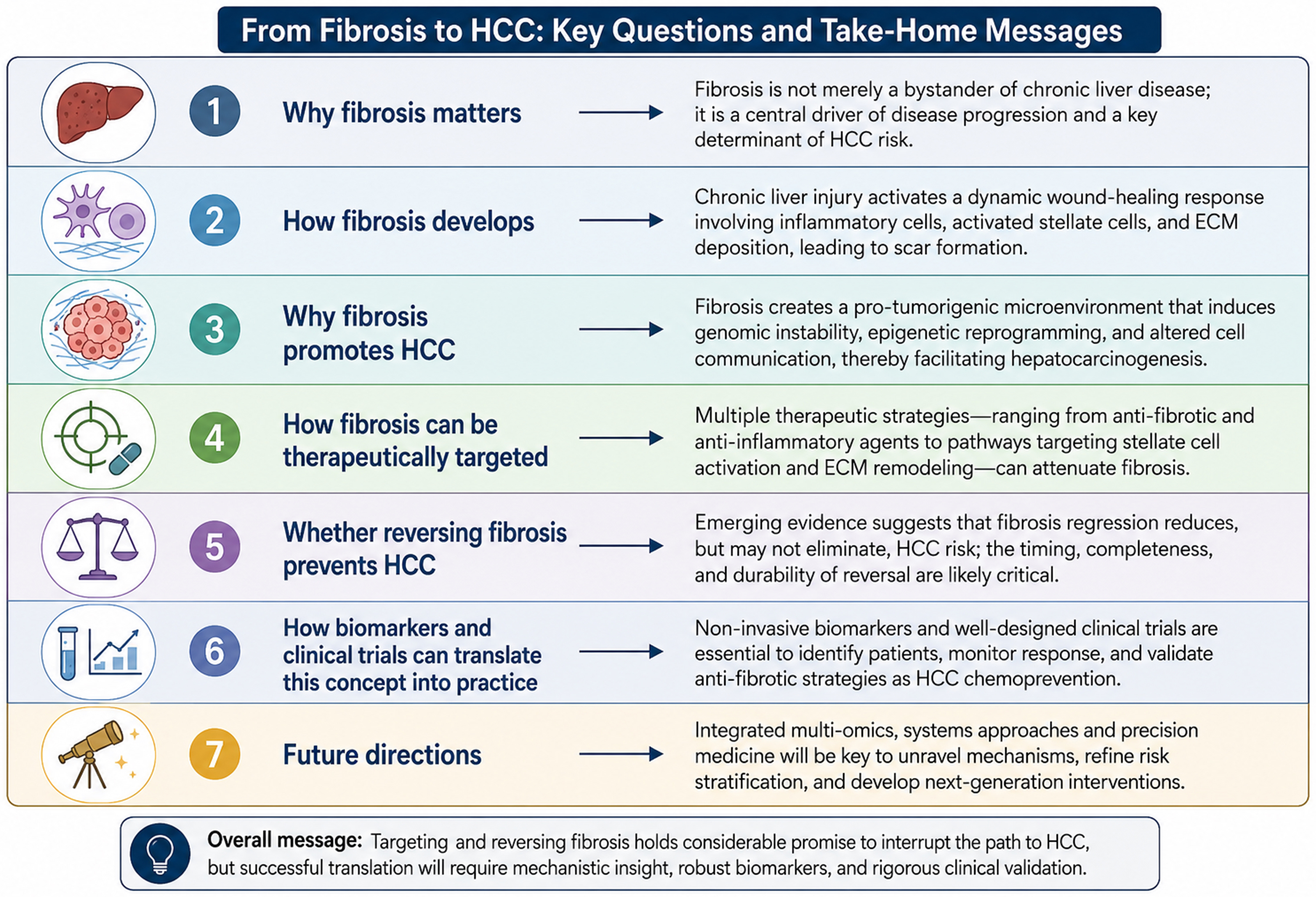
Figure 3. From fibrosis to HCC: key questions and take-home messages. Summary of the central concepts addressed in this review regarding fibrosis-driven hepatocarcinogenesis in MASLD and especially MASH. Fibrosis is not only a marker of chronic liver injury but also a major determinant of disease progression and HCC risk. Chronic hepatic injury activates wound-healing responses involving inflammatory cells, hepatic stellate cell activation, myofibroblast accumulation, and ECM deposition. The resulting fibrotic microenvironment promotes hepatocarcinogenesis through altered tissue architecture, genomic instability, epigenetic reprogramming, immune dysregulation, and disrupted intercellular communication. Therapeutic targeting of fibrosis may be achieved through antifibrotic, anti-inflammatory, metabolic, and stellate-cell-directed approaches. Although fibrosis regression is expected to reduce HCC risk, residual risk may persist depending on the timing, completeness, and durability of fibrosis reversal. Reliable non-invasive biomarkers, molecular risk signatures, and rigorously designed clinical trials are therefore essential to monitor therapeutic response, refine patient selection, and validate antifibrotic strategies as approaches to HCC chemoprevention. Integrated multi-omics, systems biology, and precision-medicine approaches will be critical for developing next-generation interventions. The figure was conceptually designed by the authors and visually developed with assistance from ChatGPT (OpenAI). ECM: Extracellular matrix; HCC: hepatocellular carcinoma; MASLD: metabolic dysfunction-associated steatotic liver disease; MASH: metabolic dysfunction-associated steatohepatitis.