

fig1
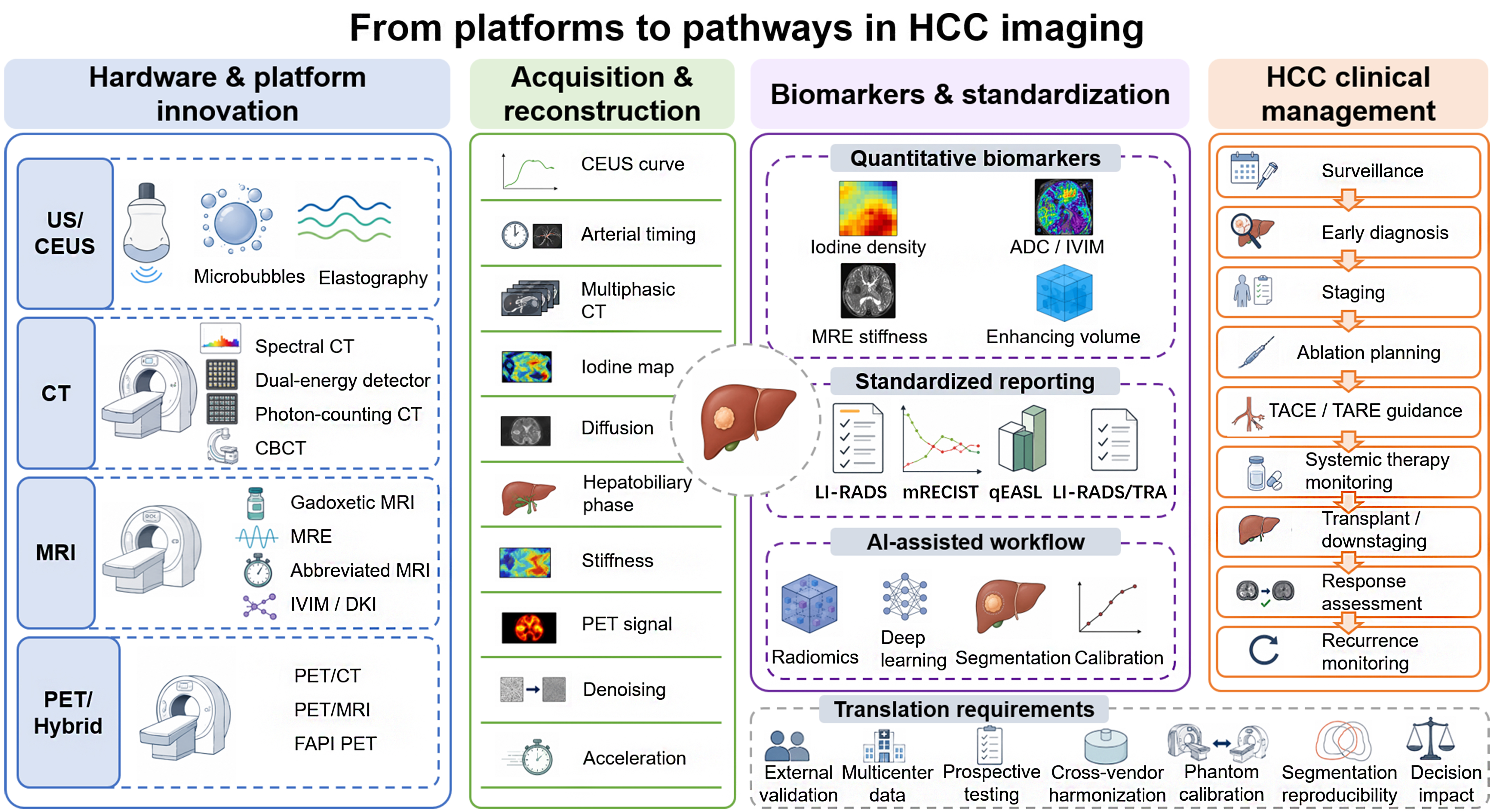
Figure 1. Conceptual pipeline for HCC imaging translation. Platform innovation at the hardware level enables acquisition and reconstruction strategies that determine whether vascular, cellular, and microenvironmental signals can be converted into quantitative biomarkers, standardized reporting, and clinically actionable decisions across surveillance, diagnosis, treatment guidance, response assessment, and recurrence monitoring. HCC: Hepatocellular carcinoma; US: ultrasound; CEUS: contrast-enhanced ultrasound; CT: computed tomography; MRI: magnetic resonance imaging; MRE: magnetic resonance elastography; IVIM: intravoxel incoherent motion; DKI: diffusion kurtosis imaging; CBCT: cone-beam computed tomography; PET: positron emission tomography; PET/CT: positron emission tomography/computed tomography; PET/MRI: positron emission tomography/magnetic resonance imaging; FAPI: fibroblast activation protein inhibitor; ADC: apparent diffusion coefficient; LI-RADS: Liver Imaging Reporting and Data System; mRECIST: modified Response Evaluation Criteria in Solid Tumors; qEASL: quantitative European Association for the Study of the Liver; TACE: transarterial chemoembolization; TARE: transarterial radioembolization; TRA: treatment response algorithm; AI: artificial intelligence.