

fig1
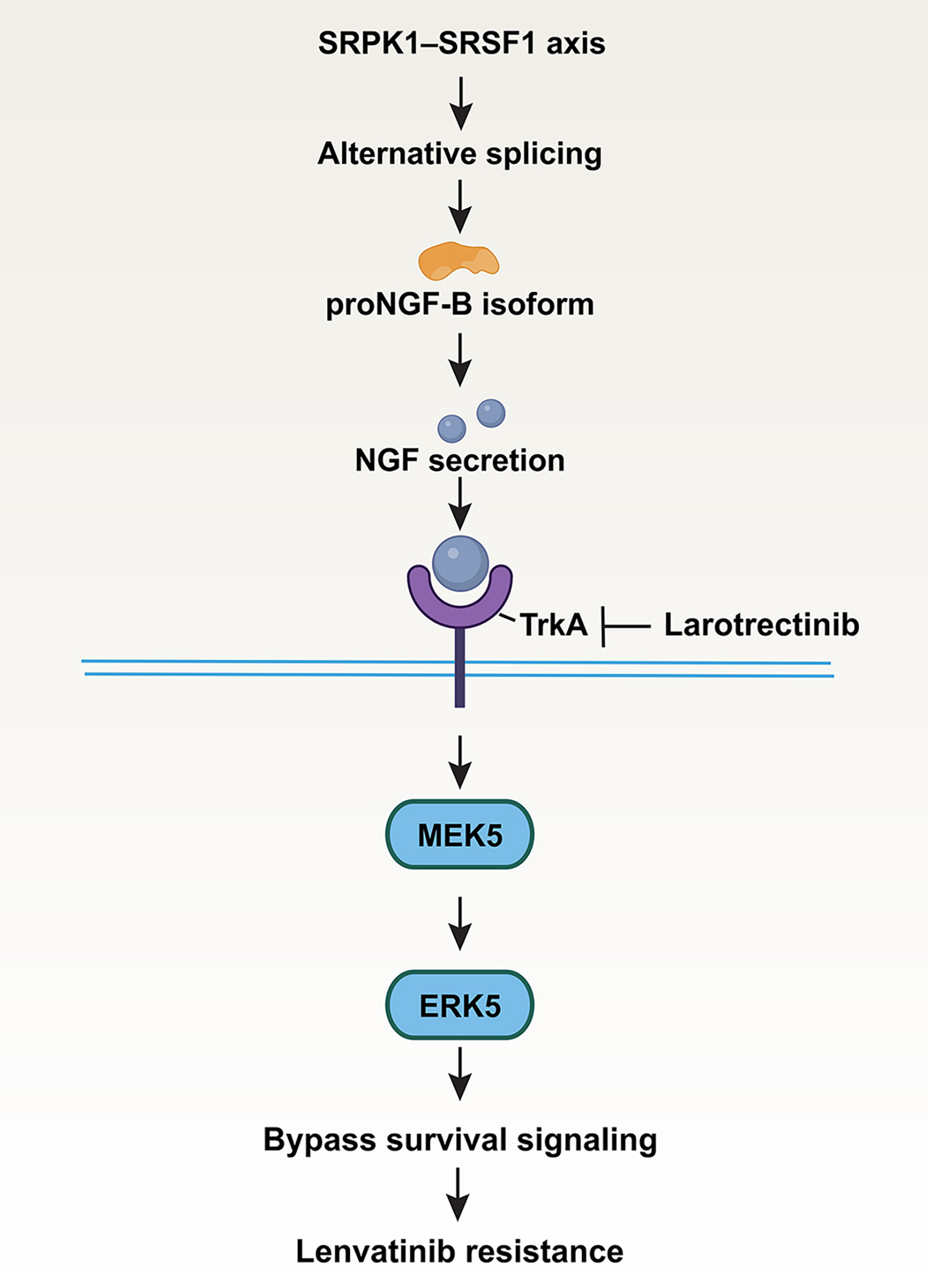
Figure 1. Schematic model of the NGF-driven adaptive signaling pathway underlying lenvatinib resistance in hepatocellular carcinoma. Chronic lenvatinib exposure activates the SRPK1-SRSF1 axis, promoting alternative splicing of NGF pre-mRNA toward the proNGF-B isoform, which exhibits enhanced translational efficiency and leads to increased NGF secretion. Secreted NGF activates TrkA on hepatocellular carcinoma cells, resulting in preferential engagement of the MEK5-ERK5 pathway. This signaling rewiring establishes a bypass survival program that enables tumor cells to evade continued lenvatinib treatment and develop acquired resistance. Pharmacologic inhibition of TrkA with larotrectinib interrupts this adaptive pathway and restores drug sensitivity. The figure was created using Adobe Illustrator. NGF: Nerve growth factor; SRPK1: serine/arginine-rich protein-specific kinase 1; SRSF1: serine/arginine-rich splicing factor 1; TrkA: tropomyosin receptor kinase A; MEK5: mitogen-activated protein kinase kinase 5; ERK5: extracellular signal-regulated kinase 5.