fig1
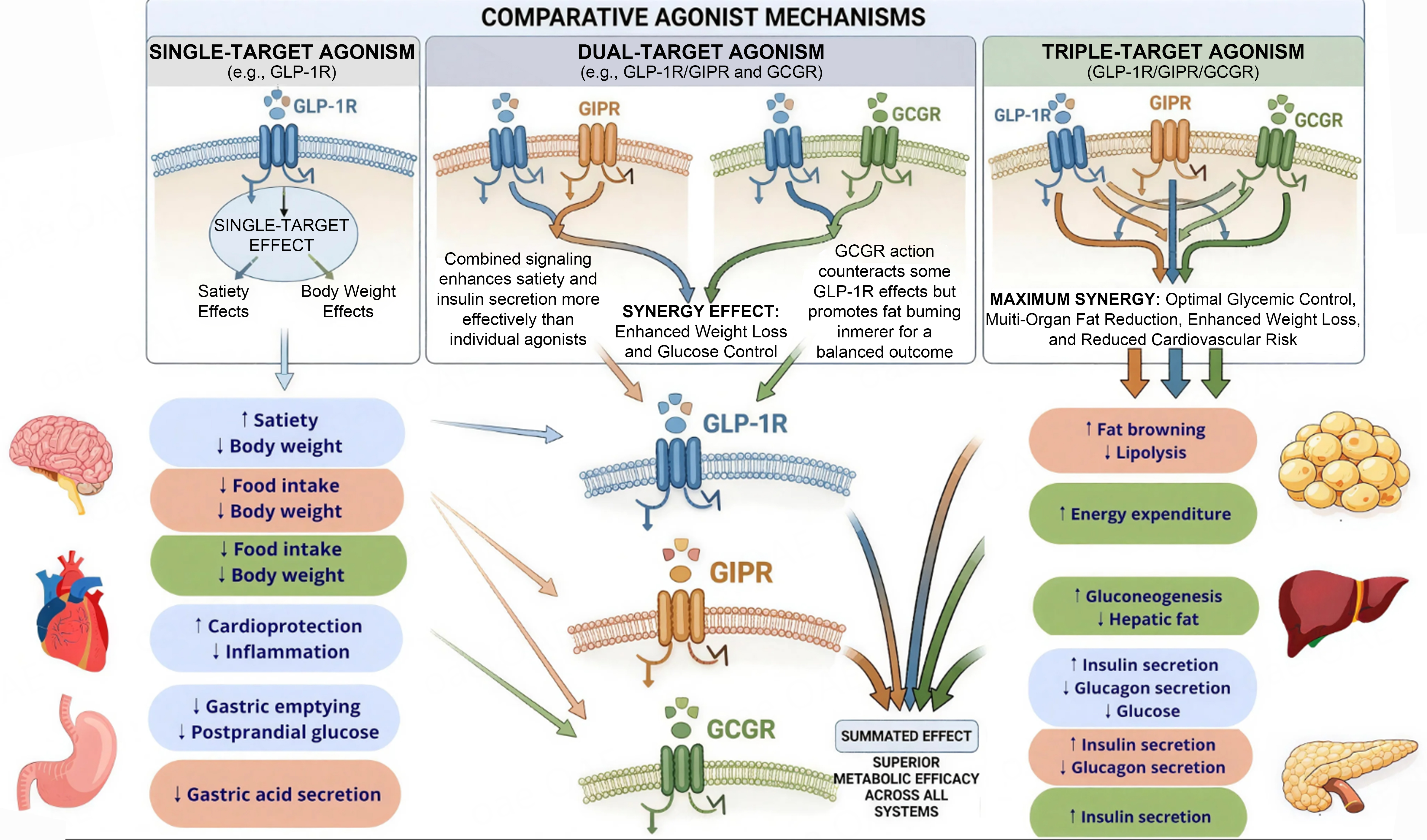
Figure 1. Mechanisms of action of GLP-1, GIP and GCG receptors in human target organs. This image was created by us with Canva. Figure illustrates the mechanisms of action of three incretin and metabolic hormone receptor systems - GLP-1R, GIPR, and GCGR - across key target organs involved in metabolic regulation. GLP-1R activation, depicted in blue, exerts a broad spectrum of effects spanning multiple organ systems. In the central nervous system, GLP-1R signaling within hypothalamic circuits increases satiety and reduces food intake, ultimately promoting body weight reduction. At the gastric level, it slows gastric emptying and reduces both postprandial glucose excursions and gastric acid secretion. In the cardiovascular system, GLP-1R engagement exerts cardioprotective effects and attenuates systemic inflammation. At the pancreas, it potentiates glucose-stimulated insulin secretion while suppressing glucagon release, thereby lowering circulating glucose concentrations. GIPR activation, shown in orange, primarily targets adipose tissue and the pancreas. In adipose tissue, GIPR signaling promotes fat browning, modulates lipolysis, and increases energy expenditure, thereby enhancing the metabolic flexibility of adipose depots and reducing ectopic lipid accumulation. At the pancreatic level, GIPR provides an additive insulinotropic stimulus complementing GLP-1R-mediated effects. GCGR activation, represented in green, is unique in that glucagon receptors are robustly expressed on hepatocytes, enabling direct liver-directed metabolic effects - a mechanistic feature absent from both GLP-1R and GIPR signaling. Hepatic GCGR activation stimulates gluconeogenesis while simultaneously reducing hepatic fat content through inhibition of de novo lipogenesis and promotion of mitochondrial fatty acid oxidation. Additionally, GCGR engagement at the pancreas further supports insulin secretion through paracrine signaling; at brain level, increases satiety and reduces food intake. Taken together, the figure highlights a key mechanistic principle underlying the therapeutic rationale for multi-agonist strategies: while GLP-1R monotherapy achieves meaningful metabolic and hepatic benefits exclusively through indirect, systemic pathways, the addition of GIPR and - most importantly - GCGR co-agonism introduces complementary and increasingly direct hepatic mechanisms, providing the pharmacological basis for the superior efficacy observed with dual and triple agonists in MASLD/MASH. GCG: Glucagon; GCGR: glucagon receptor; GIP: glucose-dependent insulinotropic polypeptide; GIPR: glucose-dependent insulinotropic polypeptide receptor; GLP-1: glucagon-like peptide-1; GLP-1R: glucagon-like peptide-1 receptor; MASLD: metabolic dysfunction-associated steatotic liver disease; MASH: metabolic dysfunction-associated steatohepatitis.