
fig2
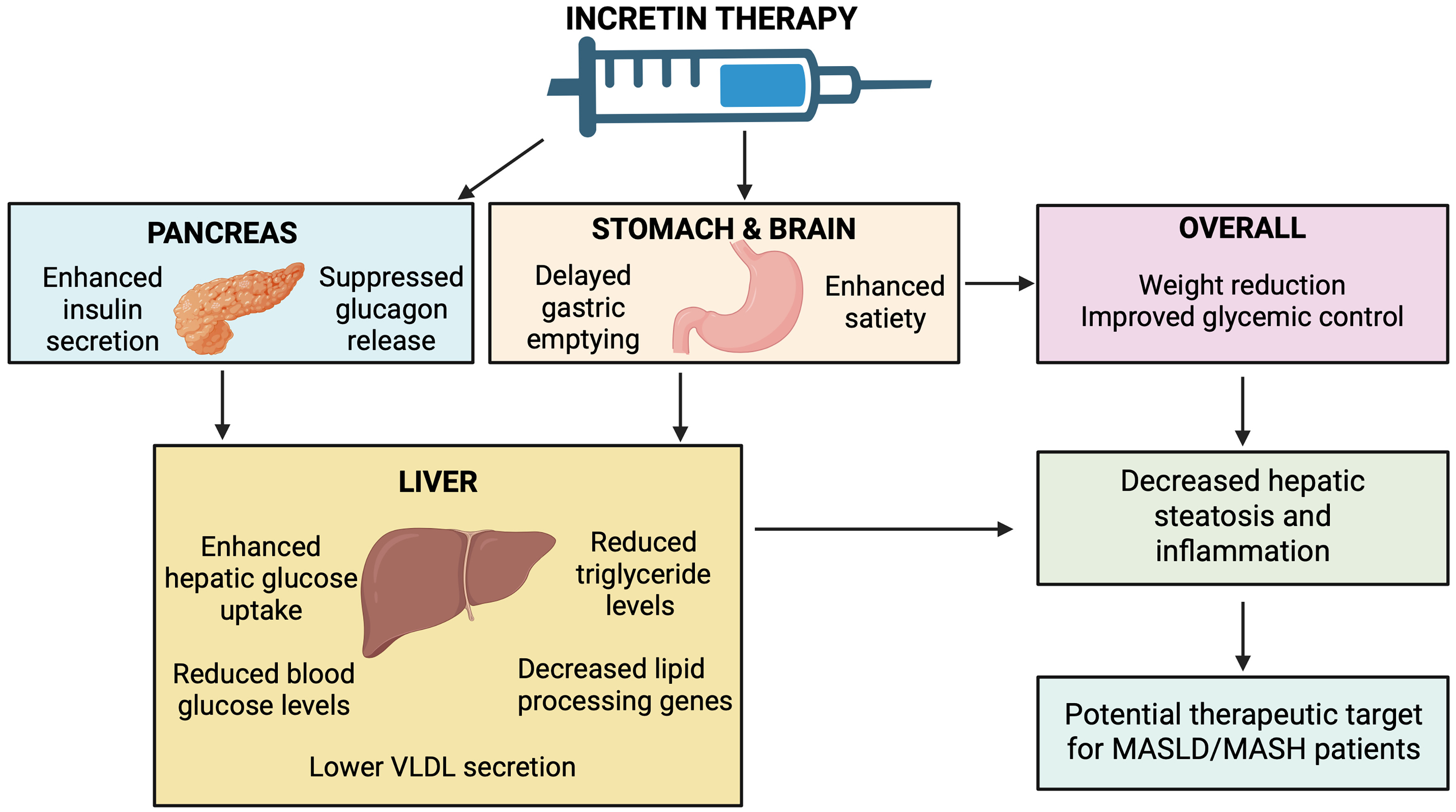
Figure 2. Metabolic and hepatic effects of incretin-based therapy. In the pancreas, incretin therapy enhances insulin secretion and suppresses glucagon release. In the stomach and brain, it delays gastric emptying and increases satiety, promoting weight reduction. These effects improve hepatic glucose uptake, reduce glucose and triglyceride release, and decrease lipid-processing pathways, lowering VLDL secretion. Collectively, these metabolic actions reduce hepatic steatosis and inflammation, supporting incretin therapy as a potential option for MASLD. Created in BioRender. Elangovan, S. (2026) https://app.biorender.com/illustrations/697b04b9ede664bc1684c975. MASLD: Metabolic dysfunction-associated steatotic liver disease; VLDL: very-low-density lipoprotein.