fig1

Thermal ablation therapy for hepatocellular carcinoma: recurrence mechanisms and intervention strategies

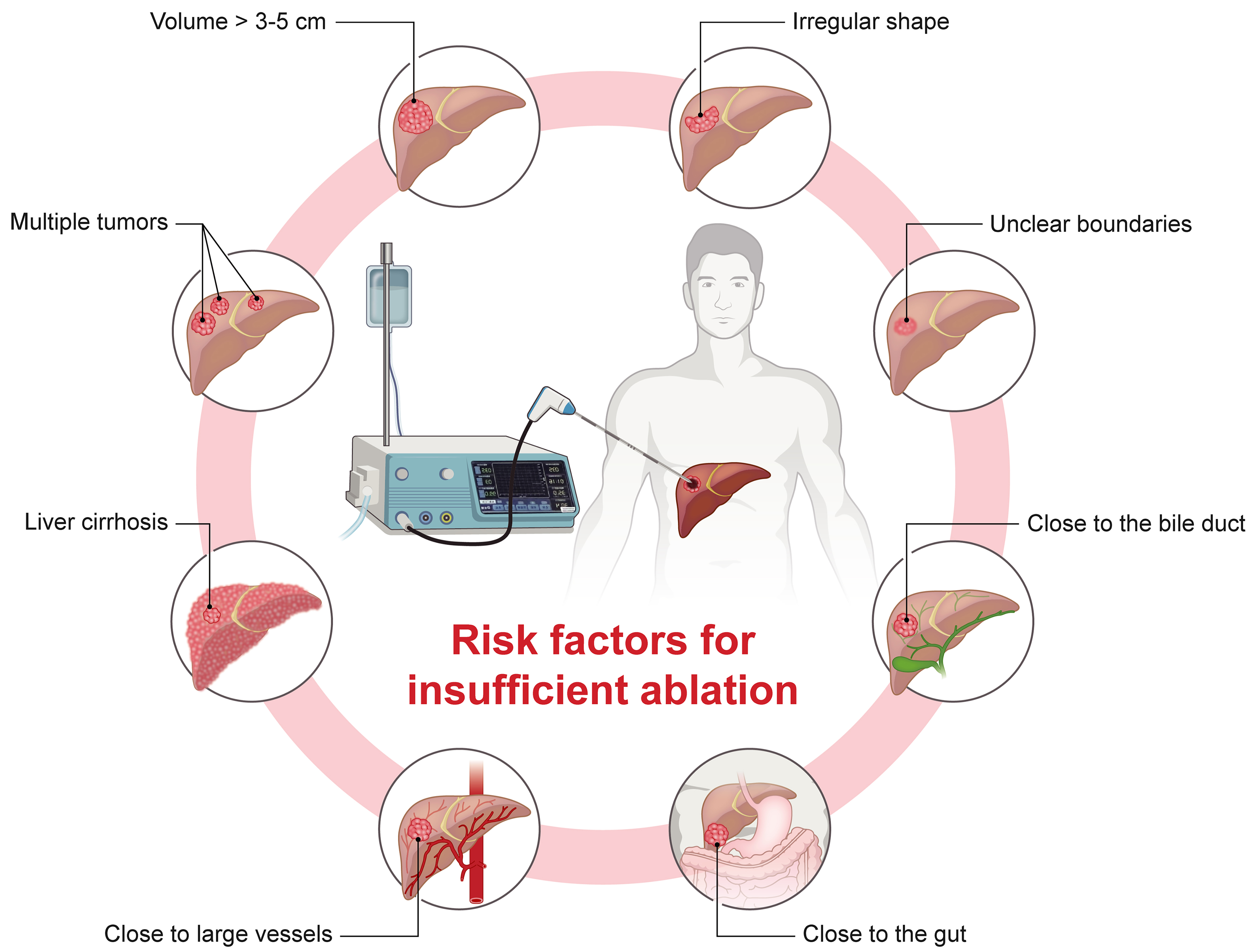
Figure 1. Risk factors for insufficient ablation in HCC. Key risk factors contributing to insufficient ablation include large tumors (> 3-5 cm), multifocality, irregular shapes, and unclear boundaries, all of which hinder full tumor coverage[19-23]. Tumors near vital structures such as the bile duct or gut may require reduced ablation power to avoid damage, leading to insufficient thermal energy. Proximity to major vessels may also produce a “heat-sink effect”, dissipate heat and reduce tumor margin temperatures. Additionally, liver cirrhosis may promote satellite nodules and vascular invasion, raising recurrence risks post-ablation. Software: Adobe Illustrator (version 27.0; Adobe Inc.). HCC: Hepatocellular carcinoma.

Hepatoma Research
ISSN 2454-2520 (Online) 2394-5079 (Print)

Portico

All published articles are preserved here permanently:

https://www.portico.org/publishers/oae/


Portico

All published articles are preserved here permanently:

https://www.portico.org/publishers/oae/