
fig1
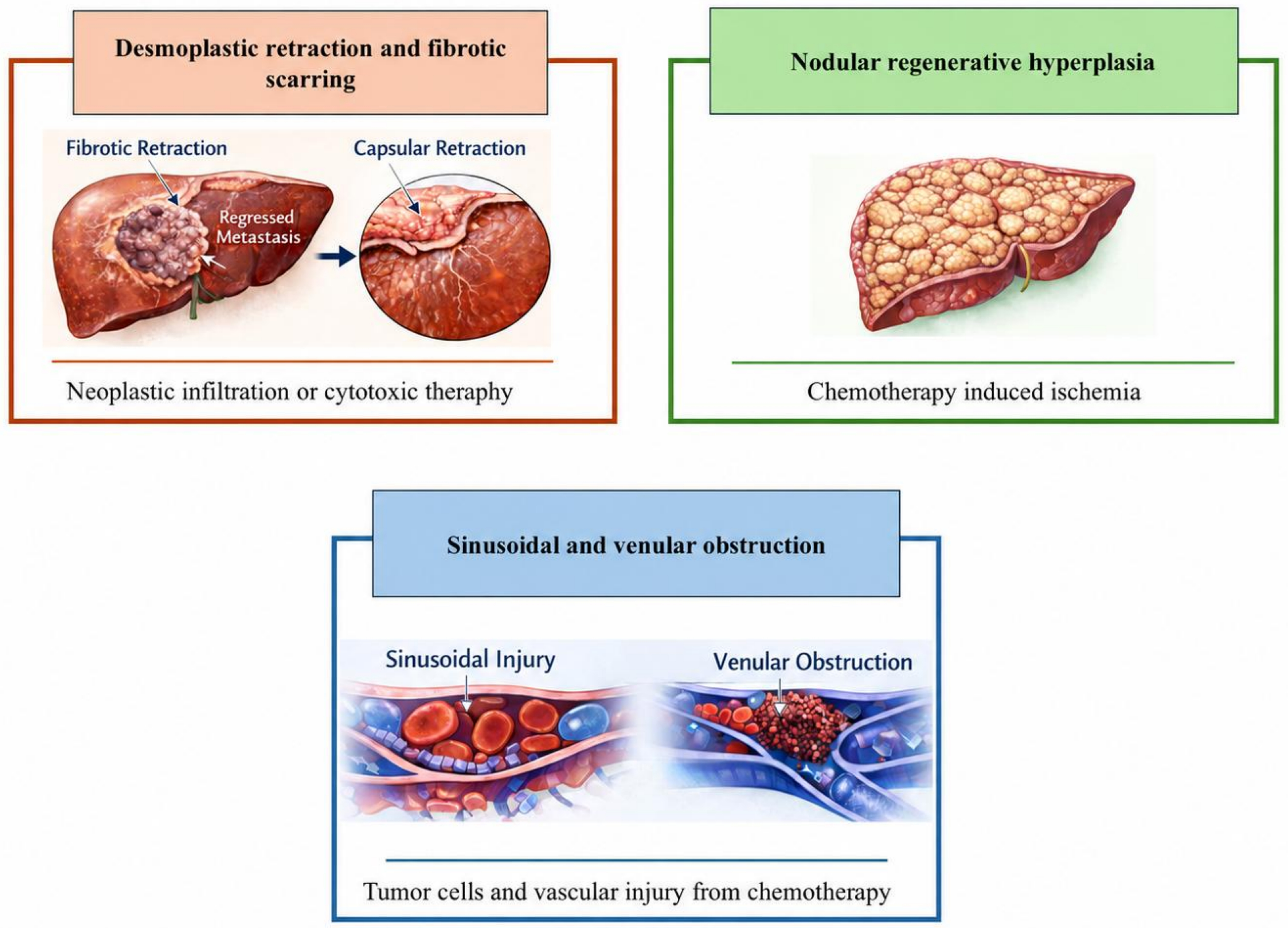
Figure 1. Schematic representation of the main mechanisms involved in pseudocirrhosis. Desmoplastic retraction and fibrotic scarring may occur after neoplastic infiltration or cytotoxic therapy, leading to capsular retraction and distortion of liver morphology. Chemotherapy-induced ischemic injury may promote nodular regenerative hyperplasia, while sinusoidal injury, venular obstruction, tumour cell infiltration, and chemotherapy-related vascular damage may contribute to intrahepatic vascular remodeling and portal hypertension. The figure was created in BioRender.com.