

fig1
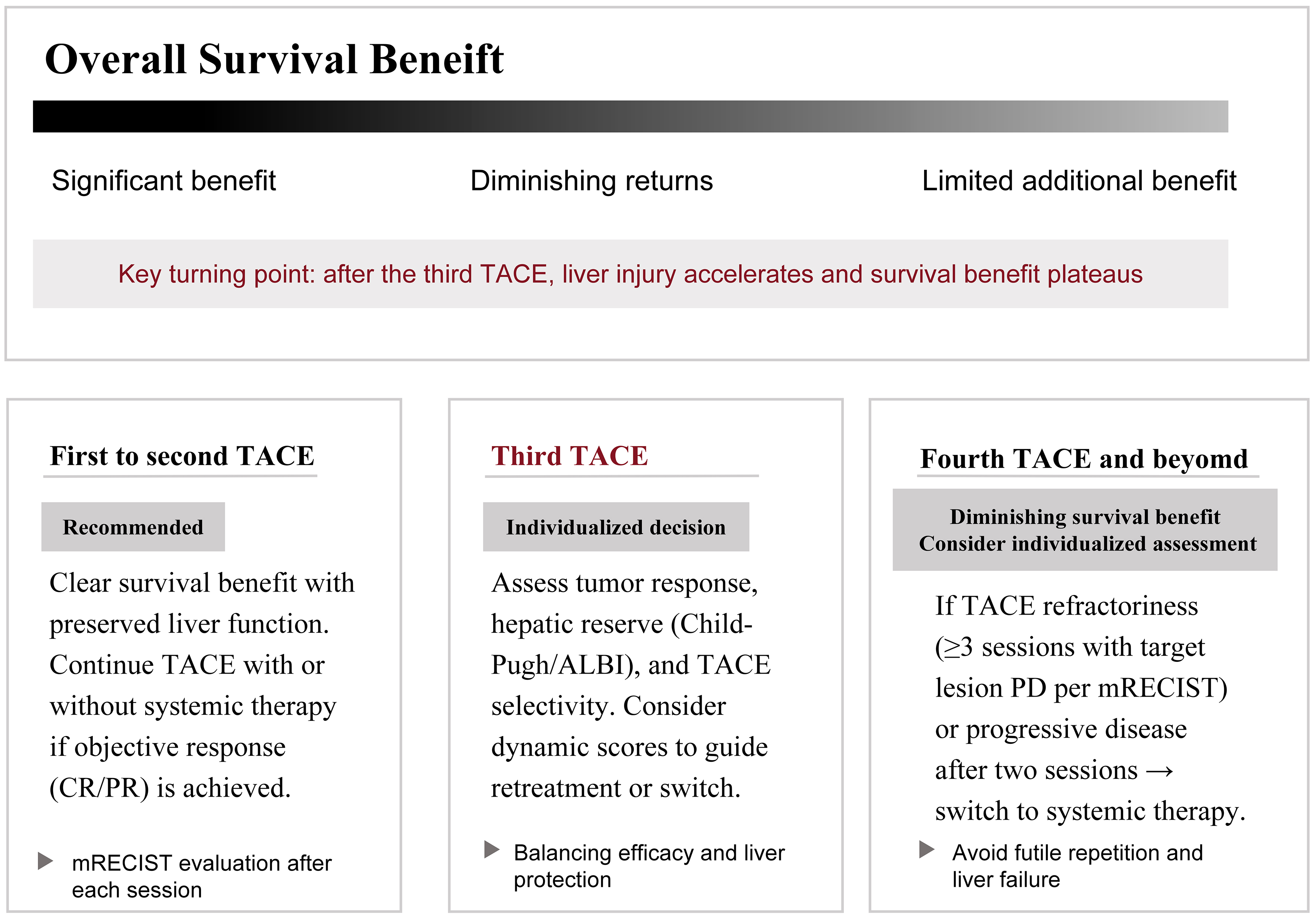
Figure 1. The relationship between treatment sessions, liver function, and survival benefit. This schematic illustrates the relationship between repeated TACE sessions, tumor response, liver function reserve, and survival benefit. The grayscale gradient bar represents how survival benefit evolves with increasing TACE frequency. The third TACE is highlighted as a potential turning point, after which the risk of liver function deterioration increases substantially (ALBI grade worsening, OR = 3.22 for three sessions) and additional survival benefit becomes limited. Clinical decisions should be individualized based on tumor response (mRECIST), hepatic reserve (Child-Pugh/ALBI), performance status, and dynamic scores. TACE refractoriness is defined according to the CCI criteria. TACE: Transarterial chemoembolization; CR: complete response; PR: partial response; OR: odds ratio; PD: progressive disease; ALBI: albumin-bilirubin grade; CCI: Chinese College of Interventionalists; mRECIST: Modified Response Evaluation Criteria in Solid tumors.